Saudi Arabia’s objectives on Formation of Presidential Council in Yemen

2022/04/12 | interview, Politics, top news

Strategic Council online – Interview: Having stated that Saudi Arabia has not an easy way ahead to unite field forces against Ansarallah, director of Yemen Desk at Mersaad think tank interpreted the resignation of Mansour Hadi and newly formed Presidential Council as Riyadh’s effort to reorganize field forces and to exploit their potentials against Ansarrallah.

While pointed to hand over the power to newly formed Presidential Council in Yemen by Mansour Hadi and the recent political events in the country, Ahmad Haji Sadeghian in an interview with the site of Strategic Council on Foreign Relations spelled out:” To review the developments in Yemen, it is important to answer the question whether Saudi Arabia is prepared to accept Ansarallah as an important part of dominant power of Yemen or not? The answer to this question will clarify how to analyze the developments of the country. In fact, ever since Anasrallah was formed in 2001, there was never such an acceptance and it still does not exist there”.

Reasons of Mansour Hadi’s Resignation

Having stated that the recent developments should be mostly assessed within the framework of the reorganization of the forces, he added:” Mansour Hadi and Ali Mohsen Al-Ahmar, his deputy and his army commander, were strongly criticized and disgusted by pro-Saudi Arabia forces and local pro-coalition forces within the past seven years. They had practically lost their efficiency and the infrastructure of Hadi’s army as well as forces of the Reform Party that led by his deputy was dismantled. In fact, they had no personnel on the ground and in the field”.

The expert on Yemen issues said:” the developments of the past seven years proceeded in a way that caused the formation of new forces. For example, in the South of Yemen the forces of Transitional Assembly, in the West of Yemen Al-Amaliqah Forces (the Giants Brigade), and also in Maareb the forces of the Reform Party led by Sultan Al-Aradeh, the governor general of the province who were not in complete coordination with Ali Mohsen Ah-Ahmar. Moreover, within the past two years and since Ansarallah shifted from defensive to offensive stage, and they were successful to liberate different regions, the inefficiency of Hadi’s army appeared clearly”.

Saudi Arabia’s Effort to Reorganize Forces against Ansarallah

Having stated that at such a situation, Saudi Arabia normally went after the reorganization of forces and made effort to materialize it in several phases, he explained:” one of the initiatives was Riyadh Agreement between transitional forces and Hadi government, which led to the defeat of coalition government resulted from the agreement, in practice. Another initiative was transfer of a part of field forces’ capability stationed along the West coast to Shabwe Province, which was failed too, and did not materialize the pre-determined objective of Saudi Arabia”.

The analyst of Yemen issues defined the resignation of Mansour Hadi and the arrival of new forces as essential initiative of Saudi Arabia to reorganize the indigenous forces of Yemen against Ansarallah and continued:” the combination of the newly formed Presidential Council of eight members indicates that those who have been elected have both actual field capability and potential capacity that can be brought into the field”.

Haji Sadeghian added:” Sultan Al-Aradeh is a person that Maareb is under his full control, Tariq Saleh has a large number of forces along the West coast, Al-Amaliqa forces as well as West coast forces act under his command. Abuzar’e Almoharrami is also a Salafid sheikh, and his forces are in fact, a part of Al-Amaliqa forces but he has the potential to reorganize Salafids against Ansarallah. Eidrous Al-Zobaidi has also the capability to activate the South against Ansarallah. A share has also been given to the Reform Party and as a bureaucrat of the Reform Party, Abdullah Al-Alimi has been appointed as a member of the Presidential Council and Reshad Al-Alimi also has been appointed as the chairman of the Presidential Council and has been tasked to make coordination among all forces until they are reactivated in coordination against Ansarallah”.

Riyadh Advisory Meeting & Its Objectives                         

He pointed to the holding of Riyadh Advisory Meeting and its concluding statement and said:” the statement had practically no new point. Saudi Arabia gathered all of its loyal forces in the Meeting to arrange its concerned reorganization. However, a large part of attendees in the Meeting, were those who are not residing in Yemen and have lived outside the country for several years. Obviously, if they were supposed to give an advice about Yemen, where they were unaware of the field situation, they could not have understood the poverty, siege, economic pressures and hardships as their priorities, no considerable result was achieved on these cases”.

Director of Yemen Desk at Mersaad think tank added:” Although Saudi Arabia and UAE announced that about $ 3 billion will be granted to the Central Bank of the new government as credits, but in practice, there will be no change in the people’s sustenance”.

Contingency of the End of Direct Military Presence of Saudi Arabia in Yemen   

Concerning the two – month truce agreed by Saudi Arabia and Ansarallah, Haji Sadeghian spelled out:” it is probable that the truce paves the ground for Saudi Arabia to completely ends its direct military intervention in Yemen. In the meantime, there also exists the possibility that Saudi Arabia will restart its air raids to suppress Ansarallah”.

Having stated that Saudi Arabia continues to confiscate the oil tankers carrying fuel for Ansarallah, and the reopening of the airport has not been materialized yet, he said:” one can not be optimist about carrying some news and media positions in connection with Saudi Arabia’s effort to negotiate with Ansarallah and or putting an end to war”.

The analyst of Yemen issues referred to some news published in connection with the house apprehension of Mansour Hadi and added:” this type of political behavior among Saudi authorities is completely understandable, and prior to the last example, former Lebanese Prime Minister Saad Hariri’s house arrest created a precedent. But, anyway, Mansour Hadi’s political life and influencing has come to an end, and his consumption date for Saudis has been expired, until and unless Saudi Arabia wishes to use him as a pawn to control the newly formed eight – member Presidential Council, which seems to be unlikely”.

Contingency of Mounting Disputes between Saudi Arabia & UAE        

Having referred to separatism issue in the South of Yemen, that was supported by UAE too, Haji Sadeghian continued to note:” in the combination of eight – member Presidential Council, four of them are depended on the UAE, and another four members have been elected from those forces depended on Saudi Arabia. The issue of South Yemen has remained to be unsettled amid all this. Despite the presence of Al-Zobaidi as the head of the South Transitional Council in the Presidential Council, the basis has been laid on unity and the issue of separatism in the South has remained in ambiguity”.

He added:” despite the agreement reached in 2014 national negotiations, the President must be from the South but Mr. Al-Alimi is originally from Ta’ez and belongs to the North of Yemen. On this basis, there exists the potential of tabling of North and South differences and mounting disputes between Saudi Arabia and UAE in Yemen. Therefore, in such a situation, Saudi Arabia has not an easy way ahead to unite the field forces against Ansarallah”.
0 Comments

Submit a Comment

Your email address will not be published. Required fields are marked *

LATEST CONTENT

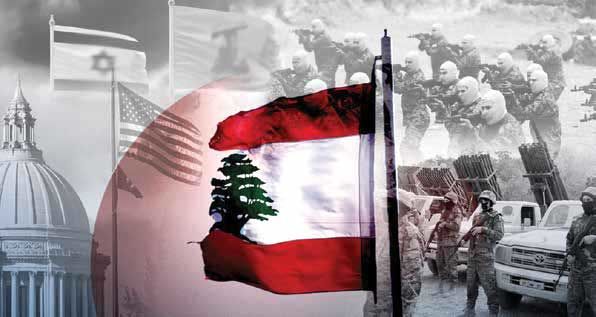
The Security Equation of Southern Lebanon for the Zionist Regime

Strategic Council Online – Opinion: American-Zionist objectives in the region are not limited to weakening Hezbollah. Efforts to disarm Iraqi resistance groups such as Kata’ib Hezbollah and the Popular Mobilization Forces are also part of their subsequent plans.

Commercial Exploitation of Peace; The Gaza Committee in Confrontation with International Legitimacy

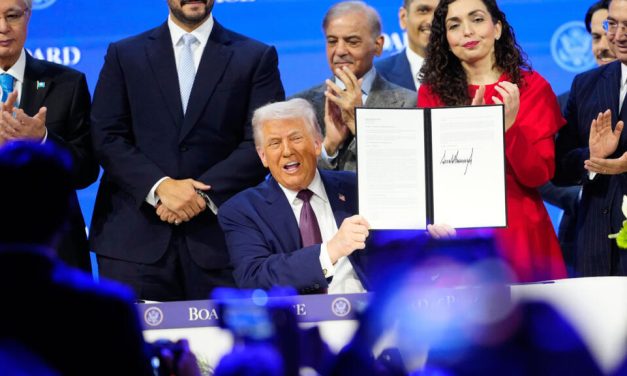
Strategic Council Online – Report: While the second phase of the implementation of the Gaza ceasefire has begun, the establishment of the “Peace Board” chaired by Donald Trump on the sidelines of the Davos meeting (22 January 2026) has become more than a technical mechanism for reconstruction and has turned into a test for the future of the international order.
Despite the signing of the charter by 22 out of 60 invited countries, the limited presence of global leaders at the Davos ceremony and the non-acceptance of this body by the European Union and key Western countries indicate a deep divide in global perceptions of the legitimacy of this mechanism.
In this report, drawing on the analysis of Hadi Borhani, a regional affairs expert, and international data, three strategic questions are addressed: Is the Peace Board an instrument for implementing UN Security Council Resolution 2803 or a substitute for the United Nations? How does the hierarchical architecture of this committee intensify executive challenges in Gaza? And finally, can this body create sustainable peace without the cooperation of Palestinians and with the concentration of power in the hands of a single individual?

America’s Zero-Sum Game in Iraq

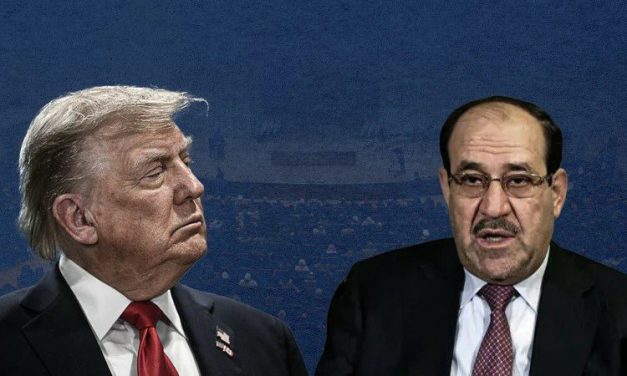
Online Strategic Council – Memoir: The swift selection of Nouri al-Maliki for the premiership constitutes a new phase in Iraq’s political sphere. Multiple factors have played a role in this process, the most important being the prevailing situation in Iraq and the region. Under such circumstances, Iraq requires a powerful and experienced prime minister who can keep the country away from the dangers of wars and crises.

America’s Strategy for Creating Tension in the Asia-Pacific

Strategic Council Online – Opinion: Relations between some countries in the Asia-Pacific region, such as China and Japan or China and Australia, which were previously relatively normal, are trending towards deterioration, and the primary reason for this is the aggressive policies of the United States of America.

Loading

Últimas publicaciones

The Security Equation of Southern Lebanon for the Zionist Regime

Strategic Council Online – Opinion: American-Zionist objectives in the region are not limited to weakening Hezbollah. Efforts to disarm Iraqi resistance groups such as Kata’ib Hezbollah and the Popular Mobilization Forces are also part of their subsequent plans.

Commercial Exploitation of Peace; The Gaza Committee in Confrontation with International Legitimacy

Strategic Council Online – Report: While the second phase of the implementation of the Gaza ceasefire has begun, the establishment of the “Peace Board” chaired by Donald Trump on the sidelines of the Davos meeting (22 January 2026) has become more than a technical mechanism for reconstruction and has turned into a test for the future of the international order.
Despite the signing of the charter by 22 out of 60 invited countries, the limited presence of global leaders at the Davos ceremony and the non-acceptance of this body by the European Union and key Western countries indicate a deep divide in global perceptions of the legitimacy of this mechanism.
In this report, drawing on the analysis of Hadi Borhani, a regional affairs expert, and international data, three strategic questions are addressed: Is the Peace Board an instrument for implementing UN Security Council Resolution 2803 or a substitute for the United Nations? How does the hierarchical architecture of this committee intensify executive challenges in Gaza? And finally, can this body create sustainable peace without the cooperation of Palestinians and with the concentration of power in the hands of a single individual?

America’s Zero-Sum Game in Iraq

Online Strategic Council – Memoir: The swift selection of Nouri al-Maliki for the premiership constitutes a new phase in Iraq’s political sphere. Multiple factors have played a role in this process, the most important being the prevailing situation in Iraq and the region. Under such circumstances, Iraq requires a powerful and experienced prime minister who can keep the country away from the dangers of wars and crises.

America’s Strategy for Creating Tension in the Asia-Pacific

Strategic Council Online – Opinion: Relations between some countries in the Asia-Pacific region, such as China and Japan or China and Australia, which were previously relatively normal, are trending towards deterioration, and the primary reason for this is the aggressive policies of the United States of America.

Loading

DERNIER CONTENU

The Security Equation of Southern Lebanon for the Zionist Regime

Strategic Council Online – Opinion: American-Zionist objectives in the region are not limited to weakening Hezbollah. Efforts to disarm Iraqi resistance groups such as Kata’ib Hezbollah and the Popular Mobilization Forces are also part of their subsequent plans.

Commercial Exploitation of Peace; The Gaza Committee in Confrontation with International Legitimacy

Strategic Council Online – Report: While the second phase of the implementation of the Gaza ceasefire has begun, the establishment of the “Peace Board” chaired by Donald Trump on the sidelines of the Davos meeting (22 January 2026) has become more than a technical mechanism for reconstruction and has turned into a test for the future of the international order.
Despite the signing of the charter by 22 out of 60 invited countries, the limited presence of global leaders at the Davos ceremony and the non-acceptance of this body by the European Union and key Western countries indicate a deep divide in global perceptions of the legitimacy of this mechanism.
In this report, drawing on the analysis of Hadi Borhani, a regional affairs expert, and international data, three strategic questions are addressed: Is the Peace Board an instrument for implementing UN Security Council Resolution 2803 or a substitute for the United Nations? How does the hierarchical architecture of this committee intensify executive challenges in Gaza? And finally, can this body create sustainable peace without the cooperation of Palestinians and with the concentration of power in the hands of a single individual?

America’s Zero-Sum Game in Iraq

Online Strategic Council – Memoir: The swift selection of Nouri al-Maliki for the premiership constitutes a new phase in Iraq’s political sphere. Multiple factors have played a role in this process, the most important being the prevailing situation in Iraq and the region. Under such circumstances, Iraq requires a powerful and experienced prime minister who can keep the country away from the dangers of wars and crises.

America’s Strategy for Creating Tension in the Asia-Pacific

Strategic Council Online – Opinion: Relations between some countries in the Asia-Pacific region, such as China and Japan or China and Australia, which were previously relatively normal, are trending towards deterioration, and the primary reason for this is the aggressive policies of the United States of America.

Loading

DERNIER CONTENU

The Security Equation of Southern Lebanon for the Zionist Regime

Strategic Council Online – Opinion: American-Zionist objectives in the region are not limited to weakening Hezbollah. Efforts to disarm Iraqi resistance groups such as Kata’ib Hezbollah and the Popular Mobilization Forces are also part of their subsequent plans.

Commercial Exploitation of Peace; The Gaza Committee in Confrontation with International Legitimacy

Strategic Council Online – Report: While the second phase of the implementation of the Gaza ceasefire has begun, the establishment of the “Peace Board” chaired by Donald Trump on the sidelines of the Davos meeting (22 January 2026) has become more than a technical mechanism for reconstruction and has turned into a test for the future of the international order.
Despite the signing of the charter by 22 out of 60 invited countries, the limited presence of global leaders at the Davos ceremony and the non-acceptance of this body by the European Union and key Western countries indicate a deep divide in global perceptions of the legitimacy of this mechanism.
In this report, drawing on the analysis of Hadi Borhani, a regional affairs expert, and international data, three strategic questions are addressed: Is the Peace Board an instrument for implementing UN Security Council Resolution 2803 or a substitute for the United Nations? How does the hierarchical architecture of this committee intensify executive challenges in Gaza? And finally, can this body create sustainable peace without the cooperation of Palestinians and with the concentration of power in the hands of a single individual?

America’s Zero-Sum Game in Iraq

Online Strategic Council – Memoir: The swift selection of Nouri al-Maliki for the premiership constitutes a new phase in Iraq’s political sphere. Multiple factors have played a role in this process, the most important being the prevailing situation in Iraq and the region. Under such circumstances, Iraq requires a powerful and experienced prime minister who can keep the country away from the dangers of wars and crises.

America’s Strategy for Creating Tension in the Asia-Pacific

Strategic Council Online – Opinion: Relations between some countries in the Asia-Pacific region, such as China and Japan or China and Australia, which were previously relatively normal, are trending towards deterioration, and the primary reason for this is the aggressive policies of the United States of America.

Loading

DERNIER CONTENU

The Security Equation of Southern Lebanon for the Zionist Regime

Strategic Council Online – Opinion: American-Zionist objectives in the region are not limited to weakening Hezbollah. Efforts to disarm Iraqi resistance groups such as Kata’ib Hezbollah and the Popular Mobilization Forces are also part of their subsequent plans.

Commercial Exploitation of Peace; The Gaza Committee in Confrontation with International Legitimacy

Strategic Council Online – Report: While the second phase of the implementation of the Gaza ceasefire has begun, the establishment of the “Peace Board” chaired by Donald Trump on the sidelines of the Davos meeting (22 January 2026) has become more than a technical mechanism for reconstruction and has turned into a test for the future of the international order.
Despite the signing of the charter by 22 out of 60 invited countries, the limited presence of global leaders at the Davos ceremony and the non-acceptance of this body by the European Union and key Western countries indicate a deep divide in global perceptions of the legitimacy of this mechanism.
In this report, drawing on the analysis of Hadi Borhani, a regional affairs expert, and international data, three strategic questions are addressed: Is the Peace Board an instrument for implementing UN Security Council Resolution 2803 or a substitute for the United Nations? How does the hierarchical architecture of this committee intensify executive challenges in Gaza? And finally, can this body create sustainable peace without the cooperation of Palestinians and with the concentration of power in the hands of a single individual?

America’s Zero-Sum Game in Iraq

Online Strategic Council – Memoir: The swift selection of Nouri al-Maliki for the premiership constitutes a new phase in Iraq’s political sphere. Multiple factors have played a role in this process, the most important being the prevailing situation in Iraq and the region. Under such circumstances, Iraq requires a powerful and experienced prime minister who can keep the country away from the dangers of wars and crises.

America’s Strategy for Creating Tension in the Asia-Pacific

Strategic Council Online – Opinion: Relations between some countries in the Asia-Pacific region, such as China and Japan or China and Australia, which were previously relatively normal, are trending towards deterioration, and the primary reason for this is the aggressive policies of the United States of America.

Loading