US Approach & the Process of Normalization of Ties with Zionist Regime

2022/02/06 | Note, Politics, top news

Strategic Council Online - Opinion: The Zionist regime’s conflict with Palestine and the Arabs is the main focus of the conflict in the Middle East and has played a major role in the US involvement in various issues in the region. Dr. Fatemeh Nekoolal Azad - Expert on West Asia affairs

Ever since Egypt’s peace with the Zionist regime in 1978, one of the most important issues in the US foreign policy has always been the issue that what is its policy towards the said conflict? In fact, one of the characteristics of the assessment of foreign policy of the US presidents after the end of their term has been what they have achieved in resolving the conflict. Based on this, it should be said that after the peace agreement between Jordan and the Zionist regime in October 1994, the next US presidents had no success in normalizing the relations between the Arabs and the Zionist regime.

Prior to Donald Trump’s presidency, US presidents believed that resolving the Palestinian-Israeli conflict was in priority over resolving the Israeli-Arab conflict. Trump completely changed this belief and, with the unilateral support of the Zionist regime, succeeded in normalizing the relations of the four Arab countries of Bahrain, the United Arab Emirates, Sudan and Morocco with the Zionist regime in the final months of his office within the framework of the so-called Abraham Accords.

More than a year after Trump’s presidency, no other Arab country has normalized relations with the Zionist regime. While after the announcement of the agreement for normalization of relations between Sudan and the Zionist regime, Trump said apart from the UAE, Bahrain and Sudan, at least five other countries are in the line to normalize relations with the Zionist regime. The failure to advance Abraham Accords over the past year has led some analysts to interpret that Biden is unwilling to continue Trump’s policies, and that the Arab-Zionist issue is essentially not a priority for him. This view is put forward by the Republican intellectual-media circles.

Others, on the other hand, have different beliefs and see Biden as a supporter of the continuation of the normalization policy. In their view, the present US President has appreciated and warmly welcomed the policy of normalization of relations of Arab countries with the Zionist regime.

Dan Shapiro, the Senior Director of Middle East on the National Security Council and the ambassador of Barack Obama administration to the Zionist regime, believes that the Biden administration will help in the normalization process, but he will most likely tie up this issue to the Palestinian state-building policy. Shapiro’s statement is true because Biden and his foreign policy team support the idea of ​​formation of two governments.

In this regard, it can be interesting to pay attention to the results of the polls during the US presidential election in 2020 and after Biden’s victory. According to pre-election polls, a majority of Zionists (63.3%) supported Trump’s re-election. In contrast, about 18% supported Biden’s victory. For this reason, Biden’s victory has caused concern among the majority of the Israelis. A poll conducted by the Jerusalem Post and Maariv shows that the Israelis have become more conservative since the election of Biden and have become more sympathetic to the right-wing parties. Biden is in favor of a two-state peace plan and the Oslo peace process, which is not in favor of the right current in the Zionist regime. On the other hand, although Palestinian groups have welcomed Biden’s victory and are seeking elections after a long delay, it should be noted that the rightists have a different stance.

Based on what has been said; although other Arab countries may recognize the Zionist regime in the near future or start peace talks with it, as in the past, no significant progress will be made in the area of ​​Palestine-Zionist regime peace. Because the Palestinian side is in a position of weakness, and the other side is not only ruled by the rights, but is also fundamentally opposed to the policy of the two Biden-backed governments. Hence, the recognition of the Zionist regime by several other Arab countries, which may also occur in the Biden period, must be separated from the direct Zionist-Palestinian conflict, which is the hard core of the conflict. Trump did not succeed in resolving the Palestinian-Israeli conflict, and it will be the same for Joe Biden.

In this regard, if there are more possible normalizations in the Zionist regime’s relations with Arab countries, there will be consequences for the stability of the region which should be considered. The first consequence is that continuation of the normalization process with several other Arab countries, despite the opposition of the nations of the region, makes it easier for other Arab countries to do the same. For example, if Saudi Arabia normalizes relations, it will be much easier for other Arab countries to follow suit. Secondly, continuation of the process of normalization of relations with the Zionist regime will help Tel Aviv to reach an agreement with Arab countries without withdrawing from the occupied Palestinian territories and to put more pressure on the Palestinians. Thirdly, considering the strategic and destructive consequences of continuation of the mentioned process, it will face opposition and reactions from the Axis of Resistance in the region.
0 Comments

Submit a Comment

Your email address will not be published. Required fields are marked *

LATEST CONTENT

America’s Zero-Sum Game in Iraq

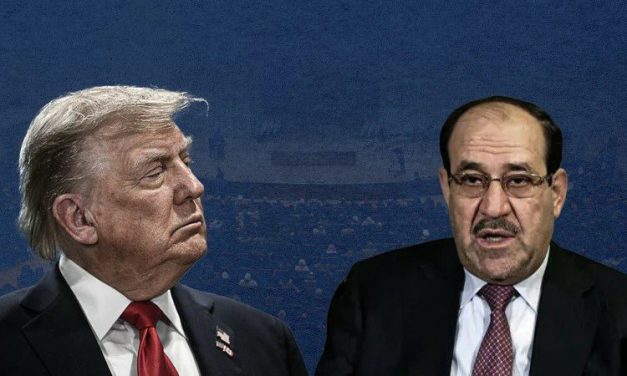
Online Strategic Council – Memoir: The swift selection of Nouri al-Maliki for the premiership constitutes a new phase in Iraq’s political sphere. Multiple factors have played a role in this process, the most important being the prevailing situation in Iraq and the region. Under such circumstances, Iraq requires a powerful and experienced prime minister who can keep the country away from the dangers of wars and crises.

America’s Strategy for Creating Tension in the Asia-Pacific

Strategic Council Online – Opinion: Relations between some countries in the Asia-Pacific region, such as China and Japan or China and Australia, which were previously relatively normal, are trending towards deterioration, and the primary reason for this is the aggressive policies of the United States of America.

The Collapse of the European Security Illusion with the Continuation of the Ukraine War?

Strategic Council Online – Interview: The Ukraine war has become a new turning point in the political, security, and even commercial relations of allies on both sides of the Atlantic. While this war is nearing its fourth year, many questions still remain regarding its future and its consequences; among them, will the continuation of the Ukraine war lead to the collapse of the European security illusion?

Is Greenland Pushing Europe Toward China?

Strategic Council Online – Interview: A European affairs expert believes that the seizure of Greenland will certainly weaken America’s relations with Europe and its allies. Donald Trump’s view is that he does not need these countries, but if Europe faces significant pressure from the United States, it is natural for it to move toward China.

Alarm Bells Sound for ISIS Revival in Syria: Threat to Iraq and West Asia

Strategic Council Online – Opinion: Numerous documents and pieces of evidence indicate that ISIS, which in recent years has been the region’s biggest threat to security and stability after the Zionist regime, has once again in recent months become a focal point for political and security exploitation by American and Zionist regime security, intelligence, and political circles.

Afghanistan’s Effective Role in the Economy of Eurasia

Strategic Council Online – Interview: A regional affairs researcher stated: Despite projects such as the Khaf-Herat railway and the Herat-Balkh-Mazar-i-Sharif corridor being on the agenda, insecurity and the absence of an inclusive government remain the most significant obstacles to realizing transit corridors and Afghanistan playing an effective role in the economy of Eurasia.

Loading

Últimas publicaciones

America’s Zero-Sum Game in Iraq

Online Strategic Council – Memoir: The swift selection of Nouri al-Maliki for the premiership constitutes a new phase in Iraq’s political sphere. Multiple factors have played a role in this process, the most important being the prevailing situation in Iraq and the region. Under such circumstances, Iraq requires a powerful and experienced prime minister who can keep the country away from the dangers of wars and crises.

America’s Strategy for Creating Tension in the Asia-Pacific

Strategic Council Online – Opinion: Relations between some countries in the Asia-Pacific region, such as China and Japan or China and Australia, which were previously relatively normal, are trending towards deterioration, and the primary reason for this is the aggressive policies of the United States of America.

The Collapse of the European Security Illusion with the Continuation of the Ukraine War?

Strategic Council Online – Interview: The Ukraine war has become a new turning point in the political, security, and even commercial relations of allies on both sides of the Atlantic. While this war is nearing its fourth year, many questions still remain regarding its future and its consequences; among them, will the continuation of the Ukraine war lead to the collapse of the European security illusion?

Is Greenland Pushing Europe Toward China?

Strategic Council Online – Interview: A European affairs expert believes that the seizure of Greenland will certainly weaken America’s relations with Europe and its allies. Donald Trump’s view is that he does not need these countries, but if Europe faces significant pressure from the United States, it is natural for it to move toward China.

Alarm Bells Sound for ISIS Revival in Syria: Threat to Iraq and West Asia

Strategic Council Online – Opinion: Numerous documents and pieces of evidence indicate that ISIS, which in recent years has been the region’s biggest threat to security and stability after the Zionist regime, has once again in recent months become a focal point for political and security exploitation by American and Zionist regime security, intelligence, and political circles.

Afghanistan’s Effective Role in the Economy of Eurasia

Strategic Council Online – Interview: A regional affairs researcher stated: Despite projects such as the Khaf-Herat railway and the Herat-Balkh-Mazar-i-Sharif corridor being on the agenda, insecurity and the absence of an inclusive government remain the most significant obstacles to realizing transit corridors and Afghanistan playing an effective role in the economy of Eurasia.

Loading

DERNIER CONTENU

America’s Zero-Sum Game in Iraq

Online Strategic Council – Memoir: The swift selection of Nouri al-Maliki for the premiership constitutes a new phase in Iraq’s political sphere. Multiple factors have played a role in this process, the most important being the prevailing situation in Iraq and the region. Under such circumstances, Iraq requires a powerful and experienced prime minister who can keep the country away from the dangers of wars and crises.

America’s Strategy for Creating Tension in the Asia-Pacific

Strategic Council Online – Opinion: Relations between some countries in the Asia-Pacific region, such as China and Japan or China and Australia, which were previously relatively normal, are trending towards deterioration, and the primary reason for this is the aggressive policies of the United States of America.

The Collapse of the European Security Illusion with the Continuation of the Ukraine War?

Strategic Council Online – Interview: The Ukraine war has become a new turning point in the political, security, and even commercial relations of allies on both sides of the Atlantic. While this war is nearing its fourth year, many questions still remain regarding its future and its consequences; among them, will the continuation of the Ukraine war lead to the collapse of the European security illusion?

Is Greenland Pushing Europe Toward China?

Strategic Council Online – Interview: A European affairs expert believes that the seizure of Greenland will certainly weaken America’s relations with Europe and its allies. Donald Trump’s view is that he does not need these countries, but if Europe faces significant pressure from the United States, it is natural for it to move toward China.

Alarm Bells Sound for ISIS Revival in Syria: Threat to Iraq and West Asia

Strategic Council Online – Opinion: Numerous documents and pieces of evidence indicate that ISIS, which in recent years has been the region’s biggest threat to security and stability after the Zionist regime, has once again in recent months become a focal point for political and security exploitation by American and Zionist regime security, intelligence, and political circles.

Afghanistan’s Effective Role in the Economy of Eurasia

Strategic Council Online – Interview: A regional affairs researcher stated: Despite projects such as the Khaf-Herat railway and the Herat-Balkh-Mazar-i-Sharif corridor being on the agenda, insecurity and the absence of an inclusive government remain the most significant obstacles to realizing transit corridors and Afghanistan playing an effective role in the economy of Eurasia.

Loading