Perpetuation of Political and Military Tensions between Turkey and Greece

2022/01/26 | Note, Politics, top news

Strategic Council Online - Opinion: Although in recent months and with the onset of the economic crisis, in a new round Turkey again speaks of “equal participation” with other countries, but the evidence shows that there is no clear prospect of reducing political and military tensions between Turkey and Greece. Mahmoud Fazeli - International affairs analyst

Hostile policies of Ankara and Athens continue at all military and political levels. The two countries talked about gaining trust and refraining from military action on national and religious holidays, but according to Greece, Turkey violated its airspace 37 times, even during the Christian New Year, 35 times with a CN-235 transport plane and twice with F-16 fighters. In addition to Turkish drones invading various parts of Greece, Turkish F-16 fighter jets have repeatedly violated Greek airspace.

The Greek leaders at various levels continue their political and media attacks on Turkey, and some officials predict that Greece is facing new tensions in its relations with Turkey. Greek President Sakellaropoulou, following the Turkish Foreign Ministry’s unprecedented attacks on her, claimed that Greece seeks peaceful coexistence and cooperation with Turkey, but will not back down in the face of unacceptable claims and Turkish aggression, and will never abandon the path of diplomacy and in line with maintaining its interests and trans-regional welfare, seeks cooperation with Turkey and peaceful coexistence and friendship of the people of the two countries.

The Greek prime minister also believes that if Turkey wants to normalize bilateral relations with the European Union, it must end its provocative measures in the Aegean, Eastern Mediterranean and against Greece. At the “military level”, the Greek Deputy Defense Minister warned that “the men and women of the Greek Armed Forces are ready to defend the sanctities of national independence and the sovereignty of all Greeks whenever necessary”.

The offensive stance of the Turkish authorities against Greece seems to have domestic consumption and is in the context of competition between Erdogan’s successors. The issue of demilitarization of the islands, which is urgently raised by Turkey, is not a new issue, and the islands in question have been militarized for 30 years; but in Greece, another group believes that Athens’ policy to prevent Turkey from becoming a regional power is inefficient and impossible and will not work, and Greece has wasted a lot of resources and should realize this as soon as possible.

The issue of the extension of territorial waters in the Aegean Sea has become one of the sensitivities of both sides. Remarks of former Deputy Foreign Minister Christos Rozakis, who recently said that the Greek side had done its utmost efforts to strengthen talks with Turkey, and in the context of exploratory talks with Turkey, the Greek side made constructive proposals such as accepting extension of Aegean territorial waters not to 12 nautical miles which was forecasted in the United Nations Convention on the Law of the Sea, but to 10 nautical miles, were considered as a kind of retreat by the Greek side. According to the domestic opposition, the ministry of foreign affairs must answer whether the Greek side has made such a proposal in the exploratory talks between the two countries, during the several rounds that took place in 2021, as well as in previous periods. Opponents of the government claim that Greece’s firm position on its inalienable right to extend its territorial waters to 12 nautical miles, which is explicitly enshrined in international law, and in particular the United Nations Convention on the Law of the Sea, remains strong. According to the Turks, increasing Greece’s territorial waters to 12 nautical miles in the Aegean Sea will increase Greece’s territorial waters, which make up 40 percent of the Aegean Sea, to 70 percent, and reduce the area of ​​the high seas from 51 percent to 19 percent. In that case, less than 10% of the Aegean basin remains for Turkey.

One of Turkey’s constant sensitivities is the construction of Greek military fortifications and arms purchases. The Turkish defense minister, who is critical of Greece’s arms purchases from France and the United States, believes that Greece’s economic situation is clear to everyone. Greece has serious economic problems, but is keen to buy very expensive weaponry systems and increase its defense budget. Greece has concluded alliance agreements with various countries within NATO and signs memoranda of understanding. Despite existence of NATO, what is the need for those agreements? Who is the Greek military stronghold against? Those weapons are too much for ordinary defense, but too little for confronting with Turkey. He urges Greece not to make miscalculations by extending its territorial waters from 6 to 12 nautical miles in the Aegean, and not to try to test Turkey’s response. It is advisable for Greece to remain within the same 6 nautical miles. Greece continues expansionism and violates the civilian regime of 16 of the 23 Aegean islands that have been stipulated in international conventions, in particular the Treaty of Lausanne. Greece claims sovereignty over islands that ceding them has not been stipulated in any international convention. Provocative measures, including militarization of islands near Turkey, are the violation of international agreements. Athens is trying to turn issues between the two countries into a problem for Turkey – the European Union – the United States or Turkey – and NATO.

Turkish Defense Minister Hulusi Akar, who has been one of Turkey’s most active figures against Greece in recent weeks, says: The Greeks at any opportunity describe Turkey as a foreign threat. By trying to portray Turkey as a threat, they are trying to gain a positional advantage. Ankara believes that problems of the two countries are deepening with the populist and uncompromising attitudes of some Greek politicians, away from international laws and realities. Ankara has also been a vocal critic of the US troop presence in the Alexandroupolis area of Greece, and has expressed dissatisfaction with the US troop presence in Alexandroupolis, which is being used for the US naval purposes.

Relations between Turkey and Greece, two members of NATO, have often been strained, with relations deteriorating sharply last year, with warships in the eastern Mediterranean fighting over maritime borders and energy rights, with Greece and Cyprus claiming their monopoly economic zone. Greece and Turkey came close to a military confrontation last year in a dispute over gas exploration in the eastern Mediterranean. Turkey has repeatedly called on Greece to pursue peaceful rather than aggressive political solutions, but Athens, in official positions, reserves the right to extend its territorial waters from the current 6 to 12 nautical miles around the Aegean islands.
0 Comments

Submit a Comment

Your email address will not be published. Required fields are marked *

LATEST CONTENT

Commercial Exploitation of Peace; The Gaza Committee in Confrontation with International Legitimacy

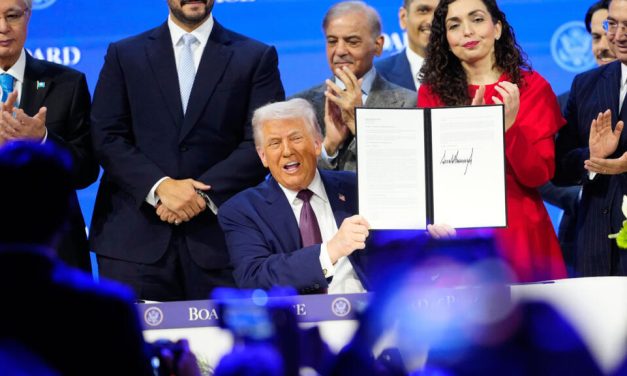
Strategic Council Online – Report: While the second phase of the implementation of the Gaza ceasefire has begun, the establishment of the “Peace Board” chaired by Donald Trump on the sidelines of the Davos meeting (22 January 2026) has become more than a technical mechanism for reconstruction and has turned into a test for the future of the international order.
Despite the signing of the charter by 22 out of 60 invited countries, the limited presence of global leaders at the Davos ceremony and the non-acceptance of this body by the European Union and key Western countries indicate a deep divide in global perceptions of the legitimacy of this mechanism.
In this report, drawing on the analysis of Hadi Borhani, a regional affairs expert, and international data, three strategic questions are addressed: Is the Peace Board an instrument for implementing UN Security Council Resolution 2803 or a substitute for the United Nations? How does the hierarchical architecture of this committee intensify executive challenges in Gaza? And finally, can this body create sustainable peace without the cooperation of Palestinians and with the concentration of power in the hands of a single individual?

America’s Zero-Sum Game in Iraq

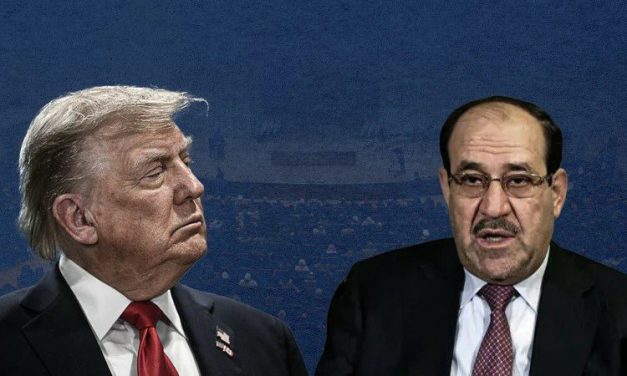
Online Strategic Council – Memoir: The swift selection of Nouri al-Maliki for the premiership constitutes a new phase in Iraq’s political sphere. Multiple factors have played a role in this process, the most important being the prevailing situation in Iraq and the region. Under such circumstances, Iraq requires a powerful and experienced prime minister who can keep the country away from the dangers of wars and crises.

America’s Strategy for Creating Tension in the Asia-Pacific

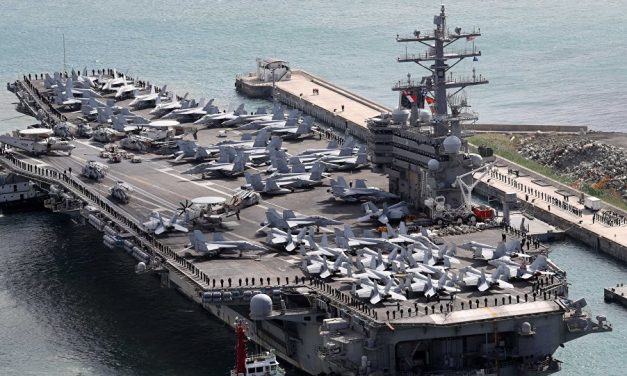
Strategic Council Online – Opinion: Relations between some countries in the Asia-Pacific region, such as China and Japan or China and Australia, which were previously relatively normal, are trending towards deterioration, and the primary reason for this is the aggressive policies of the United States of America.

The Collapse of the European Security Illusion with the Continuation of the Ukraine War?

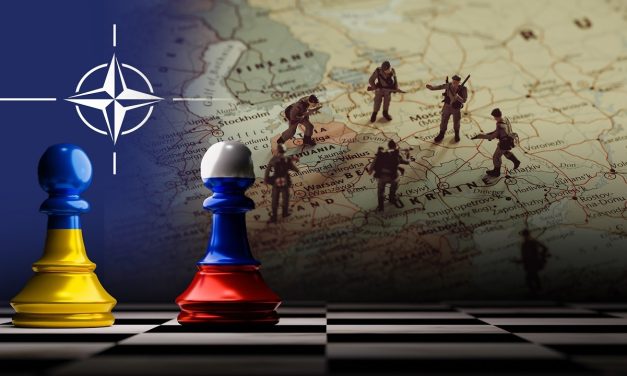
Strategic Council Online – Interview: The Ukraine war has become a new turning point in the political, security, and even commercial relations of allies on both sides of the Atlantic. While this war is nearing its fourth year, many questions still remain regarding its future and its consequences; among them, will the continuation of the Ukraine war lead to the collapse of the European security illusion?

Loading

Últimas publicaciones

Commercial Exploitation of Peace; The Gaza Committee in Confrontation with International Legitimacy

Strategic Council Online – Report: While the second phase of the implementation of the Gaza ceasefire has begun, the establishment of the “Peace Board” chaired by Donald Trump on the sidelines of the Davos meeting (22 January 2026) has become more than a technical mechanism for reconstruction and has turned into a test for the future of the international order.
Despite the signing of the charter by 22 out of 60 invited countries, the limited presence of global leaders at the Davos ceremony and the non-acceptance of this body by the European Union and key Western countries indicate a deep divide in global perceptions of the legitimacy of this mechanism.
In this report, drawing on the analysis of Hadi Borhani, a regional affairs expert, and international data, three strategic questions are addressed: Is the Peace Board an instrument for implementing UN Security Council Resolution 2803 or a substitute for the United Nations? How does the hierarchical architecture of this committee intensify executive challenges in Gaza? And finally, can this body create sustainable peace without the cooperation of Palestinians and with the concentration of power in the hands of a single individual?

America’s Zero-Sum Game in Iraq

Online Strategic Council – Memoir: The swift selection of Nouri al-Maliki for the premiership constitutes a new phase in Iraq’s political sphere. Multiple factors have played a role in this process, the most important being the prevailing situation in Iraq and the region. Under such circumstances, Iraq requires a powerful and experienced prime minister who can keep the country away from the dangers of wars and crises.

America’s Strategy for Creating Tension in the Asia-Pacific

Strategic Council Online – Opinion: Relations between some countries in the Asia-Pacific region, such as China and Japan or China and Australia, which were previously relatively normal, are trending towards deterioration, and the primary reason for this is the aggressive policies of the United States of America.

The Collapse of the European Security Illusion with the Continuation of the Ukraine War?

Strategic Council Online – Interview: The Ukraine war has become a new turning point in the political, security, and even commercial relations of allies on both sides of the Atlantic. While this war is nearing its fourth year, many questions still remain regarding its future and its consequences; among them, will the continuation of the Ukraine war lead to the collapse of the European security illusion?

Loading

DERNIER CONTENU

Commercial Exploitation of Peace; The Gaza Committee in Confrontation with International Legitimacy

Strategic Council Online – Report: While the second phase of the implementation of the Gaza ceasefire has begun, the establishment of the “Peace Board” chaired by Donald Trump on the sidelines of the Davos meeting (22 January 2026) has become more than a technical mechanism for reconstruction and has turned into a test for the future of the international order.
Despite the signing of the charter by 22 out of 60 invited countries, the limited presence of global leaders at the Davos ceremony and the non-acceptance of this body by the European Union and key Western countries indicate a deep divide in global perceptions of the legitimacy of this mechanism.
In this report, drawing on the analysis of Hadi Borhani, a regional affairs expert, and international data, three strategic questions are addressed: Is the Peace Board an instrument for implementing UN Security Council Resolution 2803 or a substitute for the United Nations? How does the hierarchical architecture of this committee intensify executive challenges in Gaza? And finally, can this body create sustainable peace without the cooperation of Palestinians and with the concentration of power in the hands of a single individual?

America’s Zero-Sum Game in Iraq

Online Strategic Council – Memoir: The swift selection of Nouri al-Maliki for the premiership constitutes a new phase in Iraq’s political sphere. Multiple factors have played a role in this process, the most important being the prevailing situation in Iraq and the region. Under such circumstances, Iraq requires a powerful and experienced prime minister who can keep the country away from the dangers of wars and crises.

America’s Strategy for Creating Tension in the Asia-Pacific

Strategic Council Online – Opinion: Relations between some countries in the Asia-Pacific region, such as China and Japan or China and Australia, which were previously relatively normal, are trending towards deterioration, and the primary reason for this is the aggressive policies of the United States of America.

The Collapse of the European Security Illusion with the Continuation of the Ukraine War?

Strategic Council Online – Interview: The Ukraine war has become a new turning point in the political, security, and even commercial relations of allies on both sides of the Atlantic. While this war is nearing its fourth year, many questions still remain regarding its future and its consequences; among them, will the continuation of the Ukraine war lead to the collapse of the European security illusion?

Loading

DERNIER CONTENU

Commercial Exploitation of Peace; The Gaza Committee in Confrontation with International Legitimacy

Strategic Council Online – Report: While the second phase of the implementation of the Gaza ceasefire has begun, the establishment of the “Peace Board” chaired by Donald Trump on the sidelines of the Davos meeting (22 January 2026) has become more than a technical mechanism for reconstruction and has turned into a test for the future of the international order.
Despite the signing of the charter by 22 out of 60 invited countries, the limited presence of global leaders at the Davos ceremony and the non-acceptance of this body by the European Union and key Western countries indicate a deep divide in global perceptions of the legitimacy of this mechanism.
In this report, drawing on the analysis of Hadi Borhani, a regional affairs expert, and international data, three strategic questions are addressed: Is the Peace Board an instrument for implementing UN Security Council Resolution 2803 or a substitute for the United Nations? How does the hierarchical architecture of this committee intensify executive challenges in Gaza? And finally, can this body create sustainable peace without the cooperation of Palestinians and with the concentration of power in the hands of a single individual?

America’s Zero-Sum Game in Iraq

Online Strategic Council – Memoir: The swift selection of Nouri al-Maliki for the premiership constitutes a new phase in Iraq’s political sphere. Multiple factors have played a role in this process, the most important being the prevailing situation in Iraq and the region. Under such circumstances, Iraq requires a powerful and experienced prime minister who can keep the country away from the dangers of wars and crises.

America’s Strategy for Creating Tension in the Asia-Pacific

Strategic Council Online – Opinion: Relations between some countries in the Asia-Pacific region, such as China and Japan or China and Australia, which were previously relatively normal, are trending towards deterioration, and the primary reason for this is the aggressive policies of the United States of America.

The Collapse of the European Security Illusion with the Continuation of the Ukraine War?

Strategic Council Online – Interview: The Ukraine war has become a new turning point in the political, security, and even commercial relations of allies on both sides of the Atlantic. While this war is nearing its fourth year, many questions still remain regarding its future and its consequences; among them, will the continuation of the Ukraine war lead to the collapse of the European security illusion?

Loading

DERNIER CONTENU

Commercial Exploitation of Peace; The Gaza Committee in Confrontation with International Legitimacy

Strategic Council Online – Report: While the second phase of the implementation of the Gaza ceasefire has begun, the establishment of the “Peace Board” chaired by Donald Trump on the sidelines of the Davos meeting (22 January 2026) has become more than a technical mechanism for reconstruction and has turned into a test for the future of the international order.
Despite the signing of the charter by 22 out of 60 invited countries, the limited presence of global leaders at the Davos ceremony and the non-acceptance of this body by the European Union and key Western countries indicate a deep divide in global perceptions of the legitimacy of this mechanism.
In this report, drawing on the analysis of Hadi Borhani, a regional affairs expert, and international data, three strategic questions are addressed: Is the Peace Board an instrument for implementing UN Security Council Resolution 2803 or a substitute for the United Nations? How does the hierarchical architecture of this committee intensify executive challenges in Gaza? And finally, can this body create sustainable peace without the cooperation of Palestinians and with the concentration of power in the hands of a single individual?

America’s Zero-Sum Game in Iraq

Online Strategic Council – Memoir: The swift selection of Nouri al-Maliki for the premiership constitutes a new phase in Iraq’s political sphere. Multiple factors have played a role in this process, the most important being the prevailing situation in Iraq and the region. Under such circumstances, Iraq requires a powerful and experienced prime minister who can keep the country away from the dangers of wars and crises.

America’s Strategy for Creating Tension in the Asia-Pacific

Strategic Council Online – Opinion: Relations between some countries in the Asia-Pacific region, such as China and Japan or China and Australia, which were previously relatively normal, are trending towards deterioration, and the primary reason for this is the aggressive policies of the United States of America.

The Collapse of the European Security Illusion with the Continuation of the Ukraine War?

Strategic Council Online – Interview: The Ukraine war has become a new turning point in the political, security, and even commercial relations of allies on both sides of the Atlantic. While this war is nearing its fourth year, many questions still remain regarding its future and its consequences; among them, will the continuation of the Ukraine war lead to the collapse of the European security illusion?

Loading