Strategic Opportunities for Iran’s Membership in Shanghai Cooperation Organization

2021/10/03 | interview, Politics, top news

Strategic Council Online - Interview: A university professor saying that Iran could be the third most influential country in the Shanghai Cooperation Organization after China and Russia, said: Iran’s membership in that organization alone is not enough for the achievement of Tehran’s goals and some factors must be taken into account and at the same time movements should be put on the agenda.

Dr. Nozar Shafiei, speaking in an interview with the website of the Strategic Council on Foreign Relations, referred to Iran’s membership in the Shanghai Organization, and noted: Regionalism increases cooperation and usually turns competition and hostility into cooperation.

The analyst of the Asian affairs continued: Regional and international organizations regulate the behavior of members and we should expect that with Iran’s membership in the Shanghai Organization, the fluctuations in the foreign policy of some member countries towards Iran will be adjusted and corrected.

Shafiei said that sometimes regional institutions act as regional strongholds in dealing with threats, adding: Accepting Iran’s membership means that in case of pressure on Iran, other members will stand by it. At the same time, Iran’s membership in the Shanghai Organization can moderate the West’s behavior against us.

Explaining the Shanghai Organization’s vast economic, political and security capabilities, the former deputy at the Islamic Consultative Assembly noted: Large population, diverse economy with similar political structures and similar social and cultural characteristics, and historical and linguistic elements of common identity as well as extensive complementary energy resources will create cohesion, which can be a very important economic and strategic tool for Iran and member countries.

Shafiei noted that there are several strengthening elements that lead member states of Shanghai Organization to cooperate more and make them stronger and more vulnerable to external pressures, adding: By creating synergies, member states, including Iran, can resist sanctions and reduce the existing capacity of sanctions. We are witnessing sanctions against Russia, China and Iran, and of course India and Pakistan have been subject to the sanctions, which have now been eased. In fact, aggregation of those countries has somehow created a sanctions club and advantage can be taken from their capacities in this way.

Emphasizing that many opportunities arise from Iran’s membership in the Shanghai Cooperation Organization, the university professor said: Even some separatist, terrorist and extremist attempts can be noticed by the members; because Iran has a lot of experience in this field and can create augmentation, and in addition, it can use its capabilities by drawing the attention of the Shanghai Organization against border insecurity, separatist, radical and terrorist tendencies.

Saying that Iran’s mere membership in that organization is not enough to achieve Iran’s goals and activities and considerations should be put on the agenda, Shafiei further elaborated: Iran should increase its relations with the Secretariat; because the Secretariat of the Organization can pay attention to the important issues of the Organization by observing them. Iran must be able to be active in this field in order to have greater influence. It should also have ongoing consultations with China and Russia as important powers in the Shanghai Cooperation Organization; because, finally, one of the characteristics of regionalism is that the important regional players are determining.

He added: Given that Central Asian countries are small, marginal and less influential countries, and given the conflicts between India and Pakistan, which do not have the opportunity to show themselves in Shanghai, and especially given India’s challenges with China, an atmosphere will be created that Iran, after China and Russia, could be the third most influential countries in the SCO.

Examining the effects of international sanctions against Iran on strategic opportunities for Iran’s cooperation with Shanghai, especially in the economic dimension, the Asia affairs analyst added: Shanghai takes this consideration into account and covers this issue by delaying the membership finalization process. It is not the case that formalization of membership gives us all the duties and rights immediately. In the case of India and Pakistan, it took three years for the Organization to gradually institutionalize their formal membership and shared them in its rights and duties.

Emphasizing the need for Iranian diplomacy to pay attention to the experience of India and Pakistan and the processes they went through after membership, Shafiei said: It seems that the Shanghai Organization has accepted Iran’s membership given the current situation and future prospects and this will also affect the adjustment of the West’s position and approach towards Iran.

The Asia affairs analyst continued: Russia and China are also concerned that by creating a deadlock in Iran’s interest in the East, Iran will suddenly turn to the West under the influence of various issues. We are now in a period of geopolitical transition, which in some respects will not be long, and in the current sensitive and critical stages, Iran may be forced to decide whether to be part of the East or part of the West.

Shafiei continued: In this regard, Iran should identify cooperation mechanisms in the Shanghai Organization without talking about sanctions, and turn to economic exchanges in the fields of energy and banking, even with non-US dollars, in the Shanghai Organization, and in practice seek the realization of those exchanges. If the members have any consideration in this regard, they should start a new round of negotiations in that Organization.
0 Comments

Submit a Comment

Your email address will not be published. Required fields are marked *

LATEST CONTENT

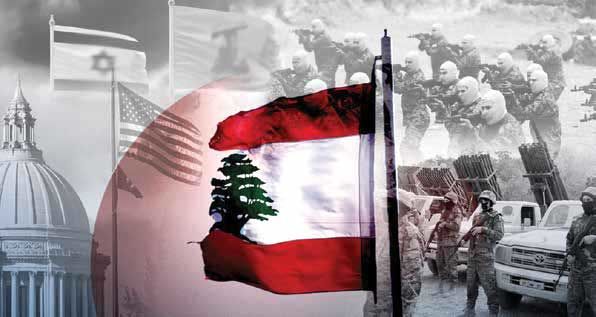
The Security Equation of Southern Lebanon for the Zionist Regime

Strategic Council Online – Opinion: American-Zionist objectives in the region are not limited to weakening Hezbollah. Efforts to disarm Iraqi resistance groups such as Kata’ib Hezbollah and the Popular Mobilization Forces are also part of their subsequent plans.

Commercial Exploitation of Peace; The Gaza Committee in Confrontation with International Legitimacy

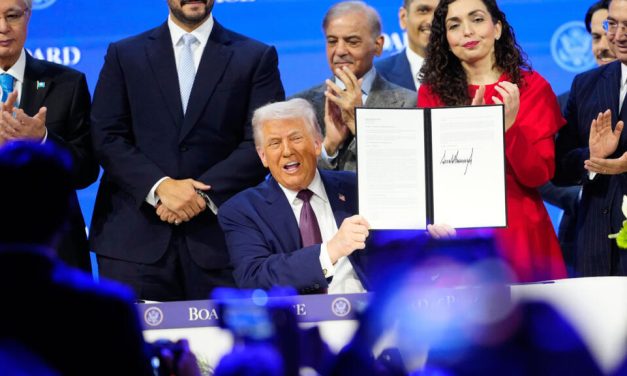
Strategic Council Online – Report: While the second phase of the implementation of the Gaza ceasefire has begun, the establishment of the “Peace Board” chaired by Donald Trump on the sidelines of the Davos meeting (22 January 2026) has become more than a technical mechanism for reconstruction and has turned into a test for the future of the international order.
Despite the signing of the charter by 22 out of 60 invited countries, the limited presence of global leaders at the Davos ceremony and the non-acceptance of this body by the European Union and key Western countries indicate a deep divide in global perceptions of the legitimacy of this mechanism.
In this report, drawing on the analysis of Hadi Borhani, a regional affairs expert, and international data, three strategic questions are addressed: Is the Peace Board an instrument for implementing UN Security Council Resolution 2803 or a substitute for the United Nations? How does the hierarchical architecture of this committee intensify executive challenges in Gaza? And finally, can this body create sustainable peace without the cooperation of Palestinians and with the concentration of power in the hands of a single individual?

America’s Zero-Sum Game in Iraq

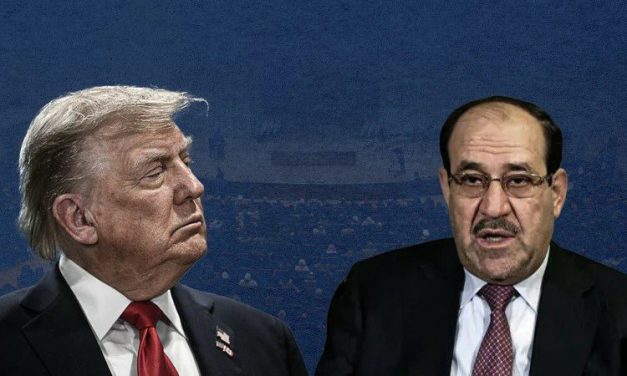
Online Strategic Council – Memoir: The swift selection of Nouri al-Maliki for the premiership constitutes a new phase in Iraq’s political sphere. Multiple factors have played a role in this process, the most important being the prevailing situation in Iraq and the region. Under such circumstances, Iraq requires a powerful and experienced prime minister who can keep the country away from the dangers of wars and crises.

America’s Strategy for Creating Tension in the Asia-Pacific

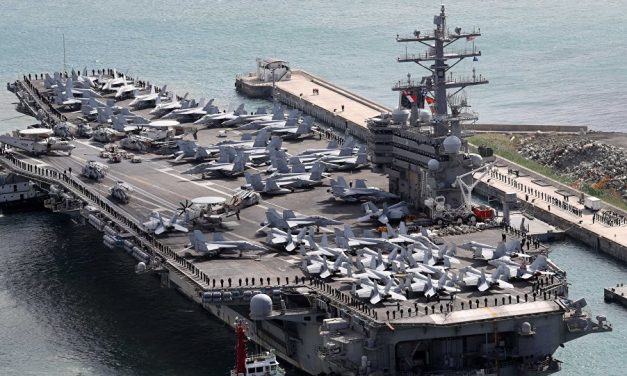
Strategic Council Online – Opinion: Relations between some countries in the Asia-Pacific region, such as China and Japan or China and Australia, which were previously relatively normal, are trending towards deterioration, and the primary reason for this is the aggressive policies of the United States of America.

Loading

Últimas publicaciones

The Security Equation of Southern Lebanon for the Zionist Regime

Strategic Council Online – Opinion: American-Zionist objectives in the region are not limited to weakening Hezbollah. Efforts to disarm Iraqi resistance groups such as Kata’ib Hezbollah and the Popular Mobilization Forces are also part of their subsequent plans.

Commercial Exploitation of Peace; The Gaza Committee in Confrontation with International Legitimacy

Strategic Council Online – Report: While the second phase of the implementation of the Gaza ceasefire has begun, the establishment of the “Peace Board” chaired by Donald Trump on the sidelines of the Davos meeting (22 January 2026) has become more than a technical mechanism for reconstruction and has turned into a test for the future of the international order.
Despite the signing of the charter by 22 out of 60 invited countries, the limited presence of global leaders at the Davos ceremony and the non-acceptance of this body by the European Union and key Western countries indicate a deep divide in global perceptions of the legitimacy of this mechanism.
In this report, drawing on the analysis of Hadi Borhani, a regional affairs expert, and international data, three strategic questions are addressed: Is the Peace Board an instrument for implementing UN Security Council Resolution 2803 or a substitute for the United Nations? How does the hierarchical architecture of this committee intensify executive challenges in Gaza? And finally, can this body create sustainable peace without the cooperation of Palestinians and with the concentration of power in the hands of a single individual?

America’s Zero-Sum Game in Iraq

Online Strategic Council – Memoir: The swift selection of Nouri al-Maliki for the premiership constitutes a new phase in Iraq’s political sphere. Multiple factors have played a role in this process, the most important being the prevailing situation in Iraq and the region. Under such circumstances, Iraq requires a powerful and experienced prime minister who can keep the country away from the dangers of wars and crises.

America’s Strategy for Creating Tension in the Asia-Pacific

Strategic Council Online – Opinion: Relations between some countries in the Asia-Pacific region, such as China and Japan or China and Australia, which were previously relatively normal, are trending towards deterioration, and the primary reason for this is the aggressive policies of the United States of America.

Loading

DERNIER CONTENU

The Security Equation of Southern Lebanon for the Zionist Regime

Strategic Council Online – Opinion: American-Zionist objectives in the region are not limited to weakening Hezbollah. Efforts to disarm Iraqi resistance groups such as Kata’ib Hezbollah and the Popular Mobilization Forces are also part of their subsequent plans.

Commercial Exploitation of Peace; The Gaza Committee in Confrontation with International Legitimacy

Strategic Council Online – Report: While the second phase of the implementation of the Gaza ceasefire has begun, the establishment of the “Peace Board” chaired by Donald Trump on the sidelines of the Davos meeting (22 January 2026) has become more than a technical mechanism for reconstruction and has turned into a test for the future of the international order.
Despite the signing of the charter by 22 out of 60 invited countries, the limited presence of global leaders at the Davos ceremony and the non-acceptance of this body by the European Union and key Western countries indicate a deep divide in global perceptions of the legitimacy of this mechanism.
In this report, drawing on the analysis of Hadi Borhani, a regional affairs expert, and international data, three strategic questions are addressed: Is the Peace Board an instrument for implementing UN Security Council Resolution 2803 or a substitute for the United Nations? How does the hierarchical architecture of this committee intensify executive challenges in Gaza? And finally, can this body create sustainable peace without the cooperation of Palestinians and with the concentration of power in the hands of a single individual?

America’s Zero-Sum Game in Iraq

Online Strategic Council – Memoir: The swift selection of Nouri al-Maliki for the premiership constitutes a new phase in Iraq’s political sphere. Multiple factors have played a role in this process, the most important being the prevailing situation in Iraq and the region. Under such circumstances, Iraq requires a powerful and experienced prime minister who can keep the country away from the dangers of wars and crises.

America’s Strategy for Creating Tension in the Asia-Pacific

Strategic Council Online – Opinion: Relations between some countries in the Asia-Pacific region, such as China and Japan or China and Australia, which were previously relatively normal, are trending towards deterioration, and the primary reason for this is the aggressive policies of the United States of America.

Loading

DERNIER CONTENU

The Security Equation of Southern Lebanon for the Zionist Regime

Strategic Council Online – Opinion: American-Zionist objectives in the region are not limited to weakening Hezbollah. Efforts to disarm Iraqi resistance groups such as Kata’ib Hezbollah and the Popular Mobilization Forces are also part of their subsequent plans.

Commercial Exploitation of Peace; The Gaza Committee in Confrontation with International Legitimacy

Strategic Council Online – Report: While the second phase of the implementation of the Gaza ceasefire has begun, the establishment of the “Peace Board” chaired by Donald Trump on the sidelines of the Davos meeting (22 January 2026) has become more than a technical mechanism for reconstruction and has turned into a test for the future of the international order.
Despite the signing of the charter by 22 out of 60 invited countries, the limited presence of global leaders at the Davos ceremony and the non-acceptance of this body by the European Union and key Western countries indicate a deep divide in global perceptions of the legitimacy of this mechanism.
In this report, drawing on the analysis of Hadi Borhani, a regional affairs expert, and international data, three strategic questions are addressed: Is the Peace Board an instrument for implementing UN Security Council Resolution 2803 or a substitute for the United Nations? How does the hierarchical architecture of this committee intensify executive challenges in Gaza? And finally, can this body create sustainable peace without the cooperation of Palestinians and with the concentration of power in the hands of a single individual?

America’s Zero-Sum Game in Iraq

Online Strategic Council – Memoir: The swift selection of Nouri al-Maliki for the premiership constitutes a new phase in Iraq’s political sphere. Multiple factors have played a role in this process, the most important being the prevailing situation in Iraq and the region. Under such circumstances, Iraq requires a powerful and experienced prime minister who can keep the country away from the dangers of wars and crises.

America’s Strategy for Creating Tension in the Asia-Pacific

Strategic Council Online – Opinion: Relations between some countries in the Asia-Pacific region, such as China and Japan or China and Australia, which were previously relatively normal, are trending towards deterioration, and the primary reason for this is the aggressive policies of the United States of America.

Loading

DERNIER CONTENU

The Security Equation of Southern Lebanon for the Zionist Regime

Strategic Council Online – Opinion: American-Zionist objectives in the region are not limited to weakening Hezbollah. Efforts to disarm Iraqi resistance groups such as Kata’ib Hezbollah and the Popular Mobilization Forces are also part of their subsequent plans.

Commercial Exploitation of Peace; The Gaza Committee in Confrontation with International Legitimacy

Strategic Council Online – Report: While the second phase of the implementation of the Gaza ceasefire has begun, the establishment of the “Peace Board” chaired by Donald Trump on the sidelines of the Davos meeting (22 January 2026) has become more than a technical mechanism for reconstruction and has turned into a test for the future of the international order.
Despite the signing of the charter by 22 out of 60 invited countries, the limited presence of global leaders at the Davos ceremony and the non-acceptance of this body by the European Union and key Western countries indicate a deep divide in global perceptions of the legitimacy of this mechanism.
In this report, drawing on the analysis of Hadi Borhani, a regional affairs expert, and international data, three strategic questions are addressed: Is the Peace Board an instrument for implementing UN Security Council Resolution 2803 or a substitute for the United Nations? How does the hierarchical architecture of this committee intensify executive challenges in Gaza? And finally, can this body create sustainable peace without the cooperation of Palestinians and with the concentration of power in the hands of a single individual?

America’s Zero-Sum Game in Iraq

Online Strategic Council – Memoir: The swift selection of Nouri al-Maliki for the premiership constitutes a new phase in Iraq’s political sphere. Multiple factors have played a role in this process, the most important being the prevailing situation in Iraq and the region. Under such circumstances, Iraq requires a powerful and experienced prime minister who can keep the country away from the dangers of wars and crises.

America’s Strategy for Creating Tension in the Asia-Pacific

Strategic Council Online – Opinion: Relations between some countries in the Asia-Pacific region, such as China and Japan or China and Australia, which were previously relatively normal, are trending towards deterioration, and the primary reason for this is the aggressive policies of the United States of America.

Loading