Consequences of New Iraqi Electoral System

2021/09/14 | interview, Politics, top news

Strategic Council Online - Interview: An expert on Iraq affairs commenting on the new election law of that country said: The new electoral system has allowed new and smaller political currents and independent candidates to have more maneuvering power and are likely to allocate part of the seats in the parliament to themselves. From this perspective too, the big traditional currents are likely to face a drop in the votes and a reduction in the seats in the parliament.

Dr. Ali Akbar Asadi, speaking in an interview with the website of the Strategic Council on Foreign Relations, noted: The new Iraqi election law was formed based on the new political and social developments and conditions in the country after October 2019. After the beginning of the protests and criticisms in October 2019, a serious current emerged in Iraq, which believed that the ruling political system, and especially the traditional and large political parties and currents that have ruled in Iraq since 2003, are facing high levels of corruption, have mismanagement and cannot provide the services and economic and livelihood demands that people expect from the governance.

Asadi continued: Accordingly, in their opinion, it was necessary to make a series of fundamental changes in the political structure and the electoral system.

Pointing out that one aspect of the demands of the protesters was related to changes in the constitution, the expert said: However, it should be noted that the change in the constitution faces serious challenges, and at least in the short and medium-term, not only it does not lead to positive results, but it can also have negative consequences.

Asadi stressed: Hence, such a trend more emphasized changing the government and holding early elections based on a new electoral system.

The expert on Iraq affairs defining the new electoral system said: The new electoral system is a system that makes the power and scope of the big traditional parties very limited compared to the previous periods. In the sense that in the past, in terms of constituencies, the whole country and then the provinces were considered as constituencies, but now the constituencies are much smaller and have reached more than 80 constituencies.

Noting that there are four to five seats in each of those constituencies, Asadi said: The result of this electoral system is that new political currents or some independent candidates have emerged and have grown significantly before the big traditional parties.

Therefore, the expert stressed that the hegemony and determination of the big parties have been greatly reduced and that those smaller parties and independent personalities, as in previous eras, do not have to stand by the big currents in order to have a vote.

Asadi also believes that as constituencies become smaller, local and regional space and preferences become very significant to national views, attitudes, and preferences, and in one constituency a tribal leader may be much more decisive than a party leader or a former official such as the prime minister.

He added: Given such issues, political figures, especially from among the Shiites, have not participated in the elections. They are worried that if they participate in a field, due to the prevalence of local preferences and views, they may lose to a local figure there, which could have negative consequences for them in terms of political prestige.

The expert on Iraq affairs also commented on the impact of the new election law on the election landscape and said: First of all, it should be noted that the political and social atmosphere that has developed in Iraq in recent years is a critical and protest atmosphere, which means that traditional parties and currents do not have the acceptance and legitimacy of previous periods, and from this perspective, most of such traditional currents may be faced with a series of obstacles in the continuity of the sovereignty, power-sharing, gaining parliamentary seats, and giving shape to the government.

He continued: The second point is that the new electoral system has allowed new and smaller political currents and independent candidates to have more maneuvering power and are likely to allocate part of the seats in the parliament to themselves. From this perspective too, the big traditional currents are likely to face a drop in votes and a reduction in the seats in the parliament.

In conclusion, Asadi stressed that in such a situation, it seems that the future parliament of Iraq will be a parliament with more pluralism and dispersion and power in the future political structure in a more dispersed and balanced way and with more ambiguities.
0 Comments

Submit a Comment

Your email address will not be published. Required fields are marked *

LATEST CONTENT

America’s Zero-Sum Game in Iraq

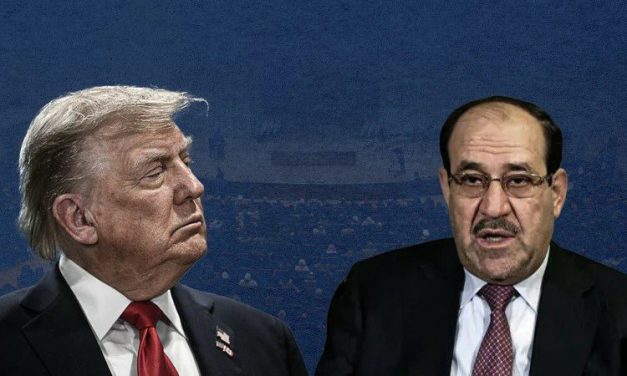
Online Strategic Council – Memoir: The swift selection of Nouri al-Maliki for the premiership constitutes a new phase in Iraq’s political sphere. Multiple factors have played a role in this process, the most important being the prevailing situation in Iraq and the region. Under such circumstances, Iraq requires a powerful and experienced prime minister who can keep the country away from the dangers of wars and crises.

America’s Strategy for Creating Tension in the Asia-Pacific

Strategic Council Online – Opinion: Relations between some countries in the Asia-Pacific region, such as China and Japan or China and Australia, which were previously relatively normal, are trending towards deterioration, and the primary reason for this is the aggressive policies of the United States of America.

The Collapse of the European Security Illusion with the Continuation of the Ukraine War?

Strategic Council Online – Interview: The Ukraine war has become a new turning point in the political, security, and even commercial relations of allies on both sides of the Atlantic. While this war is nearing its fourth year, many questions still remain regarding its future and its consequences; among them, will the continuation of the Ukraine war lead to the collapse of the European security illusion?

Is Greenland Pushing Europe Toward China?

Strategic Council Online – Interview: A European affairs expert believes that the seizure of Greenland will certainly weaken America’s relations with Europe and its allies. Donald Trump’s view is that he does not need these countries, but if Europe faces significant pressure from the United States, it is natural for it to move toward China.

Alarm Bells Sound for ISIS Revival in Syria: Threat to Iraq and West Asia

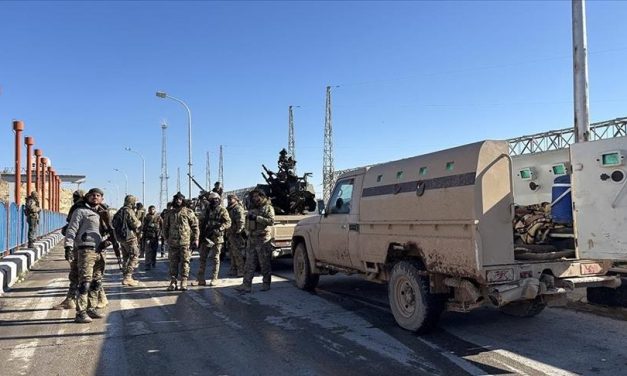
Strategic Council Online – Opinion: Numerous documents and pieces of evidence indicate that ISIS, which in recent years has been the region’s biggest threat to security and stability after the Zionist regime, has once again in recent months become a focal point for political and security exploitation by American and Zionist regime security, intelligence, and political circles.

Afghanistan’s Effective Role in the Economy of Eurasia

Strategic Council Online – Interview: A regional affairs researcher stated: Despite projects such as the Khaf-Herat railway and the Herat-Balkh-Mazar-i-Sharif corridor being on the agenda, insecurity and the absence of an inclusive government remain the most significant obstacles to realizing transit corridors and Afghanistan playing an effective role in the economy of Eurasia.

Loading

Últimas publicaciones

America’s Zero-Sum Game in Iraq

Online Strategic Council – Memoir: The swift selection of Nouri al-Maliki for the premiership constitutes a new phase in Iraq’s political sphere. Multiple factors have played a role in this process, the most important being the prevailing situation in Iraq and the region. Under such circumstances, Iraq requires a powerful and experienced prime minister who can keep the country away from the dangers of wars and crises.

America’s Strategy for Creating Tension in the Asia-Pacific

Strategic Council Online – Opinion: Relations between some countries in the Asia-Pacific region, such as China and Japan or China and Australia, which were previously relatively normal, are trending towards deterioration, and the primary reason for this is the aggressive policies of the United States of America.

The Collapse of the European Security Illusion with the Continuation of the Ukraine War?

Strategic Council Online – Interview: The Ukraine war has become a new turning point in the political, security, and even commercial relations of allies on both sides of the Atlantic. While this war is nearing its fourth year, many questions still remain regarding its future and its consequences; among them, will the continuation of the Ukraine war lead to the collapse of the European security illusion?

Is Greenland Pushing Europe Toward China?

Strategic Council Online – Interview: A European affairs expert believes that the seizure of Greenland will certainly weaken America’s relations with Europe and its allies. Donald Trump’s view is that he does not need these countries, but if Europe faces significant pressure from the United States, it is natural for it to move toward China.

Alarm Bells Sound for ISIS Revival in Syria: Threat to Iraq and West Asia

Strategic Council Online – Opinion: Numerous documents and pieces of evidence indicate that ISIS, which in recent years has been the region’s biggest threat to security and stability after the Zionist regime, has once again in recent months become a focal point for political and security exploitation by American and Zionist regime security, intelligence, and political circles.

Afghanistan’s Effective Role in the Economy of Eurasia

Strategic Council Online – Interview: A regional affairs researcher stated: Despite projects such as the Khaf-Herat railway and the Herat-Balkh-Mazar-i-Sharif corridor being on the agenda, insecurity and the absence of an inclusive government remain the most significant obstacles to realizing transit corridors and Afghanistan playing an effective role in the economy of Eurasia.

Loading

DERNIER CONTENU

America’s Zero-Sum Game in Iraq

Online Strategic Council – Memoir: The swift selection of Nouri al-Maliki for the premiership constitutes a new phase in Iraq’s political sphere. Multiple factors have played a role in this process, the most important being the prevailing situation in Iraq and the region. Under such circumstances, Iraq requires a powerful and experienced prime minister who can keep the country away from the dangers of wars and crises.

America’s Strategy for Creating Tension in the Asia-Pacific

Strategic Council Online – Opinion: Relations between some countries in the Asia-Pacific region, such as China and Japan or China and Australia, which were previously relatively normal, are trending towards deterioration, and the primary reason for this is the aggressive policies of the United States of America.

The Collapse of the European Security Illusion with the Continuation of the Ukraine War?

Strategic Council Online – Interview: The Ukraine war has become a new turning point in the political, security, and even commercial relations of allies on both sides of the Atlantic. While this war is nearing its fourth year, many questions still remain regarding its future and its consequences; among them, will the continuation of the Ukraine war lead to the collapse of the European security illusion?

Is Greenland Pushing Europe Toward China?

Strategic Council Online – Interview: A European affairs expert believes that the seizure of Greenland will certainly weaken America’s relations with Europe and its allies. Donald Trump’s view is that he does not need these countries, but if Europe faces significant pressure from the United States, it is natural for it to move toward China.

Alarm Bells Sound for ISIS Revival in Syria: Threat to Iraq and West Asia

Strategic Council Online – Opinion: Numerous documents and pieces of evidence indicate that ISIS, which in recent years has been the region’s biggest threat to security and stability after the Zionist regime, has once again in recent months become a focal point for political and security exploitation by American and Zionist regime security, intelligence, and political circles.

Afghanistan’s Effective Role in the Economy of Eurasia

Strategic Council Online – Interview: A regional affairs researcher stated: Despite projects such as the Khaf-Herat railway and the Herat-Balkh-Mazar-i-Sharif corridor being on the agenda, insecurity and the absence of an inclusive government remain the most significant obstacles to realizing transit corridors and Afghanistan playing an effective role in the economy of Eurasia.

Loading