Differences, Similarities of Trump-Biden Approach towards Zionist Regime

2021/06/26 | interview, Politics, top news

Strategic Council Online - An expert on US affairs, commenting on the role of the United States in supporting the Zionist regime and the differences between the policies of the White House in the Republican administration and the Democrats said: Despite the differences in the policies of Donald Trump and Joe Biden towards Tel Aviv, the Democratic administration remains committed to supporting Israel in the field of security; that is why Biden’s administration, despite differences with the Zionist regime in other areas, continues to define Israel’s security as a central principle in the area of military and financial support for itself.

Dr. Tahmoures Gholami, speaking in an interview with the website of the Strategic Council on Foreign Relations, stressed that US military support for Israel will cause the regime to pursue its regional policies with greater courage and in violation of the sovereignty of countries such as Lebanon and Syria, as well as attacks on the Palestinian people, especially in the Gaza Strip, adding: In other words, US political and military support for the Zionist regime has increased its freedom of action in pursuing risky policies.

Referring to the opposition within the US to the White House policies toward Israel, the expert on the US affairs said: Part of the American community opposes to the US policy towards Israel and believes in a serious review of those policies. Meanwhile, a great thinker like Stephen Walt also believes that the United States must end its costly policy of supporting Israel. In his point of view, the main root of the Arab and Islamic world opposition to the United States lies in Washington’s support for Tel Aviv.

Gholami also went on to examine the Zionist regime’s policies toward the United States, saying: The Zionist regime has always tried to keep the issue of its importance in the American political sphere trans-factional; this means that the Zionist regime has tried not to get too close to any of the presidents of the two American political parties, the Democrats and the Republicans, in order to always have the support of both parties.

Noting that for the first time in the 2012 US presidential election, Benjamin Netanyahu ignored this tradition and openly supported Republican presidential candidate Mitt Romney, he said: This same issue resulted in tension in the relations between Tel Aviv and Washington; as such that in the last weeks of his administration in 2016, Obama with no veto allowed approval of a Security Council resolution against the Zionist regime.

The expert on US affairs, saying that Israel’s support for Donald Trump’s presidency in 2016, added: So the regime received a lot of support from the United States during Trump’s four years in office. In addition to financial and military support, Trump moved the embassy from Tel Aviv to Holy Quds, agreed to Zionist settlements in the West Bank, and recognized the Golan Heights as part of Israeli territory.

He added: Trump also withdrew from the nuclear deal with Iran at Netanyahu’s request, endorsing Tel Aviv’s military action in Syria.

Referring to Joe Biden coming to power, Gholami said: During this period, the differences between the Zionist regime and the Democratic Party, which have existed since 2008, have once again manifested themselves. Despite the fact that more than a month had passed since Biden took office, he had refused to speak to Netanyahu by telephone.

According to the expert, following the opposition to Netanyahu’s policies, pro-Israel lobbies inside the United States supported Biden in the 2020 election campaign, and the voice of protest against the policies of the Zionist regime in the US House of Representatives became louder. In fact, the right atmosphere within the United States to critique the policies of the Zionist regime led Joe Biden to pursue a different policy than Trump.

Commenting on the differences between Trump and Biden on US-Israeli relations, Gholami said: Unlike Trump, Biden believes in the peace plan of the two states, has not accepted the Golan Heights as part of Israeli territory and despite the request of the Zionist regime, has begun negotiations with Iran for the revival of the Joint Comprehensive Plan of Action (JCPOA). Therefore, it can be said that during the Biden era, the level of differences between the United States and the Zionist regime will be intensified; in a way, this factor has led to the idea in the policies proclaimed by the Israeli political officials that Israel will act independently of the United States if necessary.

As for the view of the Israeli community on the coming to power of the Democrats, he said: On the threshold of the 2020 presidential election, part of the pro-Trump community in Israel was worried about Biden coming to power and believed that if Joe Biden would become the winner‌ the United States will leave the Zionist regime. In addition, part of the Israeli community attributes opposition of the Democrats to Israeli policies on Netanyahu’s breaking the tradition of officially supporting ,the Republican nominee in the 2012 US election.

The expert on the US affairs said: The reality is that the issue of the Zionist regime has now become not a trans-factional issue but a partisan issue within the United States. In other words, the Republican Party is committed to fully and comprehensively support Israel; on the other hand, the Democratic Party, although committed to ensuring Israel’s security, is extremely pessimistic about the regime’s policies at the regional level and its opposition to the JCPOA negotiations.
0 Comments

Submit a Comment

Your email address will not be published. Required fields are marked *

LATEST CONTENT

America’s Zero-Sum Game in Iraq

Online Strategic Council – Memoir: The swift selection of Nouri al-Maliki for the premiership constitutes a new phase in Iraq’s political sphere. Multiple factors have played a role in this process, the most important being the prevailing situation in Iraq and the region. Under such circumstances, Iraq requires a powerful and experienced prime minister who can keep the country away from the dangers of wars and crises.

America’s Strategy for Creating Tension in the Asia-Pacific

Strategic Council Online – Opinion: Relations between some countries in the Asia-Pacific region, such as China and Japan or China and Australia, which were previously relatively normal, are trending towards deterioration, and the primary reason for this is the aggressive policies of the United States of America.

The Collapse of the European Security Illusion with the Continuation of the Ukraine War?

Strategic Council Online – Interview: The Ukraine war has become a new turning point in the political, security, and even commercial relations of allies on both sides of the Atlantic. While this war is nearing its fourth year, many questions still remain regarding its future and its consequences; among them, will the continuation of the Ukraine war lead to the collapse of the European security illusion?

Is Greenland Pushing Europe Toward China?

Strategic Council Online – Interview: A European affairs expert believes that the seizure of Greenland will certainly weaken America’s relations with Europe and its allies. Donald Trump’s view is that he does not need these countries, but if Europe faces significant pressure from the United States, it is natural for it to move toward China.

Alarm Bells Sound for ISIS Revival in Syria: Threat to Iraq and West Asia

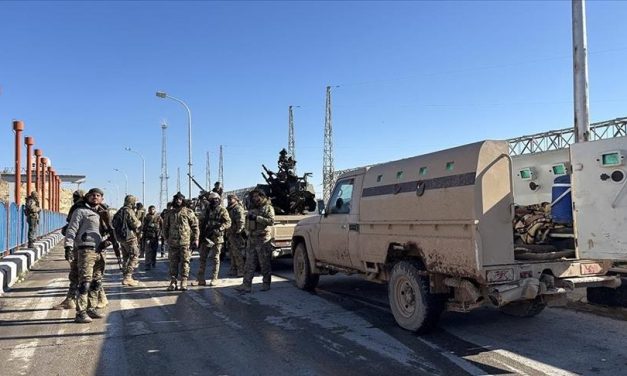
Strategic Council Online – Opinion: Numerous documents and pieces of evidence indicate that ISIS, which in recent years has been the region’s biggest threat to security and stability after the Zionist regime, has once again in recent months become a focal point for political and security exploitation by American and Zionist regime security, intelligence, and political circles.

Afghanistan’s Effective Role in the Economy of Eurasia

Strategic Council Online – Interview: A regional affairs researcher stated: Despite projects such as the Khaf-Herat railway and the Herat-Balkh-Mazar-i-Sharif corridor being on the agenda, insecurity and the absence of an inclusive government remain the most significant obstacles to realizing transit corridors and Afghanistan playing an effective role in the economy of Eurasia.

Loading

Últimas publicaciones

America’s Zero-Sum Game in Iraq

Online Strategic Council – Memoir: The swift selection of Nouri al-Maliki for the premiership constitutes a new phase in Iraq’s political sphere. Multiple factors have played a role in this process, the most important being the prevailing situation in Iraq and the region. Under such circumstances, Iraq requires a powerful and experienced prime minister who can keep the country away from the dangers of wars and crises.

America’s Strategy for Creating Tension in the Asia-Pacific

Strategic Council Online – Opinion: Relations between some countries in the Asia-Pacific region, such as China and Japan or China and Australia, which were previously relatively normal, are trending towards deterioration, and the primary reason for this is the aggressive policies of the United States of America.

The Collapse of the European Security Illusion with the Continuation of the Ukraine War?

Strategic Council Online – Interview: The Ukraine war has become a new turning point in the political, security, and even commercial relations of allies on both sides of the Atlantic. While this war is nearing its fourth year, many questions still remain regarding its future and its consequences; among them, will the continuation of the Ukraine war lead to the collapse of the European security illusion?

Is Greenland Pushing Europe Toward China?

Strategic Council Online – Interview: A European affairs expert believes that the seizure of Greenland will certainly weaken America’s relations with Europe and its allies. Donald Trump’s view is that he does not need these countries, but if Europe faces significant pressure from the United States, it is natural for it to move toward China.

Alarm Bells Sound for ISIS Revival in Syria: Threat to Iraq and West Asia

Strategic Council Online – Opinion: Numerous documents and pieces of evidence indicate that ISIS, which in recent years has been the region’s biggest threat to security and stability after the Zionist regime, has once again in recent months become a focal point for political and security exploitation by American and Zionist regime security, intelligence, and political circles.

Afghanistan’s Effective Role in the Economy of Eurasia

Strategic Council Online – Interview: A regional affairs researcher stated: Despite projects such as the Khaf-Herat railway and the Herat-Balkh-Mazar-i-Sharif corridor being on the agenda, insecurity and the absence of an inclusive government remain the most significant obstacles to realizing transit corridors and Afghanistan playing an effective role in the economy of Eurasia.

Loading

DERNIER CONTENU

America’s Zero-Sum Game in Iraq

Online Strategic Council – Memoir: The swift selection of Nouri al-Maliki for the premiership constitutes a new phase in Iraq’s political sphere. Multiple factors have played a role in this process, the most important being the prevailing situation in Iraq and the region. Under such circumstances, Iraq requires a powerful and experienced prime minister who can keep the country away from the dangers of wars and crises.

America’s Strategy for Creating Tension in the Asia-Pacific

Strategic Council Online – Opinion: Relations between some countries in the Asia-Pacific region, such as China and Japan or China and Australia, which were previously relatively normal, are trending towards deterioration, and the primary reason for this is the aggressive policies of the United States of America.

The Collapse of the European Security Illusion with the Continuation of the Ukraine War?

Strategic Council Online – Interview: The Ukraine war has become a new turning point in the political, security, and even commercial relations of allies on both sides of the Atlantic. While this war is nearing its fourth year, many questions still remain regarding its future and its consequences; among them, will the continuation of the Ukraine war lead to the collapse of the European security illusion?

Is Greenland Pushing Europe Toward China?

Strategic Council Online – Interview: A European affairs expert believes that the seizure of Greenland will certainly weaken America’s relations with Europe and its allies. Donald Trump’s view is that he does not need these countries, but if Europe faces significant pressure from the United States, it is natural for it to move toward China.

Alarm Bells Sound for ISIS Revival in Syria: Threat to Iraq and West Asia

Strategic Council Online – Opinion: Numerous documents and pieces of evidence indicate that ISIS, which in recent years has been the region’s biggest threat to security and stability after the Zionist regime, has once again in recent months become a focal point for political and security exploitation by American and Zionist regime security, intelligence, and political circles.

Afghanistan’s Effective Role in the Economy of Eurasia

Strategic Council Online – Interview: A regional affairs researcher stated: Despite projects such as the Khaf-Herat railway and the Herat-Balkh-Mazar-i-Sharif corridor being on the agenda, insecurity and the absence of an inclusive government remain the most significant obstacles to realizing transit corridors and Afghanistan playing an effective role in the economy of Eurasia.

Loading