India-China Rivalry in West Asia, Approach by Other Countries

2023/07/23 | Economy, interview, top news

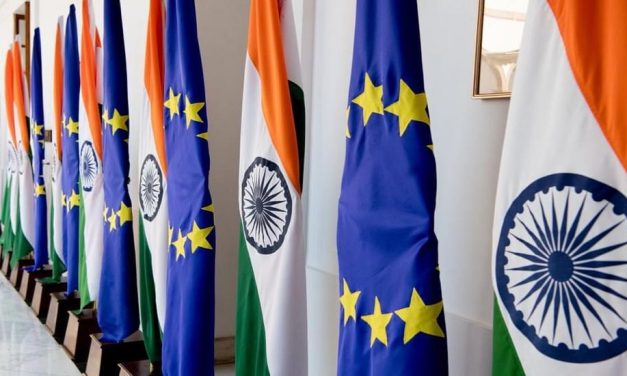
Strategic Council Online - Interview: The head of the Indian Subcontinent Desk at Jaraian Research Institute considered the view of that country on expanding relations with West Asian countries with economic and cultural objectives under the rivalry with China and said: India’s high economic growth has enlarged the middle class of that country and as a result has increased consumption and willingness to consume in that country and for this reason, India pays special attention to the hydrocarbon resources of West Asia.

In an interview with the website of the Strategic Council on Foreign Relations, Amin Rezaeinejad, while pointing to India’s efforts to strengthen relations with West Asian countries, stated that India pays attention to the benefits of corridors in this region and its hydrocarbon resources, and stated: Corridors in this region are important for India and this country tries to have a share in those directions; the recent developments have caused more attention to be paid to corridor issues in West Asia.

Referring to the report of the International Energy Agency that India will soon become the largest importer of fossil fuels after passing through China, he added: China is electrifying private and public cars at high speed, but on the other hand, the high economic growth of India has made the middle class of that country larger, as a result of which consumption and the desire to consume in that country has also increased. For this reason, India has a particular view of hydrocarbon resources. However, it has drawn a long-term vision for using green energy and is trying to become the world’s “hydrogen giant” in the future by using green energy.

The analyst of subcontinental issues referred to China’s efforts to increase its role and develop relations with West Asian countries as well as the rivalry between India and China in that region and said: In the current situation, China and India need to penetrate the West region for similar reasons. Countries of West Asia, Iran, and their neighbors should reduce the negative consequences of the rivalry between China and India in that region through understanding while achieving cooperation with each other. The approach of West Asian countries towards this rivalry is very important, as some countries are trying to make the most of the benefits of this regional rivalry without becoming part of it. The rivalry between India and China should not cause damage in West Asia but should create benefits in that region.

Recalling the many differences between India and China, especially in the border areas, Rezaeinejad said: Delhi is worried that China’s influence in West Asia, which can spread into various fields in the long run and become a cultural influence, will jeopardize India’s traditional foothold in that area. The relations of the people of the Indian Subcontinent have been tied with the people of West Asia for the past centuries, and the new conditions are considered a danger for India; because, in this case, they lose the lever of power.

The head of the Indian Subcontinent Desk in the Jaraian Research Institute stated that India is trying to establish cultural institutions, such as yoga training centers and Zen schools, and expand cultural relations in West Asian countries to maintain its sphere of influence regarding the escalation of violence taken by some Hindus towards Muslims in the past years, added: The issue of Muslims in India should be analyzed under two groups. Some Muslims in the mainland of India have not been assimilated and integrated, like those in the Kashmir region. Still, another group of Muslims consider themselves Indians and have been assimilated into the mainland of that country and have no problem with the central government.

Stating that since 2019, we have been witness to a reduction in tensions in Kashmir, the analyst of Subcontinental issues said: “Bharatiya Janata Party” is the political arm of a party with a vast cultural and social scope called “Hindu National Mobilization,” which is an extremist party and believes in the idea of “unified India” and considers the land from the middle of Iran to Thailand as its cultural domain. In some cases, the Bharatiya Party has not been able to control those extremists, and because it does not want to lose its social asset, it is forced to ignore its violence against Muslims in some cases. But during the dominance of the “Congress” party, which is a combination of Punjabi Hindus and Sikhs, we did not see concessions for Muslims, and both parties followed the approach of isolating the Muslim community in their macro politics.

According to Rezaeinejad: It should not be expected that with the departure of “Bharatiya Janata Party,” there will be a special opening for Muslims, while the pressure on Indian Muslims will not be more than what it is now; because India, due to the range of languages and the high number of ethnic groups and religions, does not have the tension to put more pressure on one group, and the increase in pressure will lead the country to collapse from within.

Emphasizing that India has a strong economic advantage over West Asian countries, he said: India can become a good importer of the products of this region. India also has an economic and cultural view of this region. In addition to economic interactions, the development of Indian cultural elements in the West Asian region cannot be ignored, and it should be considered in the field of cultural security. The expansion of the “religion of yoga” in the countries of this region, within the framework of sports and its impact on its cultural elements, is very significant. It is wrongly thought that yoga is only a sport; it is an intellectual system with its own prophet and system of thought.

The head of the Indian Subcontinent Desk at Jaraian Research Institute continued: Indian Muslims and Indian scholars who see themselves in a cultural confrontation with the ruling government in India and are under pressure to push Muslims towards Hinduism have many criticisms of the open arms of some Muslim countries for the religion of Yoga.
0 Comments

LATEST CONTENT

The Security Equation of Southern Lebanon for the Zionist Regime

Strategic Council Online – Opinion: American-Zionist objectives in the region are not limited to weakening Hezbollah. Efforts to disarm Iraqi resistance groups such as Kata’ib Hezbollah and the Popular Mobilization Forces are also part of their subsequent plans.

Commercial Exploitation of Peace; The Gaza Committee in Confrontation with International Legitimacy

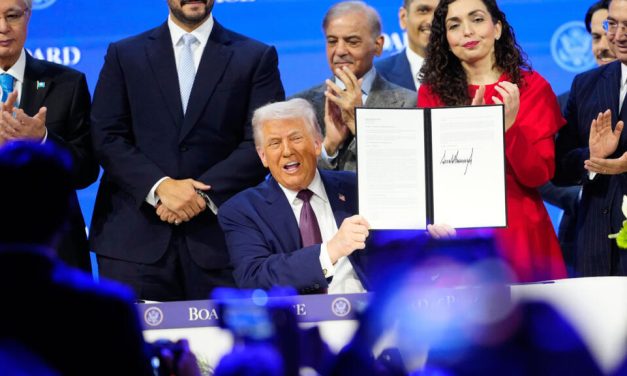
Strategic Council Online – Report: While the second phase of the implementation of the Gaza ceasefire has begun, the establishment of the “Peace Board” chaired by Donald Trump on the sidelines of the Davos meeting (22 January 2026) has become more than a technical mechanism for reconstruction and has turned into a test for the future of the international order.
Despite the signing of the charter by 22 out of 60 invited countries, the limited presence of global leaders at the Davos ceremony and the non-acceptance of this body by the European Union and key Western countries indicate a deep divide in global perceptions of the legitimacy of this mechanism.
In this report, drawing on the analysis of Hadi Borhani, a regional affairs expert, and international data, three strategic questions are addressed: Is the Peace Board an instrument for implementing UN Security Council Resolution 2803 or a substitute for the United Nations? How does the hierarchical architecture of this committee intensify executive challenges in Gaza? And finally, can this body create sustainable peace without the cooperation of Palestinians and with the concentration of power in the hands of a single individual?

America’s Zero-Sum Game in Iraq

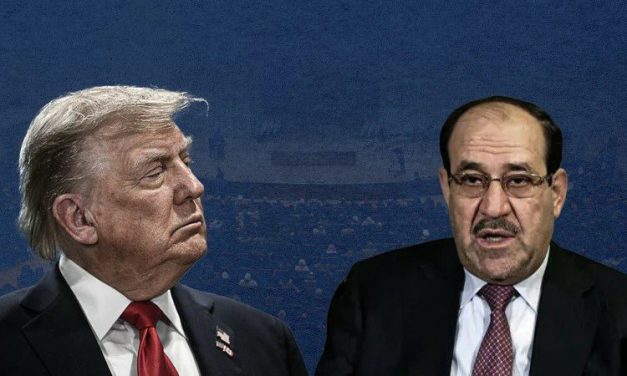
Online Strategic Council – Memoir: The swift selection of Nouri al-Maliki for the premiership constitutes a new phase in Iraq’s political sphere. Multiple factors have played a role in this process, the most important being the prevailing situation in Iraq and the region. Under such circumstances, Iraq requires a powerful and experienced prime minister who can keep the country away from the dangers of wars and crises.

America’s Strategy for Creating Tension in the Asia-Pacific

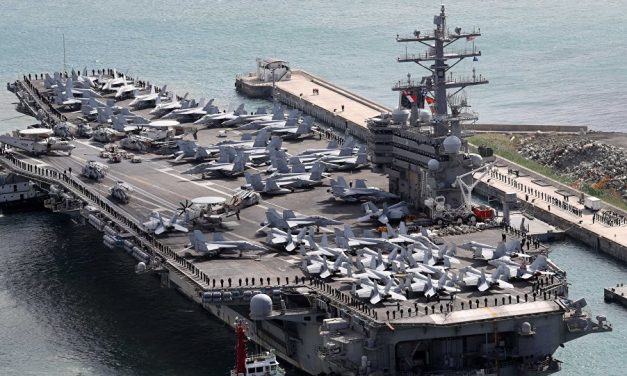
Strategic Council Online – Opinion: Relations between some countries in the Asia-Pacific region, such as China and Japan or China and Australia, which were previously relatively normal, are trending towards deterioration, and the primary reason for this is the aggressive policies of the United States of America.

Loading

Últimas publicaciones

The Security Equation of Southern Lebanon for the Zionist Regime

Strategic Council Online – Opinion: American-Zionist objectives in the region are not limited to weakening Hezbollah. Efforts to disarm Iraqi resistance groups such as Kata’ib Hezbollah and the Popular Mobilization Forces are also part of their subsequent plans.

Commercial Exploitation of Peace; The Gaza Committee in Confrontation with International Legitimacy

Strategic Council Online – Report: While the second phase of the implementation of the Gaza ceasefire has begun, the establishment of the “Peace Board” chaired by Donald Trump on the sidelines of the Davos meeting (22 January 2026) has become more than a technical mechanism for reconstruction and has turned into a test for the future of the international order.
Despite the signing of the charter by 22 out of 60 invited countries, the limited presence of global leaders at the Davos ceremony and the non-acceptance of this body by the European Union and key Western countries indicate a deep divide in global perceptions of the legitimacy of this mechanism.
In this report, drawing on the analysis of Hadi Borhani, a regional affairs expert, and international data, three strategic questions are addressed: Is the Peace Board an instrument for implementing UN Security Council Resolution 2803 or a substitute for the United Nations? How does the hierarchical architecture of this committee intensify executive challenges in Gaza? And finally, can this body create sustainable peace without the cooperation of Palestinians and with the concentration of power in the hands of a single individual?

America’s Zero-Sum Game in Iraq

Online Strategic Council – Memoir: The swift selection of Nouri al-Maliki for the premiership constitutes a new phase in Iraq’s political sphere. Multiple factors have played a role in this process, the most important being the prevailing situation in Iraq and the region. Under such circumstances, Iraq requires a powerful and experienced prime minister who can keep the country away from the dangers of wars and crises.

America’s Strategy for Creating Tension in the Asia-Pacific

Strategic Council Online – Opinion: Relations between some countries in the Asia-Pacific region, such as China and Japan or China and Australia, which were previously relatively normal, are trending towards deterioration, and the primary reason for this is the aggressive policies of the United States of America.

Loading

DERNIER CONTENU

The Security Equation of Southern Lebanon for the Zionist Regime

Strategic Council Online – Opinion: American-Zionist objectives in the region are not limited to weakening Hezbollah. Efforts to disarm Iraqi resistance groups such as Kata’ib Hezbollah and the Popular Mobilization Forces are also part of their subsequent plans.

Commercial Exploitation of Peace; The Gaza Committee in Confrontation with International Legitimacy

Strategic Council Online – Report: While the second phase of the implementation of the Gaza ceasefire has begun, the establishment of the “Peace Board” chaired by Donald Trump on the sidelines of the Davos meeting (22 January 2026) has become more than a technical mechanism for reconstruction and has turned into a test for the future of the international order.
Despite the signing of the charter by 22 out of 60 invited countries, the limited presence of global leaders at the Davos ceremony and the non-acceptance of this body by the European Union and key Western countries indicate a deep divide in global perceptions of the legitimacy of this mechanism.
In this report, drawing on the analysis of Hadi Borhani, a regional affairs expert, and international data, three strategic questions are addressed: Is the Peace Board an instrument for implementing UN Security Council Resolution 2803 or a substitute for the United Nations? How does the hierarchical architecture of this committee intensify executive challenges in Gaza? And finally, can this body create sustainable peace without the cooperation of Palestinians and with the concentration of power in the hands of a single individual?

America’s Zero-Sum Game in Iraq

Online Strategic Council – Memoir: The swift selection of Nouri al-Maliki for the premiership constitutes a new phase in Iraq’s political sphere. Multiple factors have played a role in this process, the most important being the prevailing situation in Iraq and the region. Under such circumstances, Iraq requires a powerful and experienced prime minister who can keep the country away from the dangers of wars and crises.

America’s Strategy for Creating Tension in the Asia-Pacific

Strategic Council Online – Opinion: Relations between some countries in the Asia-Pacific region, such as China and Japan or China and Australia, which were previously relatively normal, are trending towards deterioration, and the primary reason for this is the aggressive policies of the United States of America.

Loading

DERNIER CONTENU

The Security Equation of Southern Lebanon for the Zionist Regime

Strategic Council Online – Opinion: American-Zionist objectives in the region are not limited to weakening Hezbollah. Efforts to disarm Iraqi resistance groups such as Kata’ib Hezbollah and the Popular Mobilization Forces are also part of their subsequent plans.

Commercial Exploitation of Peace; The Gaza Committee in Confrontation with International Legitimacy

Strategic Council Online – Report: While the second phase of the implementation of the Gaza ceasefire has begun, the establishment of the “Peace Board” chaired by Donald Trump on the sidelines of the Davos meeting (22 January 2026) has become more than a technical mechanism for reconstruction and has turned into a test for the future of the international order.
Despite the signing of the charter by 22 out of 60 invited countries, the limited presence of global leaders at the Davos ceremony and the non-acceptance of this body by the European Union and key Western countries indicate a deep divide in global perceptions of the legitimacy of this mechanism.
In this report, drawing on the analysis of Hadi Borhani, a regional affairs expert, and international data, three strategic questions are addressed: Is the Peace Board an instrument for implementing UN Security Council Resolution 2803 or a substitute for the United Nations? How does the hierarchical architecture of this committee intensify executive challenges in Gaza? And finally, can this body create sustainable peace without the cooperation of Palestinians and with the concentration of power in the hands of a single individual?

America’s Zero-Sum Game in Iraq

Online Strategic Council – Memoir: The swift selection of Nouri al-Maliki for the premiership constitutes a new phase in Iraq’s political sphere. Multiple factors have played a role in this process, the most important being the prevailing situation in Iraq and the region. Under such circumstances, Iraq requires a powerful and experienced prime minister who can keep the country away from the dangers of wars and crises.

America’s Strategy for Creating Tension in the Asia-Pacific

Strategic Council Online – Opinion: Relations between some countries in the Asia-Pacific region, such as China and Japan or China and Australia, which were previously relatively normal, are trending towards deterioration, and the primary reason for this is the aggressive policies of the United States of America.

Loading

DERNIER CONTENU

The Security Equation of Southern Lebanon for the Zionist Regime

Strategic Council Online – Opinion: American-Zionist objectives in the region are not limited to weakening Hezbollah. Efforts to disarm Iraqi resistance groups such as Kata’ib Hezbollah and the Popular Mobilization Forces are also part of their subsequent plans.

Commercial Exploitation of Peace; The Gaza Committee in Confrontation with International Legitimacy

Strategic Council Online – Report: While the second phase of the implementation of the Gaza ceasefire has begun, the establishment of the “Peace Board” chaired by Donald Trump on the sidelines of the Davos meeting (22 January 2026) has become more than a technical mechanism for reconstruction and has turned into a test for the future of the international order.
Despite the signing of the charter by 22 out of 60 invited countries, the limited presence of global leaders at the Davos ceremony and the non-acceptance of this body by the European Union and key Western countries indicate a deep divide in global perceptions of the legitimacy of this mechanism.
In this report, drawing on the analysis of Hadi Borhani, a regional affairs expert, and international data, three strategic questions are addressed: Is the Peace Board an instrument for implementing UN Security Council Resolution 2803 or a substitute for the United Nations? How does the hierarchical architecture of this committee intensify executive challenges in Gaza? And finally, can this body create sustainable peace without the cooperation of Palestinians and with the concentration of power in the hands of a single individual?

America’s Zero-Sum Game in Iraq

Online Strategic Council – Memoir: The swift selection of Nouri al-Maliki for the premiership constitutes a new phase in Iraq’s political sphere. Multiple factors have played a role in this process, the most important being the prevailing situation in Iraq and the region. Under such circumstances, Iraq requires a powerful and experienced prime minister who can keep the country away from the dangers of wars and crises.

America’s Strategy for Creating Tension in the Asia-Pacific

Strategic Council Online – Opinion: Relations between some countries in the Asia-Pacific region, such as China and Japan or China and Australia, which were previously relatively normal, are trending towards deterioration, and the primary reason for this is the aggressive policies of the United States of America.

Loading