Japan-China Tensions Over Taiwan

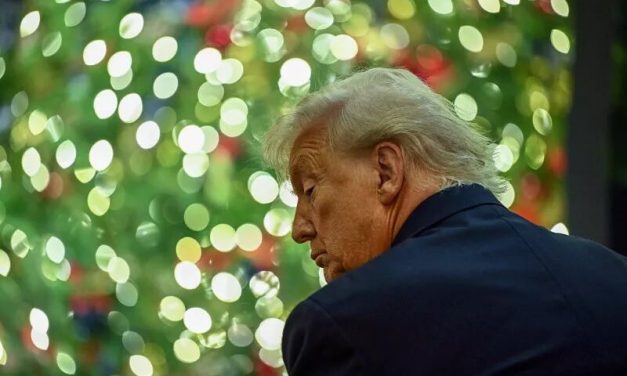
Strategic Council Online - Interview: An international affairs expert said that U.S. President Donald Trump, in a phone call this week with Sanae Takaichi, asked her not to further escalate disputes with China. Earlier this month, Takaichi created a rare tension with Beijing by stating that "a potential Chinese attack on Taiwan could lead to military action by Japan," remarks that drew a sharp reaction from China. Beijing demanded that she retract these statements, but the Japanese Prime Minister has not done so thus far, and Tokyo has only emphasized that its policy regarding Taiwan has not changed.

Seyed Reza Mirtaher, in an interview with the website of the Strategic Council on Foreign Relations, stated: “The request from U.S. President Donald Trump to the Japanese Prime Minister to reduce disputes and tensions with China is largely because Washington is concerned that escalating tensions between Japan and China could lead to a broader security, trade, and economic crisis in the Asia-Pacific region.”

He elaborated: “One of the primary and most important reasons for Trump’s concern is that provocative actions by Japan could push China towards severe economic, political, and military reactions. Indeed, we have witnessed that both the Japanese ambassador to China was summoned and China halted imports of certain goods from Japan, such as seafood, and even advised its citizens not to travel to Japan, which is considered a strong reaction from China.”

According to Mirtaher, the second reason is that Trump himself wants to take charge of managing U.S.-China relations. Certainly, the entry of a new actor like Japan, which acts as a disruptor in this context, complicates the game for the United States and makes its management more difficult.

The expert continued: “Moreover, it should be noted that although the United States is Taiwan’s main ally, it does not want the current Taiwan crisis to turn into a direct confrontation between China and its allies. Because if any conflict arises between China and Japan, the United States would inevitably have to intervene militarily.”

When asked whether this policy is a temporary tactic from Washington, he explained: “The United States generally seeks to pursue a containment or encirclement policy in the Asia-Pacific region, similar to what it does with Russia in Europe through NATO expansion to the east, by forming alliances such as AUKUS (including Australia, the United Kingdom, and the United States) and the Quad (including India, Japan, Australia, and the United States).” The international affairs expert added: “On the other hand, the United States is also seeking to militarily strengthen its regional allies, such as South Korea or Japan, so that they can, alongside the United States and Australia, in the southern flank, i.e., the Oceania region, prevent China’s military and security geopolitical expansion, especially in the South China Sea.”

Regarding the Japanese Prime Minister’s stance, Mirtaher said: “The stance taken by the Japanese Prime Minister was unexpected and somewhat hasty. His behavior and actions during Trump’s visit to Japan also showed that he is completely captivated by Trump. Therefore, it can be said that the stance he took was more to please the U.S. President.” He continued: “In any case, the recent stance of the Japanese Prime Minister was a sharp and unexpected one. Because the issue of U.S.-China confrontation over Taiwan was not related to Japan for it to take a stance, and such a strong and explicit one at that.”

According to Mirtaher, Japan has gradually changed its defense and military policies in recent years, and an important development in this regard was the first export of the Patriot system to the United States since World War II. This system was built under license in Japan, and the Americans, due to their warmongering in the West Asia region, especially during the 12-day war, consumed many Patriots, and Japan, for the first time, exported Patriot missiles to the United States.

The international affairs expert also explained Japan’s military strategy: “This country is seeking both to change its military strategy and its constitution so that it can deploy forces, purchase, and use offensive weapons. All of this together indicates that Japan gradually wants to emerge from its defensive and isolated shell and play an active and aggressive role within the framework of the U.S. regional strategy in its surrounding area.”
0 Comments

LATEST CONTENT

An Analysis of Iran’s Missile Capability

Strategic Council Online – Interview: A strategic affairs analyst said: Iran’s missile doctrine is not only part of its deterrent capability but also part of the security identity of the Islamic Republic of Iran and should not be weakened.

Japan-China Tensions Over Taiwan

Strategic Council Online – Interview: An international affairs expert said that U.S. President Donald Trump, in a phone call this week with Sanae Takaichi, asked her not to further escalate disputes with China. Earlier this month, Takaichi created a rare tension with Beijing by stating that “a potential Chinese attack on Taiwan could lead to military action by Japan,” remarks that drew a sharp reaction from China. Beijing demanded that she retract these statements, but the Japanese Prime Minister has not done so thus far, and Tokyo has only emphasized that its policy regarding Taiwan has not changed.

A Look at bin Salman’s Recent Trip to America

Strategic Council Online – Opinion: The recent trip of the Saudi Crown Prince to America was a targeted effort to solidify the strategic partnership with Washington, reduce political uncertainties, and strengthen Riyadh’s political role-playing.

Creating the Right Narrative: A Principled Strategy for Countering the Enemy’s Soft War

Strategic Council Online – Interview: A media expert stated: Given the intensification of the West’s soft war and psychological operations against Iran, our country’s primary strategy must be based on public education, strengthening national cohesion, developing international media, and countering the distortion of history through creating the right narrative.

F-35 Sale to Saudi Arabia: From Promise to Reality

Strategic Council Online – Interview: An international affairs analyst said: The issue of selling the F-35 to Saudi Arabia is not merely a military case, but rather part of a regional engineering that Washington is trying to advance.

Caspian Sea Water Level Drop; A Geopolitical Harm for Coastal Countries

Strategic Council Online – Interview: An expert in geopolitics stated, “The unprecedented drop in the Caspian Sea water level is not only an environmental threat but also a geopolitical alarm bell for Iran and the coastal countries, requiring urgent multilateral cooperation.”

Loading

Últimas publicaciones

An Analysis of Iran’s Missile Capability

Strategic Council Online – Interview: A strategic affairs analyst said: Iran’s missile doctrine is not only part of its deterrent capability but also part of the security identity of the Islamic Republic of Iran and should not be weakened.

Japan-China Tensions Over Taiwan

Strategic Council Online – Interview: An international affairs expert said that U.S. President Donald Trump, in a phone call this week with Sanae Takaichi, asked her not to further escalate disputes with China. Earlier this month, Takaichi created a rare tension with Beijing by stating that “a potential Chinese attack on Taiwan could lead to military action by Japan,” remarks that drew a sharp reaction from China. Beijing demanded that she retract these statements, but the Japanese Prime Minister has not done so thus far, and Tokyo has only emphasized that its policy regarding Taiwan has not changed.

A Look at bin Salman’s Recent Trip to America

Strategic Council Online – Opinion: The recent trip of the Saudi Crown Prince to America was a targeted effort to solidify the strategic partnership with Washington, reduce political uncertainties, and strengthen Riyadh’s political role-playing.

Creating the Right Narrative: A Principled Strategy for Countering the Enemy’s Soft War

Strategic Council Online – Interview: A media expert stated: Given the intensification of the West’s soft war and psychological operations against Iran, our country’s primary strategy must be based on public education, strengthening national cohesion, developing international media, and countering the distortion of history through creating the right narrative.

F-35 Sale to Saudi Arabia: From Promise to Reality

Strategic Council Online – Interview: An international affairs analyst said: The issue of selling the F-35 to Saudi Arabia is not merely a military case, but rather part of a regional engineering that Washington is trying to advance.

Caspian Sea Water Level Drop; A Geopolitical Harm for Coastal Countries

Strategic Council Online – Interview: An expert in geopolitics stated, “The unprecedented drop in the Caspian Sea water level is not only an environmental threat but also a geopolitical alarm bell for Iran and the coastal countries, requiring urgent multilateral cooperation.”

Loading

DERNIER CONTENU

An Analysis of Iran’s Missile Capability

Strategic Council Online – Interview: A strategic affairs analyst said: Iran’s missile doctrine is not only part of its deterrent capability but also part of the security identity of the Islamic Republic of Iran and should not be weakened.

Japan-China Tensions Over Taiwan

Strategic Council Online – Interview: An international affairs expert said that U.S. President Donald Trump, in a phone call this week with Sanae Takaichi, asked her not to further escalate disputes with China. Earlier this month, Takaichi created a rare tension with Beijing by stating that “a potential Chinese attack on Taiwan could lead to military action by Japan,” remarks that drew a sharp reaction from China. Beijing demanded that she retract these statements, but the Japanese Prime Minister has not done so thus far, and Tokyo has only emphasized that its policy regarding Taiwan has not changed.

A Look at bin Salman’s Recent Trip to America

Strategic Council Online – Opinion: The recent trip of the Saudi Crown Prince to America was a targeted effort to solidify the strategic partnership with Washington, reduce political uncertainties, and strengthen Riyadh’s political role-playing.

Creating the Right Narrative: A Principled Strategy for Countering the Enemy’s Soft War

Strategic Council Online – Interview: A media expert stated: Given the intensification of the West’s soft war and psychological operations against Iran, our country’s primary strategy must be based on public education, strengthening national cohesion, developing international media, and countering the distortion of history through creating the right narrative.

F-35 Sale to Saudi Arabia: From Promise to Reality

Strategic Council Online – Interview: An international affairs analyst said: The issue of selling the F-35 to Saudi Arabia is not merely a military case, but rather part of a regional engineering that Washington is trying to advance.

Caspian Sea Water Level Drop; A Geopolitical Harm for Coastal Countries

Strategic Council Online – Interview: An expert in geopolitics stated, “The unprecedented drop in the Caspian Sea water level is not only an environmental threat but also a geopolitical alarm bell for Iran and the coastal countries, requiring urgent multilateral cooperation.”

Loading