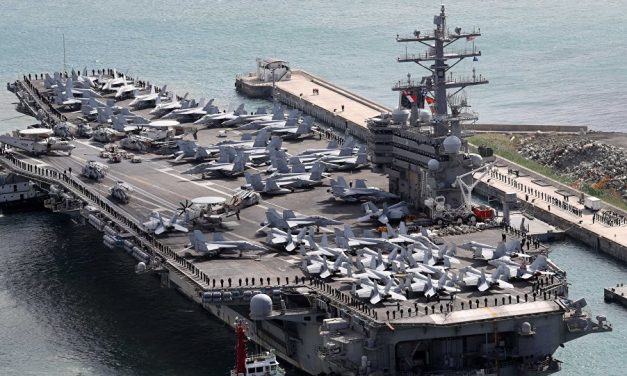
Hossein Akbari, in an interview with the website of the Strategic Council on Foreign Relations, referred to the published news that some Arab states are trying to create a Middle East NATO with the support of the United States, noted: The Arab NATO debate has been raised for a long time, and even in 2011, this issue was seriously raised by the Arab countries for the defense of regions that were affected by the developments of the Islamic Awakening and meetings were held by the Arab League; but the United States openly opposed its formation.
Saying that the United States and the Zionist regime are highly afraid of the unity of the Islamic world and the creation of any organization with such orientation, he added: What was discussed at the Sharm el-Sheikh meeting under the title of the formation of “Arab NATO” with the presence of the United States and the Zionist regime, is more propaganda and media maneuvers of the Israelis who want to show that Arab countries have aligned with them and they have solved their problems with the Islamic World.
The expert on West Asia affairs pointed to the chaotic internal conditions of the Zionist regime and the defeats it has suffered against the Resistance and continued: Before Biden’s trip to Saudi Arabia, the Zionist regime is trying its best to make it look like there are agreements to establish relations between Tel Aviv and Riyadh and negotiations for this purpose have already been finalized; therefore, other countries should also join this camp and after that, a joint power in terms of military and politics will be formed against the Resistance.
Akbari emphasized: The US has stripped the Arab states of their wealth, honor and dignity, yet it has not succeeded in providing security for them, and although they entered every project with all their might, they have only tasted defeat. What different action do they want to take now? Can it support Saudi Arabia against Yemen or give guarantees to some Arab countries such as the UAE that it will defend them with its military power and security and international power? The United States has been unable to support those countries against Yemen, which is completely besieged and does not have military power and advanced defense technology. Now, in the same situation, Yemen has a double defense power.
Saying that the Zionist regime is facing serious threats from inside of the occupied Palestine and its threats are not merely external, he noted: Under the current situation, even if the Arab NATO is formed, what help can it give to this regime.
The former Iranian ambassador in Libya reminded: Can the coalition that is proposed as the “Arab NATO” be stronger than the one that went to war against Bashar Assad in Syria in terms of the number of manpower and weapons and military technology? They were defeated in that field, in a situation where Syria was completely weak.
Akbari added: It seems that their main issue is to be able to create an ability against Iranian missiles, drones and the regional power of the Resistance Front; but it should be kept in mind for those who failed in Syria and are now extremely vulnerable in Iraq, and their bases in the region are severely endangered, and the United States, which has experienced numerous failures in West Asia and finds itself under pressure from China and Russia, that what capability can the formation of a military coalition add?
The expert on West Asia affairs said: What is being proposed as the Arab NATO is a political maneuver to get out of the passive state to show that they are in a position of power. While the Arab countries were in alliance with the United States and the Israeli regime until now and cooperated and supported and had defined various joint projects. Even such relations have been stronger than what is formed in NATO, but it has not been able to change the power equation.
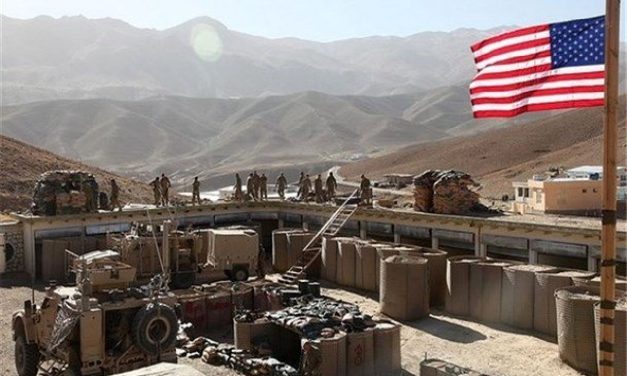
Referring to some analyzes regarding the US strategy to create a coalition that provides its interests by proxy in the Middle East, in a situation where it is forced to increase its focus on East Asia, he clarified: The United States spent all its energy with its direct presence in the Middle East and failed to achieve certain goals it intended to achieve, how can it vicariously pursue those goals better than what they were before? The United States sent a huge amount of weapons and military bases to the region and made them available to the Arab countries, but now the situation has not progressed as planned and has failed; at the same time, the experience of Afghanistan cannot be ignored.
Akbari pointed to the disputes of the Arab countries and their fundamental differences in strategy and interests regarding various issues and added: The Arab countries of the region have lost the trust they had in the United States before. They are sure that the US does not have the strength of the past and they must think independently to ensure their security. Just as Europe has come to this belief, but it is unable to act. Certainly, the importance of Europe’s solidarity and alliance is more strategic for the US than the Arab countries of the Middle East. Arab countries are witnessing the experience of Europe.
The former Iranian diplomat emphasized: the political maneuver that the Americans are doing under the title of “Arab NATO” is because they are very worried about the developments outside the West Asian region and they think that they should manage the situation in the Middle East to deal with their external and internal crises. In fact, the United States is trying to reduce its conflicts in other regions and the Zionist regime is also trying to secure its surrounding environment with regard to internal crises.
Strategic Dimensions, Implications of US Middle Eastern NATO Plan

LATEST CONTENT
Commercial Exploitation of Peace; The Gaza Committee in Confrontation with International Legitimacy
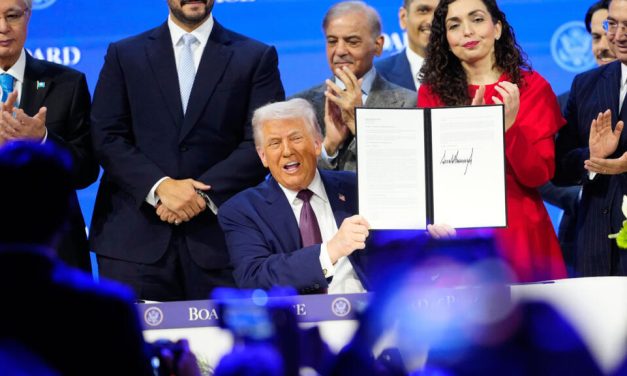
Strategic Council Online – Report: While the second phase of the implementation of the Gaza ceasefire has begun, the establishment of the “Peace Board” chaired by Donald Trump on the sidelines of the Davos meeting (22 January 2026) has become more than a technical mechanism for reconstruction and has turned into a test for the future of the international order.
Despite the signing of the charter by 22 out of 60 invited countries, the limited presence of global leaders at the Davos ceremony and the non-acceptance of this body by the European Union and key Western countries indicate a deep divide in global perceptions of the legitimacy of this mechanism.
In this report, drawing on the analysis of Hadi Borhani, a regional affairs expert, and international data, three strategic questions are addressed: Is the Peace Board an instrument for implementing UN Security Council Resolution 2803 or a substitute for the United Nations? How does the hierarchical architecture of this committee intensify executive challenges in Gaza? And finally, can this body create sustainable peace without the cooperation of Palestinians and with the concentration of power in the hands of a single individual?
America’s Zero-Sum Game in Iraq
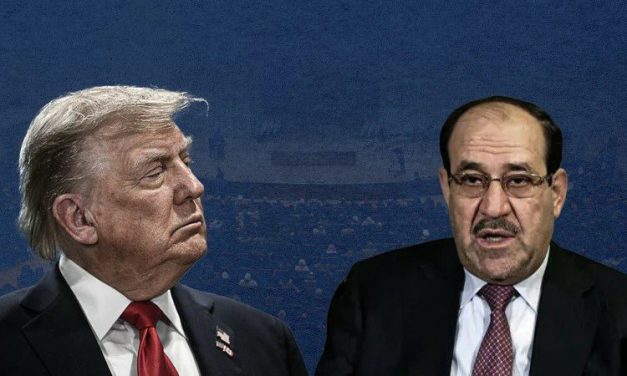
Online Strategic Council – Memoir: The swift selection of Nouri al-Maliki for the premiership constitutes a new phase in Iraq’s political sphere. Multiple factors have played a role in this process, the most important being the prevailing situation in Iraq and the region. Under such circumstances, Iraq requires a powerful and experienced prime minister who can keep the country away from the dangers of wars and crises.
America’s Strategy for Creating Tension in the Asia-Pacific
Strategic Council Online – Opinion: Relations between some countries in the Asia-Pacific region, such as China and Japan or China and Australia, which were previously relatively normal, are trending towards deterioration, and the primary reason for this is the aggressive policies of the United States of America.
The Gradual Formation of a New International Order Based on Competition Among Major Powers
Strategic Council Online – Interview: An international affairs expert stated that the decline of the liberal international order began in 2008. Although the liberal international order still governs international relations, an order is emerging to replace it, based on competition among major powers.
Últimas publicaciones
Commercial Exploitation of Peace; The Gaza Committee in Confrontation with International Legitimacy
Strategic Council Online – Report: While the second phase of the implementation of the Gaza ceasefire has begun, the establishment of the “Peace Board” chaired by Donald Trump on the sidelines of the Davos meeting (22 January 2026) has become more than a technical mechanism for reconstruction and has turned into a test for the future of the international order.
Despite the signing of the charter by 22 out of 60 invited countries, the limited presence of global leaders at the Davos ceremony and the non-acceptance of this body by the European Union and key Western countries indicate a deep divide in global perceptions of the legitimacy of this mechanism.
In this report, drawing on the analysis of Hadi Borhani, a regional affairs expert, and international data, three strategic questions are addressed: Is the Peace Board an instrument for implementing UN Security Council Resolution 2803 or a substitute for the United Nations? How does the hierarchical architecture of this committee intensify executive challenges in Gaza? And finally, can this body create sustainable peace without the cooperation of Palestinians and with the concentration of power in the hands of a single individual?
America’s Zero-Sum Game in Iraq
Online Strategic Council – Memoir: The swift selection of Nouri al-Maliki for the premiership constitutes a new phase in Iraq’s political sphere. Multiple factors have played a role in this process, the most important being the prevailing situation in Iraq and the region. Under such circumstances, Iraq requires a powerful and experienced prime minister who can keep the country away from the dangers of wars and crises.
America’s Strategy for Creating Tension in the Asia-Pacific
Strategic Council Online – Opinion: Relations between some countries in the Asia-Pacific region, such as China and Japan or China and Australia, which were previously relatively normal, are trending towards deterioration, and the primary reason for this is the aggressive policies of the United States of America.
The Gradual Formation of a New International Order Based on Competition Among Major Powers
Strategic Council Online – Interview: An international affairs expert stated that the decline of the liberal international order began in 2008. Although the liberal international order still governs international relations, an order is emerging to replace it, based on competition among major powers.
DERNIER CONTENU
Commercial Exploitation of Peace; The Gaza Committee in Confrontation with International Legitimacy
Strategic Council Online – Report: While the second phase of the implementation of the Gaza ceasefire has begun, the establishment of the “Peace Board” chaired by Donald Trump on the sidelines of the Davos meeting (22 January 2026) has become more than a technical mechanism for reconstruction and has turned into a test for the future of the international order.
Despite the signing of the charter by 22 out of 60 invited countries, the limited presence of global leaders at the Davos ceremony and the non-acceptance of this body by the European Union and key Western countries indicate a deep divide in global perceptions of the legitimacy of this mechanism.
In this report, drawing on the analysis of Hadi Borhani, a regional affairs expert, and international data, three strategic questions are addressed: Is the Peace Board an instrument for implementing UN Security Council Resolution 2803 or a substitute for the United Nations? How does the hierarchical architecture of this committee intensify executive challenges in Gaza? And finally, can this body create sustainable peace without the cooperation of Palestinians and with the concentration of power in the hands of a single individual?
America’s Zero-Sum Game in Iraq
Online Strategic Council – Memoir: The swift selection of Nouri al-Maliki for the premiership constitutes a new phase in Iraq’s political sphere. Multiple factors have played a role in this process, the most important being the prevailing situation in Iraq and the region. Under such circumstances, Iraq requires a powerful and experienced prime minister who can keep the country away from the dangers of wars and crises.
America’s Strategy for Creating Tension in the Asia-Pacific
Strategic Council Online – Opinion: Relations between some countries in the Asia-Pacific region, such as China and Japan or China and Australia, which were previously relatively normal, are trending towards deterioration, and the primary reason for this is the aggressive policies of the United States of America.
The Gradual Formation of a New International Order Based on Competition Among Major Powers
Strategic Council Online – Interview: An international affairs expert stated that the decline of the liberal international order began in 2008. Although the liberal international order still governs international relations, an order is emerging to replace it, based on competition among major powers.
DERNIER CONTENU
Commercial Exploitation of Peace; The Gaza Committee in Confrontation with International Legitimacy
Strategic Council Online – Report: While the second phase of the implementation of the Gaza ceasefire has begun, the establishment of the “Peace Board” chaired by Donald Trump on the sidelines of the Davos meeting (22 January 2026) has become more than a technical mechanism for reconstruction and has turned into a test for the future of the international order.
Despite the signing of the charter by 22 out of 60 invited countries, the limited presence of global leaders at the Davos ceremony and the non-acceptance of this body by the European Union and key Western countries indicate a deep divide in global perceptions of the legitimacy of this mechanism.
In this report, drawing on the analysis of Hadi Borhani, a regional affairs expert, and international data, three strategic questions are addressed: Is the Peace Board an instrument for implementing UN Security Council Resolution 2803 or a substitute for the United Nations? How does the hierarchical architecture of this committee intensify executive challenges in Gaza? And finally, can this body create sustainable peace without the cooperation of Palestinians and with the concentration of power in the hands of a single individual?
America’s Zero-Sum Game in Iraq
Online Strategic Council – Memoir: The swift selection of Nouri al-Maliki for the premiership constitutes a new phase in Iraq’s political sphere. Multiple factors have played a role in this process, the most important being the prevailing situation in Iraq and the region. Under such circumstances, Iraq requires a powerful and experienced prime minister who can keep the country away from the dangers of wars and crises.
America’s Strategy for Creating Tension in the Asia-Pacific
Strategic Council Online – Opinion: Relations between some countries in the Asia-Pacific region, such as China and Japan or China and Australia, which were previously relatively normal, are trending towards deterioration, and the primary reason for this is the aggressive policies of the United States of America.
The Gradual Formation of a New International Order Based on Competition Among Major Powers
Strategic Council Online – Interview: An international affairs expert stated that the decline of the liberal international order began in 2008. Although the liberal international order still governs international relations, an order is emerging to replace it, based on competition among major powers.
DERNIER CONTENU
Commercial Exploitation of Peace; The Gaza Committee in Confrontation with International Legitimacy
Strategic Council Online – Report: While the second phase of the implementation of the Gaza ceasefire has begun, the establishment of the “Peace Board” chaired by Donald Trump on the sidelines of the Davos meeting (22 January 2026) has become more than a technical mechanism for reconstruction and has turned into a test for the future of the international order.
Despite the signing of the charter by 22 out of 60 invited countries, the limited presence of global leaders at the Davos ceremony and the non-acceptance of this body by the European Union and key Western countries indicate a deep divide in global perceptions of the legitimacy of this mechanism.
In this report, drawing on the analysis of Hadi Borhani, a regional affairs expert, and international data, three strategic questions are addressed: Is the Peace Board an instrument for implementing UN Security Council Resolution 2803 or a substitute for the United Nations? How does the hierarchical architecture of this committee intensify executive challenges in Gaza? And finally, can this body create sustainable peace without the cooperation of Palestinians and with the concentration of power in the hands of a single individual?
America’s Zero-Sum Game in Iraq
Online Strategic Council – Memoir: The swift selection of Nouri al-Maliki for the premiership constitutes a new phase in Iraq’s political sphere. Multiple factors have played a role in this process, the most important being the prevailing situation in Iraq and the region. Under such circumstances, Iraq requires a powerful and experienced prime minister who can keep the country away from the dangers of wars and crises.
America’s Strategy for Creating Tension in the Asia-Pacific
Strategic Council Online – Opinion: Relations between some countries in the Asia-Pacific region, such as China and Japan or China and Australia, which were previously relatively normal, are trending towards deterioration, and the primary reason for this is the aggressive policies of the United States of America.
The Gradual Formation of a New International Order Based on Competition Among Major Powers
Strategic Council Online – Interview: An international affairs expert stated that the decline of the liberal international order began in 2008. Although the liberal international order still governs international relations, an order is emerging to replace it, based on competition among major powers.
0 Comments