China’s Goals behind Modernization of Naval Forces

Strategic Council Online - Guest opinion: The Chinese military plans to become the world’s first naval power by 2050. This is in line with the strategy announced in 2015 that China intends to become a modern socialist country by 2049. Maryam Varij Kazemi - Researcher on geopolitical issues

Therefore, China’s investment in the development and modernization of its naval presence in the oceans, especially in the Indian Ocean, will lead to China’s growing geopolitical influence to control transit routes through which it can expand its hegemony. China can pursue a security strategy based on the use of investment in maritime infrastructure for political influence and expand its military presence. It should be noted that marine infrastructure can be used for both commercial and military activities.

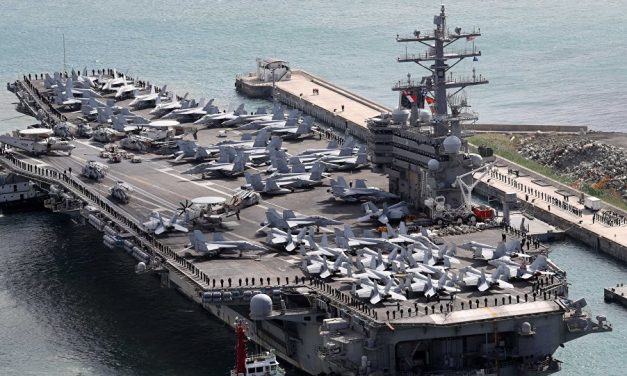
However, strengthening China’s navy, in line with the country’s national vision document, is focused on control of coastal-offshore waters, therefore modernization and increase in the number of frigates, destroyers, submarines and other military equipment are being pursued to replace the old equipment. The People’s Liberation Army of China currently has a significant number of main fighters and aircraft carriers in Liaoning and Shandong. China has announced that it has begun construction of its indigenous aircraft carrier and will be completed by 2025. According to military experts, China needs at least three aircraft carriers to maintain its presence offshore. This directly affects the army’s ability to have a strong and permanent presence in the Indian Ocean region. The Indian Ocean region is currently a hotbed of geopolitical competition to protect the diverse economic and trade interests of world powers, and the powers are trying to pursue their policies by establishing port and industrial facilities along its transit routes while controlling and monitoring competitors.

In this regard, the Shang-class submarine was sent through the Strait of Malacca to the Indian Ocean region in late 2013 for an anti-piracy mission. The presence of the submarine allowed its crew, in addition to having experience of long-term missions, to obtain comprehensive and practical information from the Indian Ocean region. The subsequent deployment of Shang-class submarines to the Indian Ocean region, which took place in November 2014 in Colombo and in May 2015 in Karachi, provided more experience for the submarine crew. The data obtained from such missions in the field of oceanographic information could further prepare the Chinese Navy for a long-term deployment as well as prepare the ground for possible future wars. Many of China’s anti-piracy missions have been with other navies en route to the Gulf of Aden or on a return voyage. The Chinese Navy has also conducted regular exercises with the Australian, Danish and Pakistani navies in the Indian Ocean region.

The Chinese navy, on the other hand, helped evacuate its citizens and other foreign nationals from Libya in 2011 and from Yemen in 2015. Meanwhile, arrival of Xuzhou, one of the most modern Chinese military frigates, at waters near Libya to protect and evacuate Chinese citizens was the first of its kind. In this regard, the Chinese government considered four heavy transport aircraft in addition to a number of civilian and floating aircraft for this operation. The operation was very successful and clearly demonstrated the capability of the Chinese navy offshore. The next operation in Yemen was carried out in March 2015 by ships stationed in the Gulf of Aden for an anti-piracy mission. Although very small in size compared to Libya, the use of naval vessels underscored the Chinese government’s commitment to protecting its citizens, even in remote areas.

However, one of the problems of the Chinese navy in the Indian Ocean region is the unavailability of airports, which would be largely addressed by the airports in Djibouti, as well as airports in countries such as Pakistan and the use of modern multi-role aircraft such as the Y-8 can be used in critical situations. There are also reports of Chinese electronic surveillance stations in the Indian Ocean region, especially in Myanmar, indicating the importance the Chinese government attaches to the Indian Ocean region and the development of a powerful navy to carry out missions in the region to achieve its strategic goals.

However, emphasizing the strength of the navy and its strategic role, especially in upgrading projects such as the Silk Road, is China’s most prominent military thinking, so building a modern, powerful navy is crucial to a safe passage along the Silk Road. The combined activities of the Chinese Navy in the Indian Ocean region over the past decade have made China internationally recognized as an efficient navy capable of conducting operations outside its waters. Of course, it is important to note that, at least in the near future, the Chinese military will not be able to maintain a large and stable presence in the Indian Ocean, like the US Navy. However, the Chinese military is rapidly gaining operational experience in this important area, which can be used to gain a tactical advantage in difficult situations. The modernization and development of the navy, with the proliferation of anti-ship, anti-aircraft and anti-submarine missiles, as well as the deployment of aircraft carriers and reliance on unmanned military equipment, has led China to major developments that can be attributed to economic-trade interaction with countries along the Silk Road and the Arctic.

It seems that China’s investment in the modernization of naval equipment can turn strategic partnerships between its rivals into an insoluble geopolitical puzzle for China, the end result will be a crisis and instability of the security structure in the periphery of that country. There is no doubt that the United States and India’s extensive efforts to limit China’s ability to monitor and control maritime routes are merely for gaining more influence in and around the Indian Ocean, thus intensifying geopolitical rivalry in the region. What is clear, however, is that China continues to focus on modernizing its navy to develop geo-economic capabilities and control and monitor global markets through the Belt-Road Initiative, and does not intend to stop there.

0 Comments

Submit a Comment

Your email address will not be published. Required fields are marked *

LATEST CONTENT

The Security Equation of Southern Lebanon for the Zionist Regime

Strategic Council Online – Opinion: American-Zionist objectives in the region are not limited to weakening Hezbollah. Efforts to disarm Iraqi resistance groups such as Kata’ib Hezbollah and the Popular Mobilization Forces are also part of their subsequent plans.

Commercial Exploitation of Peace; The Gaza Committee in Confrontation with International Legitimacy

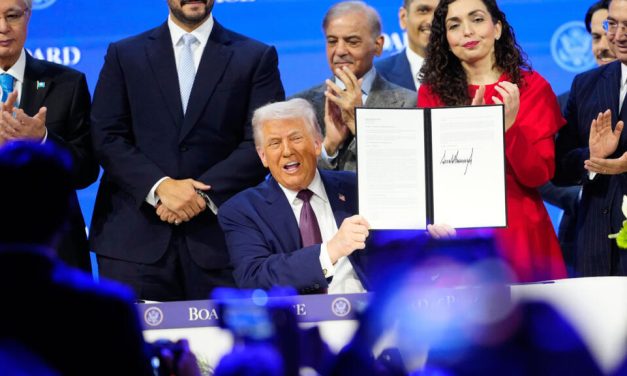
Strategic Council Online – Report: While the second phase of the implementation of the Gaza ceasefire has begun, the establishment of the “Peace Board” chaired by Donald Trump on the sidelines of the Davos meeting (22 January 2026) has become more than a technical mechanism for reconstruction and has turned into a test for the future of the international order.
Despite the signing of the charter by 22 out of 60 invited countries, the limited presence of global leaders at the Davos ceremony and the non-acceptance of this body by the European Union and key Western countries indicate a deep divide in global perceptions of the legitimacy of this mechanism.
In this report, drawing on the analysis of Hadi Borhani, a regional affairs expert, and international data, three strategic questions are addressed: Is the Peace Board an instrument for implementing UN Security Council Resolution 2803 or a substitute for the United Nations? How does the hierarchical architecture of this committee intensify executive challenges in Gaza? And finally, can this body create sustainable peace without the cooperation of Palestinians and with the concentration of power in the hands of a single individual?

America’s Zero-Sum Game in Iraq

Online Strategic Council – Memoir: The swift selection of Nouri al-Maliki for the premiership constitutes a new phase in Iraq’s political sphere. Multiple factors have played a role in this process, the most important being the prevailing situation in Iraq and the region. Under such circumstances, Iraq requires a powerful and experienced prime minister who can keep the country away from the dangers of wars and crises.

America’s Strategy for Creating Tension in the Asia-Pacific

Strategic Council Online – Opinion: Relations between some countries in the Asia-Pacific region, such as China and Japan or China and Australia, which were previously relatively normal, are trending towards deterioration, and the primary reason for this is the aggressive policies of the United States of America.

Loading

Últimas publicaciones

The Security Equation of Southern Lebanon for the Zionist Regime

Strategic Council Online – Opinion: American-Zionist objectives in the region are not limited to weakening Hezbollah. Efforts to disarm Iraqi resistance groups such as Kata’ib Hezbollah and the Popular Mobilization Forces are also part of their subsequent plans.

Commercial Exploitation of Peace; The Gaza Committee in Confrontation with International Legitimacy

Strategic Council Online – Report: While the second phase of the implementation of the Gaza ceasefire has begun, the establishment of the “Peace Board” chaired by Donald Trump on the sidelines of the Davos meeting (22 January 2026) has become more than a technical mechanism for reconstruction and has turned into a test for the future of the international order.
Despite the signing of the charter by 22 out of 60 invited countries, the limited presence of global leaders at the Davos ceremony and the non-acceptance of this body by the European Union and key Western countries indicate a deep divide in global perceptions of the legitimacy of this mechanism.
In this report, drawing on the analysis of Hadi Borhani, a regional affairs expert, and international data, three strategic questions are addressed: Is the Peace Board an instrument for implementing UN Security Council Resolution 2803 or a substitute for the United Nations? How does the hierarchical architecture of this committee intensify executive challenges in Gaza? And finally, can this body create sustainable peace without the cooperation of Palestinians and with the concentration of power in the hands of a single individual?

America’s Zero-Sum Game in Iraq

Online Strategic Council – Memoir: The swift selection of Nouri al-Maliki for the premiership constitutes a new phase in Iraq’s political sphere. Multiple factors have played a role in this process, the most important being the prevailing situation in Iraq and the region. Under such circumstances, Iraq requires a powerful and experienced prime minister who can keep the country away from the dangers of wars and crises.

America’s Strategy for Creating Tension in the Asia-Pacific

Strategic Council Online – Opinion: Relations between some countries in the Asia-Pacific region, such as China and Japan or China and Australia, which were previously relatively normal, are trending towards deterioration, and the primary reason for this is the aggressive policies of the United States of America.

Loading

DERNIER CONTENU

The Security Equation of Southern Lebanon for the Zionist Regime

Strategic Council Online – Opinion: American-Zionist objectives in the region are not limited to weakening Hezbollah. Efforts to disarm Iraqi resistance groups such as Kata’ib Hezbollah and the Popular Mobilization Forces are also part of their subsequent plans.

Commercial Exploitation of Peace; The Gaza Committee in Confrontation with International Legitimacy

Strategic Council Online – Report: While the second phase of the implementation of the Gaza ceasefire has begun, the establishment of the “Peace Board” chaired by Donald Trump on the sidelines of the Davos meeting (22 January 2026) has become more than a technical mechanism for reconstruction and has turned into a test for the future of the international order.
Despite the signing of the charter by 22 out of 60 invited countries, the limited presence of global leaders at the Davos ceremony and the non-acceptance of this body by the European Union and key Western countries indicate a deep divide in global perceptions of the legitimacy of this mechanism.
In this report, drawing on the analysis of Hadi Borhani, a regional affairs expert, and international data, three strategic questions are addressed: Is the Peace Board an instrument for implementing UN Security Council Resolution 2803 or a substitute for the United Nations? How does the hierarchical architecture of this committee intensify executive challenges in Gaza? And finally, can this body create sustainable peace without the cooperation of Palestinians and with the concentration of power in the hands of a single individual?

America’s Zero-Sum Game in Iraq

Online Strategic Council – Memoir: The swift selection of Nouri al-Maliki for the premiership constitutes a new phase in Iraq’s political sphere. Multiple factors have played a role in this process, the most important being the prevailing situation in Iraq and the region. Under such circumstances, Iraq requires a powerful and experienced prime minister who can keep the country away from the dangers of wars and crises.

America’s Strategy for Creating Tension in the Asia-Pacific

Strategic Council Online – Opinion: Relations between some countries in the Asia-Pacific region, such as China and Japan or China and Australia, which were previously relatively normal, are trending towards deterioration, and the primary reason for this is the aggressive policies of the United States of America.

Loading

DERNIER CONTENU

The Security Equation of Southern Lebanon for the Zionist Regime

Strategic Council Online – Opinion: American-Zionist objectives in the region are not limited to weakening Hezbollah. Efforts to disarm Iraqi resistance groups such as Kata’ib Hezbollah and the Popular Mobilization Forces are also part of their subsequent plans.

Commercial Exploitation of Peace; The Gaza Committee in Confrontation with International Legitimacy

Strategic Council Online – Report: While the second phase of the implementation of the Gaza ceasefire has begun, the establishment of the “Peace Board” chaired by Donald Trump on the sidelines of the Davos meeting (22 January 2026) has become more than a technical mechanism for reconstruction and has turned into a test for the future of the international order.
Despite the signing of the charter by 22 out of 60 invited countries, the limited presence of global leaders at the Davos ceremony and the non-acceptance of this body by the European Union and key Western countries indicate a deep divide in global perceptions of the legitimacy of this mechanism.
In this report, drawing on the analysis of Hadi Borhani, a regional affairs expert, and international data, three strategic questions are addressed: Is the Peace Board an instrument for implementing UN Security Council Resolution 2803 or a substitute for the United Nations? How does the hierarchical architecture of this committee intensify executive challenges in Gaza? And finally, can this body create sustainable peace without the cooperation of Palestinians and with the concentration of power in the hands of a single individual?

America’s Zero-Sum Game in Iraq

Online Strategic Council – Memoir: The swift selection of Nouri al-Maliki for the premiership constitutes a new phase in Iraq’s political sphere. Multiple factors have played a role in this process, the most important being the prevailing situation in Iraq and the region. Under such circumstances, Iraq requires a powerful and experienced prime minister who can keep the country away from the dangers of wars and crises.

America’s Strategy for Creating Tension in the Asia-Pacific

Strategic Council Online – Opinion: Relations between some countries in the Asia-Pacific region, such as China and Japan or China and Australia, which were previously relatively normal, are trending towards deterioration, and the primary reason for this is the aggressive policies of the United States of America.

Loading

DERNIER CONTENU

The Security Equation of Southern Lebanon for the Zionist Regime

Strategic Council Online – Opinion: American-Zionist objectives in the region are not limited to weakening Hezbollah. Efforts to disarm Iraqi resistance groups such as Kata’ib Hezbollah and the Popular Mobilization Forces are also part of their subsequent plans.

Commercial Exploitation of Peace; The Gaza Committee in Confrontation with International Legitimacy

Strategic Council Online – Report: While the second phase of the implementation of the Gaza ceasefire has begun, the establishment of the “Peace Board” chaired by Donald Trump on the sidelines of the Davos meeting (22 January 2026) has become more than a technical mechanism for reconstruction and has turned into a test for the future of the international order.
Despite the signing of the charter by 22 out of 60 invited countries, the limited presence of global leaders at the Davos ceremony and the non-acceptance of this body by the European Union and key Western countries indicate a deep divide in global perceptions of the legitimacy of this mechanism.
In this report, drawing on the analysis of Hadi Borhani, a regional affairs expert, and international data, three strategic questions are addressed: Is the Peace Board an instrument for implementing UN Security Council Resolution 2803 or a substitute for the United Nations? How does the hierarchical architecture of this committee intensify executive challenges in Gaza? And finally, can this body create sustainable peace without the cooperation of Palestinians and with the concentration of power in the hands of a single individual?

America’s Zero-Sum Game in Iraq

Online Strategic Council – Memoir: The swift selection of Nouri al-Maliki for the premiership constitutes a new phase in Iraq’s political sphere. Multiple factors have played a role in this process, the most important being the prevailing situation in Iraq and the region. Under such circumstances, Iraq requires a powerful and experienced prime minister who can keep the country away from the dangers of wars and crises.

America’s Strategy for Creating Tension in the Asia-Pacific

Strategic Council Online – Opinion: Relations between some countries in the Asia-Pacific region, such as China and Japan or China and Australia, which were previously relatively normal, are trending towards deterioration, and the primary reason for this is the aggressive policies of the United States of America.

Loading