Reasons for Rise in World Military Expenditures and Future Prospects

Strategic Council Online: It seems that India and China will continue arms purchases in the coming years, but countries such as Turkey, Saudi Arabia or some European states whose economies have been hurt by the corona outbreak are forced to adapt to the new conditions and turn a blind eye to the US pressures to buy weapons in the last few months to the US presidential election. Abdolreza Farajirad - Geopolitical Affairs Expert

Total global military expenditure rose to $1917 billion in 2019, according to new data from the Stockholm International Peace Research Institute (SIPRI). The total for 2019 represents an increase of 3.6 per cent from 2018 and the largest annual growth in spending since 2010.


(Stockholm, 27 April 2020) Total global military expenditure rose to $1917 billion in 2019, according to new data from the Stockholm International Peace Research Institute (SIPRI). The total for 2019 represents an increase of 3.6 per cent from 2018 and the largest annual growth in spending since 2010.

The five largest spenders in 2019, which accounted for 62 per cent of expenditure, were the United States, China, India, Russia and Saudi Arabia. This is the first time that two Asian states have featured among the top three military spenders. The comprehensive annual update of the SIPRI Military Expenditure Database is accessible from today at www.sipri.org.


Total global military expenditure rose to $1917 billion in 2019, according to new data from the Stockholm International Peace Research Institute (SIPRI). The total for 2019 represents an increase of 3.6 per cent from 2018 and the largest annual growth in spending since 2010.


The five largest spenders in 2019, which accounted for 62 per cent of expenditure, were the United States, China, India, Russia and Saudi Arabia. This is the first time that two Asian states have featured among the top three military spenders.


The increase in military purchases in the world in 2019 is due to several reasons, including the pressure US President Donald Trump is putting on Persian Gulf states, as Trump seeks to seize part of their oil revenues for the weapons they have bought from the United States under Trump’s pressure, repeated threats, coercion, and numerous phone calls. This is very clear in relation to Saudi Arabia, the UAE and Qatar.

Of course, if the arms purchases of certain countries have increased compared to previous years, it does not mean that we will see the prospect of warmongering or an increase in wars between nation-states or countries. But some of these purchases are not real and are based on pressure from Trump to make more money.


Another issue is the rivalry between China and the United States; if the Chinese at the time of former US presidents such as Barack Obama and George W. Bush had imagined that they could calm the Americans down to some extent to ease their pressure now, under Trump, they have realized that the US fight against China is a serious and unending one. Therefore, the Chinese thought of confronting the United States both in terms of foreign policy at the international level, and to seek friends for themselves, and to strengthen themselves militarily.

In fact, with the behaviour of the President of the US president so far, the Chinese have realized that the United States may cause troubles for China in the South China Sea, and they may be forced to react.

Another issue is the fall in oil prices; in this regard, some countries, such as Russia, which is one of the main suppliers of weapons, have always tried to persuade other countries to buy weapons when oil or gas revenues fall. In recent years, we have seen Russia enter the Middle East in some way, trying to sell more weapons to Middle Eastern countries, even to states that bought their weapons from Europe and the United States earlier. In this regard, Russia provided its latest missile weapons, including the S-300 and S-400, to the Middle East, and even Turkey, a NATO member, bought the Russian S-400.

Because the price of these weapons is so high, we are seeing an increase in military spending around the world.

Regarding the future of world developments, given the current situation, if this trend continues, Turkey or China, whose relations with the United States have soured, are likely to continue to buy weapons, but the problem is that countries’ incomes of arms buyers and sellers have come down. In fact, arms dealers who used to make money by selling weapons have now suffered a lot of losses due to the coronavirus and falling oil prices. On the other hand, buyers of weapons such as Turkey or Saudi Arabia have also been hit and are not able to afford to buy large quantities of weapons with their oil revenues.

China, meanwhile, may feel more threatened by the escalation of hostilities with the United States, which is why it wants to buy more weapons than ever before. India has also struggled with China to buy more weapons in recent years and develop weapons technology.

It seems that India and China will continue arms purchases in the coming years, but countries such as Turkey, Saudi Arabia or some European states whose economies have been hurt by the corona outbreak are forced to adapt to the new conditions and turn a blind eye to the US pressures to buy weapons in the last few months to the US presidential election.

0 Comments

Submit a Comment

Your email address will not be published. Required fields are marked *

LATEST CONTENT

The Strategic Consequences of U.S.-China Competition in the Field of Artificial Intelligence

Strategic Council Online – Opinion: The continuation of competition between the United States and China in the cyber and artificial intelligence domains without common frameworks, transparency, and normative constraints will not result in the victory of one over the other, but will instead lead to the erosion of global trust in the technology domain. A world where every platform is suspect, every algorithm is a potential weapon, and every piece of data can be considered a threat.

The Security Equation of Southern Lebanon for the Zionist Regime

Strategic Council Online – Opinion: American-Zionist objectives in the region are not limited to weakening Hezbollah. Efforts to disarm Iraqi resistance groups such as Kata’ib Hezbollah and the Popular Mobilization Forces are also part of their subsequent plans.

Commercial Exploitation of Peace; The Gaza Committee in Confrontation with International Legitimacy

Strategic Council Online – Report: While the second phase of the implementation of the Gaza ceasefire has begun, the establishment of the “Peace Board” chaired by Donald Trump on the sidelines of the Davos meeting (22 January 2026) has become more than a technical mechanism for reconstruction and has turned into a test for the future of the international order.
Despite the signing of the charter by 22 out of 60 invited countries, the limited presence of global leaders at the Davos ceremony and the non-acceptance of this body by the European Union and key Western countries indicate a deep divide in global perceptions of the legitimacy of this mechanism.
In this report, drawing on the analysis of Hadi Borhani, a regional affairs expert, and international data, three strategic questions are addressed: Is the Peace Board an instrument for implementing UN Security Council Resolution 2803 or a substitute for the United Nations? How does the hierarchical architecture of this committee intensify executive challenges in Gaza? And finally, can this body create sustainable peace without the cooperation of Palestinians and with the concentration of power in the hands of a single individual?

America’s Zero-Sum Game in Iraq

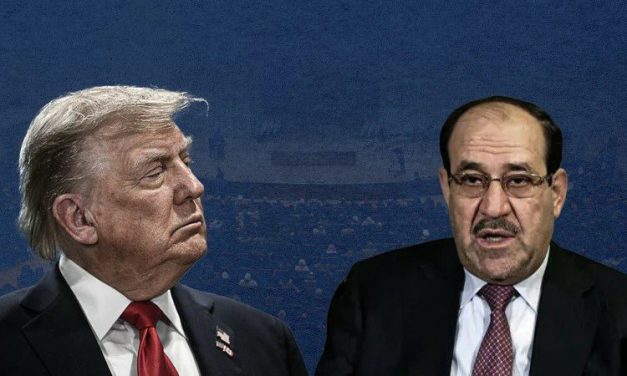
Online Strategic Council – Memoir: The swift selection of Nouri al-Maliki for the premiership constitutes a new phase in Iraq’s political sphere. Multiple factors have played a role in this process, the most important being the prevailing situation in Iraq and the region. Under such circumstances, Iraq requires a powerful and experienced prime minister who can keep the country away from the dangers of wars and crises.

Loading

Últimas publicaciones

The Strategic Consequences of U.S.-China Competition in the Field of Artificial Intelligence

Strategic Council Online – Opinion: The continuation of competition between the United States and China in the cyber and artificial intelligence domains without common frameworks, transparency, and normative constraints will not result in the victory of one over the other, but will instead lead to the erosion of global trust in the technology domain. A world where every platform is suspect, every algorithm is a potential weapon, and every piece of data can be considered a threat.

The Security Equation of Southern Lebanon for the Zionist Regime

Strategic Council Online – Opinion: American-Zionist objectives in the region are not limited to weakening Hezbollah. Efforts to disarm Iraqi resistance groups such as Kata’ib Hezbollah and the Popular Mobilization Forces are also part of their subsequent plans.

Commercial Exploitation of Peace; The Gaza Committee in Confrontation with International Legitimacy

Strategic Council Online – Report: While the second phase of the implementation of the Gaza ceasefire has begun, the establishment of the “Peace Board” chaired by Donald Trump on the sidelines of the Davos meeting (22 January 2026) has become more than a technical mechanism for reconstruction and has turned into a test for the future of the international order.
Despite the signing of the charter by 22 out of 60 invited countries, the limited presence of global leaders at the Davos ceremony and the non-acceptance of this body by the European Union and key Western countries indicate a deep divide in global perceptions of the legitimacy of this mechanism.
In this report, drawing on the analysis of Hadi Borhani, a regional affairs expert, and international data, three strategic questions are addressed: Is the Peace Board an instrument for implementing UN Security Council Resolution 2803 or a substitute for the United Nations? How does the hierarchical architecture of this committee intensify executive challenges in Gaza? And finally, can this body create sustainable peace without the cooperation of Palestinians and with the concentration of power in the hands of a single individual?

America’s Zero-Sum Game in Iraq

Online Strategic Council – Memoir: The swift selection of Nouri al-Maliki for the premiership constitutes a new phase in Iraq’s political sphere. Multiple factors have played a role in this process, the most important being the prevailing situation in Iraq and the region. Under such circumstances, Iraq requires a powerful and experienced prime minister who can keep the country away from the dangers of wars and crises.

Loading

DERNIER CONTENU

The Strategic Consequences of U.S.-China Competition in the Field of Artificial Intelligence

Strategic Council Online – Opinion: The continuation of competition between the United States and China in the cyber and artificial intelligence domains without common frameworks, transparency, and normative constraints will not result in the victory of one over the other, but will instead lead to the erosion of global trust in the technology domain. A world where every platform is suspect, every algorithm is a potential weapon, and every piece of data can be considered a threat.

The Security Equation of Southern Lebanon for the Zionist Regime

Strategic Council Online – Opinion: American-Zionist objectives in the region are not limited to weakening Hezbollah. Efforts to disarm Iraqi resistance groups such as Kata’ib Hezbollah and the Popular Mobilization Forces are also part of their subsequent plans.

Commercial Exploitation of Peace; The Gaza Committee in Confrontation with International Legitimacy

Strategic Council Online – Report: While the second phase of the implementation of the Gaza ceasefire has begun, the establishment of the “Peace Board” chaired by Donald Trump on the sidelines of the Davos meeting (22 January 2026) has become more than a technical mechanism for reconstruction and has turned into a test for the future of the international order.
Despite the signing of the charter by 22 out of 60 invited countries, the limited presence of global leaders at the Davos ceremony and the non-acceptance of this body by the European Union and key Western countries indicate a deep divide in global perceptions of the legitimacy of this mechanism.
In this report, drawing on the analysis of Hadi Borhani, a regional affairs expert, and international data, three strategic questions are addressed: Is the Peace Board an instrument for implementing UN Security Council Resolution 2803 or a substitute for the United Nations? How does the hierarchical architecture of this committee intensify executive challenges in Gaza? And finally, can this body create sustainable peace without the cooperation of Palestinians and with the concentration of power in the hands of a single individual?

America’s Zero-Sum Game in Iraq

Online Strategic Council – Memoir: The swift selection of Nouri al-Maliki for the premiership constitutes a new phase in Iraq’s political sphere. Multiple factors have played a role in this process, the most important being the prevailing situation in Iraq and the region. Under such circumstances, Iraq requires a powerful and experienced prime minister who can keep the country away from the dangers of wars and crises.

Loading

DERNIER CONTENU

The Strategic Consequences of U.S.-China Competition in the Field of Artificial Intelligence

Strategic Council Online – Opinion: The continuation of competition between the United States and China in the cyber and artificial intelligence domains without common frameworks, transparency, and normative constraints will not result in the victory of one over the other, but will instead lead to the erosion of global trust in the technology domain. A world where every platform is suspect, every algorithm is a potential weapon, and every piece of data can be considered a threat.

The Security Equation of Southern Lebanon for the Zionist Regime

Strategic Council Online – Opinion: American-Zionist objectives in the region are not limited to weakening Hezbollah. Efforts to disarm Iraqi resistance groups such as Kata’ib Hezbollah and the Popular Mobilization Forces are also part of their subsequent plans.

Commercial Exploitation of Peace; The Gaza Committee in Confrontation with International Legitimacy

Strategic Council Online – Report: While the second phase of the implementation of the Gaza ceasefire has begun, the establishment of the “Peace Board” chaired by Donald Trump on the sidelines of the Davos meeting (22 January 2026) has become more than a technical mechanism for reconstruction and has turned into a test for the future of the international order.
Despite the signing of the charter by 22 out of 60 invited countries, the limited presence of global leaders at the Davos ceremony and the non-acceptance of this body by the European Union and key Western countries indicate a deep divide in global perceptions of the legitimacy of this mechanism.
In this report, drawing on the analysis of Hadi Borhani, a regional affairs expert, and international data, three strategic questions are addressed: Is the Peace Board an instrument for implementing UN Security Council Resolution 2803 or a substitute for the United Nations? How does the hierarchical architecture of this committee intensify executive challenges in Gaza? And finally, can this body create sustainable peace without the cooperation of Palestinians and with the concentration of power in the hands of a single individual?

America’s Zero-Sum Game in Iraq

Online Strategic Council – Memoir: The swift selection of Nouri al-Maliki for the premiership constitutes a new phase in Iraq’s political sphere. Multiple factors have played a role in this process, the most important being the prevailing situation in Iraq and the region. Under such circumstances, Iraq requires a powerful and experienced prime minister who can keep the country away from the dangers of wars and crises.

Loading

DERNIER CONTENU

The Strategic Consequences of U.S.-China Competition in the Field of Artificial Intelligence

Strategic Council Online – Opinion: The continuation of competition between the United States and China in the cyber and artificial intelligence domains without common frameworks, transparency, and normative constraints will not result in the victory of one over the other, but will instead lead to the erosion of global trust in the technology domain. A world where every platform is suspect, every algorithm is a potential weapon, and every piece of data can be considered a threat.

The Security Equation of Southern Lebanon for the Zionist Regime

Strategic Council Online – Opinion: American-Zionist objectives in the region are not limited to weakening Hezbollah. Efforts to disarm Iraqi resistance groups such as Kata’ib Hezbollah and the Popular Mobilization Forces are also part of their subsequent plans.

Commercial Exploitation of Peace; The Gaza Committee in Confrontation with International Legitimacy

Strategic Council Online – Report: While the second phase of the implementation of the Gaza ceasefire has begun, the establishment of the “Peace Board” chaired by Donald Trump on the sidelines of the Davos meeting (22 January 2026) has become more than a technical mechanism for reconstruction and has turned into a test for the future of the international order.
Despite the signing of the charter by 22 out of 60 invited countries, the limited presence of global leaders at the Davos ceremony and the non-acceptance of this body by the European Union and key Western countries indicate a deep divide in global perceptions of the legitimacy of this mechanism.
In this report, drawing on the analysis of Hadi Borhani, a regional affairs expert, and international data, three strategic questions are addressed: Is the Peace Board an instrument for implementing UN Security Council Resolution 2803 or a substitute for the United Nations? How does the hierarchical architecture of this committee intensify executive challenges in Gaza? And finally, can this body create sustainable peace without the cooperation of Palestinians and with the concentration of power in the hands of a single individual?

America’s Zero-Sum Game in Iraq

Online Strategic Council – Memoir: The swift selection of Nouri al-Maliki for the premiership constitutes a new phase in Iraq’s political sphere. Multiple factors have played a role in this process, the most important being the prevailing situation in Iraq and the region. Under such circumstances, Iraq requires a powerful and experienced prime minister who can keep the country away from the dangers of wars and crises.

Loading