Barriers to Resolving the Korean Peninsula Crisis

Strategic Council Online: Recently, news broke out that the United States is seeking to resume talks with North Korea. According to the White House National Security Advisor Robert O’Brien "it’s a positive sign that North Korean leader Kim Jong Un had not delivered on a warning of a Christmas gift." However, there is still a long and winding road to resolving the crisis on the Korean Peninsula and according to current trends there is no positive prospect of resolving it until at least the end of Donald Trump's presidency. Mohammad Zare: China and Asia affairs expert

Regarding the North Korean case, it has been remarkably volatile over the past few years, and the dossier has experienced a range of full-fledged support to full opposition and diplomatic impasse in relations between the United States and North Korea. Although North Korea has embraced direct negotiations with South Korea and the US over the past few years in hopes of achieving tangible results in politics and open economy, the course of developments by the end of 2019 has been such that North Korean officials announced the failure of diplomatic course in practice by launching a new missile test and producing weapons that according to North Korean officials can significantly bridge the military capability gap with the United States.

In other words, it seems that by the end of 2019, North Korea had come to the conclusion that the US is reluctant to return to “conventional” politics and to normalize regional and international policies with Pyongyang. North Korea has been well aware that, in a transitional order, “agreements” do not necessarily mean ensuring the survival and sustainability of a disparate political system.

On the other hand, the Americans have also shown that agreements do not necessarily mean commitment. In other words accords have an expiry date and Washington would respect the deals as long as they serve its interests. The US exit from Trans Pacific free trade pact, the Paris Agreement, and the Iran Nuclear Agreement known as the Joint Comprehensive Plan of Action (JCPOA) show that the Americans, particularly under the Trump administration do not want the “principle of agreement and commitment.” This issue and US efforts to move along this path only cause “disorder” and “crisis” and the spread of “strategic distrust” in the world.

The US reluctance to fully resolve this issue and pursuing a policy of concurrent coercion and negotiation has not only brought back the logic of its relationship with North Korea to zero point, but recent US sanctions against North Korea, in particular the blacklisting of two major Korean firms which will exacerbate the issue. This approach has also raised concerns in South Korea over Washington’s disregard for Seoul’s security concerns.

In this regard, the President of South Korea, in part of his statement on the occasion of the New Year, tacitly criticized US policies and completely disapproved of the country’s position that if North Korea had taken practical steps to disarm and denuclearize, the US and the international community too should have taken similar steps and reduced the sanctions against Pyongyang. That may be why US Secretary of State Mike Pompeo in a meeting with the South Korean Foreign Minister in Philadelphia said the US will have more coordination with South Korea in responding to North Korea. The two countries will increase their engagement in the realization and advancement of Indo-Pacific strategic goals.

What is clear is that US-North Korean relations have experienced one of the most sensitive periods of their relations in the past few decades; as time goes on, North Korea is more likely to become a “pole” in the East Asian security complex: A pole that has the capacity to “shape” the region’s security equations and order alongside actors such as China, Japan and South Korea.

North Korea’s attainment of this position could transform the regional power distribution structure in such a way that it would offer new capacities at the disposal of the country, affect its alliance with China, especially in the region and in competition with the United States and its allies, and force the Americans to redefine their security relationships in the East Asian security complex.

For this reason, it must be noted that the East Asian security complex and the US will face difficult strategic choices in the near future regarding the issue and the crisis of the Korean Peninsula: difficult choices in whatever direction they may be, that will further augment the volume of strategic competitions in the region.

However, there is still a long and winding road to resolving the crisis on the Korean Peninsula and according to current trends there is no positive prospect of resolving it until at least the end of Donald Trump’s presidency because first US-North Korean relations are currently plagued with strategic mistrust, and restoring that trust is not easily possible unless the United States wants to take real big steps to address the issue and no signs are seen to that effect.

Secondly, the growing distrust between the two countries has faced North Korea with considerable doubt in abandonment its nuclear and strategic missile capabilities. Meantime, new developments in regional and international order, and in particular, increased US use of “coercive policy” to resolve its security dilemmas cannot turn such an option into a rational choice for North Korea, in the absence of strong security guarantees.

Thirdly, US politics is slowly entering the electoral period, and naturally, with such limited opportunity and time, one of the most complex crises remaining from the Cold War, namely the crisis in the Korean Peninsula, cannot be resolved.

If we add the entry of China-US relations into an era of “comprehensive strategic competition” to these three factors and China’s unwillingness to forfeit its strategic assets in the East Asian region, then the future complexity of the Korean Peninsula crisis will be greater than ever.

For the same reason, 2020 can be considered the year of “open and difficult dossiers” for America.
0 Comments

Submit a Comment

Your email address will not be published. Required fields are marked *

LATEST CONTENT

America’s Zero-Sum Game in Iraq

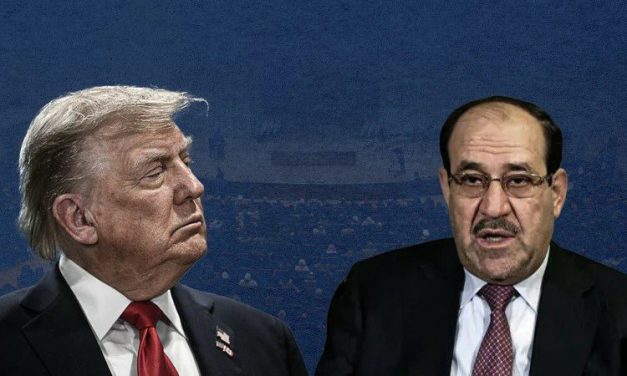
Online Strategic Council – Memoir: The swift selection of Nouri al-Maliki for the premiership constitutes a new phase in Iraq’s political sphere. Multiple factors have played a role in this process, the most important being the prevailing situation in Iraq and the region. Under such circumstances, Iraq requires a powerful and experienced prime minister who can keep the country away from the dangers of wars and crises.

America’s Strategy for Creating Tension in the Asia-Pacific

Strategic Council Online – Opinion: Relations between some countries in the Asia-Pacific region, such as China and Japan or China and Australia, which were previously relatively normal, are trending towards deterioration, and the primary reason for this is the aggressive policies of the United States of America.

The Collapse of the European Security Illusion with the Continuation of the Ukraine War?

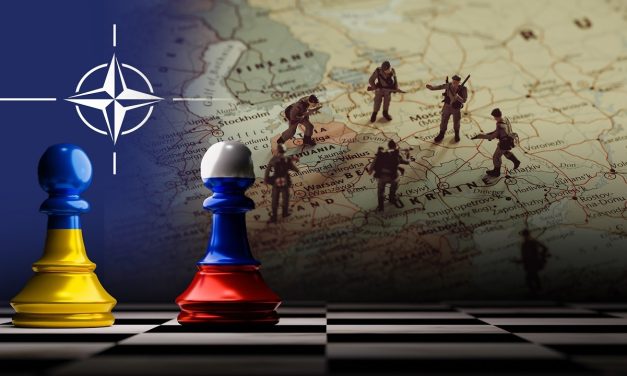
Strategic Council Online – Interview: The Ukraine war has become a new turning point in the political, security, and even commercial relations of allies on both sides of the Atlantic. While this war is nearing its fourth year, many questions still remain regarding its future and its consequences; among them, will the continuation of the Ukraine war lead to the collapse of the European security illusion?

Is Greenland Pushing Europe Toward China?

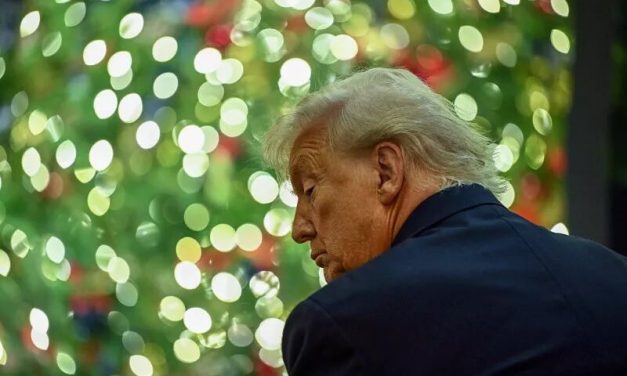
Strategic Council Online – Interview: A European affairs expert believes that the seizure of Greenland will certainly weaken America’s relations with Europe and its allies. Donald Trump’s view is that he does not need these countries, but if Europe faces significant pressure from the United States, it is natural for it to move toward China.

Alarm Bells Sound for ISIS Revival in Syria: Threat to Iraq and West Asia

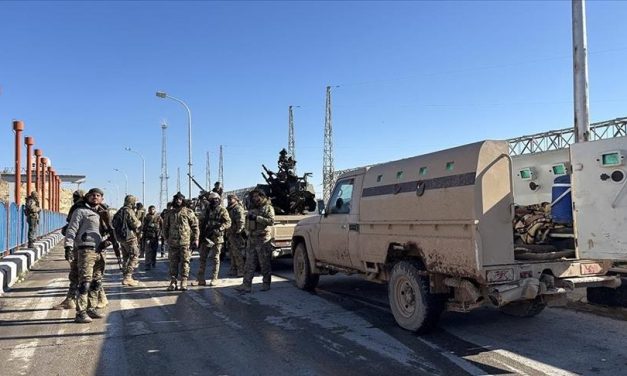
Strategic Council Online – Opinion: Numerous documents and pieces of evidence indicate that ISIS, which in recent years has been the region’s biggest threat to security and stability after the Zionist regime, has once again in recent months become a focal point for political and security exploitation by American and Zionist regime security, intelligence, and political circles.

Afghanistan’s Effective Role in the Economy of Eurasia

Strategic Council Online – Interview: A regional affairs researcher stated: Despite projects such as the Khaf-Herat railway and the Herat-Balkh-Mazar-i-Sharif corridor being on the agenda, insecurity and the absence of an inclusive government remain the most significant obstacles to realizing transit corridors and Afghanistan playing an effective role in the economy of Eurasia.

Loading

Últimas publicaciones

America’s Zero-Sum Game in Iraq

Online Strategic Council – Memoir: The swift selection of Nouri al-Maliki for the premiership constitutes a new phase in Iraq’s political sphere. Multiple factors have played a role in this process, the most important being the prevailing situation in Iraq and the region. Under such circumstances, Iraq requires a powerful and experienced prime minister who can keep the country away from the dangers of wars and crises.

America’s Strategy for Creating Tension in the Asia-Pacific

Strategic Council Online – Opinion: Relations between some countries in the Asia-Pacific region, such as China and Japan or China and Australia, which were previously relatively normal, are trending towards deterioration, and the primary reason for this is the aggressive policies of the United States of America.

The Collapse of the European Security Illusion with the Continuation of the Ukraine War?

Strategic Council Online – Interview: The Ukraine war has become a new turning point in the political, security, and even commercial relations of allies on both sides of the Atlantic. While this war is nearing its fourth year, many questions still remain regarding its future and its consequences; among them, will the continuation of the Ukraine war lead to the collapse of the European security illusion?

Is Greenland Pushing Europe Toward China?

Strategic Council Online – Interview: A European affairs expert believes that the seizure of Greenland will certainly weaken America’s relations with Europe and its allies. Donald Trump’s view is that he does not need these countries, but if Europe faces significant pressure from the United States, it is natural for it to move toward China.

Alarm Bells Sound for ISIS Revival in Syria: Threat to Iraq and West Asia

Strategic Council Online – Opinion: Numerous documents and pieces of evidence indicate that ISIS, which in recent years has been the region’s biggest threat to security and stability after the Zionist regime, has once again in recent months become a focal point for political and security exploitation by American and Zionist regime security, intelligence, and political circles.

Afghanistan’s Effective Role in the Economy of Eurasia

Strategic Council Online – Interview: A regional affairs researcher stated: Despite projects such as the Khaf-Herat railway and the Herat-Balkh-Mazar-i-Sharif corridor being on the agenda, insecurity and the absence of an inclusive government remain the most significant obstacles to realizing transit corridors and Afghanistan playing an effective role in the economy of Eurasia.

Loading

DERNIER CONTENU

America’s Zero-Sum Game in Iraq

Online Strategic Council – Memoir: The swift selection of Nouri al-Maliki for the premiership constitutes a new phase in Iraq’s political sphere. Multiple factors have played a role in this process, the most important being the prevailing situation in Iraq and the region. Under such circumstances, Iraq requires a powerful and experienced prime minister who can keep the country away from the dangers of wars and crises.

America’s Strategy for Creating Tension in the Asia-Pacific

Strategic Council Online – Opinion: Relations between some countries in the Asia-Pacific region, such as China and Japan or China and Australia, which were previously relatively normal, are trending towards deterioration, and the primary reason for this is the aggressive policies of the United States of America.

The Collapse of the European Security Illusion with the Continuation of the Ukraine War?

Strategic Council Online – Interview: The Ukraine war has become a new turning point in the political, security, and even commercial relations of allies on both sides of the Atlantic. While this war is nearing its fourth year, many questions still remain regarding its future and its consequences; among them, will the continuation of the Ukraine war lead to the collapse of the European security illusion?

Is Greenland Pushing Europe Toward China?

Strategic Council Online – Interview: A European affairs expert believes that the seizure of Greenland will certainly weaken America’s relations with Europe and its allies. Donald Trump’s view is that he does not need these countries, but if Europe faces significant pressure from the United States, it is natural for it to move toward China.

Alarm Bells Sound for ISIS Revival in Syria: Threat to Iraq and West Asia

Strategic Council Online – Opinion: Numerous documents and pieces of evidence indicate that ISIS, which in recent years has been the region’s biggest threat to security and stability after the Zionist regime, has once again in recent months become a focal point for political and security exploitation by American and Zionist regime security, intelligence, and political circles.

Afghanistan’s Effective Role in the Economy of Eurasia

Strategic Council Online – Interview: A regional affairs researcher stated: Despite projects such as the Khaf-Herat railway and the Herat-Balkh-Mazar-i-Sharif corridor being on the agenda, insecurity and the absence of an inclusive government remain the most significant obstacles to realizing transit corridors and Afghanistan playing an effective role in the economy of Eurasia.

Loading