Prospects of Launching a European Army

Strategic Council Online: The leaders of France and Germany on January 22 signed a pact renewing their countries’ friendship after 56 year. Thus, the two leaders announced their resolve to play a new role in the Green Continent.

According to the text of the German-French Friendship Pact, the two countries will reinforce their cooperation in the areas of foreign affairs, defense, security as well as both domestic and foreign development, while working together to strengthen Europe’s ability to act independently.


History of Cooperation between Germany and France

Cooperation between Germany and France dates back to 1957 and the signing of the Paris Treaty for the establishment of the Western European Union. Subsequently, the two countries joined the European Economic Community and somehow assumed European leadership.

This collaboration went so far that in 1963, the German Chancellor Konrad Adenauer and French President General De Gaulle, met at the Elysee Palace, and signed a friendship treaty. According to the treaty, it was agreed that the two countries should cooperate on economic and cultural matters in addition to political interaction.

This alignment was among the reasons why both countries joined the various international institutions and organizations, including the North Atlantic Treaty Organization (NATO), the Organization for Security and Cooperation in Europe, the Treaty of Schengen, and the Atomic Energy Agency of Europe.

Of course, the two countries did not share the same view about everything and sometimes even became rivals. For example, mention can be made of France’s reluctance to expand the European Union towards Eastern Europe or the behind-the-scene cooperation between London and Paris to undermine Germany in the European institutions.

Nevertheless, the leaders of the two countries have decided to renew the friendship pact, which, in addition to consolidation of the 1963 treaty, underlines the need to develop bilateral cooperation, especially in the field of defense as required.


Idea of Launching Joint European Army

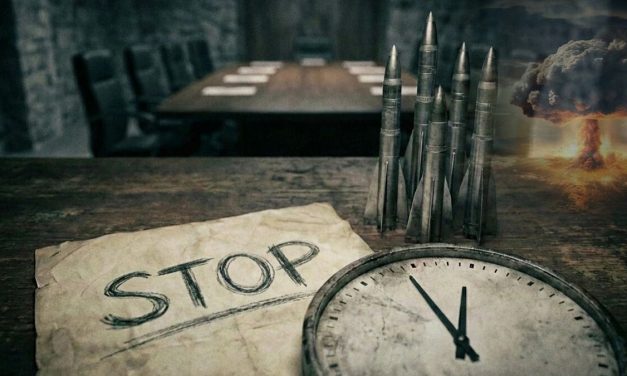
The idea of launching a joint European army gained momentum after US President Donald Trump pressed the European states to pay their shares in NATO; French president in remarks made in November underlined the need to launch a European army and  described the US a threat.

Macron regarded the formation of a real army in Europe to protect the continent against China, Russia and even the United States imperative and referring to Trump’s decision to withdraw from the Intermediate Range Nuclear Forces Treaty (INF) said the main victim of this decision is Europe and the security of its member states.

The European Commission also supported the French president’s proposal to launch a European Army, and EC President Jean Claude Junker said that obedience to NATO could no longer be a compelling pretext against joint defense efforts in Europe.

On the other hand, British withdrawal from the European Union has boosted the issue of defense cooperation in the European Union, because Brussels is worried that Trump, compared to Obama, has less desire to defend Europe against Russia’s possible hostile actions.

Meanwhile, German Chancellor Angela Merkel delivered a speech to the European Parliament in November and voiced support for the creation of a European army and considered it a good complement for NATO. Merkel stressed that the fate of Europe must be in the hands of Europe itself.

German Foreign Minister Heiko Maas has said that, regardless of Trump’s era, Europe needs a new and balanced partnership with the United States and reinforcement of the European column of the alliance on the two sides of the Atlantic Ocean.

From the perspective of Germany as one of the most important countries of the European Union and the largest economic power in Europe, Trump has in a calculated manner embarked on destroying all the instruments and regulations of multilateralism and has put the approach of force-based unilateralism on the top of his international efforts.

The idea of launching a European Army, however, was strongly opposed by the President of the United States so that during his Paris visit, Trump called the French president’s statement on creation of an independent European army insulting.

Of course, the idea of a European Army is not new. The history of this idea dates back to the De Gaulle doctrine that predicted the pillar of Europe in NATO independent of the United States. France already presented such a plan in 1950 in the presence of six European countries, namely Belgium, France, Italy, Luxemburg, the Netherlands and the former West Germany.

Consequently, Macron, who, according to experts, is an advocate of General De Gaulle in foreign policy, once again raised the idea of creating the European Army. Raising the idea once again shows that Europeans are seeking to come out of America’s influence. This means that Europe can defend itself independently of America, because the first policy of Trump’s American has been accompanied by widespread criticism of the European leaders. They believe that the US president has undermined the traditional Western alliances, including NATO. Europeans believe that NATO is serving US military targets more than trying to secure Europe.

`

Challenges of a European Army

Supporting the idea of a European Army does not mean its realization in principle because some of the NATO member states are still skeptical about it. Meantime, some experts believe that the establishment of the European Union’s defense institution faces particular legal problems, because such an institution does not have the backing of state sovereignty and lacks defense and financial bodies in charge.

For example, the ultimate decision-making authority on the use of military force outside the borders is the European Parliament, and this in emergency situations could reduce the speed of European military. At present, however, many European countries are not able to spend even two percent of their Gross Domestic Product on military funding.


Last Word

However, the leaders of key European countries, namely France and Germany, have come to the conclusion that reliance on Washington to maintain European security is not possible due to the unilateralism of the US president, and the Europeans should take care of their own security. Meanwhile, Europe’s intention  to achieve military and defense independence, among which goals is the European ability to deal with security crises inside Europe, have led to more American dissatisfaction, because its realization means reducing Washington’s capacity to intervene and play a role in European security crises.

The insistence of the US president on unilateralism and withdrawal from cooperation treaties seems to have increased the gap between the United States and the West to the extent that the decline of the US hegemony has been accelerated.
0 Comments

Submit a Comment

Your email address will not be published. Required fields are marked *

LATEST CONTENT

An Analysis of Iran’s Missile Capability

Strategic Council Online – Interview: A strategic affairs analyst said: Iran’s missile doctrine is not only part of its deterrent capability but also part of the security identity of the Islamic Republic of Iran and should not be weakened.

Japan-China Tensions Over Taiwan

Strategic Council Online – Interview: An international affairs expert said that U.S. President Donald Trump, in a phone call this week with Sanae Takaichi, asked her not to further escalate disputes with China. Earlier this month, Takaichi created a rare tension with Beijing by stating that “a potential Chinese attack on Taiwan could lead to military action by Japan,” remarks that drew a sharp reaction from China. Beijing demanded that she retract these statements, but the Japanese Prime Minister has not done so thus far, and Tokyo has only emphasized that its policy regarding Taiwan has not changed.

A Look at bin Salman’s Recent Trip to America

Strategic Council Online – Opinion: The recent trip of the Saudi Crown Prince to America was a targeted effort to solidify the strategic partnership with Washington, reduce political uncertainties, and strengthen Riyadh’s political role-playing.

Creating the Right Narrative: A Principled Strategy for Countering the Enemy’s Soft War

Strategic Council Online – Interview: A media expert stated: Given the intensification of the West’s soft war and psychological operations against Iran, our country’s primary strategy must be based on public education, strengthening national cohesion, developing international media, and countering the distortion of history through creating the right narrative.

F-35 Sale to Saudi Arabia: From Promise to Reality

Strategic Council Online – Interview: An international affairs analyst said: The issue of selling the F-35 to Saudi Arabia is not merely a military case, but rather part of a regional engineering that Washington is trying to advance.

Caspian Sea Water Level Drop; A Geopolitical Harm for Coastal Countries

Strategic Council Online – Interview: An expert in geopolitics stated, “The unprecedented drop in the Caspian Sea water level is not only an environmental threat but also a geopolitical alarm bell for Iran and the coastal countries, requiring urgent multilateral cooperation.”

Loading

Últimas publicaciones

An Analysis of Iran’s Missile Capability

Strategic Council Online – Interview: A strategic affairs analyst said: Iran’s missile doctrine is not only part of its deterrent capability but also part of the security identity of the Islamic Republic of Iran and should not be weakened.

Japan-China Tensions Over Taiwan

Strategic Council Online – Interview: An international affairs expert said that U.S. President Donald Trump, in a phone call this week with Sanae Takaichi, asked her not to further escalate disputes with China. Earlier this month, Takaichi created a rare tension with Beijing by stating that “a potential Chinese attack on Taiwan could lead to military action by Japan,” remarks that drew a sharp reaction from China. Beijing demanded that she retract these statements, but the Japanese Prime Minister has not done so thus far, and Tokyo has only emphasized that its policy regarding Taiwan has not changed.

A Look at bin Salman’s Recent Trip to America

Strategic Council Online – Opinion: The recent trip of the Saudi Crown Prince to America was a targeted effort to solidify the strategic partnership with Washington, reduce political uncertainties, and strengthen Riyadh’s political role-playing.

Creating the Right Narrative: A Principled Strategy for Countering the Enemy’s Soft War

Strategic Council Online – Interview: A media expert stated: Given the intensification of the West’s soft war and psychological operations against Iran, our country’s primary strategy must be based on public education, strengthening national cohesion, developing international media, and countering the distortion of history through creating the right narrative.

F-35 Sale to Saudi Arabia: From Promise to Reality

Strategic Council Online – Interview: An international affairs analyst said: The issue of selling the F-35 to Saudi Arabia is not merely a military case, but rather part of a regional engineering that Washington is trying to advance.

Caspian Sea Water Level Drop; A Geopolitical Harm for Coastal Countries

Strategic Council Online – Interview: An expert in geopolitics stated, “The unprecedented drop in the Caspian Sea water level is not only an environmental threat but also a geopolitical alarm bell for Iran and the coastal countries, requiring urgent multilateral cooperation.”

Loading

DERNIER CONTENU

An Analysis of Iran’s Missile Capability

Strategic Council Online – Interview: A strategic affairs analyst said: Iran’s missile doctrine is not only part of its deterrent capability but also part of the security identity of the Islamic Republic of Iran and should not be weakened.

Japan-China Tensions Over Taiwan

Strategic Council Online – Interview: An international affairs expert said that U.S. President Donald Trump, in a phone call this week with Sanae Takaichi, asked her not to further escalate disputes with China. Earlier this month, Takaichi created a rare tension with Beijing by stating that “a potential Chinese attack on Taiwan could lead to military action by Japan,” remarks that drew a sharp reaction from China. Beijing demanded that she retract these statements, but the Japanese Prime Minister has not done so thus far, and Tokyo has only emphasized that its policy regarding Taiwan has not changed.

A Look at bin Salman’s Recent Trip to America

Strategic Council Online – Opinion: The recent trip of the Saudi Crown Prince to America was a targeted effort to solidify the strategic partnership with Washington, reduce political uncertainties, and strengthen Riyadh’s political role-playing.

Creating the Right Narrative: A Principled Strategy for Countering the Enemy’s Soft War

Strategic Council Online – Interview: A media expert stated: Given the intensification of the West’s soft war and psychological operations against Iran, our country’s primary strategy must be based on public education, strengthening national cohesion, developing international media, and countering the distortion of history through creating the right narrative.

F-35 Sale to Saudi Arabia: From Promise to Reality

Strategic Council Online – Interview: An international affairs analyst said: The issue of selling the F-35 to Saudi Arabia is not merely a military case, but rather part of a regional engineering that Washington is trying to advance.

Caspian Sea Water Level Drop; A Geopolitical Harm for Coastal Countries

Strategic Council Online – Interview: An expert in geopolitics stated, “The unprecedented drop in the Caspian Sea water level is not only an environmental threat but also a geopolitical alarm bell for Iran and the coastal countries, requiring urgent multilateral cooperation.”

Loading