Dr. Kharazi Elucidated at the National Congress on Foreign Policy: The Country’s Foreign Relations Priorities: Preserving Independence, Resisting Bullying, and Developing Relations with Our Neighbors

Strategic Council Online: The President of the Strategic Council on Foreign Relations stated: The current priority of the Islamic Republic of Iran in foreign relations is preserving independence, resisting bullying, and developing relations with our neighbors.

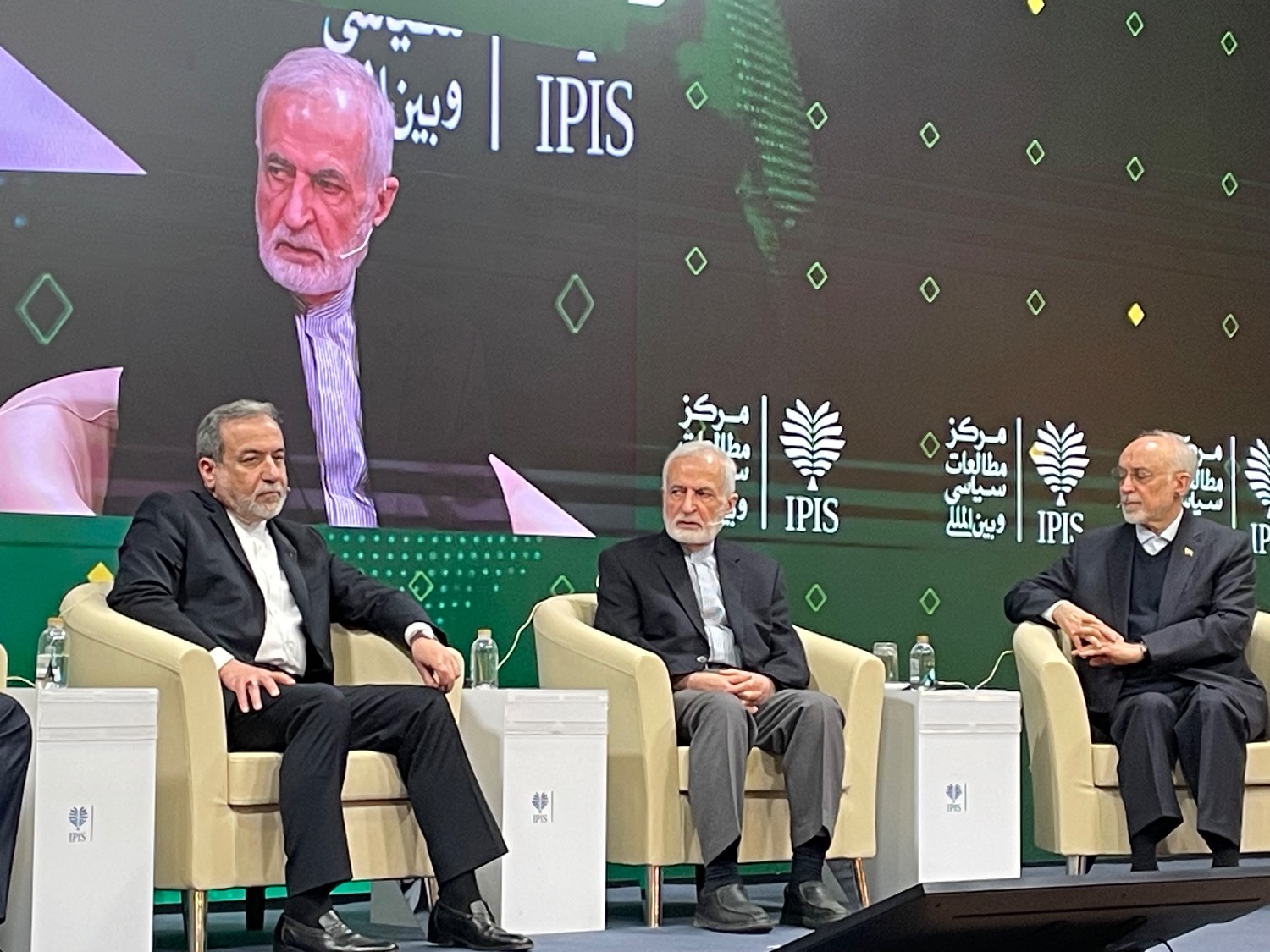
Dr. Seyed Kamal Kharazi, this afternoon in a joint panel featuring Dr. Seyed Abbas Araghchi, the Minister of Foreign Affairs, and Dr. Ali Akbar Salehi, the former Minister of Foreign Affairs, at the National Congress on Foreign Policy held at the Center for Studies of the Ministry of Foreign Affairs, responded to this question: What is the priorities of the country’s current foreign policy?

Developing Relations with Neighbors

Dr. Kharazi said: Our priority is the relations with our neighbors, as this priority is currently being implemented.
He stated that perhaps in the past this priority was not observed, emphasizing: In the past, we made some mistakes in relations with our neighbors, and some neighbors became afraid of us. For example, exporting the revolution was not something to be pursued through incorrect methods; rather, the revolution should have taken root in the hearts of others and made them defenders of the revolution.

Referring to the friendly and brotherly relations between Iran and Iraq, the President of the Council said: Now, for example, why do the people of Iraq defend the Islamic Revolution? We did not send troops to that country to export the revolution. The reason the Iraqi people defend the Islamic Revolution is that they deeply understand the value of its ideals, especially independence.

Dr. Kharazi emphasized: The priority of the foreign relations of the Islamic Republic of Iran must be its neighbors, and relations with these countries should be developed as much as possible. In addition, naturally, to preserve the country’s independence, we must stand against bullying. Just as Dr. Araghchi stated in the opening speech of this congress, we have stood against bullying since the beginning of the revolution to preserve the country’s independence.

Preserving Independence and Resisting Bullying

He added: Therefore, on the stage of foreign relations, preserving independence, resisting bullying, and developing relations with neighbors are the current priorities of our foreign policy.

The President of the Council, meanwhile, emphasized the necessity of theorizing the ideals and goals of the Islamic Revolution, stating: Theorizing the ideals and presenting methods for achieving those ideals is a challenge that persists because what is taught in our universities are theories formulated in the West and are not suited to our country’s conditions for realizing the revolution’s ideals.

The Need for Resistance in Various Arenas

In another part of his remarks on this panel regarding how to preserve the country’s identity and independence against enemies, Dr. Kharazi emphasized: Our resistance must take place across various arenas. Military resistance is one of these arenas in which the armed forces perform their duties in the best possible manner and defend the country against aggression.

The President of the Council stated: But the military arena is not the only arena of resistance. We must also resist in the arenas of foreign policy and media. This is not solely the duty of official institutions either; of course, the duty of the Ministry of Foreign Affairs is to explain and defend the official positions of the country in various forums; but just as national resistance is the duty of every Iranian individual, and we have witnessed it both in the presence of the people and national solidarity during the eight-year Sacred Defense and in the recent 12-day war, it is the duty of every Iranian individual to participate in defending their country in the arenas of political, informational, media, and narrative-building.

He said: In this regard, unfortunately, we are weak. All individuals and actors who possess the necessary capability and a deep understanding of foreign policy issues must enter the arena and participate in this national defense, so that our country’s interests are adequately defended across various arenas, including in think tanks and international media.

In response to a question from one of the attendees of this session about why we are involved in extreme hostility with the United States, Dr. Kharazi said, “We did not have hostility toward America from the beginning.” Rather, we wanted to have peaceful relations with all countries. When the other side shows hostility, you are compelled to respond.

He added: If Saddam had not entered Iranian soil based on his miscalculation, we would have had no reason to enter the war either. In fact, we stood against Saddam’s aggression. Therefore, the view that there are documents suggesting the war could have been prevented is not correct.

The President of the Council said: On the contrary, there are many documents that Saddam, based on the geopolitical interests he had in mind, saw our country’s situation after the revolution as suitable to enter the war and annex parts of Iran to his territory; but of course, his calculation was wrong. He thought our army was in disarray and could not resist, but contrary to his calculations, the people came to the arena and valiantly defended the country.

Dr. Kharazi, emphasizing that reactions must be proportionate to the enemy’s hostility, said: America showed hostility towards Iran from the very first day of the victory of the Islamic Revolution, and we had to act proportionately. Of course, we may have been doing better, but in any case, one must act decisively against enemies. Like the recent 12-day war, where they bombed us, we also bombed in retaliation and stood firm.

The President of the Council concluded by saying: We must resist in various arenas, and God willing, with the presence of the people, we can achieve victory.
0 Comments

LATEST CONTENT

The Security Equation of Southern Lebanon for the Zionist Regime

Strategic Council Online – Opinion: American-Zionist objectives in the region are not limited to weakening Hezbollah. Efforts to disarm Iraqi resistance groups such as Kata’ib Hezbollah and the Popular Mobilization Forces are also part of their subsequent plans.

Commercial Exploitation of Peace; The Gaza Committee in Confrontation with International Legitimacy

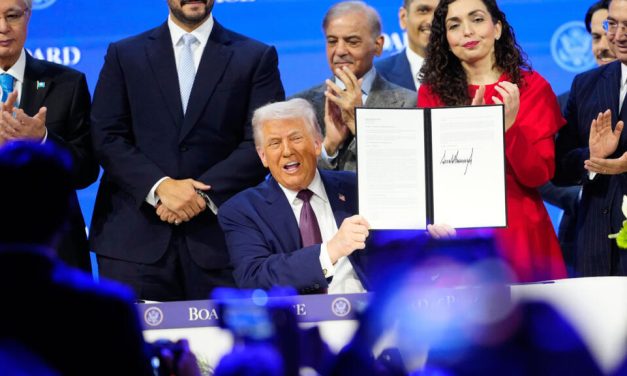
Strategic Council Online – Report: While the second phase of the implementation of the Gaza ceasefire has begun, the establishment of the “Peace Board” chaired by Donald Trump on the sidelines of the Davos meeting (22 January 2026) has become more than a technical mechanism for reconstruction and has turned into a test for the future of the international order.
Despite the signing of the charter by 22 out of 60 invited countries, the limited presence of global leaders at the Davos ceremony and the non-acceptance of this body by the European Union and key Western countries indicate a deep divide in global perceptions of the legitimacy of this mechanism.
In this report, drawing on the analysis of Hadi Borhani, a regional affairs expert, and international data, three strategic questions are addressed: Is the Peace Board an instrument for implementing UN Security Council Resolution 2803 or a substitute for the United Nations? How does the hierarchical architecture of this committee intensify executive challenges in Gaza? And finally, can this body create sustainable peace without the cooperation of Palestinians and with the concentration of power in the hands of a single individual?

America’s Zero-Sum Game in Iraq

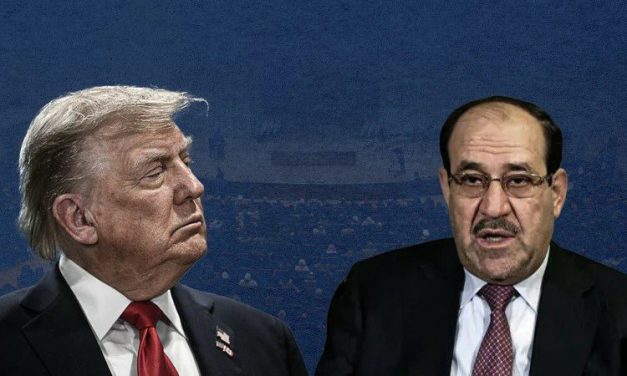
Online Strategic Council – Memoir: The swift selection of Nouri al-Maliki for the premiership constitutes a new phase in Iraq’s political sphere. Multiple factors have played a role in this process, the most important being the prevailing situation in Iraq and the region. Under such circumstances, Iraq requires a powerful and experienced prime minister who can keep the country away from the dangers of wars and crises.

America’s Strategy for Creating Tension in the Asia-Pacific

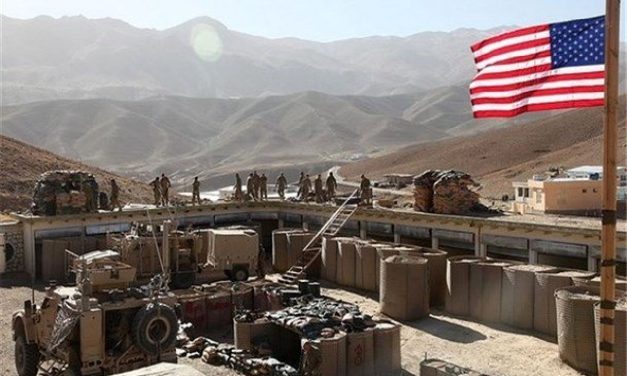
Strategic Council Online – Opinion: Relations between some countries in the Asia-Pacific region, such as China and Japan or China and Australia, which were previously relatively normal, are trending towards deterioration, and the primary reason for this is the aggressive policies of the United States of America.

Loading

Últimas publicaciones

The Security Equation of Southern Lebanon for the Zionist Regime

Strategic Council Online – Opinion: American-Zionist objectives in the region are not limited to weakening Hezbollah. Efforts to disarm Iraqi resistance groups such as Kata’ib Hezbollah and the Popular Mobilization Forces are also part of their subsequent plans.

Commercial Exploitation of Peace; The Gaza Committee in Confrontation with International Legitimacy

Strategic Council Online – Report: While the second phase of the implementation of the Gaza ceasefire has begun, the establishment of the “Peace Board” chaired by Donald Trump on the sidelines of the Davos meeting (22 January 2026) has become more than a technical mechanism for reconstruction and has turned into a test for the future of the international order.
Despite the signing of the charter by 22 out of 60 invited countries, the limited presence of global leaders at the Davos ceremony and the non-acceptance of this body by the European Union and key Western countries indicate a deep divide in global perceptions of the legitimacy of this mechanism.
In this report, drawing on the analysis of Hadi Borhani, a regional affairs expert, and international data, three strategic questions are addressed: Is the Peace Board an instrument for implementing UN Security Council Resolution 2803 or a substitute for the United Nations? How does the hierarchical architecture of this committee intensify executive challenges in Gaza? And finally, can this body create sustainable peace without the cooperation of Palestinians and with the concentration of power in the hands of a single individual?

America’s Zero-Sum Game in Iraq

Online Strategic Council – Memoir: The swift selection of Nouri al-Maliki for the premiership constitutes a new phase in Iraq’s political sphere. Multiple factors have played a role in this process, the most important being the prevailing situation in Iraq and the region. Under such circumstances, Iraq requires a powerful and experienced prime minister who can keep the country away from the dangers of wars and crises.

America’s Strategy for Creating Tension in the Asia-Pacific

Strategic Council Online – Opinion: Relations between some countries in the Asia-Pacific region, such as China and Japan or China and Australia, which were previously relatively normal, are trending towards deterioration, and the primary reason for this is the aggressive policies of the United States of America.

Loading

DERNIER CONTENU

The Security Equation of Southern Lebanon for the Zionist Regime

Strategic Council Online – Opinion: American-Zionist objectives in the region are not limited to weakening Hezbollah. Efforts to disarm Iraqi resistance groups such as Kata’ib Hezbollah and the Popular Mobilization Forces are also part of their subsequent plans.

Commercial Exploitation of Peace; The Gaza Committee in Confrontation with International Legitimacy

Strategic Council Online – Report: While the second phase of the implementation of the Gaza ceasefire has begun, the establishment of the “Peace Board” chaired by Donald Trump on the sidelines of the Davos meeting (22 January 2026) has become more than a technical mechanism for reconstruction and has turned into a test for the future of the international order.
Despite the signing of the charter by 22 out of 60 invited countries, the limited presence of global leaders at the Davos ceremony and the non-acceptance of this body by the European Union and key Western countries indicate a deep divide in global perceptions of the legitimacy of this mechanism.
In this report, drawing on the analysis of Hadi Borhani, a regional affairs expert, and international data, three strategic questions are addressed: Is the Peace Board an instrument for implementing UN Security Council Resolution 2803 or a substitute for the United Nations? How does the hierarchical architecture of this committee intensify executive challenges in Gaza? And finally, can this body create sustainable peace without the cooperation of Palestinians and with the concentration of power in the hands of a single individual?

America’s Zero-Sum Game in Iraq

Online Strategic Council – Memoir: The swift selection of Nouri al-Maliki for the premiership constitutes a new phase in Iraq’s political sphere. Multiple factors have played a role in this process, the most important being the prevailing situation in Iraq and the region. Under such circumstances, Iraq requires a powerful and experienced prime minister who can keep the country away from the dangers of wars and crises.

America’s Strategy for Creating Tension in the Asia-Pacific

Strategic Council Online – Opinion: Relations between some countries in the Asia-Pacific region, such as China and Japan or China and Australia, which were previously relatively normal, are trending towards deterioration, and the primary reason for this is the aggressive policies of the United States of America.

Loading

DERNIER CONTENU

The Security Equation of Southern Lebanon for the Zionist Regime

Strategic Council Online – Opinion: American-Zionist objectives in the region are not limited to weakening Hezbollah. Efforts to disarm Iraqi resistance groups such as Kata’ib Hezbollah and the Popular Mobilization Forces are also part of their subsequent plans.

Commercial Exploitation of Peace; The Gaza Committee in Confrontation with International Legitimacy

Strategic Council Online – Report: While the second phase of the implementation of the Gaza ceasefire has begun, the establishment of the “Peace Board” chaired by Donald Trump on the sidelines of the Davos meeting (22 January 2026) has become more than a technical mechanism for reconstruction and has turned into a test for the future of the international order.
Despite the signing of the charter by 22 out of 60 invited countries, the limited presence of global leaders at the Davos ceremony and the non-acceptance of this body by the European Union and key Western countries indicate a deep divide in global perceptions of the legitimacy of this mechanism.
In this report, drawing on the analysis of Hadi Borhani, a regional affairs expert, and international data, three strategic questions are addressed: Is the Peace Board an instrument for implementing UN Security Council Resolution 2803 or a substitute for the United Nations? How does the hierarchical architecture of this committee intensify executive challenges in Gaza? And finally, can this body create sustainable peace without the cooperation of Palestinians and with the concentration of power in the hands of a single individual?

America’s Zero-Sum Game in Iraq

Online Strategic Council – Memoir: The swift selection of Nouri al-Maliki for the premiership constitutes a new phase in Iraq’s political sphere. Multiple factors have played a role in this process, the most important being the prevailing situation in Iraq and the region. Under such circumstances, Iraq requires a powerful and experienced prime minister who can keep the country away from the dangers of wars and crises.

America’s Strategy for Creating Tension in the Asia-Pacific

Strategic Council Online – Opinion: Relations between some countries in the Asia-Pacific region, such as China and Japan or China and Australia, which were previously relatively normal, are trending towards deterioration, and the primary reason for this is the aggressive policies of the United States of America.

Loading

DERNIER CONTENU

The Security Equation of Southern Lebanon for the Zionist Regime

Strategic Council Online – Opinion: American-Zionist objectives in the region are not limited to weakening Hezbollah. Efforts to disarm Iraqi resistance groups such as Kata’ib Hezbollah and the Popular Mobilization Forces are also part of their subsequent plans.

Commercial Exploitation of Peace; The Gaza Committee in Confrontation with International Legitimacy

Strategic Council Online – Report: While the second phase of the implementation of the Gaza ceasefire has begun, the establishment of the “Peace Board” chaired by Donald Trump on the sidelines of the Davos meeting (22 January 2026) has become more than a technical mechanism for reconstruction and has turned into a test for the future of the international order.
Despite the signing of the charter by 22 out of 60 invited countries, the limited presence of global leaders at the Davos ceremony and the non-acceptance of this body by the European Union and key Western countries indicate a deep divide in global perceptions of the legitimacy of this mechanism.
In this report, drawing on the analysis of Hadi Borhani, a regional affairs expert, and international data, three strategic questions are addressed: Is the Peace Board an instrument for implementing UN Security Council Resolution 2803 or a substitute for the United Nations? How does the hierarchical architecture of this committee intensify executive challenges in Gaza? And finally, can this body create sustainable peace without the cooperation of Palestinians and with the concentration of power in the hands of a single individual?

America’s Zero-Sum Game in Iraq

Online Strategic Council – Memoir: The swift selection of Nouri al-Maliki for the premiership constitutes a new phase in Iraq’s political sphere. Multiple factors have played a role in this process, the most important being the prevailing situation in Iraq and the region. Under such circumstances, Iraq requires a powerful and experienced prime minister who can keep the country away from the dangers of wars and crises.

America’s Strategy for Creating Tension in the Asia-Pacific

Strategic Council Online – Opinion: Relations between some countries in the Asia-Pacific region, such as China and Japan or China and Australia, which were previously relatively normal, are trending towards deterioration, and the primary reason for this is the aggressive policies of the United States of America.

Loading