“Collective security cannot be imported; regional cooperation is the only way to confront challenges”

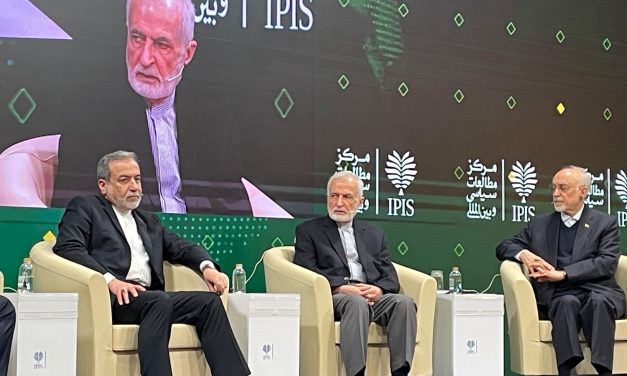
Strategic Council Online: Dr. Seyed Kamal Kharrazi, at the fourth session of the Iran-Arab dialogues in Doha titled "Strong Relations, Mutual Interests," emphasized the necessity of regional solidarity to confront shared challenges and stated: " collective security cannot be imported—it must be cultivated from within, without external interference."

The President of the Strategic Council on Foreign Relations (SCFR), speaking at the opening ceremony of the fourth Iran-Arab dialogue session—jointly initiated and organized by the Council and the Al Jazeera Centre for Studies—in a reference to the crimes of the Zionist regime in Gaza and warned that the Zionist regime, armed by the West, “not only continues the systematic killing of Palestinians but also uses famine as a weapon by blocking access to water and food.”
Dr. Kharrazi also pointed to the Zionist regime’s territorial expansionism based on the long-standing slogan “From the Nile to the Euphrates,” stating that the occupation of Syrian and Lebanese lands to fragment those countries is a sign of such a policy, and regional nations must resist it.
SCFR’s President described proactive diplomacy and the formation of a regional dialogue forum as a key to reducing tensions and called on Arab countries to unify their efforts for an immediate ceasefire and legal prosecution of the Zionist regime’s war crimes.
In another part of his speech, which focused on economic issues, Dr. Kharrazi emphasized complementary cooperation in energy, environment, transportation, and tourism, proposing that regional countries “utilize each other’s capacities through joint cooperation for sustainable development instead of competing.”
In conclusion, he reiterated that Iran has always extended a hand of friendship to its neighbors, stating: “The future of the region must be built on mutual respect and shared interests.”
The fourth Iran-Arab dialogue session, attended by Iranian and Arab officials and experts, will continue in Doha until May 12.

The full text of this speech comes as follows:

In the Name of God, the Compassionate, the Merciful

Your Excellencies, esteemed delegates, Ladies and gentlemen,

I am honored to speak before this distinguished gathering and to present my views on major regional developments. I extend my sincere gratitude to the Government and people of Qatar for their warm hospitality and to the Al Jazeera Center for Studies for organizing this conference. I hope our discussions and exchanges in this meeting will help realize the title of the session, namely, “Strong Relations and Mutual Interests.”

Excellencies,
The flourishing of any region requires, above all, a collective commitment by its members to peace and stability. The future of a region must be determined by its own countries, based on mutual respect, sovereign equality, and shared responsibility, as collective security cannot be imported—it must be cultivated from within, without external interference.
The Islamic Republic of Iran supports the establishment of inclusive and sustainable frameworks for dialogue among regional countries to promote peace, stability, and prosperity. We emphasize proactive diplomacy and the peaceful resolution of disputes. From our perspective, neighbors are not rivals but key partners in achieving a peaceful future. Iran is ready for bilateral and multilateral dialogues to strengthen transparency and trust, and to reduce misunderstandings. In this regard, I emphasize the importance of establishing a regional dialogue forum, as mandated to the Secretary-General by UN Security Council Resolution 598.

Dear Colleagues,
In the economic domain, Iran envisions a regional future based on cooperation and shared development. Our region, with its abundant natural resources, dynamic young population, and strategic geographic location between East and West, holds great potential. However, this potential remains largely untapped due to geopolitical tensions and uncoordinated economic policies.
Iran supports complementary rather than rival economies and welcomes proposals that enhance intra-regional trade and investment in areas such as energy, transportation, logistics, and tourism. Diversifying the regional economy is a shared goal that can only be achieved through cooperation.
In the energy sector specifically, there are vast opportunities for cooperation—not only in oil and gas but also in energy efficiency and the development of renewable energy technologies. By aligning our policies, we can enhance the region’s role in global energy security.

Ladies and Gentlemen,
Cultural ties are the cornerstone of regional solidarity. Our shared history, closely related languages, and rich artistic and cultural traditions reflect both our diversity and unity. Cultural exchange is a powerful tool for mutual understanding, empathy, and regional social cohesion.
Scientific and technological cooperation is another vital area of mutual interest. Iran is ready to share its experiences and to learn from its neighbors’ achievements. Science diplomacy is a means of capacity building and confidence building. We propose the establishment of joint research centers, inter-university cooperation, and mechanisms for data exchange among countries of the region.

Excellencies,
Our region faces deep and urgent challenges, foremost among them the ongoing humanitarian catastrophe in Gaza. The occupying regime, armed by the West, continues its crimes against the Palestinian people, systematically killing civilians—including children, women, and the elderly—and using famine as a weapon by blocking access to water and food.
Israel’s actions are not limited to the military occupation of Gaza. The Zionist regime seeks territorial expansion and the realization of the slogan “From the Nile to the Euphrates,” and with its aggression against Lebanon and Syria, aims to fragment those countries. Yemen, too, is under repeated attacks by the U.S. and Israel due to its support for Palestine, and its civilian infrastructure has been devastated.
In the face of these crises, there is no alternative but to strengthen regional solidarity and coordination. Regional countries must unify their diplomatic efforts, demand an immediate ceasefire, and employ international legal mechanisms to address Israel’s war crimes.
We must also establish common platforms for humanitarian assistance, a fund for supporting refugees, and rebuilding war-torn areas. Only through collective action can we achieve peace, justice, and development.
In conclusion, the Islamic Republic of Iran remains committed to building a stable, prosperous, and resilient region. Our approach is based on respect for the sovereignty of others and cooperation for mutual benefit. Addressing complex challenges requires unity, trust, and joint action.
Let us not act as fragmented players, but as united neighbors building a cooperative future. Iran extends a hand of friendship and invites all regional partners to join this path.
Thank you for your attention.


0 Comments

LATEST CONTENT

With the End of New START, How Will the Future of Nuclear Security Be Shaped?

Strategic Council Online – Opinion: With the collapse of the last pillar of nuclear arms control between Washington and Moscow, the world stands on the threshold of a ruleless order that both carries the scent of unlimited competition and conceals within itself the possibility of new forms of bargaining.

The Strategic Consequences of U.S.-China Competition in the Field of Artificial Intelligence

Strategic Council Online – Opinion: The continuation of competition between the United States and China in the cyber and artificial intelligence domains without common frameworks, transparency, and normative constraints will not result in the victory of one over the other, but will instead lead to the erosion of global trust in the technology domain. A world where every platform is suspect, every algorithm is a potential weapon, and every piece of data can be considered a threat.

The Security Equation of Southern Lebanon for the Zionist Regime

Strategic Council Online – Opinion: American-Zionist objectives in the region are not limited to weakening Hezbollah. Efforts to disarm Iraqi resistance groups such as Kata’ib Hezbollah and the Popular Mobilization Forces are also part of their subsequent plans.

Loading

Últimas publicaciones

With the End of New START, How Will the Future of Nuclear Security Be Shaped?

Strategic Council Online – Opinion: With the collapse of the last pillar of nuclear arms control between Washington and Moscow, the world stands on the threshold of a ruleless order that both carries the scent of unlimited competition and conceals within itself the possibility of new forms of bargaining.

The Strategic Consequences of U.S.-China Competition in the Field of Artificial Intelligence

Strategic Council Online – Opinion: The continuation of competition between the United States and China in the cyber and artificial intelligence domains without common frameworks, transparency, and normative constraints will not result in the victory of one over the other, but will instead lead to the erosion of global trust in the technology domain. A world where every platform is suspect, every algorithm is a potential weapon, and every piece of data can be considered a threat.

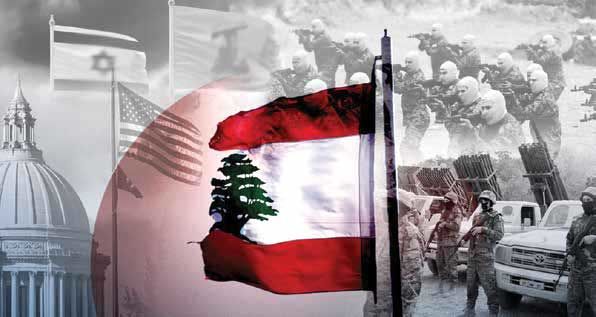
The Security Equation of Southern Lebanon for the Zionist Regime

Strategic Council Online – Opinion: American-Zionist objectives in the region are not limited to weakening Hezbollah. Efforts to disarm Iraqi resistance groups such as Kata’ib Hezbollah and the Popular Mobilization Forces are also part of their subsequent plans.

Loading

DERNIER CONTENU

With the End of New START, How Will the Future of Nuclear Security Be Shaped?

Strategic Council Online – Opinion: With the collapse of the last pillar of nuclear arms control between Washington and Moscow, the world stands on the threshold of a ruleless order that both carries the scent of unlimited competition and conceals within itself the possibility of new forms of bargaining.

The Strategic Consequences of U.S.-China Competition in the Field of Artificial Intelligence

Strategic Council Online – Opinion: The continuation of competition between the United States and China in the cyber and artificial intelligence domains without common frameworks, transparency, and normative constraints will not result in the victory of one over the other, but will instead lead to the erosion of global trust in the technology domain. A world where every platform is suspect, every algorithm is a potential weapon, and every piece of data can be considered a threat.

The Security Equation of Southern Lebanon for the Zionist Regime

Strategic Council Online – Opinion: American-Zionist objectives in the region are not limited to weakening Hezbollah. Efforts to disarm Iraqi resistance groups such as Kata’ib Hezbollah and the Popular Mobilization Forces are also part of their subsequent plans.

Loading

DERNIER CONTENU

With the End of New START, How Will the Future of Nuclear Security Be Shaped?

Strategic Council Online – Opinion: With the collapse of the last pillar of nuclear arms control between Washington and Moscow, the world stands on the threshold of a ruleless order that both carries the scent of unlimited competition and conceals within itself the possibility of new forms of bargaining.

The Strategic Consequences of U.S.-China Competition in the Field of Artificial Intelligence

Strategic Council Online – Opinion: The continuation of competition between the United States and China in the cyber and artificial intelligence domains without common frameworks, transparency, and normative constraints will not result in the victory of one over the other, but will instead lead to the erosion of global trust in the technology domain. A world where every platform is suspect, every algorithm is a potential weapon, and every piece of data can be considered a threat.

The Security Equation of Southern Lebanon for the Zionist Regime

Strategic Council Online – Opinion: American-Zionist objectives in the region are not limited to weakening Hezbollah. Efforts to disarm Iraqi resistance groups such as Kata’ib Hezbollah and the Popular Mobilization Forces are also part of their subsequent plans.

Loading

DERNIER CONTENU

With the End of New START, How Will the Future of Nuclear Security Be Shaped?

Strategic Council Online – Opinion: With the collapse of the last pillar of nuclear arms control between Washington and Moscow, the world stands on the threshold of a ruleless order that both carries the scent of unlimited competition and conceals within itself the possibility of new forms of bargaining.

The Strategic Consequences of U.S.-China Competition in the Field of Artificial Intelligence

Strategic Council Online – Opinion: The continuation of competition between the United States and China in the cyber and artificial intelligence domains without common frameworks, transparency, and normative constraints will not result in the victory of one over the other, but will instead lead to the erosion of global trust in the technology domain. A world where every platform is suspect, every algorithm is a potential weapon, and every piece of data can be considered a threat.

The Security Equation of Southern Lebanon for the Zionist Regime

Strategic Council Online – Opinion: American-Zionist objectives in the region are not limited to weakening Hezbollah. Efforts to disarm Iraqi resistance groups such as Kata’ib Hezbollah and the Popular Mobilization Forces are also part of their subsequent plans.

Loading