Dr. Kharrazi's response to the new US position on Iran's nuclear program:
It Was America That Abandoned Nuclear Diplomacy/ Iran Also Considers Diplomacy the Best Approach

Strategic Council Online: The President of the Strategic Council on Foreign Relations stated: "The US State Department spokesperson, after my interview with Al Jazeera, reiterated their past remarks, stating that they won't allow Iran to build nuclear weapons, but ultimately said diplomacy is the best approach. Yes, we too prefer diplomacy since based on the Fatwa of our Supreme Leader are not for nuclear weapons; rather, we are advocates of diplomacy to make the Middle East a nuclear-free region. But, in case the Israeli regime threatens us with nuclear weapons, we surely cannot sit idle and wait for permission from others."

Dr. Seyed Kamal Kharrazi, at the opening ceremony of the third round of the Iranian-Arab dialogue conference hosted by the Strategic Council on Foreign Relations in collaboration with the Al Jazeera Studies Center, said: “I tell Americans that you were the ones who left the JCPOA, and today you have no interest in negotiating to revive it. If you return to the deal, we can discuss about making the region a nuclear-free zone.”

Expressing satisfaction with the participation of foreign policy scholars from Arab countries in this conference, he expressed hope that this session would lead to further understanding and contribute to the development of interaction and cooperation between Arab countries and Iran.

Dr. Kharrazi, regarding the Gaza war, said: “The immediate issue in the Middle East is to stop the Israeli regime’s atrocities against the Palestinian people, which unfortunately continues with the support of USA and Europe. It is unacceptable that USA and Europe, on the one hand, provide the most destructive invasion weapons to the Israeli regime and, on the other hand, shed crocodile tears for the helpless people of Gaza.”

The President of the council said: “The global public opinion demands the cessation of financial aid, and supply of arms to Israel from USA and Europe. It Islamic countries too are expected not only to refrain from any assistance to the Israeli regime, but also to sanction the apartheid regime of Israel and to pressure America and Europe to withdraw their support to that genocidal regime.”

Dr. Kharrazi, referring to indirect negotiations between Hamas and the Zionist regime to establish a ceasefire, said: “The Israeli regime is fundamentally not negotiable. Every time it has reached an agreement with the Palestinians, has violated it in practice. A prominent example is the Oslo Accords. The Israeli regime’s entry into Rafah, despite accepting the Qatar and Egypt proposal by Hamas, once again demonstrated that the Israeli regime only seeks to achieve its goals through force, which, of course, is unattainable.”

Dr. Kharrazi, in another part of his speech, addressed the regional defensive capabilities, stating: “Middle Eastern countries must be strong to independently defend themselves against external aggressions. We are not only not worried about the strength of regional countries but also welcome it. We are also ready to cooperate with other regional countries, regardless of their views, in the field of science and technology and defense industries, to have a strong region capable of defending its collective interests. The prerequisite for establishing sustainable peace is to have strong countries in the region, enhancing their deterrent power against any aggression.”

The President of the Strategic Council on Foreign Relations also spoke about nuclear deterrence, saying: “Since 1974, Iran has always promoted the idea of having a nuclear-free Middle East. Today, our position is that the Israeli regime, which is the sole possessor of nuclear weapons in this region, must be disarmed; otherwise, nuclear competition in this region would intensify. As I have announced, if the Israeli regime threatens Iran with nuclear weapons, we are forced to reconsider our nuclear doctrine.”

He added:  “The US State Department spokesperson, after my interview with Al Jazeera, reiterated their past remarks, stating that they won’t allow Iran to build nuclear weapons, but ultimately said diplomacy is the best approach. Yes, we too prefer diplomacy since based on the Fatwa of our Supreme Leader are not for nuclear weapons; rather, we are advocates of diplomacy to make the Middle East a nuclear-free region. But, in case the Israeli regime threatens us with nuclear weapons, we surely cannot sit idle and wait for permission from others.”

Dr. Kharrazi continued: “I tell Americans that you were the ones who left the nuclear deal, and today, you show no more interest in negotiating to revive it. If you return to the deal, we can discuss about making the region a nuclear-free zone.”

Regarding regional cooperation, Dr. Kharrazi said: “Foreign powers by spreading Iranophobia, are trying to make regional countries worried after Operation True Promise against the Zionist regime, while Iran’s military power is primarily for self-defense and for assisting other regional countries upon their request, as it did in response to Syria and Iraq’s request to suppress ISIS. This has always been the Iranian tradition, so much so that even before Islam, Iranians rushed to the help of people of Yemen against the aggression of Abyssinia, and Iranian soldiers participated in the Dhofar War upon Oman’s request. Iran has never attacked another country in the past two or three centuries. But it has always responded defensively to any aggression against its territory, as in the case of Iraq’s invasion of Iran and, more recently, Operation True Promise in response to Israel’s attack to the Iranian embassy in Damascus.”

He added, “The time has come for regional countries to contribute to peace and stability in the region through a collective security plan and signing no-aggression treaties with other countries. It is surprising that some countries, under pressure and mediation of the United States, have taken steps to normalize their relations with the apartheid regime of Israel and have even maintained that relationship despite Israel’s ongoing atrocities. Still, they are doubtful about expanding their relationship with Islamic Republic of Iran. If their criterion is power, then Islamic Iran is also a powerful country, and if their criterion is technology, then Iran is successfully developing its needed technologies. If their criterion is natural resources, then Iran is abundant in these resources.

Dr. Kharrazi proposed the idea of developing scientific and technological cooperation between Iran and regional countries, stating, “Technological development must be indigenous. This does not mean that we should not have scientific collaboration with other countries; instead, it means that if technology acquisition does not have roots in the country’s scientific community, it can quickly become vulnerable to foreign pressure. Despite the most severe sanctions, Iran has developed the most sophisticated technologies to meet its needs, such as nuclear technology, by supporting the establishment of about 10,000 knowledge-based companies. Cooperation in scientific and technological fields could be one of the areas of interaction between Iran and regional countries.

Dr. Kharrazi expressed hope that, at the end of this conference, intellectuals and scholars be able to visit some of Iran’s developed technologies, including emerging ones.

At the end of his remarks, the President of the council suggested that the researchers and scholars present in the committees of the conference, think collectively about how to end the Gaza war and establish a permanent ceasefire, foresee the geopolitical developments of the region, in the post Gaza war, and the future of Palestine, as well as the formation of regional security cooperation mechanism to promote peace and tranquility in the region.
0 Comments

LATEST CONTENT

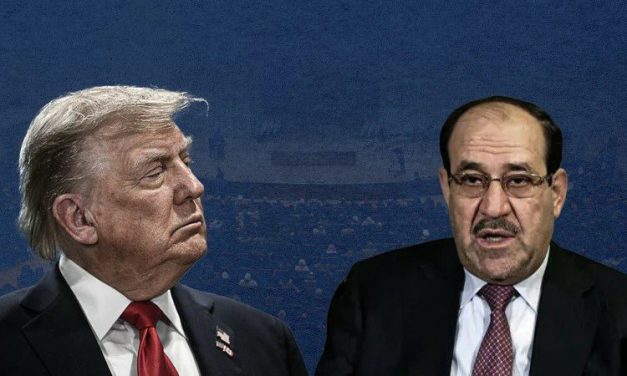
America’s Zero-Sum Game in Iraq

Online Strategic Council – Memoir: The swift selection of Nouri al-Maliki for the premiership constitutes a new phase in Iraq’s political sphere. Multiple factors have played a role in this process, the most important being the prevailing situation in Iraq and the region. Under such circumstances, Iraq requires a powerful and experienced prime minister who can keep the country away from the dangers of wars and crises.

America’s Strategy for Creating Tension in the Asia-Pacific

Strategic Council Online – Opinion: Relations between some countries in the Asia-Pacific region, such as China and Japan or China and Australia, which were previously relatively normal, are trending towards deterioration, and the primary reason for this is the aggressive policies of the United States of America.

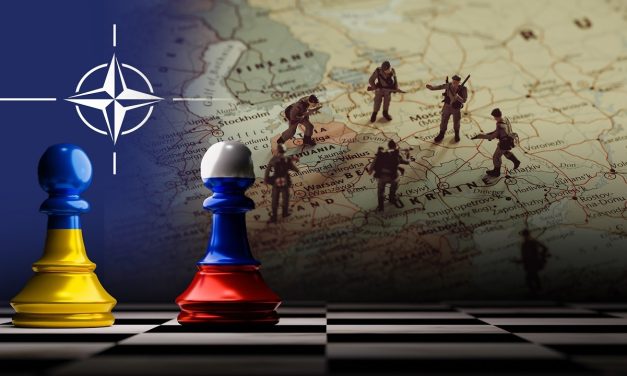
The Collapse of the European Security Illusion with the Continuation of the Ukraine War?

Strategic Council Online – Interview: The Ukraine war has become a new turning point in the political, security, and even commercial relations of allies on both sides of the Atlantic. While this war is nearing its fourth year, many questions still remain regarding its future and its consequences; among them, will the continuation of the Ukraine war lead to the collapse of the European security illusion?

Is Greenland Pushing Europe Toward China?

Strategic Council Online – Interview: A European affairs expert believes that the seizure of Greenland will certainly weaken America’s relations with Europe and its allies. Donald Trump’s view is that he does not need these countries, but if Europe faces significant pressure from the United States, it is natural for it to move toward China.

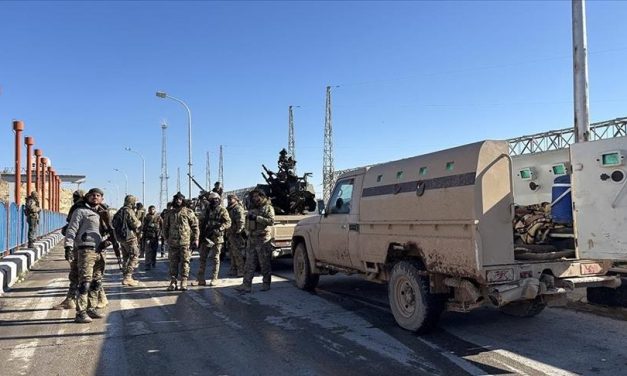
Alarm Bells Sound for ISIS Revival in Syria: Threat to Iraq and West Asia

Strategic Council Online – Opinion: Numerous documents and pieces of evidence indicate that ISIS, which in recent years has been the region’s biggest threat to security and stability after the Zionist regime, has once again in recent months become a focal point for political and security exploitation by American and Zionist regime security, intelligence, and political circles.

Afghanistan’s Effective Role in the Economy of Eurasia

Strategic Council Online – Interview: A regional affairs researcher stated: Despite projects such as the Khaf-Herat railway and the Herat-Balkh-Mazar-i-Sharif corridor being on the agenda, insecurity and the absence of an inclusive government remain the most significant obstacles to realizing transit corridors and Afghanistan playing an effective role in the economy of Eurasia.

Loading

Últimas publicaciones

America’s Zero-Sum Game in Iraq

Online Strategic Council – Memoir: The swift selection of Nouri al-Maliki for the premiership constitutes a new phase in Iraq’s political sphere. Multiple factors have played a role in this process, the most important being the prevailing situation in Iraq and the region. Under such circumstances, Iraq requires a powerful and experienced prime minister who can keep the country away from the dangers of wars and crises.

America’s Strategy for Creating Tension in the Asia-Pacific

Strategic Council Online – Opinion: Relations between some countries in the Asia-Pacific region, such as China and Japan or China and Australia, which were previously relatively normal, are trending towards deterioration, and the primary reason for this is the aggressive policies of the United States of America.

The Collapse of the European Security Illusion with the Continuation of the Ukraine War?

Strategic Council Online – Interview: The Ukraine war has become a new turning point in the political, security, and even commercial relations of allies on both sides of the Atlantic. While this war is nearing its fourth year, many questions still remain regarding its future and its consequences; among them, will the continuation of the Ukraine war lead to the collapse of the European security illusion?

Is Greenland Pushing Europe Toward China?

Strategic Council Online – Interview: A European affairs expert believes that the seizure of Greenland will certainly weaken America’s relations with Europe and its allies. Donald Trump’s view is that he does not need these countries, but if Europe faces significant pressure from the United States, it is natural for it to move toward China.

Alarm Bells Sound for ISIS Revival in Syria: Threat to Iraq and West Asia

Strategic Council Online – Opinion: Numerous documents and pieces of evidence indicate that ISIS, which in recent years has been the region’s biggest threat to security and stability after the Zionist regime, has once again in recent months become a focal point for political and security exploitation by American and Zionist regime security, intelligence, and political circles.

Afghanistan’s Effective Role in the Economy of Eurasia

Strategic Council Online – Interview: A regional affairs researcher stated: Despite projects such as the Khaf-Herat railway and the Herat-Balkh-Mazar-i-Sharif corridor being on the agenda, insecurity and the absence of an inclusive government remain the most significant obstacles to realizing transit corridors and Afghanistan playing an effective role in the economy of Eurasia.

Loading

DERNIER CONTENU

America’s Zero-Sum Game in Iraq

Online Strategic Council – Memoir: The swift selection of Nouri al-Maliki for the premiership constitutes a new phase in Iraq’s political sphere. Multiple factors have played a role in this process, the most important being the prevailing situation in Iraq and the region. Under such circumstances, Iraq requires a powerful and experienced prime minister who can keep the country away from the dangers of wars and crises.

America’s Strategy for Creating Tension in the Asia-Pacific

Strategic Council Online – Opinion: Relations between some countries in the Asia-Pacific region, such as China and Japan or China and Australia, which were previously relatively normal, are trending towards deterioration, and the primary reason for this is the aggressive policies of the United States of America.

The Collapse of the European Security Illusion with the Continuation of the Ukraine War?

Strategic Council Online – Interview: The Ukraine war has become a new turning point in the political, security, and even commercial relations of allies on both sides of the Atlantic. While this war is nearing its fourth year, many questions still remain regarding its future and its consequences; among them, will the continuation of the Ukraine war lead to the collapse of the European security illusion?

Is Greenland Pushing Europe Toward China?

Strategic Council Online – Interview: A European affairs expert believes that the seizure of Greenland will certainly weaken America’s relations with Europe and its allies. Donald Trump’s view is that he does not need these countries, but if Europe faces significant pressure from the United States, it is natural for it to move toward China.

Alarm Bells Sound for ISIS Revival in Syria: Threat to Iraq and West Asia

Strategic Council Online – Opinion: Numerous documents and pieces of evidence indicate that ISIS, which in recent years has been the region’s biggest threat to security and stability after the Zionist regime, has once again in recent months become a focal point for political and security exploitation by American and Zionist regime security, intelligence, and political circles.

Afghanistan’s Effective Role in the Economy of Eurasia

Strategic Council Online – Interview: A regional affairs researcher stated: Despite projects such as the Khaf-Herat railway and the Herat-Balkh-Mazar-i-Sharif corridor being on the agenda, insecurity and the absence of an inclusive government remain the most significant obstacles to realizing transit corridors and Afghanistan playing an effective role in the economy of Eurasia.

Loading