Sharif University of Technology lecturer at the “Foreign Relations in Artificial Intelligence Era” meeting: Need to determine data governance to benefit from artificial intelligence

Strategic Council Online: A professor of Sharif University of Technology, referring to the performance of cognitive sciences and neurosciences in addition to quantum processing and artificial intelligence, stated: If we do not consider these three together, given the progress being made in the world, it is impossible for us to reach that stage, and this means that in such a case, we will only receive services; that means we will have to be subordinate in diplomacy; not only in diplomacy, but in all fields, we either have to be subservient, or we have to live like primitive humans.

Dr. Hamidreza Rabiei, a faculty member of the Department of Computer Engineering at the Sharif University of Technology, speaking at the specialized meeting on “Foreign Relations in Artificial Intelligence Era,” which was organized by the Strategic Council on Foreign Relations, referred to the “Artificial Intelligence and National Security from the Perspective of Foreign Relations” and said: In today’s age, security is a deeper issue and one should not only see its negative aspects. Unfortunately, we see issues mainly from a negative angle, and, for example, in the discussion of data, we want to make data secure. This makes us not take advantage of its benefits.

Stating that artificial intelligence is a transformative technology, he said: Our traditional diplomacy, security, and service delivery methods are being transformed in general. We must understand and accept it. Failure to accept it can be a national security issue. Therefore, we must first accept that this is technology; of course, we are magnifying artificial intelligence. Artificial intelligence is a double-edged sword with mistakes and errors.

Emphasizing that artificial intelligence is an ecosystem, and this issue should not be viewed as one-dimensional, the university professor continued: A one-dimensional view of it is more of a waste of resources. If we take a one-dimensional measure, we should not be happy and imagine that the country has grown in this field. This disaster has happened to other technologies as well. This makes us unable to have the necessary productivity. Artificial intelligence is no exception. Therefore, we should consider artificial intelligence as an ecosystem and, according to our ability, invest in things that can increase the country’s productivity.

Rabiei added: Investing in this field is a terrible investment, and even though we can shout slogans, we cannot face the world. If we add up the top 10 artificial intelligence companies in the US and China, they are worth about 8 trillion dollars. We can’t invest this amount.

Stating that we can use artificial intelligence to solve some of our problems, he said: This ecosystem is an ecosystem at different levels in the world, up to the level of an organization. If we want to take advantage of what’s in the world, we need to fine-tune our relationships to access the many platforms that exist in AI.

The university professor referred to the investment of world companies in such areas and emphasized the necessity of having real views in this regard, adding: The Ministry of Foreign Affairs must recognize the elements of its ecosystem well and invest in them to have high productivity.

Emphasizing that the world is not looking for artificial intelligence to make decisions instead of humans, and in complex systems, artificial intelligence decision-making is unacceptable; he explained: The world is looking for human-centered artificial intelligence; because we believe that AI has not yet been generalized enough to take the place of humans, while there are characteristics of humans that machines cannot model them. Therefore, where decisions are to be made about human lives and the fate of humans, they must be made with human-centered and ethical systems, and AI is by our side as a tool and an assistant.

Stating that the task of data in Iran is not straightforward and we cannot be productive from the security point of view, Rabiei noted: Until data governance is not clarified, artificial intelligence is nothing more than a slogan. Artificial intelligence has no meaning without data. The second problem is talented human resources; we should pay attention to how to keep these talented human resources in the country. The next problem is technology; if we ignore it, our distance from the world will get deeper and deeper every day. Our attitude and way of thinking is also very important. If the proper thought is not spread, we will definitely have problems.

Emphasizing the importance of regulation, he added: The world is now dealing with this issue so that its harm does not outweigh its benefits. In addition, we should also pay attention to the coordination and control of this ecosystem; we usually deal with one of those cases and leave the other cases and run into problems. Then we seek to solve it through security. This method does not work. Therefore, this ecosystem should be seen as a whole.

Emphasizing that not paying attention to this ecosystem and its elements is our most significant national security challenge, Rabiei explained: What is more terrible than encouraging our best young people to emigrate from Iran? This is a national security problem. You cannot design a system without humans. Without data, AI has no meaning. These all need to be adjusted.

The faculty member of the Department of Computer Engineering of Sharif University of Technology pointed to the performance of cognitive sciences and neurosciences along with quantum processing and artificial intelligence and stated: If we do not consider these three together, given the developments that are taking place in the world, it is impossible for us to reach this stage, and this means that in such a case we will only receive services; that means we will have be subordinate in diplomacy; not only in diplomacy, but in all fields, we either have to be subservient, or we have to live like primitive humans.

Rabiei continued: Unfortunately, we ignore such issues. We must have proper diplomacy to have our place and role in this world, which is an ecosystem. The first point is our good human resources that by taking all the opportunities from them, we force them to leave with two hands, and it seems this issue is not very important for us.

Referring to the US investment of 47 billion dollars in 2022 in these fields and China’s investment of 13.41 billion dollars in this regard, he said: The industry and companies of the world are ahead of the universities in those fields. But our companies have not appropriately invested and have not had proper productivity. Oxford University has ranked Iran 75th out of 181 countries in research on artificial intelligence indicators, and Iran has been ranked 12th out of 18 countries in the Middle East. This shows that we are not in a good situation.

The university professor, stating that artificial intelligence models accelerate the speed of scientific findings and progress, added: The investment and the proportion of companies that received artificial intelligence in the past two years have increased, But the investments of those who had received artificial intelligence have increased.

Stating that Chinese citizens trust AI more than American citizens, Rabiei emphasized: One of the benefits of artificial intelligence is the personalization of systems and services, but on the other hand, it creates an intense concentration of power. The processes of science and innovation change, and on the other hand, the development of cyber weapons leads to the penetration and control of the country’s critical infrastructure, which, unfortunately, we do not pay much attention to.

Emphasizing that artificial intelligence can help us in solving complex problems. It will certainly help regional decision-making on a global scale and relations between countries. Still, at the same time, it disrupts human heterogeneity, he reminded: It is not true to think that AI will make decisions for us in every area of diplomacy and politics, and the world does not do such a thing either. Therefore, it can be viewed as a consultant. The country must make a serious decision at the macro level.
0 Comments

LATEST CONTENT

Commercial Exploitation of Peace; The Gaza Committee in Confrontation with International Legitimacy

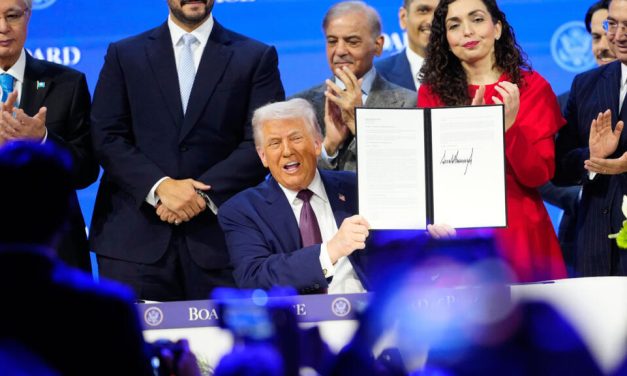
Strategic Council Online – Report: While the second phase of the implementation of the Gaza ceasefire has begun, the establishment of the “Peace Board” chaired by Donald Trump on the sidelines of the Davos meeting (22 January 2026) has become more than a technical mechanism for reconstruction and has turned into a test for the future of the international order.
Despite the signing of the charter by 22 out of 60 invited countries, the limited presence of global leaders at the Davos ceremony and the non-acceptance of this body by the European Union and key Western countries indicate a deep divide in global perceptions of the legitimacy of this mechanism.
In this report, drawing on the analysis of Hadi Borhani, a regional affairs expert, and international data, three strategic questions are addressed: Is the Peace Board an instrument for implementing UN Security Council Resolution 2803 or a substitute for the United Nations? How does the hierarchical architecture of this committee intensify executive challenges in Gaza? And finally, can this body create sustainable peace without the cooperation of Palestinians and with the concentration of power in the hands of a single individual?

America’s Zero-Sum Game in Iraq

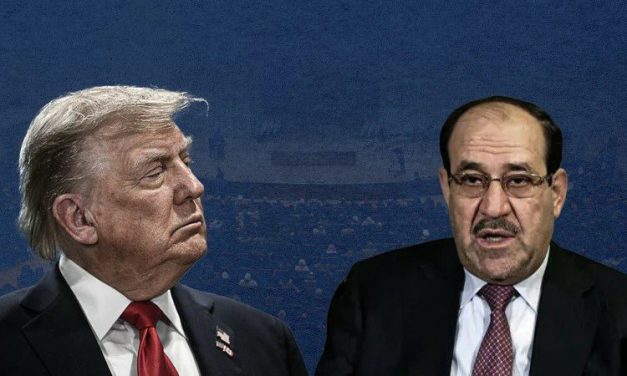
Online Strategic Council – Memoir: The swift selection of Nouri al-Maliki for the premiership constitutes a new phase in Iraq’s political sphere. Multiple factors have played a role in this process, the most important being the prevailing situation in Iraq and the region. Under such circumstances, Iraq requires a powerful and experienced prime minister who can keep the country away from the dangers of wars and crises.

America’s Strategy for Creating Tension in the Asia-Pacific

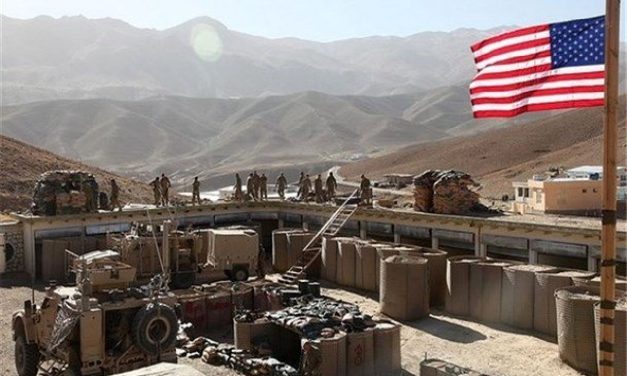
Strategic Council Online – Opinion: Relations between some countries in the Asia-Pacific region, such as China and Japan or China and Australia, which were previously relatively normal, are trending towards deterioration, and the primary reason for this is the aggressive policies of the United States of America.

The Collapse of the European Security Illusion with the Continuation of the Ukraine War?

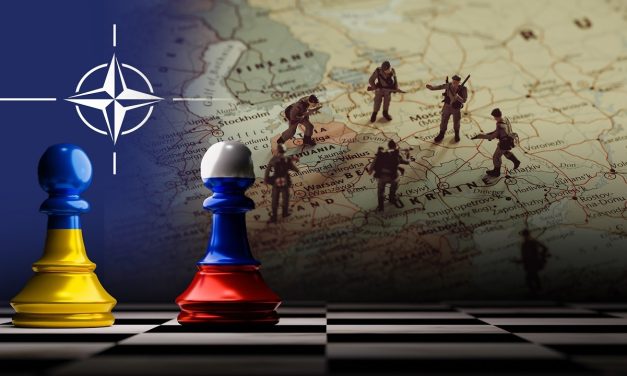
Strategic Council Online – Interview: The Ukraine war has become a new turning point in the political, security, and even commercial relations of allies on both sides of the Atlantic. While this war is nearing its fourth year, many questions still remain regarding its future and its consequences; among them, will the continuation of the Ukraine war lead to the collapse of the European security illusion?

Loading

Últimas publicaciones

Commercial Exploitation of Peace; The Gaza Committee in Confrontation with International Legitimacy

Strategic Council Online – Report: While the second phase of the implementation of the Gaza ceasefire has begun, the establishment of the “Peace Board” chaired by Donald Trump on the sidelines of the Davos meeting (22 January 2026) has become more than a technical mechanism for reconstruction and has turned into a test for the future of the international order.
Despite the signing of the charter by 22 out of 60 invited countries, the limited presence of global leaders at the Davos ceremony and the non-acceptance of this body by the European Union and key Western countries indicate a deep divide in global perceptions of the legitimacy of this mechanism.
In this report, drawing on the analysis of Hadi Borhani, a regional affairs expert, and international data, three strategic questions are addressed: Is the Peace Board an instrument for implementing UN Security Council Resolution 2803 or a substitute for the United Nations? How does the hierarchical architecture of this committee intensify executive challenges in Gaza? And finally, can this body create sustainable peace without the cooperation of Palestinians and with the concentration of power in the hands of a single individual?

America’s Zero-Sum Game in Iraq

Online Strategic Council – Memoir: The swift selection of Nouri al-Maliki for the premiership constitutes a new phase in Iraq’s political sphere. Multiple factors have played a role in this process, the most important being the prevailing situation in Iraq and the region. Under such circumstances, Iraq requires a powerful and experienced prime minister who can keep the country away from the dangers of wars and crises.

America’s Strategy for Creating Tension in the Asia-Pacific

Strategic Council Online – Opinion: Relations between some countries in the Asia-Pacific region, such as China and Japan or China and Australia, which were previously relatively normal, are trending towards deterioration, and the primary reason for this is the aggressive policies of the United States of America.

The Collapse of the European Security Illusion with the Continuation of the Ukraine War?

Strategic Council Online – Interview: The Ukraine war has become a new turning point in the political, security, and even commercial relations of allies on both sides of the Atlantic. While this war is nearing its fourth year, many questions still remain regarding its future and its consequences; among them, will the continuation of the Ukraine war lead to the collapse of the European security illusion?

Loading

DERNIER CONTENU

Commercial Exploitation of Peace; The Gaza Committee in Confrontation with International Legitimacy

Strategic Council Online – Report: While the second phase of the implementation of the Gaza ceasefire has begun, the establishment of the “Peace Board” chaired by Donald Trump on the sidelines of the Davos meeting (22 January 2026) has become more than a technical mechanism for reconstruction and has turned into a test for the future of the international order.
Despite the signing of the charter by 22 out of 60 invited countries, the limited presence of global leaders at the Davos ceremony and the non-acceptance of this body by the European Union and key Western countries indicate a deep divide in global perceptions of the legitimacy of this mechanism.
In this report, drawing on the analysis of Hadi Borhani, a regional affairs expert, and international data, three strategic questions are addressed: Is the Peace Board an instrument for implementing UN Security Council Resolution 2803 or a substitute for the United Nations? How does the hierarchical architecture of this committee intensify executive challenges in Gaza? And finally, can this body create sustainable peace without the cooperation of Palestinians and with the concentration of power in the hands of a single individual?

America’s Zero-Sum Game in Iraq

Online Strategic Council – Memoir: The swift selection of Nouri al-Maliki for the premiership constitutes a new phase in Iraq’s political sphere. Multiple factors have played a role in this process, the most important being the prevailing situation in Iraq and the region. Under such circumstances, Iraq requires a powerful and experienced prime minister who can keep the country away from the dangers of wars and crises.

America’s Strategy for Creating Tension in the Asia-Pacific

Strategic Council Online – Opinion: Relations between some countries in the Asia-Pacific region, such as China and Japan or China and Australia, which were previously relatively normal, are trending towards deterioration, and the primary reason for this is the aggressive policies of the United States of America.

The Collapse of the European Security Illusion with the Continuation of the Ukraine War?

Strategic Council Online – Interview: The Ukraine war has become a new turning point in the political, security, and even commercial relations of allies on both sides of the Atlantic. While this war is nearing its fourth year, many questions still remain regarding its future and its consequences; among them, will the continuation of the Ukraine war lead to the collapse of the European security illusion?

Loading

DERNIER CONTENU

Commercial Exploitation of Peace; The Gaza Committee in Confrontation with International Legitimacy

Strategic Council Online – Report: While the second phase of the implementation of the Gaza ceasefire has begun, the establishment of the “Peace Board” chaired by Donald Trump on the sidelines of the Davos meeting (22 January 2026) has become more than a technical mechanism for reconstruction and has turned into a test for the future of the international order.
Despite the signing of the charter by 22 out of 60 invited countries, the limited presence of global leaders at the Davos ceremony and the non-acceptance of this body by the European Union and key Western countries indicate a deep divide in global perceptions of the legitimacy of this mechanism.
In this report, drawing on the analysis of Hadi Borhani, a regional affairs expert, and international data, three strategic questions are addressed: Is the Peace Board an instrument for implementing UN Security Council Resolution 2803 or a substitute for the United Nations? How does the hierarchical architecture of this committee intensify executive challenges in Gaza? And finally, can this body create sustainable peace without the cooperation of Palestinians and with the concentration of power in the hands of a single individual?

America’s Zero-Sum Game in Iraq

Online Strategic Council – Memoir: The swift selection of Nouri al-Maliki for the premiership constitutes a new phase in Iraq’s political sphere. Multiple factors have played a role in this process, the most important being the prevailing situation in Iraq and the region. Under such circumstances, Iraq requires a powerful and experienced prime minister who can keep the country away from the dangers of wars and crises.

America’s Strategy for Creating Tension in the Asia-Pacific

Strategic Council Online – Opinion: Relations between some countries in the Asia-Pacific region, such as China and Japan or China and Australia, which were previously relatively normal, are trending towards deterioration, and the primary reason for this is the aggressive policies of the United States of America.

The Collapse of the European Security Illusion with the Continuation of the Ukraine War?

Strategic Council Online – Interview: The Ukraine war has become a new turning point in the political, security, and even commercial relations of allies on both sides of the Atlantic. While this war is nearing its fourth year, many questions still remain regarding its future and its consequences; among them, will the continuation of the Ukraine war lead to the collapse of the European security illusion?

Loading

DERNIER CONTENU

Commercial Exploitation of Peace; The Gaza Committee in Confrontation with International Legitimacy

Strategic Council Online – Report: While the second phase of the implementation of the Gaza ceasefire has begun, the establishment of the “Peace Board” chaired by Donald Trump on the sidelines of the Davos meeting (22 January 2026) has become more than a technical mechanism for reconstruction and has turned into a test for the future of the international order.
Despite the signing of the charter by 22 out of 60 invited countries, the limited presence of global leaders at the Davos ceremony and the non-acceptance of this body by the European Union and key Western countries indicate a deep divide in global perceptions of the legitimacy of this mechanism.
In this report, drawing on the analysis of Hadi Borhani, a regional affairs expert, and international data, three strategic questions are addressed: Is the Peace Board an instrument for implementing UN Security Council Resolution 2803 or a substitute for the United Nations? How does the hierarchical architecture of this committee intensify executive challenges in Gaza? And finally, can this body create sustainable peace without the cooperation of Palestinians and with the concentration of power in the hands of a single individual?

America’s Zero-Sum Game in Iraq

Online Strategic Council – Memoir: The swift selection of Nouri al-Maliki for the premiership constitutes a new phase in Iraq’s political sphere. Multiple factors have played a role in this process, the most important being the prevailing situation in Iraq and the region. Under such circumstances, Iraq requires a powerful and experienced prime minister who can keep the country away from the dangers of wars and crises.

America’s Strategy for Creating Tension in the Asia-Pacific

Strategic Council Online – Opinion: Relations between some countries in the Asia-Pacific region, such as China and Japan or China and Australia, which were previously relatively normal, are trending towards deterioration, and the primary reason for this is the aggressive policies of the United States of America.

The Collapse of the European Security Illusion with the Continuation of the Ukraine War?

Strategic Council Online – Interview: The Ukraine war has become a new turning point in the political, security, and even commercial relations of allies on both sides of the Atlantic. While this war is nearing its fourth year, many questions still remain regarding its future and its consequences; among them, will the continuation of the Ukraine war lead to the collapse of the European security illusion?

Loading