Intra-Islamic Civilization Dialogue as a Strategy

2019/03/27 | Council, News

Strategic Council Online: 'Returning to Islamic civilization in the Muslim world today is a proper response to the identity crisis, which is being suffered by all Muslim nations', the President of the Strategic Council of Foreign Relations said.

Dr. Seyyed Kamal Kharrazi made his speech at Ibn Khaldun Center, Qatar on the title: “Intra-Islamic Civilization Dialogue as a Strategy to Overcome the Present Challenges”.

The Full text of this speech comes as follows:

Mr. Chairman, Ladies, and Gentlemen

I would like to appreciate the initiative of the University of Qatar and the Ibn Khaldun Center to organize such a meeting. Today, the Muslim world in general and the West Asian countries, in particular, are in dire need of adopting dialogue among themselves. Therefore, I would like to focus on the necessity of establishing dialogue inside the Islamic civilization as a strategy to overcome the existing challenges.


Ladies and Gentlemen

Without a doubt, one of the main innovations of Ibn Khaldun was to investigate scientifically the Islamic civilization, its formation, and glory. A civilization, which according to Lothrop Stoddard the American historian in his book “The New World of Islam”, is among the prominent civilizations decorating the public history of the world and making history with its bright impacts.

The main features of the Islamic civilization, as outlined by the distinguished researchers of the field, include concepts such as safe environment, ethical discipline, genuineness of thoughts and ideas, superiority of the level of living, tolerance and avoidance of prejudice, spirit of unity and consolidation, development and progress of science and literary, labor and faith and considering the oppressed.

Muslim scientists conquered the fields of science for more than 500 years, during the dark periods of Europe. This demonstrates that the Muslim society has been capable enough to establish and sustain a glorious civilization. In the shadow of this great civilization, the engine of human knowledge was reignited by Muslim scientists through the promotion of philosophy and science, and thus the heritage of Greek knowledge was publicized in the hands of new Muslim rational fathers and pioneers of Islamic scientific research. In this way, the Islamic civilization and Muslim thinkers played an intermediary role between the scientific achievements of Greece and the new era.   

Now a question arises here: Is Islamic civilization a phenomenon related to the past and part of history? Or, still considered a reality, accessible to human beings which constitutes a part of the cultural, social and political life of today’s world?

In response, one may indicate that Islamic civilization, backed by the religion of Islam and Islamic culture, is a living, dynamic and prosperous creature which in spite of losing its glory and tolerating hardship during the period of its decline, has been repeatedly seeking to revive its civilizational dimensions and manifestations.

Such revivalist efforts and concerns of the past two recent centuries entered a new and determining state with the wave of Islamic awakening. A stage in which return to Islamic civilization and values has become the leading demand of the public at the level of the masses and the elites. In the Muslim world today, talking of Islam and its glorious civilization is now considered as an all-inclusive solution.

Of course, it should be regrettably admitted that in parallel with the increasing calls to return to Islamic civilization and establish a new era of glorious civilization, the malady and enormous damage of “division” is spreading across the Muslim world.


Ladies and Gentlemen

Now there arises another key question: Did differences within the Islamic world not existed during the 500 years of the prosperity of the Islamic civilization? There, definitely existed. So what did they do which enabled them to found such a glorious civilization despite such differences? And how they managed to recognize such differences and handle them? The answer may be; they benefited from tolerance and patience and were able to create dialogue and understanding among different Islamic schools of thought. I believe this a fundamental principle for reviving the Islamic civilization. Tolerance and patience, in fact, constituted the building blocks of the Islamic civilization.

In order to end the present unacceptable situation that has created challenges for the sphere of the Islamic civilization, I would like to propose to move towards fostering dialogue inside the Islamic civilization. The period of glory and majesty of the Islamic civilization is a reality on which all Muslims have the utmost agreement and sentiment. Moreover, return to Islamic civilization in the Muslim world today is a proper response to the identity crisis, which is being suffered by all Muslim nations.

The prerequisite to establishing dialogue inside the Islamic civilization is to admit this reality that firstly, the Islamic civilization is the manifestation of the philosophical notion of “unity and in the same time plurality”. In other words, belief on the principle of unity yet plurality constitutes the foundation of dialogue inside the Islamic civilization. Secondly, we need to come to the belief that the development and expansion of Islamic civilization in all its dimensions are to benefit all. Such a dialogue should not be conditional on any prerequisite. Any dialogue should be free and safe from prejudice, exactly as it was prevalent during the golden era of the Islamic civilization.

The starting point of such a dialogue should be based on positive rather than negative attitudes, meaning that dialogue should begin on the commonalities, which exist in the Muslim world and not the differences, distinctions, and conflicts. This dialogue should start at the level of elites and opinion leaders, and of course, with the political support and consent of our governments.


Dear Friends

Even though Muslim countries may have differences in opinions, they, fortunately, agree on the necessity of reviving our great Islamic civilization. Therefore, the issue of establishing intra-Islamic civilization dialogue to find solutions for its revival could provide the best path for convergence and unity of the Muslim Ummah which may lead to positive outcomes in reducing other differences as well.

It is hoped that with the establishment of such dialog, a new spirit is blown into the body of the Muslim world. Islamic civilization enjoys countless capacities and capabilities for prosperity and progress in all areas of science, economy, trade, culture, and history.


Mr. Chairman

I would like to conclude with the following suggestions on how to start:

  • Hold meetings for the exchange of views among Muslim scholars on how to revive the Islamic civilization.
  • Publicize the features of the glorious era of Islamic civilization as a source of inspiration.
  • Invest more in developing sciences and technologies in Muslim countries as the key prerequisite of any glorious civilization.
  • Establish cooperation among the universities of the Muslim world to exchange and share knowledge and technology.
  • Set up an international group of thinkers and scholars from the Muslim world to advance such a sacred cause.
  • Establish non-governmental organizations in Muslim countries to pursue and demand the intra-Islamic civilization dialogue.
  • Coordinate the media of the Muslim world to highlight such a necessity with the ultimate goal of turning it into a public demand at the level of grassroots in Muslim nations.
0 Comments

Submit a Comment

Your email address will not be published. Required fields are marked *

LATEST CONTENT

The Security Equation of Southern Lebanon for the Zionist Regime

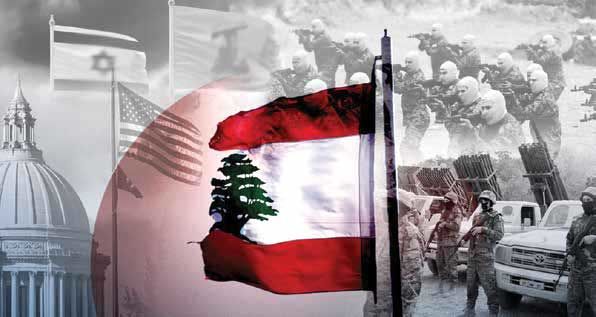
Strategic Council Online – Opinion: American-Zionist objectives in the region are not limited to weakening Hezbollah. Efforts to disarm Iraqi resistance groups such as Kata’ib Hezbollah and the Popular Mobilization Forces are also part of their subsequent plans.

Commercial Exploitation of Peace; The Gaza Committee in Confrontation with International Legitimacy

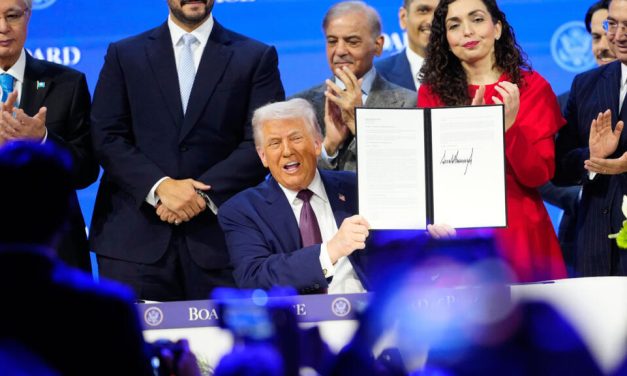
Strategic Council Online – Report: While the second phase of the implementation of the Gaza ceasefire has begun, the establishment of the “Peace Board” chaired by Donald Trump on the sidelines of the Davos meeting (22 January 2026) has become more than a technical mechanism for reconstruction and has turned into a test for the future of the international order.
Despite the signing of the charter by 22 out of 60 invited countries, the limited presence of global leaders at the Davos ceremony and the non-acceptance of this body by the European Union and key Western countries indicate a deep divide in global perceptions of the legitimacy of this mechanism.
In this report, drawing on the analysis of Hadi Borhani, a regional affairs expert, and international data, three strategic questions are addressed: Is the Peace Board an instrument for implementing UN Security Council Resolution 2803 or a substitute for the United Nations? How does the hierarchical architecture of this committee intensify executive challenges in Gaza? And finally, can this body create sustainable peace without the cooperation of Palestinians and with the concentration of power in the hands of a single individual?

America’s Zero-Sum Game in Iraq

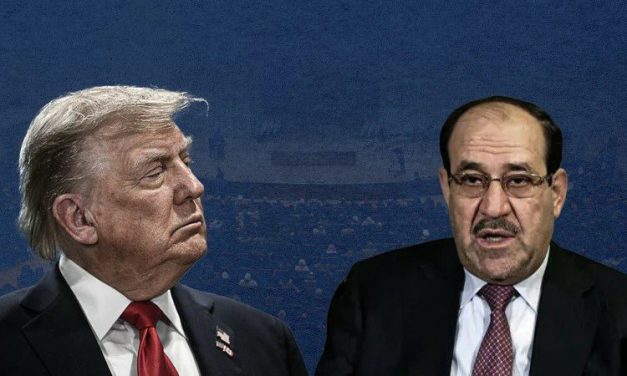
Online Strategic Council – Memoir: The swift selection of Nouri al-Maliki for the premiership constitutes a new phase in Iraq’s political sphere. Multiple factors have played a role in this process, the most important being the prevailing situation in Iraq and the region. Under such circumstances, Iraq requires a powerful and experienced prime minister who can keep the country away from the dangers of wars and crises.

America’s Strategy for Creating Tension in the Asia-Pacific

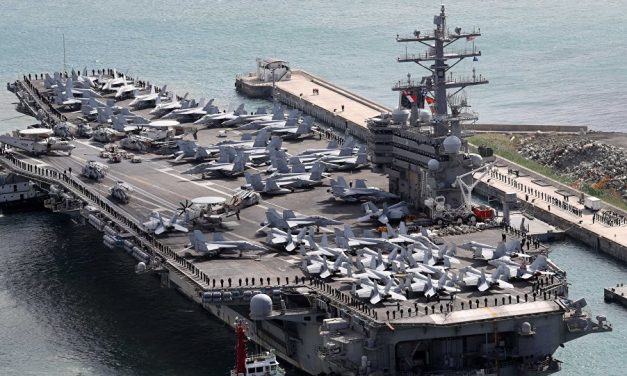
Strategic Council Online – Opinion: Relations between some countries in the Asia-Pacific region, such as China and Japan or China and Australia, which were previously relatively normal, are trending towards deterioration, and the primary reason for this is the aggressive policies of the United States of America.

Loading

Últimas publicaciones

The Security Equation of Southern Lebanon for the Zionist Regime

Strategic Council Online – Opinion: American-Zionist objectives in the region are not limited to weakening Hezbollah. Efforts to disarm Iraqi resistance groups such as Kata’ib Hezbollah and the Popular Mobilization Forces are also part of their subsequent plans.

Commercial Exploitation of Peace; The Gaza Committee in Confrontation with International Legitimacy

Strategic Council Online – Report: While the second phase of the implementation of the Gaza ceasefire has begun, the establishment of the “Peace Board” chaired by Donald Trump on the sidelines of the Davos meeting (22 January 2026) has become more than a technical mechanism for reconstruction and has turned into a test for the future of the international order.
Despite the signing of the charter by 22 out of 60 invited countries, the limited presence of global leaders at the Davos ceremony and the non-acceptance of this body by the European Union and key Western countries indicate a deep divide in global perceptions of the legitimacy of this mechanism.
In this report, drawing on the analysis of Hadi Borhani, a regional affairs expert, and international data, three strategic questions are addressed: Is the Peace Board an instrument for implementing UN Security Council Resolution 2803 or a substitute for the United Nations? How does the hierarchical architecture of this committee intensify executive challenges in Gaza? And finally, can this body create sustainable peace without the cooperation of Palestinians and with the concentration of power in the hands of a single individual?

America’s Zero-Sum Game in Iraq

Online Strategic Council – Memoir: The swift selection of Nouri al-Maliki for the premiership constitutes a new phase in Iraq’s political sphere. Multiple factors have played a role in this process, the most important being the prevailing situation in Iraq and the region. Under such circumstances, Iraq requires a powerful and experienced prime minister who can keep the country away from the dangers of wars and crises.

America’s Strategy for Creating Tension in the Asia-Pacific

Strategic Council Online – Opinion: Relations between some countries in the Asia-Pacific region, such as China and Japan or China and Australia, which were previously relatively normal, are trending towards deterioration, and the primary reason for this is the aggressive policies of the United States of America.

Loading

DERNIER CONTENU

The Security Equation of Southern Lebanon for the Zionist Regime

Strategic Council Online – Opinion: American-Zionist objectives in the region are not limited to weakening Hezbollah. Efforts to disarm Iraqi resistance groups such as Kata’ib Hezbollah and the Popular Mobilization Forces are also part of their subsequent plans.

Commercial Exploitation of Peace; The Gaza Committee in Confrontation with International Legitimacy

Strategic Council Online – Report: While the second phase of the implementation of the Gaza ceasefire has begun, the establishment of the “Peace Board” chaired by Donald Trump on the sidelines of the Davos meeting (22 January 2026) has become more than a technical mechanism for reconstruction and has turned into a test for the future of the international order.
Despite the signing of the charter by 22 out of 60 invited countries, the limited presence of global leaders at the Davos ceremony and the non-acceptance of this body by the European Union and key Western countries indicate a deep divide in global perceptions of the legitimacy of this mechanism.
In this report, drawing on the analysis of Hadi Borhani, a regional affairs expert, and international data, three strategic questions are addressed: Is the Peace Board an instrument for implementing UN Security Council Resolution 2803 or a substitute for the United Nations? How does the hierarchical architecture of this committee intensify executive challenges in Gaza? And finally, can this body create sustainable peace without the cooperation of Palestinians and with the concentration of power in the hands of a single individual?

America’s Zero-Sum Game in Iraq

Online Strategic Council – Memoir: The swift selection of Nouri al-Maliki for the premiership constitutes a new phase in Iraq’s political sphere. Multiple factors have played a role in this process, the most important being the prevailing situation in Iraq and the region. Under such circumstances, Iraq requires a powerful and experienced prime minister who can keep the country away from the dangers of wars and crises.

America’s Strategy for Creating Tension in the Asia-Pacific

Strategic Council Online – Opinion: Relations between some countries in the Asia-Pacific region, such as China and Japan or China and Australia, which were previously relatively normal, are trending towards deterioration, and the primary reason for this is the aggressive policies of the United States of America.

Loading

DERNIER CONTENU

The Security Equation of Southern Lebanon for the Zionist Regime

Strategic Council Online – Opinion: American-Zionist objectives in the region are not limited to weakening Hezbollah. Efforts to disarm Iraqi resistance groups such as Kata’ib Hezbollah and the Popular Mobilization Forces are also part of their subsequent plans.

Commercial Exploitation of Peace; The Gaza Committee in Confrontation with International Legitimacy

Strategic Council Online – Report: While the second phase of the implementation of the Gaza ceasefire has begun, the establishment of the “Peace Board” chaired by Donald Trump on the sidelines of the Davos meeting (22 January 2026) has become more than a technical mechanism for reconstruction and has turned into a test for the future of the international order.
Despite the signing of the charter by 22 out of 60 invited countries, the limited presence of global leaders at the Davos ceremony and the non-acceptance of this body by the European Union and key Western countries indicate a deep divide in global perceptions of the legitimacy of this mechanism.
In this report, drawing on the analysis of Hadi Borhani, a regional affairs expert, and international data, three strategic questions are addressed: Is the Peace Board an instrument for implementing UN Security Council Resolution 2803 or a substitute for the United Nations? How does the hierarchical architecture of this committee intensify executive challenges in Gaza? And finally, can this body create sustainable peace without the cooperation of Palestinians and with the concentration of power in the hands of a single individual?

America’s Zero-Sum Game in Iraq

Online Strategic Council – Memoir: The swift selection of Nouri al-Maliki for the premiership constitutes a new phase in Iraq’s political sphere. Multiple factors have played a role in this process, the most important being the prevailing situation in Iraq and the region. Under such circumstances, Iraq requires a powerful and experienced prime minister who can keep the country away from the dangers of wars and crises.

America’s Strategy for Creating Tension in the Asia-Pacific

Strategic Council Online – Opinion: Relations between some countries in the Asia-Pacific region, such as China and Japan or China and Australia, which were previously relatively normal, are trending towards deterioration, and the primary reason for this is the aggressive policies of the United States of America.

Loading

DERNIER CONTENU

The Security Equation of Southern Lebanon for the Zionist Regime

Strategic Council Online – Opinion: American-Zionist objectives in the region are not limited to weakening Hezbollah. Efforts to disarm Iraqi resistance groups such as Kata’ib Hezbollah and the Popular Mobilization Forces are also part of their subsequent plans.

Commercial Exploitation of Peace; The Gaza Committee in Confrontation with International Legitimacy

Strategic Council Online – Report: While the second phase of the implementation of the Gaza ceasefire has begun, the establishment of the “Peace Board” chaired by Donald Trump on the sidelines of the Davos meeting (22 January 2026) has become more than a technical mechanism for reconstruction and has turned into a test for the future of the international order.
Despite the signing of the charter by 22 out of 60 invited countries, the limited presence of global leaders at the Davos ceremony and the non-acceptance of this body by the European Union and key Western countries indicate a deep divide in global perceptions of the legitimacy of this mechanism.
In this report, drawing on the analysis of Hadi Borhani, a regional affairs expert, and international data, three strategic questions are addressed: Is the Peace Board an instrument for implementing UN Security Council Resolution 2803 or a substitute for the United Nations? How does the hierarchical architecture of this committee intensify executive challenges in Gaza? And finally, can this body create sustainable peace without the cooperation of Palestinians and with the concentration of power in the hands of a single individual?

America’s Zero-Sum Game in Iraq

Online Strategic Council – Memoir: The swift selection of Nouri al-Maliki for the premiership constitutes a new phase in Iraq’s political sphere. Multiple factors have played a role in this process, the most important being the prevailing situation in Iraq and the region. Under such circumstances, Iraq requires a powerful and experienced prime minister who can keep the country away from the dangers of wars and crises.

America’s Strategy for Creating Tension in the Asia-Pacific

Strategic Council Online – Opinion: Relations between some countries in the Asia-Pacific region, such as China and Japan or China and Australia, which were previously relatively normal, are trending towards deterioration, and the primary reason for this is the aggressive policies of the United States of America.

Loading