Importance, Necessity of Resumption of Iran-Egypt Relations

Strategic Council Online - Opinion: More than 43 years have passed since the Islamic Republic of Iran and Egypt severed relations. Support of Anwar Sadat, the former president of Egypt, for the deposed Shah of Iran, his opposition to the Islamic Revolution, and the conclusion of the so-called “Camp David” agreement were three important issues that caused the relationship between the two countries to be severed in 1979. Barsam Mohammadi – Expert on regional affairs

In the past four decades, in several stages, efforts were made to restore the relations between the two countries, but due to the “submission of Egypt’s foreign policy to the US and Saudi Arabia”, these efforts produced no results.
According to published reports, in recent months following the Egyptians’ request to Iraq for mediation, Egyptian and Iranian security officials have started talks in Baghdad. However, it is still too early to comment on the prospects of the talks, which are currently focused on “security files”.
In the talks, the Egyptian side has announced that it will not be included in any regional military and security coalition formed against Iran. In addition, a powerful movement within the Egyptian armed forces and the national security institution of the country, which are also affiliated with the intelligence organization, have recently completely rejected the idea of Egypt’s participation in a military coalition against Iran.
Importance, necessity of reviving relations
According to what was said; revival of relations between Iran and Egypt is important for several reasons:
First; according to the “neighborhood policy”, neighboring and Islamic countries have a special place and priority in the foreign policy of the Islamic Republic of Iran. Although Egypt is not considered as one of Iran’s neighboring countries, it is one of the important Arab and Islamic countries that has been “deprived” of natural, logical relations and opportunities for relations with Iran for many years. This is an issue that Egyptian circles emphasize. Of course, Iran also understands the importance of Egypt very well. In addition to the economic, cultural, political and strategic dimensions, Egypt is an “important passge” for the consolidation of Iran’s cooperation with African states.
Second; the 6,000-year-old civilization, glorious past, large population, special geopolitical position, significant strategic value, history of anti-colonial struggles, etc., are prominent features of Egypt. It is not suitable for a country as great as Egypt to coordinate its foreign and regional policy with the positions and views of the sheikhdoms of the Persian Gulf and to be separated from a country like Iran, which is in its historical class.
Third; the most important factor that has separated the two countries over the past 43 years and weakened Egypt’s traditional and strategic position among Arab and Islamic countries is Cairo’s submission to the US regional policies. Apart from this issue, there is no other important ideological or political issue that justifies the severing of relations between the two countries.
Fourth; Egypt is not in a good situation today. Despite its large population, the economy of the country is limited to tourism, taxation from the Suez Canal and agriculture. This has caused the economic indicators in this country to always be at a low level. The US financial aid, instead of developing the country’s economy and saving it from bottlenecks, has intensified the country’s dependence on the US, not only in the economy, but also in the political, military, security fields and so on.
To get out of such a situation, Cairo has no choice but to review its foreign policy and adopt balanced approaches. Egypt should look for new opportunities to improve economic indicators and attract foreign investment and access new markets in the region. In this context, Iran, which has reached self-sufficiency in the fields of industry, trade, technology, military, medicine, etc., is a good and reliable option that can strengthen the Egyptian economy without any political ambitions.
Fifth; for many years, Egypt has been seeking to regain its past influence and role, as well as the leadership of the Arab world, due to its historical background, significant population and a set of other variables that do not exist in any other Arab country. This country also seeks to play an active role in the Persian Gulf region. The interaction and relationship with Iran in this field can strengthen the position of the country in the Arab world and facilitate and accelerate the process of Egypt’s active activism in the Persian Gulf and, as a result, the use of the economic, commercial, energy, etc. capacities of this region.
Obstacles to restoring relationships
There is a two-faceted equation based on which, to the extent that the relations between Iran and Egypt move towards interaction and convergence, the position, role and influence of the Zionist regime and the United States in the region will be weakened. Therefore, we have always witnessed the destructive policies of the Zionists and the White House in order to fuel the differences and intensify the political-security gaps between Iran and Egypt. Egypt’s interaction with Iran causes confusion in the regional calculations of the Zionist regime and the United States, an issue that is not acceptable by Tel Aviv and Washington.
Therefore, Tel Aviv-Washington’s regional policies and approaches act as the most important obstacle and hindering factor in the revival of Iran-Egypt relations. Resolving this issue in the first step depends on the will of the Egyptian side.
Final point
The start of Iran’s peace talks with Arab countries, including Saudi Arabia and Egypt, in addition to the opportunities it has through the expansion of the interaction atmosphere for the parties to the negotiations, is a suitable and applicable model, as well as an important deterrent factor to the intensification of security processes and arrangements and the “militarization” of the region by the US and the Zionist regime. This issue can replace the “win-loss” rule with the “win-win” rule in the region.
Although the process of peace talks between Iran and Egypt faces less challenge compared to talks between Iran and Saudi Arabia, it is obvious that the reduction of the level of differences between Tehran and Riyadh will have an effect on Iran-Egypt relations. Undoubtedly, if there is “necessary will” on the Egyptian side, the two countries can resume relations in the not too distant future.
0 Comments

Submit a Comment

Your email address will not be published. Required fields are marked *

LATEST CONTENT

Commercial Exploitation of Peace; The Gaza Committee in Confrontation with International Legitimacy

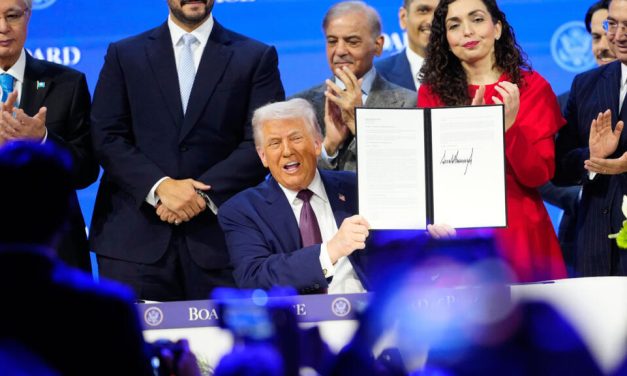
Strategic Council Online – Report: While the second phase of the implementation of the Gaza ceasefire has begun, the establishment of the “Peace Board” chaired by Donald Trump on the sidelines of the Davos meeting (22 January 2026) has become more than a technical mechanism for reconstruction and has turned into a test for the future of the international order.
Despite the signing of the charter by 22 out of 60 invited countries, the limited presence of global leaders at the Davos ceremony and the non-acceptance of this body by the European Union and key Western countries indicate a deep divide in global perceptions of the legitimacy of this mechanism.
In this report, drawing on the analysis of Hadi Borhani, a regional affairs expert, and international data, three strategic questions are addressed: Is the Peace Board an instrument for implementing UN Security Council Resolution 2803 or a substitute for the United Nations? How does the hierarchical architecture of this committee intensify executive challenges in Gaza? And finally, can this body create sustainable peace without the cooperation of Palestinians and with the concentration of power in the hands of a single individual?
America’s Zero-Sum Game in Iraq

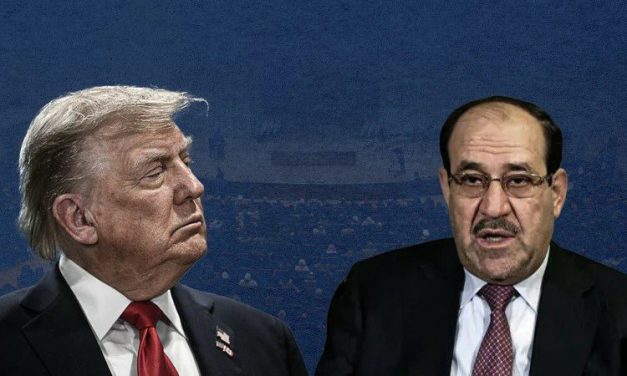
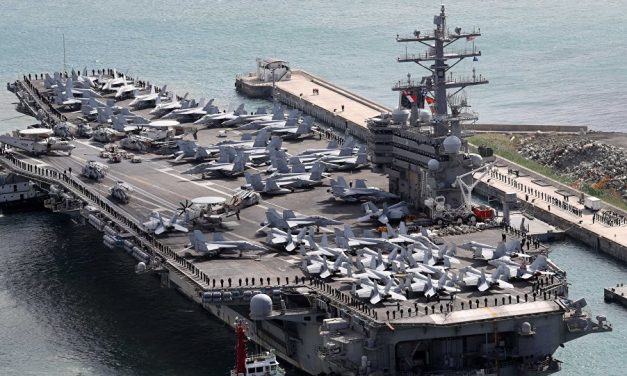
Online Strategic Council – Memoir: The swift selection of Nouri al-Maliki for the premiership constitutes a new phase in Iraq’s political sphere. Multiple factors have played a role in this process, the most important being the prevailing situation in Iraq and the region. Under such circumstances, Iraq requires a powerful and experienced prime minister who can keep the country away from the dangers of wars and crises.

America’s Strategy for Creating Tension in the Asia-Pacific

Strategic Council Online – Opinion: Relations between some countries in the Asia-Pacific region, such as China and Japan or China and Australia, which were previously relatively normal, are trending towards deterioration, and the primary reason for this is the aggressive policies of the United States of America.

The Collapse of the European Security Illusion with the Continuation of the Ukraine War?

Strategic Council Online – Interview: The Ukraine war has become a new turning point in the political, security, and even commercial relations of allies on both sides of the Atlantic. While this war is nearing its fourth year, many questions still remain regarding its future and its consequences; among them, will the continuation of the Ukraine war lead to the collapse of the European security illusion?

Is Greenland Pushing Europe Toward China?

Strategic Council Online – Interview: A European affairs expert believes that the seizure of Greenland will certainly weaken America’s relations with Europe and its allies. Donald Trump’s view is that he does not need these countries, but if Europe faces significant pressure from the United States, it is natural for it to move toward China.

Alarm Bells Sound for ISIS Revival in Syria: Threat to Iraq and West Asia

Strategic Council Online – Opinion: Numerous documents and pieces of evidence indicate that ISIS, which in recent years has been the region’s biggest threat to security and stability after the Zionist regime, has once again in recent months become a focal point for political and security exploitation by American and Zionist regime security, intelligence, and political circles.

Afghanistan’s Effective Role in the Economy of Eurasia

Strategic Council Online – Interview: A regional affairs researcher stated: Despite projects such as the Khaf-Herat railway and the Herat-Balkh-Mazar-i-Sharif corridor being on the agenda, insecurity and the absence of an inclusive government remain the most significant obstacles to realizing transit corridors and Afghanistan playing an effective role in the economy of Eurasia.

Loading

Últimas publicaciones

Commercial Exploitation of Peace; The Gaza Committee in Confrontation with International Legitimacy

Strategic Council Online – Report: While the second phase of the implementation of the Gaza ceasefire has begun, the establishment of the “Peace Board” chaired by Donald Trump on the sidelines of the Davos meeting (22 January 2026) has become more than a technical mechanism for reconstruction and has turned into a test for the future of the international order.
Despite the signing of the charter by 22 out of 60 invited countries, the limited presence of global leaders at the Davos ceremony and the non-acceptance of this body by the European Union and key Western countries indicate a deep divide in global perceptions of the legitimacy of this mechanism.
In this report, drawing on the analysis of Hadi Borhani, a regional affairs expert, and international data, three strategic questions are addressed: Is the Peace Board an instrument for implementing UN Security Council Resolution 2803 or a substitute for the United Nations? How does the hierarchical architecture of this committee intensify executive challenges in Gaza? And finally, can this body create sustainable peace without the cooperation of Palestinians and with the concentration of power in the hands of a single individual?

America’s Zero-Sum Game in Iraq

Online Strategic Council – Memoir: The swift selection of Nouri al-Maliki for the premiership constitutes a new phase in Iraq’s political sphere. Multiple factors have played a role in this process, the most important being the prevailing situation in Iraq and the region. Under such circumstances, Iraq requires a powerful and experienced prime minister who can keep the country away from the dangers of wars and crises.

America’s Strategy for Creating Tension in the Asia-Pacific

Strategic Council Online – Opinion: Relations between some countries in the Asia-Pacific region, such as China and Japan or China and Australia, which were previously relatively normal, are trending towards deterioration, and the primary reason for this is the aggressive policies of the United States of America.

The Collapse of the European Security Illusion with the Continuation of the Ukraine War?

Strategic Council Online – Interview: The Ukraine war has become a new turning point in the political, security, and even commercial relations of allies on both sides of the Atlantic. While this war is nearing its fourth year, many questions still remain regarding its future and its consequences; among them, will the continuation of the Ukraine war lead to the collapse of the European security illusion?

Is Greenland Pushing Europe Toward China?

Strategic Council Online – Interview: A European affairs expert believes that the seizure of Greenland will certainly weaken America’s relations with Europe and its allies. Donald Trump’s view is that he does not need these countries, but if Europe faces significant pressure from the United States, it is natural for it to move toward China.

Alarm Bells Sound for ISIS Revival in Syria: Threat to Iraq and West Asia

Strategic Council Online – Opinion: Numerous documents and pieces of evidence indicate that ISIS, which in recent years has been the region’s biggest threat to security and stability after the Zionist regime, has once again in recent months become a focal point for political and security exploitation by American and Zionist regime security, intelligence, and political circles.

Afghanistan’s Effective Role in the Economy of Eurasia

Strategic Council Online – Interview: A regional affairs researcher stated: Despite projects such as the Khaf-Herat railway and the Herat-Balkh-Mazar-i-Sharif corridor being on the agenda, insecurity and the absence of an inclusive government remain the most significant obstacles to realizing transit corridors and Afghanistan playing an effective role in the economy of Eurasia.

Loading

DERNIER CONTENU

Commercial Exploitation of Peace; The Gaza Committee in Confrontation with International Legitimacy

Strategic Council Online – Report: While the second phase of the implementation of the Gaza ceasefire has begun, the establishment of the “Peace Board” chaired by Donald Trump on the sidelines of the Davos meeting (22 January 2026) has become more than a technical mechanism for reconstruction and has turned into a test for the future of the international order.
Despite the signing of the charter by 22 out of 60 invited countries, the limited presence of global leaders at the Davos ceremony and the non-acceptance of this body by the European Union and key Western countries indicate a deep divide in global perceptions of the legitimacy of this mechanism.
In this report, drawing on the analysis of Hadi Borhani, a regional affairs expert, and international data, three strategic questions are addressed: Is the Peace Board an instrument for implementing UN Security Council Resolution 2803 or a substitute for the United Nations? How does the hierarchical architecture of this committee intensify executive challenges in Gaza? And finally, can this body create sustainable peace without the cooperation of Palestinians and with the concentration of power in the hands of a single individual?
America’s Zero-Sum Game in Iraq

Online Strategic Council – Memoir: The swift selection of Nouri al-Maliki for the premiership constitutes a new phase in Iraq’s political sphere. Multiple factors have played a role in this process, the most important being the prevailing situation in Iraq and the region. Under such circumstances, Iraq requires a powerful and experienced prime minister who can keep the country away from the dangers of wars and crises.

America’s Strategy for Creating Tension in the Asia-Pacific

Strategic Council Online – Opinion: Relations between some countries in the Asia-Pacific region, such as China and Japan or China and Australia, which were previously relatively normal, are trending towards deterioration, and the primary reason for this is the aggressive policies of the United States of America.

The Collapse of the European Security Illusion with the Continuation of the Ukraine War?

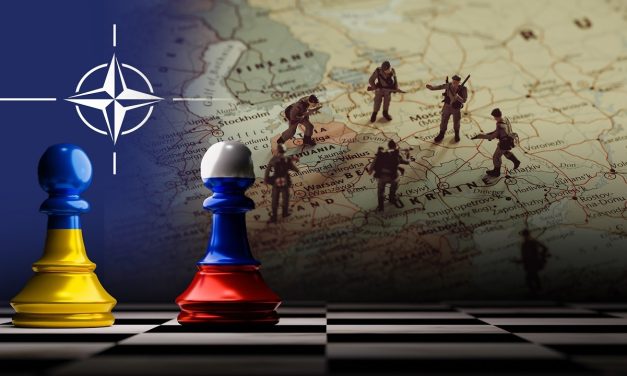
Strategic Council Online – Interview: The Ukraine war has become a new turning point in the political, security, and even commercial relations of allies on both sides of the Atlantic. While this war is nearing its fourth year, many questions still remain regarding its future and its consequences; among them, will the continuation of the Ukraine war lead to the collapse of the European security illusion?

Is Greenland Pushing Europe Toward China?

Strategic Council Online – Interview: A European affairs expert believes that the seizure of Greenland will certainly weaken America’s relations with Europe and its allies. Donald Trump’s view is that he does not need these countries, but if Europe faces significant pressure from the United States, it is natural for it to move toward China.

Alarm Bells Sound for ISIS Revival in Syria: Threat to Iraq and West Asia

Strategic Council Online – Opinion: Numerous documents and pieces of evidence indicate that ISIS, which in recent years has been the region’s biggest threat to security and stability after the Zionist regime, has once again in recent months become a focal point for political and security exploitation by American and Zionist regime security, intelligence, and political circles.

Afghanistan’s Effective Role in the Economy of Eurasia

Strategic Council Online – Interview: A regional affairs researcher stated: Despite projects such as the Khaf-Herat railway and the Herat-Balkh-Mazar-i-Sharif corridor being on the agenda, insecurity and the absence of an inclusive government remain the most significant obstacles to realizing transit corridors and Afghanistan playing an effective role in the economy of Eurasia.

Loading