جدیدترین مطالب

An Analysis of Iran’s Missile Capability

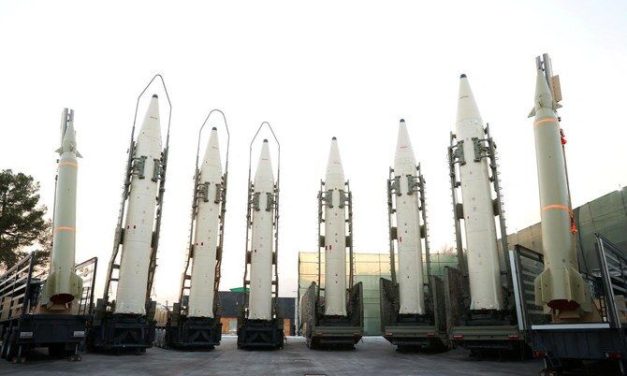
Strategic Council Online – Interview: A strategic affairs analyst said: Iran’s missile doctrine is not only part of its deterrent capability but also part of the security identity of the Islamic Republic of Iran and should not be weakened.
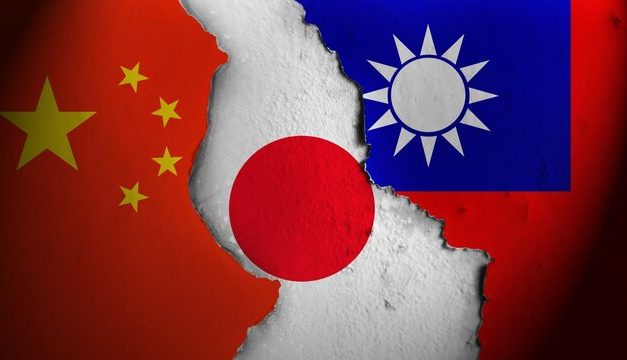
Japan-China Tensions Over Taiwan

Strategic Council Online – Interview: An international affairs expert said that U.S. President Donald Trump, in a phone call this week with Sanae Takaichi, asked her not to further escalate disputes with China. Earlier this month, Takaichi created a rare tension with Beijing by stating that “a potential Chinese attack on Taiwan could lead to military action by Japan,” remarks that drew a sharp reaction from China. Beijing demanded that she retract these statements, but the Japanese Prime Minister has not done so thus far, and Tokyo has only emphasized that its policy regarding Taiwan has not changed.

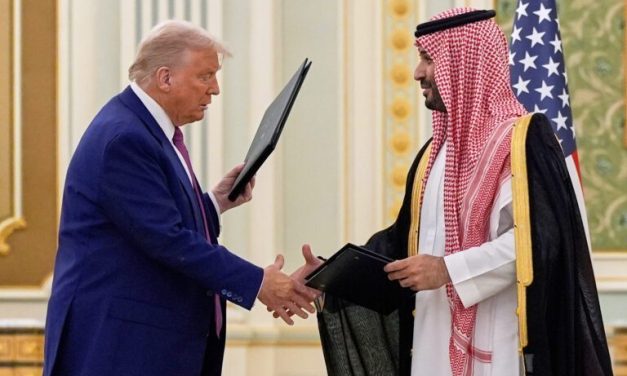
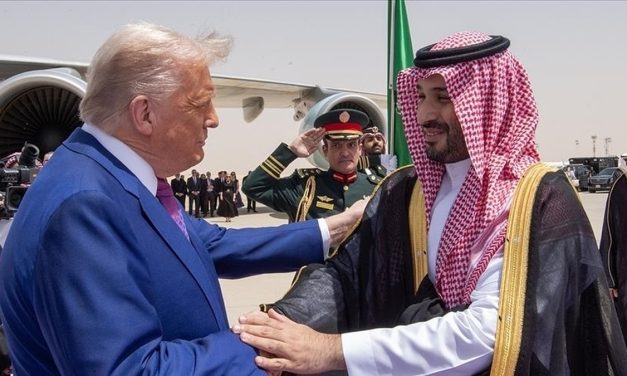
A Look at bin Salman’s Recent Trip to America

Strategic Council Online – Opinion: The recent trip of the Saudi Crown Prince to America was a targeted effort to solidify the strategic partnership with Washington, reduce political uncertainties, and strengthen Riyadh’s political role-playing.

Creating the Right Narrative: A Principled Strategy for Countering the Enemy’s Soft War

Strategic Council Online – Interview: A media expert stated: Given the intensification of the West’s soft war and psychological operations against Iran, our country’s primary strategy must be based on public education, strengthening national cohesion, developing international media, and countering the distortion of history through creating the right narrative.

F-35 Sale to Saudi Arabia: From Promise to Reality

Strategic Council Online – Interview: An international affairs analyst said: The issue of selling the F-35 to Saudi Arabia is not merely a military case, but rather part of a regional engineering that Washington is trying to advance.

Caspian Sea Water Level Drop; A Geopolitical Harm for Coastal Countries

Strategic Council Online – Interview: An expert in geopolitics stated, “The unprecedented drop in the Caspian Sea water level is not only an environmental threat but also a geopolitical alarm bell for Iran and the coastal countries, requiring urgent multilateral cooperation.”

Loading

Zionist regime

The Landscape of the Battle Between the Zionist Regime and the Yemeni Resistance

The Landscape of the Battle Between the Zionist Regime and the Yemeni Resistance

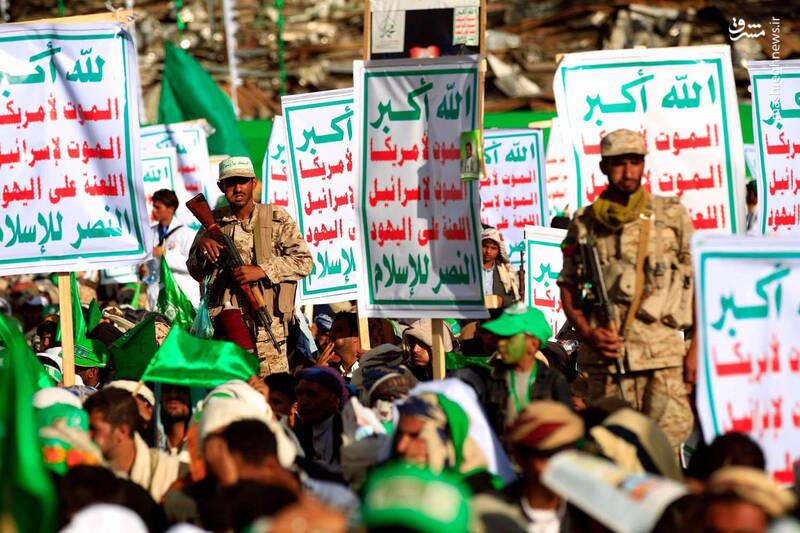
Strategic Council Online – Opinion: The escalating conflict between the Yemeni Resistance and the Zionist regime is a clear example of asymmetric confrontation with strategic consequences in the region. The missile operations of the Yemeni Resistance serve as a demonstration of this country’s strategic and military power and send a clear message to the Zionist regime and America regarding the costs of continuing the status quo. This has increased the legitimacy and influence of the Yemeni Resistance, led by Ansarullah, in the Arab world and turned it into an undeniable strategic actor.

Martyrdom of 270 Journalists by the Zionist Regime: A Deplorable and Unprecedented Record in the History of Wars

Martyrdom of 270 Journalists by the Zionist Regime: A Deplorable and Unprecedented Record in the History of Wars

Strategic Council Online – Interview: A senior West Asia affairs analyst wrote: A report by the Hebrew magazine “972” reveals that after October 7, 2023, the Zionist regime established a unit called the “Legitimization Unit” for media warfare and defaming Palestinian journalists. The goal of this unit is not security-related, but rather an effort to legitimize the actions of the Israeli regime in the eyes of public opinion and prevent international pressure. According to this report, the Israeli regime’s intelligence teams distort data and falsely link journalists to Hamas to both justify their killing and silence the Palestinian narrative. In some cases, a journalist was labeled as a “Hamas member” before being assassinated—an act that amounts to an unofficial death sentence in Gaza. The severe restrictions on foreign journalists entering Gaza are also part of this policy of narrative monopoly. According to statistics, over the past 22 months, at least 270 journalists have been killed in Gaza—an unprecedented number that exceeds the total number of journalists killed in World Wars, Vietnam, and Afghanistan. The recent drone attack on journalists’ tents near Al-Shifa Hospital and the martyrdom of Al Jazeera journalists represent the peak of this targeted and inhumane policy. As a result, the Israeli regime’s war against Gaza is not only military but also an organized media battle to distort reality and legitimize war crimes.

Dimensions and Negative Consequences of Netanyahu’s “Greater Israel” Idea

Dimensions and Negative Consequences of Netanyahu’s “Greater Israel” Idea

Strategic Council Online– Opinion: Netanyahu, the Prime Minister of the Zionist regime, in an interview with the i24 network, while receiving the “Promised Land” talisman from Sharon Gal, a former representative of the right-wing faction, said he is very attached to the ideal of “Greater Israel.” In this interview, he emphasized that he sees himself on a historical and spiritual mission that includes generations of Jews who dreamed of coming here and generations of Jews who will come after us.

New Syrian-Zionist Interactions and the Greater Israel Project

New Syrian-Zionist Interactions and the Greater Israel Project

Strategic Council Online – Interview: A senior international affairs analyst stated that the recent meeting of the foreign minister of Syria’s interim government with a delegation from the Zionist regime in Paris marks a turning point in the regional equations; an event that, beyond a simple diplomatic meeting, signifies a redefinition of strategies regarding Syria’s future. These talks, which were mediated by the United States and focused on reducing tensions in southern Syria, monitoring the ceasefire, and reactivating the 1974 agreement, clearly indicate that the Syria file can no longer be analyzed solely within the framework of an internal crisis or field conflicts. Instead, Damascus today is caught in a complex duality: on one hand, it faces the occupation of part of its territory by the Israeli regime and increasing pressures on its strategic geography, and on the other hand, it feels the necessity of utilizing diplomacy to break out of political isolation. Meanwhile, the Israeli regime seeks to consolidate its position in the region, an issue that links to the long-standing project of “Greater Israel” and efforts to dismantle the traditional structures of the Middle East.

Decoding the Israeli Regime’s Narrative-Building in the Gaza War

Decoding the Israeli Regime’s Narrative-Building in the Gaza War

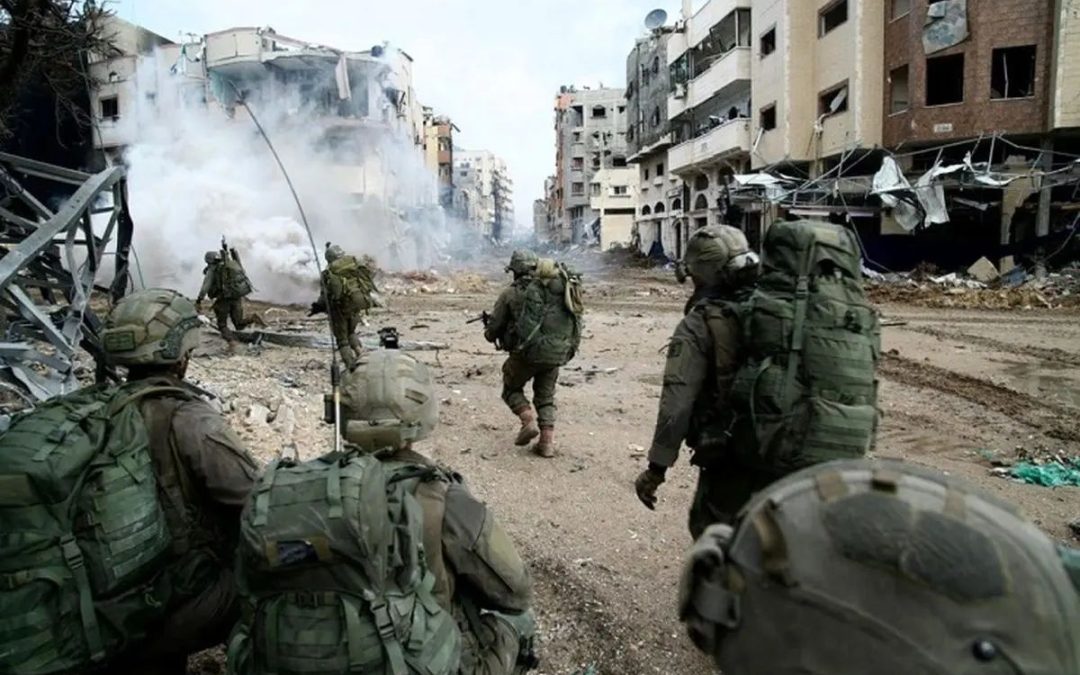
Strategic Council Online – Interview: A senior Palestinian affairs analyst stated: To justify its crimes in Gaza, the Zionist regime employs two main strategies: using military censorship regarding the publication of operational details and presenting an official narrative by military spokespersons in Hebrew and Arabic. By relying on selective images and information, it attempts to make its military actions in Gaza seem believable. While Benjamin Netanyahu, the Prime Minister of the Israeli regime, has announced readiness to expand military operations in Gaza and claimed that Palestinians would be allowed to leave the area, international criticism of this regime’s actions under the accusation of ethnic cleansing has intensified. By controlling Gaza’s borders, the Israeli regime’s military has restricted the exit of Palestinians and simultaneously carried out extensive bombings in the residential areas of Zeitoun and Sabra, which, according to the Hamas Civil Defense Organization, resulted in at least 33 deaths and widespread destruction. The European Union, the United Kingdom, Australia, Canada, and Japan, in a joint statement, have warned of an impending famine in Gaza and called for a halt to the use of lethal force near aid distribution sites. The World Health Organization has also emphasized the necessity of medical equipment entering Gaza, but the Israeli regime continues to prevent sufficient humanitarian aid from being sent.

Ambiguous Prospects of the Zionist Regime’s Strategy for the Occupation of Gaza

Ambiguous Prospects of the Zionist Regime’s Strategy for the Occupation of Gaza

Strategic Council Online – Opinion: Despite widespread disagreements between Netanyahu and the Chief of the General Staff of the Zionist regime’s army, Eyal Zamir, the main framework of the plan to occupy Gaza City was finally signed after the war cabinet agreed to seize Gaza City; a decision that could have extensive consequences in the Occupied Territories and the region.

Dimensions and Implications of Parallel Efforts to Disarm the Resistance in West Asia

Dimensions and Implications of Parallel Efforts to Disarm the Resistance in West Asia

Strategic Council Online – Interview: A senior analyst on West Asian affairs stated that under the current circumstances, discussing the disarmament of the Resistance is not only unfeasible but could also lead to an escalation of tensions. Following the 12-day aggression by the United States and the Israeli regime against Iran, efforts in another layer to disarm Resistance groups, including Hezbollah, the Popular Mobilization Forces (PMF or Hashd al-Shaabi), and Hamas, have intensified as part of a coordinated project pursued to weaken the Axis of Resistance and impose American regional dominance. The U.S. proposal for Lebanon, which includes disarming Hezbollah by the end of 2025 and the withdrawal of the Israeli regime from border positions, is an attempt to transform an external conflict into an internal one. Hezbollah has firmly rejected this proposal, deeming it a violation of national sovereignty and a service to the interests of the Israeli regime, while emphasizing its defensive role. In Iraq, pressure on the Popular Mobilization Forces has been accompanied by accusations and economic sanctions, yet this group continues to stand as a popular force against external threats. Hamas, despite heavy attacks by the Israeli regime, has continued its resistance and rejected a recent ceasefire proposal in exchange for disarmament. These plans, supported by U.S. and allied diplomatic and economic backing, seek to alter the balance of power in the region. Still, the resistance of the groups and popular support have prevented the realization of these objectives.

Netanyahu’s Legal Liability After Confession About Assassination of Iranian Nuclear Scientists

Netanyahu’s Legal Liability After Confession About Assassination of Iranian Nuclear Scientists

Strategic Council Online – Interview: A West Asia affairs analyst said: Recently, Benjamin Netanyahu, the Prime Minister of the Zionist regime, explicitly stated in an interview with Channel 14 of this regime that a significant number of Iran’s nuclear scientists have been killed as part of a targeted assassination program. This is the first time that a senior official of the Israeli regime has made such an explicit confession. Although the Israeli regime had previously been accused of playing a role in the assassination of Iranian scientists, this official confession opens a new chapter in legal and political pursuits; a chapter that could, by utilizing international capacities, confront a regime that sees itself as above the law with serious consequences.

Critical Analysis of the Security Council’s Approach Towards the Gaza Crisis

Critical Analysis of the Security Council’s Approach Towards the Gaza Crisis

Strategic Council Online in – Interview: A senior Arab world analyst stated: When 61 thousand people are killed in Gaza and the Security Council is not even willing to issue a simple resolution in condemnation of the Zionist regime, it means the international structure is entirely dysfunctional. In such a situation, it is the nations that must cry out and awaken the global conscience.

Consequences of the “Lebanon Minus Resistance” Scenario

Consequences of the “Lebanon Minus Resistance” Scenario

Strategic Council Online – Interview: An expert on Arab world affairs said: One of the Zionist regime’s primary motives for insisting on disarming Hezbollah is to create a security vacuum in Lebanon so that, if needed, the possibility of attacking it again is provided. Today, Lebanon is witnessing one of its most sensitive political junctures in recent years; the Lebanese cabinet, in its recent session chaired by Najib Mikati, the country’s Prime Minister, approved the content of the US proposal for disarming Hezbollah and monopolizing weapons in the hands of the army, despite opposition from some ministers. The US proposal, which has faced firm opposition from the Hezbollah, was brought to Beirut by Thomas Barrack, the US Special Envoy, and with a paternalistic approach, considers disarming the Hezbollah a precondition for starting any dialogue and border demarcation, explicitly stating that this plan must either be entirely accepted or Lebanon must accept the consequences of its rejection.

أحدث الوظائف

An Analysis of Iran’s Missile Capability

Strategic Council Online – Interview: A strategic affairs analyst said: Iran’s missile doctrine is not only part of its deterrent capability but also part of the security identity of the Islamic Republic of Iran and should not be weakened.

Japan-China Tensions Over Taiwan

Strategic Council Online – Interview: An international affairs expert said that U.S. President Donald Trump, in a phone call this week with Sanae Takaichi, asked her not to further escalate disputes with China. Earlier this month, Takaichi created a rare tension with Beijing by stating that “a potential Chinese attack on Taiwan could lead to military action by Japan,” remarks that drew a sharp reaction from China. Beijing demanded that she retract these statements, but the Japanese Prime Minister has not done so thus far, and Tokyo has only emphasized that its policy regarding Taiwan has not changed.

A Look at bin Salman’s Recent Trip to America

Strategic Council Online – Opinion: The recent trip of the Saudi Crown Prince to America was a targeted effort to solidify the strategic partnership with Washington, reduce political uncertainties, and strengthen Riyadh’s political role-playing.

Creating the Right Narrative: A Principled Strategy for Countering the Enemy’s Soft War

Strategic Council Online – Interview: A media expert stated: Given the intensification of the West’s soft war and psychological operations against Iran, our country’s primary strategy must be based on public education, strengthening national cohesion, developing international media, and countering the distortion of history through creating the right narrative.

F-35 Sale to Saudi Arabia: From Promise to Reality

Strategic Council Online – Interview: An international affairs analyst said: The issue of selling the F-35 to Saudi Arabia is not merely a military case, but rather part of a regional engineering that Washington is trying to advance.

Caspian Sea Water Level Drop; A Geopolitical Harm for Coastal Countries

Strategic Council Online – Interview: An expert in geopolitics stated, “The unprecedented drop in the Caspian Sea water level is not only an environmental threat but also a geopolitical alarm bell for Iran and the coastal countries, requiring urgent multilateral cooperation.”

Loading

Zionist regime

The Landscape of the Battle Between the Zionist Regime and the Yemeni Resistance

The Landscape of the Battle Between the Zionist Regime and the Yemeni Resistance

Strategic Council Online – Opinion: The escalating conflict between the Yemeni Resistance and the Zionist regime is a clear example of asymmetric confrontation with strategic consequences in the region. The missile operations of the Yemeni Resistance serve as a demonstration of this country’s strategic and military power and send a clear message to the Zionist regime and America regarding the costs of continuing the status quo. This has increased the legitimacy and influence of the Yemeni Resistance, led by Ansarullah, in the Arab world and turned it into an undeniable strategic actor.

Martyrdom of 270 Journalists by the Zionist Regime: A Deplorable and Unprecedented Record in the History of Wars

Martyrdom of 270 Journalists by the Zionist Regime: A Deplorable and Unprecedented Record in the History of Wars

Strategic Council Online – Interview: A senior West Asia affairs analyst wrote: A report by the Hebrew magazine “972” reveals that after October 7, 2023, the Zionist regime established a unit called the “Legitimization Unit” for media warfare and defaming Palestinian journalists. The goal of this unit is not security-related, but rather an effort to legitimize the actions of the Israeli regime in the eyes of public opinion and prevent international pressure. According to this report, the Israeli regime’s intelligence teams distort data and falsely link journalists to Hamas to both justify their killing and silence the Palestinian narrative. In some cases, a journalist was labeled as a “Hamas member” before being assassinated—an act that amounts to an unofficial death sentence in Gaza. The severe restrictions on foreign journalists entering Gaza are also part of this policy of narrative monopoly. According to statistics, over the past 22 months, at least 270 journalists have been killed in Gaza—an unprecedented number that exceeds the total number of journalists killed in World Wars, Vietnam, and Afghanistan. The recent drone attack on journalists’ tents near Al-Shifa Hospital and the martyrdom of Al Jazeera journalists represent the peak of this targeted and inhumane policy. As a result, the Israeli regime’s war against Gaza is not only military but also an organized media battle to distort reality and legitimize war crimes.

Dimensions and Negative Consequences of Netanyahu’s “Greater Israel” Idea

Dimensions and Negative Consequences of Netanyahu’s “Greater Israel” Idea

Strategic Council Online– Opinion: Netanyahu, the Prime Minister of the Zionist regime, in an interview with the i24 network, while receiving the “Promised Land” talisman from Sharon Gal, a former representative of the right-wing faction, said he is very attached to the ideal of “Greater Israel.” In this interview, he emphasized that he sees himself on a historical and spiritual mission that includes generations of Jews who dreamed of coming here and generations of Jews who will come after us.

New Syrian-Zionist Interactions and the Greater Israel Project

New Syrian-Zionist Interactions and the Greater Israel Project

Strategic Council Online – Interview: A senior international affairs analyst stated that the recent meeting of the foreign minister of Syria’s interim government with a delegation from the Zionist regime in Paris marks a turning point in the regional equations; an event that, beyond a simple diplomatic meeting, signifies a redefinition of strategies regarding Syria’s future. These talks, which were mediated by the United States and focused on reducing tensions in southern Syria, monitoring the ceasefire, and reactivating the 1974 agreement, clearly indicate that the Syria file can no longer be analyzed solely within the framework of an internal crisis or field conflicts. Instead, Damascus today is caught in a complex duality: on one hand, it faces the occupation of part of its territory by the Israeli regime and increasing pressures on its strategic geography, and on the other hand, it feels the necessity of utilizing diplomacy to break out of political isolation. Meanwhile, the Israeli regime seeks to consolidate its position in the region, an issue that links to the long-standing project of “Greater Israel” and efforts to dismantle the traditional structures of the Middle East.

Decoding the Israeli Regime’s Narrative-Building in the Gaza War

Decoding the Israeli Regime’s Narrative-Building in the Gaza War

Strategic Council Online – Interview: A senior Palestinian affairs analyst stated: To justify its crimes in Gaza, the Zionist regime employs two main strategies: using military censorship regarding the publication of operational details and presenting an official narrative by military spokespersons in Hebrew and Arabic. By relying on selective images and information, it attempts to make its military actions in Gaza seem believable. While Benjamin Netanyahu, the Prime Minister of the Israeli regime, has announced readiness to expand military operations in Gaza and claimed that Palestinians would be allowed to leave the area, international criticism of this regime’s actions under the accusation of ethnic cleansing has intensified. By controlling Gaza’s borders, the Israeli regime’s military has restricted the exit of Palestinians and simultaneously carried out extensive bombings in the residential areas of Zeitoun and Sabra, which, according to the Hamas Civil Defense Organization, resulted in at least 33 deaths and widespread destruction. The European Union, the United Kingdom, Australia, Canada, and Japan, in a joint statement, have warned of an impending famine in Gaza and called for a halt to the use of lethal force near aid distribution sites. The World Health Organization has also emphasized the necessity of medical equipment entering Gaza, but the Israeli regime continues to prevent sufficient humanitarian aid from being sent.

Ambiguous Prospects of the Zionist Regime’s Strategy for the Occupation of Gaza

Ambiguous Prospects of the Zionist Regime’s Strategy for the Occupation of Gaza

Strategic Council Online – Opinion: Despite widespread disagreements between Netanyahu and the Chief of the General Staff of the Zionist regime’s army, Eyal Zamir, the main framework of the plan to occupy Gaza City was finally signed after the war cabinet agreed to seize Gaza City; a decision that could have extensive consequences in the Occupied Territories and the region.

Dimensions and Implications of Parallel Efforts to Disarm the Resistance in West Asia

Dimensions and Implications of Parallel Efforts to Disarm the Resistance in West Asia

Strategic Council Online – Interview: A senior analyst on West Asian affairs stated that under the current circumstances, discussing the disarmament of the Resistance is not only unfeasible but could also lead to an escalation of tensions. Following the 12-day aggression by the United States and the Israeli regime against Iran, efforts in another layer to disarm Resistance groups, including Hezbollah, the Popular Mobilization Forces (PMF or Hashd al-Shaabi), and Hamas, have intensified as part of a coordinated project pursued to weaken the Axis of Resistance and impose American regional dominance. The U.S. proposal for Lebanon, which includes disarming Hezbollah by the end of 2025 and the withdrawal of the Israeli regime from border positions, is an attempt to transform an external conflict into an internal one. Hezbollah has firmly rejected this proposal, deeming it a violation of national sovereignty and a service to the interests of the Israeli regime, while emphasizing its defensive role. In Iraq, pressure on the Popular Mobilization Forces has been accompanied by accusations and economic sanctions, yet this group continues to stand as a popular force against external threats. Hamas, despite heavy attacks by the Israeli regime, has continued its resistance and rejected a recent ceasefire proposal in exchange for disarmament. These plans, supported by U.S. and allied diplomatic and economic backing, seek to alter the balance of power in the region. Still, the resistance of the groups and popular support have prevented the realization of these objectives.

Netanyahu’s Legal Liability After Confession About Assassination of Iranian Nuclear Scientists

Netanyahu’s Legal Liability After Confession About Assassination of Iranian Nuclear Scientists

Strategic Council Online – Interview: A West Asia affairs analyst said: Recently, Benjamin Netanyahu, the Prime Minister of the Zionist regime, explicitly stated in an interview with Channel 14 of this regime that a significant number of Iran’s nuclear scientists have been killed as part of a targeted assassination program. This is the first time that a senior official of the Israeli regime has made such an explicit confession. Although the Israeli regime had previously been accused of playing a role in the assassination of Iranian scientists, this official confession opens a new chapter in legal and political pursuits; a chapter that could, by utilizing international capacities, confront a regime that sees itself as above the law with serious consequences.

Critical Analysis of the Security Council’s Approach Towards the Gaza Crisis

Critical Analysis of the Security Council’s Approach Towards the Gaza Crisis

Strategic Council Online in – Interview: A senior Arab world analyst stated: When 61 thousand people are killed in Gaza and the Security Council is not even willing to issue a simple resolution in condemnation of the Zionist regime, it means the international structure is entirely dysfunctional. In such a situation, it is the nations that must cry out and awaken the global conscience.

Consequences of the “Lebanon Minus Resistance” Scenario

Consequences of the “Lebanon Minus Resistance” Scenario

Strategic Council Online – Interview: An expert on Arab world affairs said: One of the Zionist regime’s primary motives for insisting on disarming Hezbollah is to create a security vacuum in Lebanon so that, if needed, the possibility of attacking it again is provided. Today, Lebanon is witnessing one of its most sensitive political junctures in recent years; the Lebanese cabinet, in its recent session chaired by Najib Mikati, the country’s Prime Minister, approved the content of the US proposal for disarming Hezbollah and monopolizing weapons in the hands of the army, despite opposition from some ministers. The US proposal, which has faced firm opposition from the Hezbollah, was brought to Beirut by Thomas Barrack, the US Special Envoy, and with a paternalistic approach, considers disarming the Hezbollah a precondition for starting any dialogue and border demarcation, explicitly stating that this plan must either be entirely accepted or Lebanon must accept the consequences of its rejection.

Zionist regime

The Landscape of the Battle Between the Zionist Regime and the Yemeni Resistance

The Landscape of the Battle Between the Zionist Regime and the Yemeni Resistance

Strategic Council Online – Opinion: The escalating conflict between the Yemeni Resistance and the Zionist regime is a clear example of asymmetric confrontation with strategic consequences in the region. The missile operations of the Yemeni Resistance serve as a demonstration of this country’s strategic and military power and send a clear message to the Zionist regime and America regarding the costs of continuing the status quo. This has increased the legitimacy and influence of the Yemeni Resistance, led by Ansarullah, in the Arab world and turned it into an undeniable strategic actor.

Martyrdom of 270 Journalists by the Zionist Regime: A Deplorable and Unprecedented Record in the History of Wars

Martyrdom of 270 Journalists by the Zionist Regime: A Deplorable and Unprecedented Record in the History of Wars

Strategic Council Online – Interview: A senior West Asia affairs analyst wrote: A report by the Hebrew magazine “972” reveals that after October 7, 2023, the Zionist regime established a unit called the “Legitimization Unit” for media warfare and defaming Palestinian journalists. The goal of this unit is not security-related, but rather an effort to legitimize the actions of the Israeli regime in the eyes of public opinion and prevent international pressure. According to this report, the Israeli regime’s intelligence teams distort data and falsely link journalists to Hamas to both justify their killing and silence the Palestinian narrative. In some cases, a journalist was labeled as a “Hamas member” before being assassinated—an act that amounts to an unofficial death sentence in Gaza. The severe restrictions on foreign journalists entering Gaza are also part of this policy of narrative monopoly. According to statistics, over the past 22 months, at least 270 journalists have been killed in Gaza—an unprecedented number that exceeds the total number of journalists killed in World Wars, Vietnam, and Afghanistan. The recent drone attack on journalists’ tents near Al-Shifa Hospital and the martyrdom of Al Jazeera journalists represent the peak of this targeted and inhumane policy. As a result, the Israeli regime’s war against Gaza is not only military but also an organized media battle to distort reality and legitimize war crimes.

Dimensions and Negative Consequences of Netanyahu’s “Greater Israel” Idea

Dimensions and Negative Consequences of Netanyahu’s “Greater Israel” Idea

Strategic Council Online– Opinion: Netanyahu, the Prime Minister of the Zionist regime, in an interview with the i24 network, while receiving the “Promised Land” talisman from Sharon Gal, a former representative of the right-wing faction, said he is very attached to the ideal of “Greater Israel.” In this interview, he emphasized that he sees himself on a historical and spiritual mission that includes generations of Jews who dreamed of coming here and generations of Jews who will come after us.

New Syrian-Zionist Interactions and the Greater Israel Project

New Syrian-Zionist Interactions and the Greater Israel Project

Strategic Council Online – Interview: A senior international affairs analyst stated that the recent meeting of the foreign minister of Syria’s interim government with a delegation from the Zionist regime in Paris marks a turning point in the regional equations; an event that, beyond a simple diplomatic meeting, signifies a redefinition of strategies regarding Syria’s future. These talks, which were mediated by the United States and focused on reducing tensions in southern Syria, monitoring the ceasefire, and reactivating the 1974 agreement, clearly indicate that the Syria file can no longer be analyzed solely within the framework of an internal crisis or field conflicts. Instead, Damascus today is caught in a complex duality: on one hand, it faces the occupation of part of its territory by the Israeli regime and increasing pressures on its strategic geography, and on the other hand, it feels the necessity of utilizing diplomacy to break out of political isolation. Meanwhile, the Israeli regime seeks to consolidate its position in the region, an issue that links to the long-standing project of “Greater Israel” and efforts to dismantle the traditional structures of the Middle East.

Decoding the Israeli Regime’s Narrative-Building in the Gaza War

Decoding the Israeli Regime’s Narrative-Building in the Gaza War

Strategic Council Online – Interview: A senior Palestinian affairs analyst stated: To justify its crimes in Gaza, the Zionist regime employs two main strategies: using military censorship regarding the publication of operational details and presenting an official narrative by military spokespersons in Hebrew and Arabic. By relying on selective images and information, it attempts to make its military actions in Gaza seem believable. While Benjamin Netanyahu, the Prime Minister of the Israeli regime, has announced readiness to expand military operations in Gaza and claimed that Palestinians would be allowed to leave the area, international criticism of this regime’s actions under the accusation of ethnic cleansing has intensified. By controlling Gaza’s borders, the Israeli regime’s military has restricted the exit of Palestinians and simultaneously carried out extensive bombings in the residential areas of Zeitoun and Sabra, which, according to the Hamas Civil Defense Organization, resulted in at least 33 deaths and widespread destruction. The European Union, the United Kingdom, Australia, Canada, and Japan, in a joint statement, have warned of an impending famine in Gaza and called for a halt to the use of lethal force near aid distribution sites. The World Health Organization has also emphasized the necessity of medical equipment entering Gaza, but the Israeli regime continues to prevent sufficient humanitarian aid from being sent.

Ambiguous Prospects of the Zionist Regime’s Strategy for the Occupation of Gaza

Ambiguous Prospects of the Zionist Regime’s Strategy for the Occupation of Gaza

Strategic Council Online – Opinion: Despite widespread disagreements between Netanyahu and the Chief of the General Staff of the Zionist regime’s army, Eyal Zamir, the main framework of the plan to occupy Gaza City was finally signed after the war cabinet agreed to seize Gaza City; a decision that could have extensive consequences in the Occupied Territories and the region.

Dimensions and Implications of Parallel Efforts to Disarm the Resistance in West Asia

Dimensions and Implications of Parallel Efforts to Disarm the Resistance in West Asia

Strategic Council Online – Interview: A senior analyst on West Asian affairs stated that under the current circumstances, discussing the disarmament of the Resistance is not only unfeasible but could also lead to an escalation of tensions. Following the 12-day aggression by the United States and the Israeli regime against Iran, efforts in another layer to disarm Resistance groups, including Hezbollah, the Popular Mobilization Forces (PMF or Hashd al-Shaabi), and Hamas, have intensified as part of a coordinated project pursued to weaken the Axis of Resistance and impose American regional dominance. The U.S. proposal for Lebanon, which includes disarming Hezbollah by the end of 2025 and the withdrawal of the Israeli regime from border positions, is an attempt to transform an external conflict into an internal one. Hezbollah has firmly rejected this proposal, deeming it a violation of national sovereignty and a service to the interests of the Israeli regime, while emphasizing its defensive role. In Iraq, pressure on the Popular Mobilization Forces has been accompanied by accusations and economic sanctions, yet this group continues to stand as a popular force against external threats. Hamas, despite heavy attacks by the Israeli regime, has continued its resistance and rejected a recent ceasefire proposal in exchange for disarmament. These plans, supported by U.S. and allied diplomatic and economic backing, seek to alter the balance of power in the region. Still, the resistance of the groups and popular support have prevented the realization of these objectives.

Netanyahu’s Legal Liability After Confession About Assassination of Iranian Nuclear Scientists

Netanyahu’s Legal Liability After Confession About Assassination of Iranian Nuclear Scientists

Strategic Council Online – Interview: A West Asia affairs analyst said: Recently, Benjamin Netanyahu, the Prime Minister of the Zionist regime, explicitly stated in an interview with Channel 14 of this regime that a significant number of Iran’s nuclear scientists have been killed as part of a targeted assassination program. This is the first time that a senior official of the Israeli regime has made such an explicit confession. Although the Israeli regime had previously been accused of playing a role in the assassination of Iranian scientists, this official confession opens a new chapter in legal and political pursuits; a chapter that could, by utilizing international capacities, confront a regime that sees itself as above the law with serious consequences.

Critical Analysis of the Security Council’s Approach Towards the Gaza Crisis

Critical Analysis of the Security Council’s Approach Towards the Gaza Crisis

Strategic Council Online in – Interview: A senior Arab world analyst stated: When 61 thousand people are killed in Gaza and the Security Council is not even willing to issue a simple resolution in condemnation of the Zionist regime, it means the international structure is entirely dysfunctional. In such a situation, it is the nations that must cry out and awaken the global conscience.

Consequences of the “Lebanon Minus Resistance” Scenario

Consequences of the “Lebanon Minus Resistance” Scenario

Strategic Council Online – Interview: An expert on Arab world affairs said: One of the Zionist regime’s primary motives for insisting on disarming Hezbollah is to create a security vacuum in Lebanon so that, if needed, the possibility of attacking it again is provided. Today, Lebanon is witnessing one of its most sensitive political junctures in recent years; the Lebanese cabinet, in its recent session chaired by Najib Mikati, the country’s Prime Minister, approved the content of the US proposal for disarming Hezbollah and monopolizing weapons in the hands of the army, despite opposition from some ministers. The US proposal, which has faced firm opposition from the Hezbollah, was brought to Beirut by Thomas Barrack, the US Special Envoy, and with a paternalistic approach, considers disarming the Hezbollah a precondition for starting any dialogue and border demarcation, explicitly stating that this plan must either be entirely accepted or Lebanon must accept the consequences of its rejection.

LATEST CONTENT

An Analysis of Iran’s Missile Capability

Strategic Council Online – Interview: A strategic affairs analyst said: Iran’s missile doctrine is not only part of its deterrent capability but also part of the security identity of the Islamic Republic of Iran and should not be weakened.

Japan-China Tensions Over Taiwan

Strategic Council Online – Interview: An international affairs expert said that U.S. President Donald Trump, in a phone call this week with Sanae Takaichi, asked her not to further escalate disputes with China. Earlier this month, Takaichi created a rare tension with Beijing by stating that “a potential Chinese attack on Taiwan could lead to military action by Japan,” remarks that drew a sharp reaction from China. Beijing demanded that she retract these statements, but the Japanese Prime Minister has not done so thus far, and Tokyo has only emphasized that its policy regarding Taiwan has not changed.

A Look at bin Salman’s Recent Trip to America

Strategic Council Online – Opinion: The recent trip of the Saudi Crown Prince to America was a targeted effort to solidify the strategic partnership with Washington, reduce political uncertainties, and strengthen Riyadh’s political role-playing.

Creating the Right Narrative: A Principled Strategy for Countering the Enemy’s Soft War

Strategic Council Online – Interview: A media expert stated: Given the intensification of the West’s soft war and psychological operations against Iran, our country’s primary strategy must be based on public education, strengthening national cohesion, developing international media, and countering the distortion of history through creating the right narrative.

F-35 Sale to Saudi Arabia: From Promise to Reality

Strategic Council Online – Interview: An international affairs analyst said: The issue of selling the F-35 to Saudi Arabia is not merely a military case, but rather part of a regional engineering that Washington is trying to advance.

Caspian Sea Water Level Drop; A Geopolitical Harm for Coastal Countries

Strategic Council Online – Interview: An expert in geopolitics stated, “The unprecedented drop in the Caspian Sea water level is not only an environmental threat but also a geopolitical alarm bell for Iran and the coastal countries, requiring urgent multilateral cooperation.”

Loading

Zionist regime

The Landscape of the Battle Between the Zionist Regime and the Yemeni Resistance

The Landscape of the Battle Between the Zionist Regime and the Yemeni Resistance

Strategic Council Online – Opinion: The escalating conflict between the Yemeni Resistance and the Zionist regime is a clear example of asymmetric confrontation with strategic consequences in the region. The missile operations of the Yemeni Resistance serve as a demonstration of this country’s strategic and military power and send a clear message to the Zionist regime and America regarding the costs of continuing the status quo. This has increased the legitimacy and influence of the Yemeni Resistance, led by Ansarullah, in the Arab world and turned it into an undeniable strategic actor.

Martyrdom of 270 Journalists by the Zionist Regime: A Deplorable and Unprecedented Record in the History of Wars

Martyrdom of 270 Journalists by the Zionist Regime: A Deplorable and Unprecedented Record in the History of Wars

Strategic Council Online – Interview: A senior West Asia affairs analyst wrote: A report by the Hebrew magazine “972” reveals that after October 7, 2023, the Zionist regime established a unit called the “Legitimization Unit” for media warfare and defaming Palestinian journalists. The goal of this unit is not security-related, but rather an effort to legitimize the actions of the Israeli regime in the eyes of public opinion and prevent international pressure. According to this report, the Israeli regime’s intelligence teams distort data and falsely link journalists to Hamas to both justify their killing and silence the Palestinian narrative. In some cases, a journalist was labeled as a “Hamas member” before being assassinated—an act that amounts to an unofficial death sentence in Gaza. The severe restrictions on foreign journalists entering Gaza are also part of this policy of narrative monopoly. According to statistics, over the past 22 months, at least 270 journalists have been killed in Gaza—an unprecedented number that exceeds the total number of journalists killed in World Wars, Vietnam, and Afghanistan. The recent drone attack on journalists’ tents near Al-Shifa Hospital and the martyrdom of Al Jazeera journalists represent the peak of this targeted and inhumane policy. As a result, the Israeli regime’s war against Gaza is not only military but also an organized media battle to distort reality and legitimize war crimes.

Dimensions and Negative Consequences of Netanyahu’s “Greater Israel” Idea

Dimensions and Negative Consequences of Netanyahu’s “Greater Israel” Idea

Strategic Council Online– Opinion: Netanyahu, the Prime Minister of the Zionist regime, in an interview with the i24 network, while receiving the “Promised Land” talisman from Sharon Gal, a former representative of the right-wing faction, said he is very attached to the ideal of “Greater Israel.” In this interview, he emphasized that he sees himself on a historical and spiritual mission that includes generations of Jews who dreamed of coming here and generations of Jews who will come after us.

New Syrian-Zionist Interactions and the Greater Israel Project

New Syrian-Zionist Interactions and the Greater Israel Project

Strategic Council Online – Interview: A senior international affairs analyst stated that the recent meeting of the foreign minister of Syria’s interim government with a delegation from the Zionist regime in Paris marks a turning point in the regional equations; an event that, beyond a simple diplomatic meeting, signifies a redefinition of strategies regarding Syria’s future. These talks, which were mediated by the United States and focused on reducing tensions in southern Syria, monitoring the ceasefire, and reactivating the 1974 agreement, clearly indicate that the Syria file can no longer be analyzed solely within the framework of an internal crisis or field conflicts. Instead, Damascus today is caught in a complex duality: on one hand, it faces the occupation of part of its territory by the Israeli regime and increasing pressures on its strategic geography, and on the other hand, it feels the necessity of utilizing diplomacy to break out of political isolation. Meanwhile, the Israeli regime seeks to consolidate its position in the region, an issue that links to the long-standing project of “Greater Israel” and efforts to dismantle the traditional structures of the Middle East.

Decoding the Israeli Regime’s Narrative-Building in the Gaza War

Decoding the Israeli Regime’s Narrative-Building in the Gaza War

Strategic Council Online – Interview: A senior Palestinian affairs analyst stated: To justify its crimes in Gaza, the Zionist regime employs two main strategies: using military censorship regarding the publication of operational details and presenting an official narrative by military spokespersons in Hebrew and Arabic. By relying on selective images and information, it attempts to make its military actions in Gaza seem believable. While Benjamin Netanyahu, the Prime Minister of the Israeli regime, has announced readiness to expand military operations in Gaza and claimed that Palestinians would be allowed to leave the area, international criticism of this regime’s actions under the accusation of ethnic cleansing has intensified. By controlling Gaza’s borders, the Israeli regime’s military has restricted the exit of Palestinians and simultaneously carried out extensive bombings in the residential areas of Zeitoun and Sabra, which, according to the Hamas Civil Defense Organization, resulted in at least 33 deaths and widespread destruction. The European Union, the United Kingdom, Australia, Canada, and Japan, in a joint statement, have warned of an impending famine in Gaza and called for a halt to the use of lethal force near aid distribution sites. The World Health Organization has also emphasized the necessity of medical equipment entering Gaza, but the Israeli regime continues to prevent sufficient humanitarian aid from being sent.

Ambiguous Prospects of the Zionist Regime’s Strategy for the Occupation of Gaza

Ambiguous Prospects of the Zionist Regime’s Strategy for the Occupation of Gaza

Strategic Council Online – Opinion: Despite widespread disagreements between Netanyahu and the Chief of the General Staff of the Zionist regime’s army, Eyal Zamir, the main framework of the plan to occupy Gaza City was finally signed after the war cabinet agreed to seize Gaza City; a decision that could have extensive consequences in the Occupied Territories and the region.

Dimensions and Implications of Parallel Efforts to Disarm the Resistance in West Asia

Dimensions and Implications of Parallel Efforts to Disarm the Resistance in West Asia

Strategic Council Online – Interview: A senior analyst on West Asian affairs stated that under the current circumstances, discussing the disarmament of the Resistance is not only unfeasible but could also lead to an escalation of tensions. Following the 12-day aggression by the United States and the Israeli regime against Iran, efforts in another layer to disarm Resistance groups, including Hezbollah, the Popular Mobilization Forces (PMF or Hashd al-Shaabi), and Hamas, have intensified as part of a coordinated project pursued to weaken the Axis of Resistance and impose American regional dominance. The U.S. proposal for Lebanon, which includes disarming Hezbollah by the end of 2025 and the withdrawal of the Israeli regime from border positions, is an attempt to transform an external conflict into an internal one. Hezbollah has firmly rejected this proposal, deeming it a violation of national sovereignty and a service to the interests of the Israeli regime, while emphasizing its defensive role. In Iraq, pressure on the Popular Mobilization Forces has been accompanied by accusations and economic sanctions, yet this group continues to stand as a popular force against external threats. Hamas, despite heavy attacks by the Israeli regime, has continued its resistance and rejected a recent ceasefire proposal in exchange for disarmament. These plans, supported by U.S. and allied diplomatic and economic backing, seek to alter the balance of power in the region. Still, the resistance of the groups and popular support have prevented the realization of these objectives.

Netanyahu’s Legal Liability After Confession About Assassination of Iranian Nuclear Scientists

Netanyahu’s Legal Liability After Confession About Assassination of Iranian Nuclear Scientists

Strategic Council Online – Interview: A West Asia affairs analyst said: Recently, Benjamin Netanyahu, the Prime Minister of the Zionist regime, explicitly stated in an interview with Channel 14 of this regime that a significant number of Iran’s nuclear scientists have been killed as part of a targeted assassination program. This is the first time that a senior official of the Israeli regime has made such an explicit confession. Although the Israeli regime had previously been accused of playing a role in the assassination of Iranian scientists, this official confession opens a new chapter in legal and political pursuits; a chapter that could, by utilizing international capacities, confront a regime that sees itself as above the law with serious consequences.

Critical Analysis of the Security Council’s Approach Towards the Gaza Crisis

Critical Analysis of the Security Council’s Approach Towards the Gaza Crisis

Strategic Council Online in – Interview: A senior Arab world analyst stated: When 61 thousand people are killed in Gaza and the Security Council is not even willing to issue a simple resolution in condemnation of the Zionist regime, it means the international structure is entirely dysfunctional. In such a situation, it is the nations that must cry out and awaken the global conscience.

Consequences of the “Lebanon Minus Resistance” Scenario

Consequences of the “Lebanon Minus Resistance” Scenario

Strategic Council Online – Interview: An expert on Arab world affairs said: One of the Zionist regime’s primary motives for insisting on disarming Hezbollah is to create a security vacuum in Lebanon so that, if needed, the possibility of attacking it again is provided. Today, Lebanon is witnessing one of its most sensitive political junctures in recent years; the Lebanese cabinet, in its recent session chaired by Najib Mikati, the country’s Prime Minister, approved the content of the US proposal for disarming Hezbollah and monopolizing weapons in the hands of the army, despite opposition from some ministers. The US proposal, which has faced firm opposition from the Hezbollah, was brought to Beirut by Thomas Barrack, the US Special Envoy, and with a paternalistic approach, considers disarming the Hezbollah a precondition for starting any dialogue and border demarcation, explicitly stating that this plan must either be entirely accepted or Lebanon must accept the consequences of its rejection.

ÚLTIMAS PUBLICACIONES

An Analysis of Iran’s Missile Capability

Strategic Council Online – Interview: A strategic affairs analyst said: Iran’s missile doctrine is not only part of its deterrent capability but also part of the security identity of the Islamic Republic of Iran and should not be weakened.
Japan-China Tensions Over Taiwan

Strategic Council Online – Interview: An international affairs expert said that U.S. President Donald Trump, in a phone call this week with Sanae Takaichi, asked her not to further escalate disputes with China. Earlier this month, Takaichi created a rare tension with Beijing by stating that “a potential Chinese attack on Taiwan could lead to military action by Japan,” remarks that drew a sharp reaction from China. Beijing demanded that she retract these statements, but the Japanese Prime Minister has not done so thus far, and Tokyo has only emphasized that its policy regarding Taiwan has not changed.

A Look at bin Salman’s Recent Trip to America

Strategic Council Online – Opinion: The recent trip of the Saudi Crown Prince to America was a targeted effort to solidify the strategic partnership with Washington, reduce political uncertainties, and strengthen Riyadh’s political role-playing.

Creating the Right Narrative: A Principled Strategy for Countering the Enemy’s Soft War

Strategic Council Online – Interview: A media expert stated: Given the intensification of the West’s soft war and psychological operations against Iran, our country’s primary strategy must be based on public education, strengthening national cohesion, developing international media, and countering the distortion of history through creating the right narrative.

F-35 Sale to Saudi Arabia: From Promise to Reality

Strategic Council Online – Interview: An international affairs analyst said: The issue of selling the F-35 to Saudi Arabia is not merely a military case, but rather part of a regional engineering that Washington is trying to advance.

Caspian Sea Water Level Drop; A Geopolitical Harm for Coastal Countries

Strategic Council Online – Interview: An expert in geopolitics stated, “The unprecedented drop in the Caspian Sea water level is not only an environmental threat but also a geopolitical alarm bell for Iran and the coastal countries, requiring urgent multilateral cooperation.”

Loading

Zionist regime

The Landscape of the Battle Between the Zionist Regime and the Yemeni Resistance

The Landscape of the Battle Between the Zionist Regime and the Yemeni Resistance

Strategic Council Online – Opinion: The escalating conflict between the Yemeni Resistance and the Zionist regime is a clear example of asymmetric confrontation with strategic consequences in the region. The missile operations of the Yemeni Resistance serve as a demonstration of this country’s strategic and military power and send a clear message to the Zionist regime and America regarding the costs of continuing the status quo. This has increased the legitimacy and influence of the Yemeni Resistance, led by Ansarullah, in the Arab world and turned it into an undeniable strategic actor.

Martyrdom of 270 Journalists by the Zionist Regime: A Deplorable and Unprecedented Record in the History of Wars

Martyrdom of 270 Journalists by the Zionist Regime: A Deplorable and Unprecedented Record in the History of Wars

Strategic Council Online – Interview: A senior West Asia affairs analyst wrote: A report by the Hebrew magazine “972” reveals that after October 7, 2023, the Zionist regime established a unit called the “Legitimization Unit” for media warfare and defaming Palestinian journalists. The goal of this unit is not security-related, but rather an effort to legitimize the actions of the Israeli regime in the eyes of public opinion and prevent international pressure. According to this report, the Israeli regime’s intelligence teams distort data and falsely link journalists to Hamas to both justify their killing and silence the Palestinian narrative. In some cases, a journalist was labeled as a “Hamas member” before being assassinated—an act that amounts to an unofficial death sentence in Gaza. The severe restrictions on foreign journalists entering Gaza are also part of this policy of narrative monopoly. According to statistics, over the past 22 months, at least 270 journalists have been killed in Gaza—an unprecedented number that exceeds the total number of journalists killed in World Wars, Vietnam, and Afghanistan. The recent drone attack on journalists’ tents near Al-Shifa Hospital and the martyrdom of Al Jazeera journalists represent the peak of this targeted and inhumane policy. As a result, the Israeli regime’s war against Gaza is not only military but also an organized media battle to distort reality and legitimize war crimes.

Dimensions and Negative Consequences of Netanyahu’s “Greater Israel” Idea

Dimensions and Negative Consequences of Netanyahu’s “Greater Israel” Idea

Strategic Council Online– Opinion: Netanyahu, the Prime Minister of the Zionist regime, in an interview with the i24 network, while receiving the “Promised Land” talisman from Sharon Gal, a former representative of the right-wing faction, said he is very attached to the ideal of “Greater Israel.” In this interview, he emphasized that he sees himself on a historical and spiritual mission that includes generations of Jews who dreamed of coming here and generations of Jews who will come after us.

New Syrian-Zionist Interactions and the Greater Israel Project

New Syrian-Zionist Interactions and the Greater Israel Project

Strategic Council Online – Interview: A senior international affairs analyst stated that the recent meeting of the foreign minister of Syria’s interim government with a delegation from the Zionist regime in Paris marks a turning point in the regional equations; an event that, beyond a simple diplomatic meeting, signifies a redefinition of strategies regarding Syria’s future. These talks, which were mediated by the United States and focused on reducing tensions in southern Syria, monitoring the ceasefire, and reactivating the 1974 agreement, clearly indicate that the Syria file can no longer be analyzed solely within the framework of an internal crisis or field conflicts. Instead, Damascus today is caught in a complex duality: on one hand, it faces the occupation of part of its territory by the Israeli regime and increasing pressures on its strategic geography, and on the other hand, it feels the necessity of utilizing diplomacy to break out of political isolation. Meanwhile, the Israeli regime seeks to consolidate its position in the region, an issue that links to the long-standing project of “Greater Israel” and efforts to dismantle the traditional structures of the Middle East.

Decoding the Israeli Regime’s Narrative-Building in the Gaza War

Decoding the Israeli Regime’s Narrative-Building in the Gaza War

Strategic Council Online – Interview: A senior Palestinian affairs analyst stated: To justify its crimes in Gaza, the Zionist regime employs two main strategies: using military censorship regarding the publication of operational details and presenting an official narrative by military spokespersons in Hebrew and Arabic. By relying on selective images and information, it attempts to make its military actions in Gaza seem believable. While Benjamin Netanyahu, the Prime Minister of the Israeli regime, has announced readiness to expand military operations in Gaza and claimed that Palestinians would be allowed to leave the area, international criticism of this regime’s actions under the accusation of ethnic cleansing has intensified. By controlling Gaza’s borders, the Israeli regime’s military has restricted the exit of Palestinians and simultaneously carried out extensive bombings in the residential areas of Zeitoun and Sabra, which, according to the Hamas Civil Defense Organization, resulted in at least 33 deaths and widespread destruction. The European Union, the United Kingdom, Australia, Canada, and Japan, in a joint statement, have warned of an impending famine in Gaza and called for a halt to the use of lethal force near aid distribution sites. The World Health Organization has also emphasized the necessity of medical equipment entering Gaza, but the Israeli regime continues to prevent sufficient humanitarian aid from being sent.

Ambiguous Prospects of the Zionist Regime’s Strategy for the Occupation of Gaza

Ambiguous Prospects of the Zionist Regime’s Strategy for the Occupation of Gaza

Strategic Council Online – Opinion: Despite widespread disagreements between Netanyahu and the Chief of the General Staff of the Zionist regime’s army, Eyal Zamir, the main framework of the plan to occupy Gaza City was finally signed after the war cabinet agreed to seize Gaza City; a decision that could have extensive consequences in the Occupied Territories and the region.

Dimensions and Implications of Parallel Efforts to Disarm the Resistance in West Asia

Dimensions and Implications of Parallel Efforts to Disarm the Resistance in West Asia

Strategic Council Online – Interview: A senior analyst on West Asian affairs stated that under the current circumstances, discussing the disarmament of the Resistance is not only unfeasible but could also lead to an escalation of tensions. Following the 12-day aggression by the United States and the Israeli regime against Iran, efforts in another layer to disarm Resistance groups, including Hezbollah, the Popular Mobilization Forces (PMF or Hashd al-Shaabi), and Hamas, have intensified as part of a coordinated project pursued to weaken the Axis of Resistance and impose American regional dominance. The U.S. proposal for Lebanon, which includes disarming Hezbollah by the end of 2025 and the withdrawal of the Israeli regime from border positions, is an attempt to transform an external conflict into an internal one. Hezbollah has firmly rejected this proposal, deeming it a violation of national sovereignty and a service to the interests of the Israeli regime, while emphasizing its defensive role. In Iraq, pressure on the Popular Mobilization Forces has been accompanied by accusations and economic sanctions, yet this group continues to stand as a popular force against external threats. Hamas, despite heavy attacks by the Israeli regime, has continued its resistance and rejected a recent ceasefire proposal in exchange for disarmament. These plans, supported by U.S. and allied diplomatic and economic backing, seek to alter the balance of power in the region. Still, the resistance of the groups and popular support have prevented the realization of these objectives.

Netanyahu’s Legal Liability After Confession About Assassination of Iranian Nuclear Scientists

Netanyahu’s Legal Liability After Confession About Assassination of Iranian Nuclear Scientists

Strategic Council Online – Interview: A West Asia affairs analyst said: Recently, Benjamin Netanyahu, the Prime Minister of the Zionist regime, explicitly stated in an interview with Channel 14 of this regime that a significant number of Iran’s nuclear scientists have been killed as part of a targeted assassination program. This is the first time that a senior official of the Israeli regime has made such an explicit confession. Although the Israeli regime had previously been accused of playing a role in the assassination of Iranian scientists, this official confession opens a new chapter in legal and political pursuits; a chapter that could, by utilizing international capacities, confront a regime that sees itself as above the law with serious consequences.

Critical Analysis of the Security Council’s Approach Towards the Gaza Crisis

Critical Analysis of the Security Council’s Approach Towards the Gaza Crisis

Strategic Council Online in – Interview: A senior Arab world analyst stated: When 61 thousand people are killed in Gaza and the Security Council is not even willing to issue a simple resolution in condemnation of the Zionist regime, it means the international structure is entirely dysfunctional. In such a situation, it is the nations that must cry out and awaken the global conscience.

Consequences of the “Lebanon Minus Resistance” Scenario

Consequences of the “Lebanon Minus Resistance” Scenario

Strategic Council Online – Interview: An expert on Arab world affairs said: One of the Zionist regime’s primary motives for insisting on disarming Hezbollah is to create a security vacuum in Lebanon so that, if needed, the possibility of attacking it again is provided. Today, Lebanon is witnessing one of its most sensitive political junctures in recent years; the Lebanese cabinet, in its recent session chaired by Najib Mikati, the country’s Prime Minister, approved the content of the US proposal for disarming Hezbollah and monopolizing weapons in the hands of the army, despite opposition from some ministers. The US proposal, which has faced firm opposition from the Hezbollah, was brought to Beirut by Thomas Barrack, the US Special Envoy, and with a paternalistic approach, considers disarming the Hezbollah a precondition for starting any dialogue and border demarcation, explicitly stating that this plan must either be entirely accepted or Lebanon must accept the consequences of its rejection.

ÚLTIMAS PUBLICACIONES

An Analysis of Iran’s Missile Capability

Strategic Council Online – Interview: A strategic affairs analyst said: Iran’s missile doctrine is not only part of its deterrent capability but also part of the security identity of the Islamic Republic of Iran and should not be weakened.

Japan-China Tensions Over Taiwan

Strategic Council Online – Interview: An international affairs expert said that U.S. President Donald Trump, in a phone call this week with Sanae Takaichi, asked her not to further escalate disputes with China. Earlier this month, Takaichi created a rare tension with Beijing by stating that “a potential Chinese attack on Taiwan could lead to military action by Japan,” remarks that drew a sharp reaction from China. Beijing demanded that she retract these statements, but the Japanese Prime Minister has not done so thus far, and Tokyo has only emphasized that its policy regarding Taiwan has not changed.

A Look at bin Salman’s Recent Trip to America

Strategic Council Online – Opinion: The recent trip of the Saudi Crown Prince to America was a targeted effort to solidify the strategic partnership with Washington, reduce political uncertainties, and strengthen Riyadh’s political role-playing.

Creating the Right Narrative: A Principled Strategy for Countering the Enemy’s Soft War

Strategic Council Online – Interview: A media expert stated: Given the intensification of the West’s soft war and psychological operations against Iran, our country’s primary strategy must be based on public education, strengthening national cohesion, developing international media, and countering the distortion of history through creating the right narrative.

F-35 Sale to Saudi Arabia: From Promise to Reality

Strategic Council Online – Interview: An international affairs analyst said: The issue of selling the F-35 to Saudi Arabia is not merely a military case, but rather part of a regional engineering that Washington is trying to advance.

Caspian Sea Water Level Drop; A Geopolitical Harm for Coastal Countries

Strategic Council Online – Interview: An expert in geopolitics stated, “The unprecedented drop in the Caspian Sea water level is not only an environmental threat but also a geopolitical alarm bell for Iran and the coastal countries, requiring urgent multilateral cooperation.”

Loading