China-US Trade War Spectrum

2019/07/22 | Economy, top news

Strategic Council Online: China-US trade war has become one of the most important issues in international relations over the past two years and has experienced numerous ups and downs including imposing mutual tariffs on imported goods and the on and off-trade negotiations between the two countries. Assadollah Kaveh - China Affairs Expert

Generally, since the advent of the “pivot” to Asia policy of the Barack Obama administration, China’s rising economic growth and its increasing weight in international politics have attracted attentions more than before, and China’s policy of “shadow development” has somehow been faced with problems.

In the past 10 years, competition and cooperation between Beijing and Washington on various regional and international issues is considered an essential element. In this regard, three points are of particular importance:

First, contrary to the Obama administration’s emphasis on the simultaneous use of deterrence, cooperation, and commitment, the Trump administration theorists, based on the principles of the theory of offensive realism, have analyzed the behaviour of the Chinese government and how to confront it. According to John Mearsheimer, the prominent theorist of offensive realism, country leaders must pursue policies that undermine potential enemies and increase the power of the state. Followers of this line of thinking do not believe in détente and their view, “detente” means only creating opportunities and breathing space for governments; there is intrinsic competition between the great powers, and if a partnership is formed, it is a tactical turn.

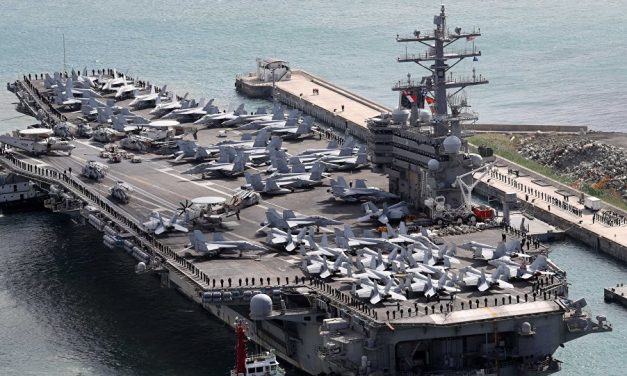
As a result, the Trump administration tries to create a global consensus between its traditional allies (Europe, Japan, South Korea, and ASEAN countries) against China by using economic, political, military and cybersecurity strategies, while limiting China’s rising tide; Among the measures taken by the US government in confronting China the following can be mentioned: Imposing tariffs on Chinese goods; requesting China to change the economic structure and not interfere in the economy; pushing for the enforcement of intellectual property rights; dispatching a warship to the South China Sea and the Strait of Taiwan; open and clandestine opposition to the idea of ​​China Belt and Road Initiative (BRI) and leveling charges against this idea; arms sales to Taiwan; support for popular protests in Hong Kong; putting pressures on China at international assemblies and through the media about the situation of Muslims in Xinjiang; leveling cybercrime charges against ZTE and Huawei; and accusing China of interfering in Venezuelan affairs. Therefore, confrontation with China is not limited to trade alone but because the principles of free trade are challenged by the Trump administration not only in relations with China but also in relations with other countries, it is more important than other issues.

Secondly, in the relations between the United States and China, the leaders of the two countries play a double role compared to the past. Xi Jinping is recognized as the most powerful leader of China in the post-Mao period. He has managed to bring all the state affairs under control and delegate key positions to associates and cohorts. Reforms in the Liberation Army, countering internal and structural corruption in the party and the military, and making the presidency a lifetime position by changing the constitution in 2018 are among the components that have made Xi a powerful leader in China.

On the other hand, the US businessman turned President Donald Trump, through direct involvement in business and economic affairs and foreign policy by using real and virtual instruments as well as the relocation of effective forces at the White House, is trying to make all the decisions by himself and execute them. Some believe that the presence of President Xi and Trump has a huge impact on the reduction or increase of tensions between China and the US; as in the case of ZTE, the Chinese president’s telephone call to his American counterpart caused the problem to be solved.

Thirdly, over the past years, the Chinese government has always emphasized the importance of supporting multilateralism; but China’s behaviour does not mean the use of tools in the international system; China’s behaviour in multilateral institutions, such as the United Nations, the WTO, and the like, is only to serve its National interests. Beijing’s multilateralism is based on the Belt and Road Initiative (BRI), in which 65 countries are directly involved and so far two international cooperation forums have been held in 2017 and 2019 to this end. On average, 40 heads of state and representatives from 120 countries participated in these forums.

China, through economic and banking tools, such as the Asian Development Bank and the Silk Road Fund, is also trying to create multilateralism based on new concepts. It should be noted that issues such as lack of transparency, lack of clarity of the list of projects, lending and investment standards, debt-trap and complex organization are considered weak points of the BRI concept; but in any case, the holding of international forum and related initiatives like the Belt and Road Green International Development Coalition, and digital silk road, have given particular identity to this idea and will increase China’s weight in international interactions. In the meantime, this assumption should not be ignored that these measures do not mean China is fully capable of countering American supremacy or, more accurately the domination of the US dollar over the world economy in short term and medium term.

In sum, despite the recent agreement between the presidents of China and the United States on the sidelines of the G20 summit in Osaka, Japan to resume trade talks, the lifting of tariffs on Chinese goods by Trump and giving authorization to Huawei to buy from American companies, one cannot believe that that the issue of trade war as the most important part of China-US disputes would end up intangible and concrete solutions.

The Chinese government will continue to pursue a strategic tolerance to leave behind the Trump era and find alternative ways to achieve its desired economic development. It is also emphasized that the year ahead for the Trump administration is a year of elections and is fateful. Therefore the US president is striving to overcome the problems created in US foreign policy (such as tension with China; withdrawal from the Joint Comprehensive Plan of Action; pulling out from the Paris Climate Accord; collapse of talks with North Korea, etc.) by using diplomatic gestures and voicing a desire to meet with leaders of other countries in order not to allow the Democrats to take advantage of the situation. On the other hand, China will likely use the same opportunity to get some concessions from the US government.

Also, the creation of obstacles by Trump for China will undoubtedly have negative effects on countries such as the Islamic Republic of Iran, which are under the US sanctions, with the least effective being the fear of the Chinese private companies to cooperate with Iran due to concerns of unilateral sanctions.
0 Comments

Submit a Comment

Your email address will not be published. Required fields are marked *

LATEST CONTENT

America’s Zero-Sum Game in Iraq

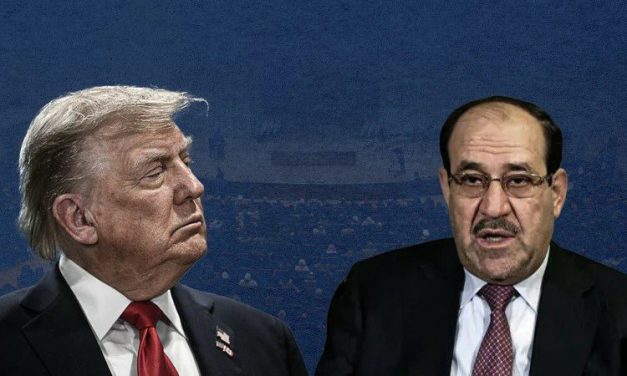
Online Strategic Council – Memoir: The swift selection of Nouri al-Maliki for the premiership constitutes a new phase in Iraq’s political sphere. Multiple factors have played a role in this process, the most important being the prevailing situation in Iraq and the region. Under such circumstances, Iraq requires a powerful and experienced prime minister who can keep the country away from the dangers of wars and crises.

America’s Strategy for Creating Tension in the Asia-Pacific

Strategic Council Online – Opinion: Relations between some countries in the Asia-Pacific region, such as China and Japan or China and Australia, which were previously relatively normal, are trending towards deterioration, and the primary reason for this is the aggressive policies of the United States of America.

The Collapse of the European Security Illusion with the Continuation of the Ukraine War?

Strategic Council Online – Interview: The Ukraine war has become a new turning point in the political, security, and even commercial relations of allies on both sides of the Atlantic. While this war is nearing its fourth year, many questions still remain regarding its future and its consequences; among them, will the continuation of the Ukraine war lead to the collapse of the European security illusion?

Is Greenland Pushing Europe Toward China?

Strategic Council Online – Interview: A European affairs expert believes that the seizure of Greenland will certainly weaken America’s relations with Europe and its allies. Donald Trump’s view is that he does not need these countries, but if Europe faces significant pressure from the United States, it is natural for it to move toward China.

Alarm Bells Sound for ISIS Revival in Syria: Threat to Iraq and West Asia

Strategic Council Online – Opinion: Numerous documents and pieces of evidence indicate that ISIS, which in recent years has been the region’s biggest threat to security and stability after the Zionist regime, has once again in recent months become a focal point for political and security exploitation by American and Zionist regime security, intelligence, and political circles.

Afghanistan’s Effective Role in the Economy of Eurasia

Strategic Council Online – Interview: A regional affairs researcher stated: Despite projects such as the Khaf-Herat railway and the Herat-Balkh-Mazar-i-Sharif corridor being on the agenda, insecurity and the absence of an inclusive government remain the most significant obstacles to realizing transit corridors and Afghanistan playing an effective role in the economy of Eurasia.

Loading

Últimas publicaciones

America’s Zero-Sum Game in Iraq

Online Strategic Council – Memoir: The swift selection of Nouri al-Maliki for the premiership constitutes a new phase in Iraq’s political sphere. Multiple factors have played a role in this process, the most important being the prevailing situation in Iraq and the region. Under such circumstances, Iraq requires a powerful and experienced prime minister who can keep the country away from the dangers of wars and crises.

America’s Strategy for Creating Tension in the Asia-Pacific

Strategic Council Online – Opinion: Relations between some countries in the Asia-Pacific region, such as China and Japan or China and Australia, which were previously relatively normal, are trending towards deterioration, and the primary reason for this is the aggressive policies of the United States of America.

The Collapse of the European Security Illusion with the Continuation of the Ukraine War?

Strategic Council Online – Interview: The Ukraine war has become a new turning point in the political, security, and even commercial relations of allies on both sides of the Atlantic. While this war is nearing its fourth year, many questions still remain regarding its future and its consequences; among them, will the continuation of the Ukraine war lead to the collapse of the European security illusion?

Is Greenland Pushing Europe Toward China?

Strategic Council Online – Interview: A European affairs expert believes that the seizure of Greenland will certainly weaken America’s relations with Europe and its allies. Donald Trump’s view is that he does not need these countries, but if Europe faces significant pressure from the United States, it is natural for it to move toward China.

Alarm Bells Sound for ISIS Revival in Syria: Threat to Iraq and West Asia

Strategic Council Online – Opinion: Numerous documents and pieces of evidence indicate that ISIS, which in recent years has been the region’s biggest threat to security and stability after the Zionist regime, has once again in recent months become a focal point for political and security exploitation by American and Zionist regime security, intelligence, and political circles.

Afghanistan’s Effective Role in the Economy of Eurasia

Strategic Council Online – Interview: A regional affairs researcher stated: Despite projects such as the Khaf-Herat railway and the Herat-Balkh-Mazar-i-Sharif corridor being on the agenda, insecurity and the absence of an inclusive government remain the most significant obstacles to realizing transit corridors and Afghanistan playing an effective role in the economy of Eurasia.

Loading

DERNIER CONTENU

America’s Zero-Sum Game in Iraq

Online Strategic Council – Memoir: The swift selection of Nouri al-Maliki for the premiership constitutes a new phase in Iraq’s political sphere. Multiple factors have played a role in this process, the most important being the prevailing situation in Iraq and the region. Under such circumstances, Iraq requires a powerful and experienced prime minister who can keep the country away from the dangers of wars and crises.

America’s Strategy for Creating Tension in the Asia-Pacific

Strategic Council Online – Opinion: Relations between some countries in the Asia-Pacific region, such as China and Japan or China and Australia, which were previously relatively normal, are trending towards deterioration, and the primary reason for this is the aggressive policies of the United States of America.

The Collapse of the European Security Illusion with the Continuation of the Ukraine War?

Strategic Council Online – Interview: The Ukraine war has become a new turning point in the political, security, and even commercial relations of allies on both sides of the Atlantic. While this war is nearing its fourth year, many questions still remain regarding its future and its consequences; among them, will the continuation of the Ukraine war lead to the collapse of the European security illusion?

Is Greenland Pushing Europe Toward China?

Strategic Council Online – Interview: A European affairs expert believes that the seizure of Greenland will certainly weaken America’s relations with Europe and its allies. Donald Trump’s view is that he does not need these countries, but if Europe faces significant pressure from the United States, it is natural for it to move toward China.

Alarm Bells Sound for ISIS Revival in Syria: Threat to Iraq and West Asia

Strategic Council Online – Opinion: Numerous documents and pieces of evidence indicate that ISIS, which in recent years has been the region’s biggest threat to security and stability after the Zionist regime, has once again in recent months become a focal point for political and security exploitation by American and Zionist regime security, intelligence, and political circles.

Afghanistan’s Effective Role in the Economy of Eurasia

Strategic Council Online – Interview: A regional affairs researcher stated: Despite projects such as the Khaf-Herat railway and the Herat-Balkh-Mazar-i-Sharif corridor being on the agenda, insecurity and the absence of an inclusive government remain the most significant obstacles to realizing transit corridors and Afghanistan playing an effective role in the economy of Eurasia.

Loading