Reasons Why Lausanne Treaty Is Important for Turkey & Greece

Strategic Council Online - Opinion: On the occasion of the 99th anniversary of the Treaty of Lausanne, Recep Tayyip Erdoğan announced in a statement that the Greek side has ignored the terms recorded in the Treaty and deliberately destroyed the agreement, especially regarding the rights of the Turkish Muslim minority in that country. Mahmoud Fazeli - Analyst of international issues

The president of Turkey announced that the country is determined to ‘use all its efforts to establish permanent peace and stability in the region and defend the rights of its people. Turkey cannot accept such conditions, which contradict the good neighborly relations and the principle of adherence to the signed treaty.’
The Treaty of Lausanne is one of the basic documents of the Republic of Turkey, through which its land borders were determined, withdrawals were canceled and the rights of the Turkish minority in Greece were guaranteed. Ankara has carefully monitored implementation of that agreement for the past 99 years. Turkey will continue to strengthen its active position in regional and global issues simultaneously with taking strong steps towards 2023, the 100th anniversary of the Lausanne Peace Treaty and establishment of the Republic of Turkey.
The 1923 treaty was signed by the new Republic of Turkey to settle disputes with the Allies, including Greece, after the World War I and the Turkish War of Independence. The document outlines the rights of the remaining Muslim minority in Greece and Christians in Turkey after the intense conflict between the two countries.
It also sets the conditions for Greek sovereignty over the Aegean islands off the coast of Turkey. Ankara worries about the militarization of the islands and Greece’s violation of the treaty, but Athens says it is acting in accordance with international law and defending its territory against Turkey’s continued hostility.
Greek Muslims, Turks, Romans, and Bulgarian-speaking Pomaks, are one of the main differences between the two countries. Turkey says there are 150,000 people of “Turkish descent” living in the region, while Greece insists that they are 120,000 “Greek Muslims”.
Turkey believes that the Muslim minority is constantly under pressure from the Greek government institutions, and it has considered the closure of four Muslim minority schools in Greece as an example.
Tensions between Turkey and Greece have recently increased again over airspace and the status of non-military islands in the Aegean Sea. After the Greek prime minister’s attempt to prevent the sale of F-16 fighter planes to Turkey in the US Congress, Erdoğan emphasized in his rare position that ‘the prime minister of Greece no longer exists for him’.
Relations between Turkey and Greece, two NATO members, have often been strained, and last year those relations deteriorated severely with warships clashing in eastern Mediterranean over maritime borders and energy rights.
Turkey believes that the purpose of Greece’s behavior in recent years is to wear out the Lausanne Treaty, because it has not complied with the provisions of the treaty and its purpose is to take over some islands by creating a few-day crisis.
On the anniversary of the Treaty of Lausanne in 1923, which both countries consider a political victory over their neighbor and regional rival, the long-standing differences between the two sides continue and there is no a clear prospect for resolving such differences. According to Turkey, despite all kinds of impossibilities, betrayals and difficulties, the country fought to achieve independence and achieved victory. This victory has been confirmed on the international stage by the Lausanne Peace Treaty.
Greece considers Turkey’s argument regarding the delivery of the Aegean and Eastern Mediterranean islands to Greece according to the Lausanne Treaty and the non-military nature of those islands as baseless and wrong in terms of law and history. Greece’s sovereignty over the islands of the eastern Aegean Sea is fully confirmed in Article 12 of the treaty. Greek sovereignty is not subject to any obligation including the demilitarization of the islands, and there is no mention of the words such as “demilitarization”, “demilitarizing,” or “state of demilitarizing”.
The Treaty of Lausanne, which was signed on July 24, 1923 in the city of Lausanne, Switzerland, was accepted as the founding document of the Republic of Turkey, and this agreement recognizes Turkey as an independent and sovereign country, the effects of which continue.
The Treaty of Lausanne is the name of the peace treaty that was signed between the representatives of the Turkish Parliament on the one hand and Britain, France, Italy, Japan, Greece, Romania, Bulgaria, Portugal, Belgium and Yugoslavia on the one hand. The process of Lausanne negotiations began on November 20, 1922, and Turkey was asked to compromise on “capitulation” and “Armenian government”. Such negotiations were stopped on February 4, 1923 due to issues related to the straits, capitulation, debts of the Ottoman government, and the status of the cities of Mosul and Kirkuk.
After the World War II, 12 islands were given to Greece. The issue of the straits was one of the issues discussed in Lausanne, which was resolved by the Montreux Convention, signed on July 20, 1936. According to the Lausanne Agreement, foreign schools were established in the borders of the Turkish government according to Turkish laws, and the curriculum of the above schools was regulated by the Turkish government.
Apart from the Greeks living in Istanbul, other Greeks were sent from Turkey to Greece, and in addition to the Turks of Western Thrace (located in Greece), all the Turks also returned to Turkey, and thus the population exchange between the two countries took place. After the First World War and population exchanges, the Turkish minority still lives in Western Thrace, who were recognized as a minority according to the Lausanne Treaty.
Greece claims to be fully committed to international law and the protection of human rights, and implements its obligations arising from the Lausanne Treaty, which explicitly and clearly refers to the Muslim minority in Greece. Turkey’s continuous efforts to “distort the reality” as well as the country’s claims of “not protecting the rights of those citizens or discriminating against them” are baseless, and Greece fully implements the provisions of the Lausanne Treaty regarding the Muslim minority of that region.
0 Comments

Submit a Comment

Your email address will not be published. Required fields are marked *

LATEST CONTENT

The Security Equation of Southern Lebanon for the Zionist Regime

Strategic Council Online – Opinion: American-Zionist objectives in the region are not limited to weakening Hezbollah. Efforts to disarm Iraqi resistance groups such as Kata’ib Hezbollah and the Popular Mobilization Forces are also part of their subsequent plans.

Commercial Exploitation of Peace; The Gaza Committee in Confrontation with International Legitimacy

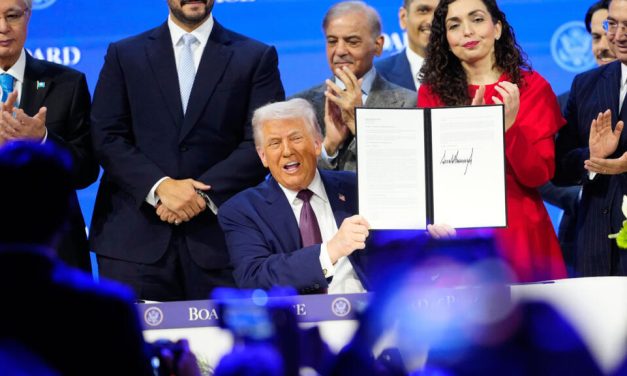
Strategic Council Online – Report: While the second phase of the implementation of the Gaza ceasefire has begun, the establishment of the “Peace Board” chaired by Donald Trump on the sidelines of the Davos meeting (22 January 2026) has become more than a technical mechanism for reconstruction and has turned into a test for the future of the international order.
Despite the signing of the charter by 22 out of 60 invited countries, the limited presence of global leaders at the Davos ceremony and the non-acceptance of this body by the European Union and key Western countries indicate a deep divide in global perceptions of the legitimacy of this mechanism.
In this report, drawing on the analysis of Hadi Borhani, a regional affairs expert, and international data, three strategic questions are addressed: Is the Peace Board an instrument for implementing UN Security Council Resolution 2803 or a substitute for the United Nations? How does the hierarchical architecture of this committee intensify executive challenges in Gaza? And finally, can this body create sustainable peace without the cooperation of Palestinians and with the concentration of power in the hands of a single individual?

America’s Zero-Sum Game in Iraq

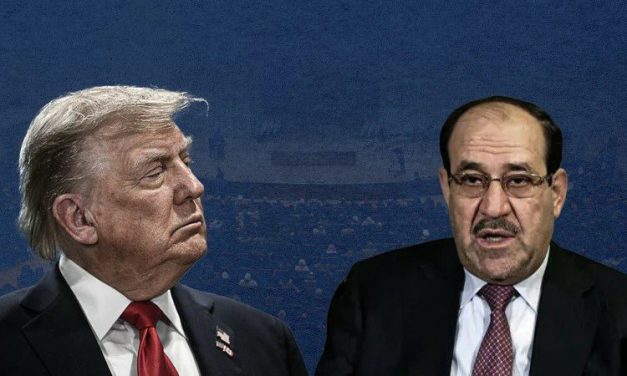
Online Strategic Council – Memoir: The swift selection of Nouri al-Maliki for the premiership constitutes a new phase in Iraq’s political sphere. Multiple factors have played a role in this process, the most important being the prevailing situation in Iraq and the region. Under such circumstances, Iraq requires a powerful and experienced prime minister who can keep the country away from the dangers of wars and crises.

America’s Strategy for Creating Tension in the Asia-Pacific

Strategic Council Online – Opinion: Relations between some countries in the Asia-Pacific region, such as China and Japan or China and Australia, which were previously relatively normal, are trending towards deterioration, and the primary reason for this is the aggressive policies of the United States of America.

Loading

Últimas publicaciones

The Security Equation of Southern Lebanon for the Zionist Regime

Strategic Council Online – Opinion: American-Zionist objectives in the region are not limited to weakening Hezbollah. Efforts to disarm Iraqi resistance groups such as Kata’ib Hezbollah and the Popular Mobilization Forces are also part of their subsequent plans.

Commercial Exploitation of Peace; The Gaza Committee in Confrontation with International Legitimacy

Strategic Council Online – Report: While the second phase of the implementation of the Gaza ceasefire has begun, the establishment of the “Peace Board” chaired by Donald Trump on the sidelines of the Davos meeting (22 January 2026) has become more than a technical mechanism for reconstruction and has turned into a test for the future of the international order.
Despite the signing of the charter by 22 out of 60 invited countries, the limited presence of global leaders at the Davos ceremony and the non-acceptance of this body by the European Union and key Western countries indicate a deep divide in global perceptions of the legitimacy of this mechanism.
In this report, drawing on the analysis of Hadi Borhani, a regional affairs expert, and international data, three strategic questions are addressed: Is the Peace Board an instrument for implementing UN Security Council Resolution 2803 or a substitute for the United Nations? How does the hierarchical architecture of this committee intensify executive challenges in Gaza? And finally, can this body create sustainable peace without the cooperation of Palestinians and with the concentration of power in the hands of a single individual?

America’s Zero-Sum Game in Iraq

Online Strategic Council – Memoir: The swift selection of Nouri al-Maliki for the premiership constitutes a new phase in Iraq’s political sphere. Multiple factors have played a role in this process, the most important being the prevailing situation in Iraq and the region. Under such circumstances, Iraq requires a powerful and experienced prime minister who can keep the country away from the dangers of wars and crises.

America’s Strategy for Creating Tension in the Asia-Pacific

Strategic Council Online – Opinion: Relations between some countries in the Asia-Pacific region, such as China and Japan or China and Australia, which were previously relatively normal, are trending towards deterioration, and the primary reason for this is the aggressive policies of the United States of America.

Loading

DERNIER CONTENU

The Security Equation of Southern Lebanon for the Zionist Regime

Strategic Council Online – Opinion: American-Zionist objectives in the region are not limited to weakening Hezbollah. Efforts to disarm Iraqi resistance groups such as Kata’ib Hezbollah and the Popular Mobilization Forces are also part of their subsequent plans.

Commercial Exploitation of Peace; The Gaza Committee in Confrontation with International Legitimacy

Strategic Council Online – Report: While the second phase of the implementation of the Gaza ceasefire has begun, the establishment of the “Peace Board” chaired by Donald Trump on the sidelines of the Davos meeting (22 January 2026) has become more than a technical mechanism for reconstruction and has turned into a test for the future of the international order.
Despite the signing of the charter by 22 out of 60 invited countries, the limited presence of global leaders at the Davos ceremony and the non-acceptance of this body by the European Union and key Western countries indicate a deep divide in global perceptions of the legitimacy of this mechanism.
In this report, drawing on the analysis of Hadi Borhani, a regional affairs expert, and international data, three strategic questions are addressed: Is the Peace Board an instrument for implementing UN Security Council Resolution 2803 or a substitute for the United Nations? How does the hierarchical architecture of this committee intensify executive challenges in Gaza? And finally, can this body create sustainable peace without the cooperation of Palestinians and with the concentration of power in the hands of a single individual?

America’s Zero-Sum Game in Iraq

Online Strategic Council – Memoir: The swift selection of Nouri al-Maliki for the premiership constitutes a new phase in Iraq’s political sphere. Multiple factors have played a role in this process, the most important being the prevailing situation in Iraq and the region. Under such circumstances, Iraq requires a powerful and experienced prime minister who can keep the country away from the dangers of wars and crises.

America’s Strategy for Creating Tension in the Asia-Pacific

Strategic Council Online – Opinion: Relations between some countries in the Asia-Pacific region, such as China and Japan or China and Australia, which were previously relatively normal, are trending towards deterioration, and the primary reason for this is the aggressive policies of the United States of America.

Loading

DERNIER CONTENU

The Security Equation of Southern Lebanon for the Zionist Regime

Strategic Council Online – Opinion: American-Zionist objectives in the region are not limited to weakening Hezbollah. Efforts to disarm Iraqi resistance groups such as Kata’ib Hezbollah and the Popular Mobilization Forces are also part of their subsequent plans.

Commercial Exploitation of Peace; The Gaza Committee in Confrontation with International Legitimacy

Strategic Council Online – Report: While the second phase of the implementation of the Gaza ceasefire has begun, the establishment of the “Peace Board” chaired by Donald Trump on the sidelines of the Davos meeting (22 January 2026) has become more than a technical mechanism for reconstruction and has turned into a test for the future of the international order.
Despite the signing of the charter by 22 out of 60 invited countries, the limited presence of global leaders at the Davos ceremony and the non-acceptance of this body by the European Union and key Western countries indicate a deep divide in global perceptions of the legitimacy of this mechanism.
In this report, drawing on the analysis of Hadi Borhani, a regional affairs expert, and international data, three strategic questions are addressed: Is the Peace Board an instrument for implementing UN Security Council Resolution 2803 or a substitute for the United Nations? How does the hierarchical architecture of this committee intensify executive challenges in Gaza? And finally, can this body create sustainable peace without the cooperation of Palestinians and with the concentration of power in the hands of a single individual?

America’s Zero-Sum Game in Iraq

Online Strategic Council – Memoir: The swift selection of Nouri al-Maliki for the premiership constitutes a new phase in Iraq’s political sphere. Multiple factors have played a role in this process, the most important being the prevailing situation in Iraq and the region. Under such circumstances, Iraq requires a powerful and experienced prime minister who can keep the country away from the dangers of wars and crises.

America’s Strategy for Creating Tension in the Asia-Pacific

Strategic Council Online – Opinion: Relations between some countries in the Asia-Pacific region, such as China and Japan or China and Australia, which were previously relatively normal, are trending towards deterioration, and the primary reason for this is the aggressive policies of the United States of America.

Loading

DERNIER CONTENU

The Security Equation of Southern Lebanon for the Zionist Regime

Strategic Council Online – Opinion: American-Zionist objectives in the region are not limited to weakening Hezbollah. Efforts to disarm Iraqi resistance groups such as Kata’ib Hezbollah and the Popular Mobilization Forces are also part of their subsequent plans.

Commercial Exploitation of Peace; The Gaza Committee in Confrontation with International Legitimacy

Strategic Council Online – Report: While the second phase of the implementation of the Gaza ceasefire has begun, the establishment of the “Peace Board” chaired by Donald Trump on the sidelines of the Davos meeting (22 January 2026) has become more than a technical mechanism for reconstruction and has turned into a test for the future of the international order.
Despite the signing of the charter by 22 out of 60 invited countries, the limited presence of global leaders at the Davos ceremony and the non-acceptance of this body by the European Union and key Western countries indicate a deep divide in global perceptions of the legitimacy of this mechanism.
In this report, drawing on the analysis of Hadi Borhani, a regional affairs expert, and international data, three strategic questions are addressed: Is the Peace Board an instrument for implementing UN Security Council Resolution 2803 or a substitute for the United Nations? How does the hierarchical architecture of this committee intensify executive challenges in Gaza? And finally, can this body create sustainable peace without the cooperation of Palestinians and with the concentration of power in the hands of a single individual?

America’s Zero-Sum Game in Iraq

Online Strategic Council – Memoir: The swift selection of Nouri al-Maliki for the premiership constitutes a new phase in Iraq’s political sphere. Multiple factors have played a role in this process, the most important being the prevailing situation in Iraq and the region. Under such circumstances, Iraq requires a powerful and experienced prime minister who can keep the country away from the dangers of wars and crises.

America’s Strategy for Creating Tension in the Asia-Pacific

Strategic Council Online – Opinion: Relations between some countries in the Asia-Pacific region, such as China and Japan or China and Australia, which were previously relatively normal, are trending towards deterioration, and the primary reason for this is the aggressive policies of the United States of America.

Loading