Abdullah-Ghani Agreement & Political Future of Afghanistan

2020/05/17 | interview, Politics, Top News

Strategic Council Online: Explaining the dimensions of the framework of the political agreement in Afghanistan, a university professor said: "If the government fails to display particular effectiveness under the political agreement the Taliban may not adhere to its political deal with the government and ISIS may stronger amidst the created anarchy.”

Dr Ahmad Bakhshi, in an interview with the website of the Strategic Council on Foreign Relations, stated that post-Taliban Afghanistan, due to the quasi-democratic processes and structures enshrined in its constitution, gives space to various ethnic and political groups and takes their role into account. Given that these groups have been involved in state-building at various times, as well as in the fight against the Taliban and their activities against the communist government and the Soviet invasion, they have taken into account power-sharing, and in the post-9/11 conditions, this power-sharing has been included in the Afghan constitution.

He said that after the first government formed by Hamid Karzai, there was only one term that we did not face the crisis of the election results, adding: “Every time there were issues in the election, the second person and the main winner of the election claimed victory or circumstances led to the conclusion that the structure of local, regional and international statesmen and politicians has concluded that a coalition must be formed, otherwise the situation will become more complicated and difficult given the fragile structure of the government in Afghanistan.

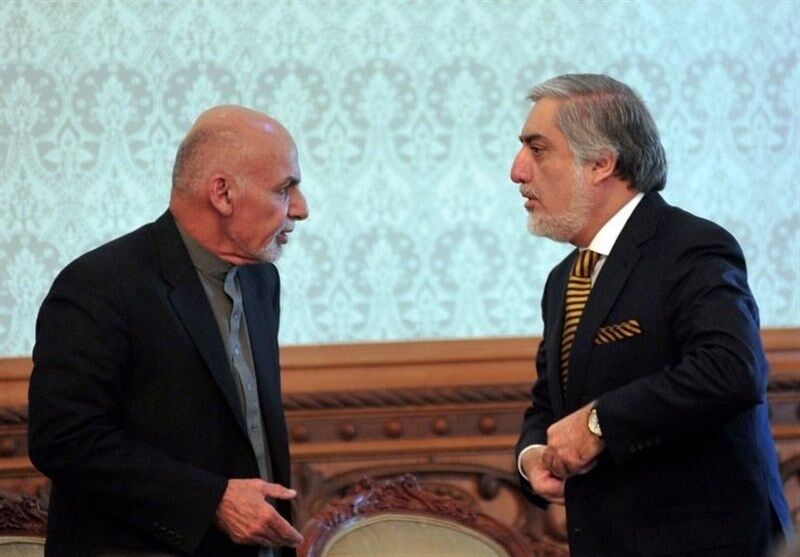
Explaining the process of establishing the post of chief executive after the first round of elections between Ashraf Ghani and Abdullah Abdullah, the Afghan developments analyst continued: “In the previous round, less than two years had passed since the differences between them began. The previous presidency or executive branch was not very efficient, which created social dissatisfaction within the society and formed discontent between the two groups.

Bakhshi pointed to the small number of votes gained by the winner in Afghanistan’s elections and the separate and concurrent swearing-in ceremonies by Abdullah Abdullah and Ashraf Ghani, as well as warnings about the need for a coalition between them and said: If we review the developments since the second term of Karzai presidency and the mediation by John Kerry until the previous round that the post of Chief Executive was created, there has never been such consensus and common identity between the internal, regional and international forces on the need for a coalition between them.

Dimensions of Political Agreement Framework

Referring to the announcement of negotiations between Abdullah and Ashraf Ghani after these pressures and the possibility of a deal and its drafting by Abdullah to reach a political understanding, he added: “Abdullah plan is to form a national participation government and its theme is “political agreement framework” and has several parts.

Explaining the clauses and details of the framework of the political agreement, the professor noted: “According to this framework, a high-level government council consisting of political leaders and national figures should be formed to provide consultations on major issues, Afghanistan’s relations with other countries and issues related to national unity, social justice and structural reform. In addition, the post of “executive prime minister” is focused on the fulfilment of peace, in which the prime minister has good authority.

He continued: “In the executive protocol, it is stated that the executive prime minister is in the second place in terms of security and protocol, and his deputies are like the vice presidents. Fifty per cent of the ministers, their deputies, and ambassadors will be decided by the chief executive or concerning security, military, provincial commanders, mayors, and four major Afghan security officials, there will be a 50-50 balance.

The university professor said that the governors in the 34 provinces would also be selected by a person with the highest number of votes in the province. “According to this framework, the constitutional amendment plan should start one year after the agreement and its chairman will be introduced by the executive prime minister with peace orientation, and the Loya Jirga will amend the constitution to change the political system.

Disagreements between Abdullah’s Supporters over Political Agreement Framework

At the same time, he noted some differences between Abdullah’s supporters, explaining that some believe that it would be better if Abdullah took over the “chief executive” post and institutionalized it, rather than, for example, running a peace council. Salahuddin Rabbani and Ahmad Zia Massoud, brother of Ahmad Shah Massoud, oppose the Peace Council chairmanship or new mechanisms. They emphasize the creation of an executive prime minister, and in a way they want this institution to be included in the law, and later the system to be in the form of a president and a prime minister.

“Of course, given the structure of politics, ethnicity, religion and history in Afghanistan, it seems that the constitutional structure will need to include an executive with a secondary role because in real politics Afghanistan ethnic groups want a share of power, and in practice, it may be possible to share power by the power structure mechanism, like what is happening in Lebanon now,” Bakhshi said.

The problem of Taliban’s Share in Next Government

“The Afghan people are not so happy with the previous coalition and have sent a message that they need efficiency and that political disputes should be put aside,” he said. Politicians, on the other hand, agree that if the Taliban participates in government-building and makes contributions, it can help stabilize and secure Afghanistan. But one of the government’s problems will be which side the Taliban will play in the next government. However, both have stated that they will abide by the agreement with the Taliban and will contribute to it.

Emphasizing that the Taliban have fundamental differences with both sides that will arise, he added: “Ultimately, this mechanism is much better than the mechanism proposed five years ago as the chief executive, and in fact, Abdullah has been able to get the concessions he wanted.” But because a series of interventions may take place and reduce Ashraf Ghani’s share, it created some problems for the future of the political system in Afghanistan.

The Afghan affairs analyst went on to say that if the government fails to display particular effectiveness under the political agreement the Taliban may not adhere to its political deal with the government and anarchy may be created. “A fourth force in Afghanistan should be considered de facto and de jure and it is, in fact, ISIS, which can be strengthened. If they fail to provide security in Afghanistan due to the agreement reached with the Taliban and bring stability to the country and prosperity to the economy, it will still lead to the emergence of internal conflicts in Afghanistan, as in the 1990s.

`Problems of Lebanonization

He stressed: “Of course, in the short term, because a consensus has been reached and it is welcome and still in the process of implementation, it may be satisfactory, but in the long run we will see certain problems at every stage.” However, today, when we talk about Lebanonization, we see that in the last decade, the structure remaining from colonialism in Lebanon is facing problems and the government is practically not stable.


0 Comments

Submit a Comment

Your email address will not be published. Required fields are marked *

LATEST CONTENT

The Inseparability of the Lebanese Front from the Axis of Resistance

SCFR Online–Opinion: By providing an extensive network of social, healthcare, educational, and post-war reconstruction services, Hezbollah has established a strong social base for itself among Lebanon’s Shiites and Sunnis, and even beyond that, among other segments of Lebanese society, including Christians. Hezbollah has never been an external actor imposed upon Lebanon; rather, it is a phenomenon fundamentally born out of the occupation and crimes of the Zionist regime and itself influenced by popular resistance.

The Increasing Efforts of the Zionist Regime to Redefine Borders and the Regional Order and Its Consequences

SCFR Online– Opinion: Security and military developments in the region over recent months indicate that the ongoing crises and wars in Gaza, southern Lebanon, and parts of Syrian territory encompass broader dimensions of geopolitical and geostrategic transformations. In this context, the increased military presence and control of the Zionist regime over parts of the territories of these areas, along with proposals regarding the creation of buffer zones or even the expansion of security borders, have raised serious questions about the future of the regional order and its consequences for the countries of West Asia.

The Components of Iran’s Deterrence Power

SCFR Online – Opinion: At a time when regional security equations have reached a sensitive stage under the influence of Iran’s strategic confrontation with the United States and the Zionist regime, the question of the nature of Tehran’s defensive power has gained greater significance than ever before. While Washington and Tel Aviv rely on their technological superiority, the Islamic Republic of Iran has presented a model of deterrence that extends beyond the material calculations of the world’s classical militaries. This power, rooted in the connection between “the field” and “the people,” has not only altered the balance of power in recent conflicts but has also disrupted adversaries’ calculations when confronting Iran’s strategic depth.

The Persian Gulf; A Cold Battlefield Between Beijing and Washington

SCFR Online – Opinion: The competition in recent years between the United States and China encompasses various geographical regions—including the Indo-Pacific, West Asia, the Arctic and Antarctic, and Africa—as well as multiple domains such as economics and technology. Within this context, a strategic competition has also emerged in the Persian Gulf region across economic, technological, and military spheres.

Europe’s Enduring Dependence on Persian Gulf Energy

SCFR Online – Opinion: The dominant discourse in the field of European energy security over the past two decades has revolved around diversification of supply sources and the gradual reduction of dependence on fossil fuels. This narrative, which gained particular momentum after the Ukraine gas crisis in 2006 and its intensification in 2014 and 2022, was based on the assumption that Europe could free itself from the geopolitical vulnerabilities arising from dependence on specific suppliers through investment in renewable energy, imports of liquefied natural gas from diversified sources, and the establishment of new infrastructure. However, a closer analysis of energy trade data and the structure of the global oil and gas supply chain presents a different picture. Europe has not only failed to meaningfully reduce its dependence on the Persian Gulf, but in some sectors — particularly in liquefied natural gas imports — this dependence has deepened. This reality, which is often overlooked in public discourse, raises fundamental questions about the sustainability of Europe’s energy security strategies and their impact on regional power equations.

Loading

Últimas publicaciones

The Inseparability of the Lebanese Front from the Axis of Resistance

SCFR Online–Opinion: By providing an extensive network of social, healthcare, educational, and post-war reconstruction services, Hezbollah has established a strong social base for itself among Lebanon’s Shiites and Sunnis, and even beyond that, among other segments of Lebanese society, including Christians. Hezbollah has never been an external actor imposed upon Lebanon; rather, it is a phenomenon fundamentally born out of the occupation and crimes of the Zionist regime and itself influenced by popular resistance.

The Increasing Efforts of the Zionist Regime to Redefine Borders and the Regional Order and Its Consequences

SCFR Online– Opinion: Security and military developments in the region over recent months indicate that the ongoing crises and wars in Gaza, southern Lebanon, and parts of Syrian territory encompass broader dimensions of geopolitical and geostrategic transformations. In this context, the increased military presence and control of the Zionist regime over parts of the territories of these areas, along with proposals regarding the creation of buffer zones or even the expansion of security borders, have raised serious questions about the future of the regional order and its consequences for the countries of West Asia.

The Components of Iran’s Deterrence Power

SCFR Online – Opinion: At a time when regional security equations have reached a sensitive stage under the influence of Iran’s strategic confrontation with the United States and the Zionist regime, the question of the nature of Tehran’s defensive power has gained greater significance than ever before. While Washington and Tel Aviv rely on their technological superiority, the Islamic Republic of Iran has presented a model of deterrence that extends beyond the material calculations of the world’s classical militaries. This power, rooted in the connection between “the field” and “the people,” has not only altered the balance of power in recent conflicts but has also disrupted adversaries’ calculations when confronting Iran’s strategic depth.

The Persian Gulf; A Cold Battlefield Between Beijing and Washington

SCFR Online – Opinion: The competition in recent years between the United States and China encompasses various geographical regions—including the Indo-Pacific, West Asia, the Arctic and Antarctic, and Africa—as well as multiple domains such as economics and technology. Within this context, a strategic competition has also emerged in the Persian Gulf region across economic, technological, and military spheres.

Europe’s Enduring Dependence on Persian Gulf Energy

SCFR Online – Opinion: The dominant discourse in the field of European energy security over the past two decades has revolved around diversification of supply sources and the gradual reduction of dependence on fossil fuels. This narrative, which gained particular momentum after the Ukraine gas crisis in 2006 and its intensification in 2014 and 2022, was based on the assumption that Europe could free itself from the geopolitical vulnerabilities arising from dependence on specific suppliers through investment in renewable energy, imports of liquefied natural gas from diversified sources, and the establishment of new infrastructure. However, a closer analysis of energy trade data and the structure of the global oil and gas supply chain presents a different picture. Europe has not only failed to meaningfully reduce its dependence on the Persian Gulf, but in some sectors — particularly in liquefied natural gas imports — this dependence has deepened. This reality, which is often overlooked in public discourse, raises fundamental questions about the sustainability of Europe’s energy security strategies and their impact on regional power equations.

Loading

DERNIER CONTENU

The Inseparability of the Lebanese Front from the Axis of Resistance

SCFR Online–Opinion: By providing an extensive network of social, healthcare, educational, and post-war reconstruction services, Hezbollah has established a strong social base for itself among Lebanon’s Shiites and Sunnis, and even beyond that, among other segments of Lebanese society, including Christians. Hezbollah has never been an external actor imposed upon Lebanon; rather, it is a phenomenon fundamentally born out of the occupation and crimes of the Zionist regime and itself influenced by popular resistance.

The Increasing Efforts of the Zionist Regime to Redefine Borders and the Regional Order and Its Consequences

SCFR Online– Opinion: Security and military developments in the region over recent months indicate that the ongoing crises and wars in Gaza, southern Lebanon, and parts of Syrian territory encompass broader dimensions of geopolitical and geostrategic transformations. In this context, the increased military presence and control of the Zionist regime over parts of the territories of these areas, along with proposals regarding the creation of buffer zones or even the expansion of security borders, have raised serious questions about the future of the regional order and its consequences for the countries of West Asia.

The Components of Iran’s Deterrence Power

SCFR Online – Opinion: At a time when regional security equations have reached a sensitive stage under the influence of Iran’s strategic confrontation with the United States and the Zionist regime, the question of the nature of Tehran’s defensive power has gained greater significance than ever before. While Washington and Tel Aviv rely on their technological superiority, the Islamic Republic of Iran has presented a model of deterrence that extends beyond the material calculations of the world’s classical militaries. This power, rooted in the connection between “the field” and “the people,” has not only altered the balance of power in recent conflicts but has also disrupted adversaries’ calculations when confronting Iran’s strategic depth.

The Persian Gulf; A Cold Battlefield Between Beijing and Washington

SCFR Online – Opinion: The competition in recent years between the United States and China encompasses various geographical regions—including the Indo-Pacific, West Asia, the Arctic and Antarctic, and Africa—as well as multiple domains such as economics and technology. Within this context, a strategic competition has also emerged in the Persian Gulf region across economic, technological, and military spheres.

Europe’s Enduring Dependence on Persian Gulf Energy

SCFR Online – Opinion: The dominant discourse in the field of European energy security over the past two decades has revolved around diversification of supply sources and the gradual reduction of dependence on fossil fuels. This narrative, which gained particular momentum after the Ukraine gas crisis in 2006 and its intensification in 2014 and 2022, was based on the assumption that Europe could free itself from the geopolitical vulnerabilities arising from dependence on specific suppliers through investment in renewable energy, imports of liquefied natural gas from diversified sources, and the establishment of new infrastructure. However, a closer analysis of energy trade data and the structure of the global oil and gas supply chain presents a different picture. Europe has not only failed to meaningfully reduce its dependence on the Persian Gulf, but in some sectors — particularly in liquefied natural gas imports — this dependence has deepened. This reality, which is often overlooked in public discourse, raises fundamental questions about the sustainability of Europe’s energy security strategies and their impact on regional power equations.

Loading

DERNIER CONTENU

The Inseparability of the Lebanese Front from the Axis of Resistance

SCFR Online–Opinion: By providing an extensive network of social, healthcare, educational, and post-war reconstruction services, Hezbollah has established a strong social base for itself among Lebanon’s Shiites and Sunnis, and even beyond that, among other segments of Lebanese society, including Christians. Hezbollah has never been an external actor imposed upon Lebanon; rather, it is a phenomenon fundamentally born out of the occupation and crimes of the Zionist regime and itself influenced by popular resistance.

The Increasing Efforts of the Zionist Regime to Redefine Borders and the Regional Order and Its Consequences

SCFR Online– Opinion: Security and military developments in the region over recent months indicate that the ongoing crises and wars in Gaza, southern Lebanon, and parts of Syrian territory encompass broader dimensions of geopolitical and geostrategic transformations. In this context, the increased military presence and control of the Zionist regime over parts of the territories of these areas, along with proposals regarding the creation of buffer zones or even the expansion of security borders, have raised serious questions about the future of the regional order and its consequences for the countries of West Asia.

The Components of Iran’s Deterrence Power

SCFR Online – Opinion: At a time when regional security equations have reached a sensitive stage under the influence of Iran’s strategic confrontation with the United States and the Zionist regime, the question of the nature of Tehran’s defensive power has gained greater significance than ever before. While Washington and Tel Aviv rely on their technological superiority, the Islamic Republic of Iran has presented a model of deterrence that extends beyond the material calculations of the world’s classical militaries. This power, rooted in the connection between “the field” and “the people,” has not only altered the balance of power in recent conflicts but has also disrupted adversaries’ calculations when confronting Iran’s strategic depth.

The Persian Gulf; A Cold Battlefield Between Beijing and Washington

SCFR Online – Opinion: The competition in recent years between the United States and China encompasses various geographical regions—including the Indo-Pacific, West Asia, the Arctic and Antarctic, and Africa—as well as multiple domains such as economics and technology. Within this context, a strategic competition has also emerged in the Persian Gulf region across economic, technological, and military spheres.

Europe’s Enduring Dependence on Persian Gulf Energy

SCFR Online – Opinion: The dominant discourse in the field of European energy security over the past two decades has revolved around diversification of supply sources and the gradual reduction of dependence on fossil fuels. This narrative, which gained particular momentum after the Ukraine gas crisis in 2006 and its intensification in 2014 and 2022, was based on the assumption that Europe could free itself from the geopolitical vulnerabilities arising from dependence on specific suppliers through investment in renewable energy, imports of liquefied natural gas from diversified sources, and the establishment of new infrastructure. However, a closer analysis of energy trade data and the structure of the global oil and gas supply chain presents a different picture. Europe has not only failed to meaningfully reduce its dependence on the Persian Gulf, but in some sectors — particularly in liquefied natural gas imports — this dependence has deepened. This reality, which is often overlooked in public discourse, raises fundamental questions about the sustainability of Europe’s energy security strategies and their impact on regional power equations.

Loading

DERNIER CONTENU

The Inseparability of the Lebanese Front from the Axis of Resistance

SCFR Online–Opinion: By providing an extensive network of social, healthcare, educational, and post-war reconstruction services, Hezbollah has established a strong social base for itself among Lebanon’s Shiites and Sunnis, and even beyond that, among other segments of Lebanese society, including Christians. Hezbollah has never been an external actor imposed upon Lebanon; rather, it is a phenomenon fundamentally born out of the occupation and crimes of the Zionist regime and itself influenced by popular resistance.

The Increasing Efforts of the Zionist Regime to Redefine Borders and the Regional Order and Its Consequences

SCFR Online– Opinion: Security and military developments in the region over recent months indicate that the ongoing crises and wars in Gaza, southern Lebanon, and parts of Syrian territory encompass broader dimensions of geopolitical and geostrategic transformations. In this context, the increased military presence and control of the Zionist regime over parts of the territories of these areas, along with proposals regarding the creation of buffer zones or even the expansion of security borders, have raised serious questions about the future of the regional order and its consequences for the countries of West Asia.

The Components of Iran’s Deterrence Power

SCFR Online – Opinion: At a time when regional security equations have reached a sensitive stage under the influence of Iran’s strategic confrontation with the United States and the Zionist regime, the question of the nature of Tehran’s defensive power has gained greater significance than ever before. While Washington and Tel Aviv rely on their technological superiority, the Islamic Republic of Iran has presented a model of deterrence that extends beyond the material calculations of the world’s classical militaries. This power, rooted in the connection between “the field” and “the people,” has not only altered the balance of power in recent conflicts but has also disrupted adversaries’ calculations when confronting Iran’s strategic depth.

The Persian Gulf; A Cold Battlefield Between Beijing and Washington

SCFR Online – Opinion: The competition in recent years between the United States and China encompasses various geographical regions—including the Indo-Pacific, West Asia, the Arctic and Antarctic, and Africa—as well as multiple domains such as economics and technology. Within this context, a strategic competition has also emerged in the Persian Gulf region across economic, technological, and military spheres.

Europe’s Enduring Dependence on Persian Gulf Energy

SCFR Online – Opinion: The dominant discourse in the field of European energy security over the past two decades has revolved around diversification of supply sources and the gradual reduction of dependence on fossil fuels. This narrative, which gained particular momentum after the Ukraine gas crisis in 2006 and its intensification in 2014 and 2022, was based on the assumption that Europe could free itself from the geopolitical vulnerabilities arising from dependence on specific suppliers through investment in renewable energy, imports of liquefied natural gas from diversified sources, and the establishment of new infrastructure. However, a closer analysis of energy trade data and the structure of the global oil and gas supply chain presents a different picture. Europe has not only failed to meaningfully reduce its dependence on the Persian Gulf, but in some sectors — particularly in liquefied natural gas imports — this dependence has deepened. This reality, which is often overlooked in public discourse, raises fundamental questions about the sustainability of Europe’s energy security strategies and their impact on regional power equations.

Loading




