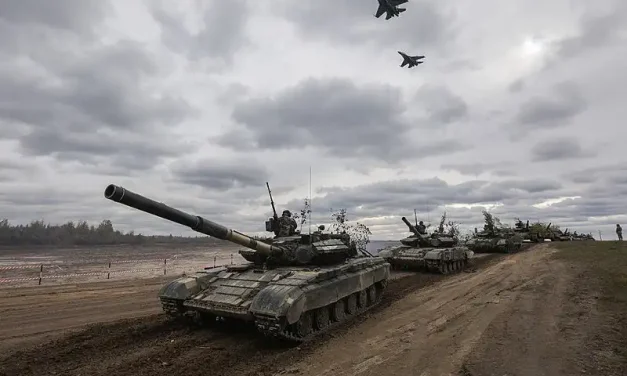
Messages and outcomes of Hezbollah consultations in Russia

2021/03/31 | interview, Politics, top news

Strategic Council Online—Interview: An expert of Russian studies, while referring to the outcomes of the consultations conducted by Lebanon’s Hezbollah in Moscow, said if players influential in resolving the crisis and controlling the domestic situation in Syria enhance once again their cooperation and interaction, this message will be sent to the United States and the Joe Biden administration that disrupting the order in the region would not be without costs for the United States.

Afifeh Abedi told the Strategic Council on Foreign Relations that a delegation from Lebanon’s Hezbollah has visited Moscow to conduct consultations with Russian officials over Syria, adding that the history of relations between Russia and Hezbollah dates back to decades and Moscow follows the policy of “Russia’s Greater Middle East Policy” which has been formed since Putin came into power.

“Russia has tried to get in touch with all the regional players such as Lebanon’s Hezbollah and other state and non-state players and this policy is being pursued at the present time by Russia in spite of all the highs and lows.”

Abedi said friendly relations between Russia and Hezbollah could be assessed within such a framework, adding that in the past two decades, representatives of Russia and Hezbollah have held regular meetings and consulted on many regional issues such as the crisis in Syria.

On the reasons and messages of the recent visit by the Hezbollah delegation to Russia, she said “we need to consider the regional and international dimensions of this interaction. Given the developments in the United States, regional players are facing many ambiguities on the policies of the new US administration in the Middle East and it is highly likely that Biden would pursue the traditional politics of the United States in the region that is to support changing regional order in favor of its allied forces in the region—something which is against the interests of Russia, Hezbollah, Iran and Syria.”

Prospects of politics of the Biden administration is not appropriate for Russia

Abedi added that prospects of the policies of the Biden administration do not seem appropriate for Moscow and there are no signs of a new round of relations or revival of previous relations between Moscow and Washington.

“Therefore, it seems that the Russians have reached the conclusion that if they act passively, all their accomplishments in the Middle East would be weakened and this means that Russia would lose its bargaining power in various areas with the United States.”

The role of Hezbollah in Syria’s security and non-official equations

This researcher of the State Expediency Council’s Strategic Research Center said Hezbollah remains one of the most important political and military currents of Lebanon and the whole region and plays a pivotal role in the security and non-official equations in Syria.

She said a new round of talks have been formed on Syria and new developments are unfolding in the ground and negotiating table in Syria, adding that it seems that this visit can be assessed within the framework of such issues.

Referring to the foreign policy of Russia towards the Middle East, Abedia said Russia is making efforts in its foreign policy to have connections with all the regional players including parties that support the United States such as Saudi Arabia and other US allies in the region and the proponents of the United States that constitute the resistance front such as Iran, Hezbollah, Palestinian groups and Syria.

“However, experience has it that relations between Russia and the US allies in the region have indicated that such relations have always faced obstacles created by Washington. For example, Saudi Arabia tries to benefit from the green lights indicated by Russia in order to gain concessions and advantages from the United States.”

Some efforts to isolate Russia from Iran and Syria

This expert of Russia affairs said Russia has made advances in Syria with the support of Iranian forces, adding that in recent years, and after such cooperation, efforts were made by Russia and other regional and international players to isolate Russia from the resistance front including Iran and Hezbollah in Syria. They encouraged Russia to isolate itself from Iran and Hezbollah in Syria so that concessions are offered to Moscow.

“Signals were indicated on some occasions by Russians suggesting that Russians may be interested in going around its allies in Syria. In fact, Russians have some differences with Iran and Hezbollah in their consultations and cooperation on Syria. However, it was demonstrated to Russians in practice that as they were not able to defeat terrorist groups and station in Syria without the ground supports of Iran and Hezbollah, they cannot make any accomplishments over the negotiating table without the support of these players in Syria.”

Abedi said it seems that Russians are not disinterested in benefiting from their relations with regional players such as Hezbollah in their equations.

The message of consultations between Hezbollah and Russia for the United States

Referring to the significance of consultations between Hezbollah and Russia, she said it is very important for effective players in Syria crisis such as Russia, Iran, Hezbollah and other non-official players to continue their consultations and visits as they were able to control the crisis in Syria and establish relative stability.

“If these players get in touch once again, this message will be conveyed to the United States and the Biden administration that any change of balance in Syria and region will not be without costs. It seems that when alliance, relations and close cooperation between Russia, Iran and Hezbollah are weakened, the United States becomes emboldened under the present circumstances in the Middle East to take the initiative. Therefore, if such cooperation is consolidated, it will affect the calculations of the other side.”
0 Comments

Submit a Comment

Your email address will not be published. Required fields are marked *

LATEST CONTENT

Iran’s Strategic Opportunity to Become the Pharmaceutical Hub of West Asia

Strategic Council Online – Interview: A senior health-sector analyst stated that for Iran to become the regional pharmaceutical hub, it must shift the playing field in its favor. Iran’s strategy should be built on three pillars: speed, leveraging indigenous intelligence, and positive strategic dependence, to transform from a commodity seller into the architect and guarantor of regional health security.

The Prospect of a Possible Trade Agreement between the United States and China

Strategic Council Online– Interview: An international relations expert stated that the growing possibility of a trade agreement between the United States and China following the recent meeting between Donald Trump and Xi Jinping in South Korea is not a strategic economic reconciliation, but rather a tactical move by Beijing in the process of restructuring power within the emerging world order.

Chabahar’s Strategic Position Amid Rising India-U.S. Tensions

Strategic Council Online- Interview: An analyst of subcontinent affairs stated: Chabahar has become the focal point of the intersection of India and America’s competition and cooperation; a place where diplomacy, economy, and geopolitics intertwine.

The Position of Water Diplomacy in Safeguarding Iran’s Water Rights

Strategic Council Online- Interview: An international affairs expert said, “By utilizing multilateral capacities and regional diplomacy, Iran is trying to establish geopolitical balance against the water policies of its neighbors while safeguarding its historical water rights.”

Egypt’s Motives and Goals for Mediation in the Region

Strategic Council Online – Interview: An Egyptian affairs expert stated that Cairo has recently established a direct role in mediating the reduction of regional tensions, as well as in reducing or managing tensions between Iran and the West and with the International Atomic Energy Agency.

The West’s Confusion in the Ukraine War

Strategic Council Online– Opinion: The experience of three and a half years of Russia’s war with Ukraine and the tensions it has had with the West within this framework have shown that the Russians have not only given in at any stage in the face of Western pressure, including sanctions, but this has also led to an escalation of tensions, differences, and conflicts, both in the region and in Russia-West relations. In practice, any effort in this regard has so far had at least negative results for the Ukrainians, and they have faced increased Russian attacks.

Loading

Últimas publicaciones

Iran’s Strategic Opportunity to Become the Pharmaceutical Hub of West Asia

Strategic Council Online – Interview: A senior health-sector analyst stated that for Iran to become the regional pharmaceutical hub, it must shift the playing field in its favor. Iran’s strategy should be built on three pillars: speed, leveraging indigenous intelligence, and positive strategic dependence, to transform from a commodity seller into the architect and guarantor of regional health security.

The Prospect of a Possible Trade Agreement between the United States and China

Strategic Council Online– Interview: An international relations expert stated that the growing possibility of a trade agreement between the United States and China following the recent meeting between Donald Trump and Xi Jinping in South Korea is not a strategic economic reconciliation, but rather a tactical move by Beijing in the process of restructuring power within the emerging world order.

Chabahar’s Strategic Position Amid Rising India-U.S. Tensions

Strategic Council Online- Interview: An analyst of subcontinent affairs stated: Chabahar has become the focal point of the intersection of India and America’s competition and cooperation; a place where diplomacy, economy, and geopolitics intertwine.

The Position of Water Diplomacy in Safeguarding Iran’s Water Rights

Strategic Council Online- Interview: An international affairs expert said, “By utilizing multilateral capacities and regional diplomacy, Iran is trying to establish geopolitical balance against the water policies of its neighbors while safeguarding its historical water rights.”

Egypt’s Motives and Goals for Mediation in the Region

Strategic Council Online – Interview: An Egyptian affairs expert stated that Cairo has recently established a direct role in mediating the reduction of regional tensions, as well as in reducing or managing tensions between Iran and the West and with the International Atomic Energy Agency.

The West’s Confusion in the Ukraine War

Strategic Council Online– Opinion: The experience of three and a half years of Russia’s war with Ukraine and the tensions it has had with the West within this framework have shown that the Russians have not only given in at any stage in the face of Western pressure, including sanctions, but this has also led to an escalation of tensions, differences, and conflicts, both in the region and in Russia-West relations. In practice, any effort in this regard has so far had at least negative results for the Ukrainians, and they have faced increased Russian attacks.

Loading

DERNIER CONTENU

Iran’s Strategic Opportunity to Become the Pharmaceutical Hub of West Asia

Strategic Council Online – Interview: A senior health-sector analyst stated that for Iran to become the regional pharmaceutical hub, it must shift the playing field in its favor. Iran’s strategy should be built on three pillars: speed, leveraging indigenous intelligence, and positive strategic dependence, to transform from a commodity seller into the architect and guarantor of regional health security.

The Prospect of a Possible Trade Agreement between the United States and China

Strategic Council Online– Interview: An international relations expert stated that the growing possibility of a trade agreement between the United States and China following the recent meeting between Donald Trump and Xi Jinping in South Korea is not a strategic economic reconciliation, but rather a tactical move by Beijing in the process of restructuring power within the emerging world order.

Chabahar’s Strategic Position Amid Rising India-U.S. Tensions

Strategic Council Online- Interview: An analyst of subcontinent affairs stated: Chabahar has become the focal point of the intersection of India and America’s competition and cooperation; a place where diplomacy, economy, and geopolitics intertwine.

The Position of Water Diplomacy in Safeguarding Iran’s Water Rights

Strategic Council Online- Interview: An international affairs expert said, “By utilizing multilateral capacities and regional diplomacy, Iran is trying to establish geopolitical balance against the water policies of its neighbors while safeguarding its historical water rights.”

Egypt’s Motives and Goals for Mediation in the Region

Strategic Council Online – Interview: An Egyptian affairs expert stated that Cairo has recently established a direct role in mediating the reduction of regional tensions, as well as in reducing or managing tensions between Iran and the West and with the International Atomic Energy Agency.

The West’s Confusion in the Ukraine War

Strategic Council Online– Opinion: The experience of three and a half years of Russia’s war with Ukraine and the tensions it has had with the West within this framework have shown that the Russians have not only given in at any stage in the face of Western pressure, including sanctions, but this has also led to an escalation of tensions, differences, and conflicts, both in the region and in Russia-West relations. In practice, any effort in this regard has so far had at least negative results for the Ukrainians, and they have faced increased Russian attacks.

Loading