

At that time, the names of 32 Iranian nationals were mentioned in the European Union list, and now, after nearly 12 years, this list contains the names of 155 natural persons and 12 legal entities. It would suffice to examine the reasons and justifications cited for sanctioning of the Iranian persons in order to determine how weak this document is from a legal point of view and how it lacks convincing or in other words court-friendly arguments.
Therefore, it can be said that the approach in releasing this document is to provide fodder for the mass media, while distorting the account and justifying unjustified and illegal actions; because otherwise, in order to maintain the appearance in the first place, the European Union should reflect and discuss its concerns over the Iranian side through diplomatic talks and then raise such claims and accusations against the citizens of an independent sovereignty.
Although the current approach of the European Union lacks legal and judicial grounds, the reasons for which are cited below but in its turn, it is dangerous; and it is imperative to take countermeasures and to put diplomatic action on the agenda to counter and neutralize it.
Mere talk that the sanctioned persons do not need to travel to the soil of European Union or that they have no property in that part of the world to make them upset in the event of a blockade, would not compensate for the harm the EU has brought to the national sovereignty of the Islamic Republic of Iran. Although the fool’s errand, each of these sanctions is aimed at framing up and so-called delegitimizing the Islamic Republic of Iran.
It should be noted that the equality of sovereigns is considered as one of the inalienable principles of international law and the cornerstone of modern international relations, as Oppenheim eloquently speaks out saying that states as the main subject of international law, although have differences and inequalities in the area of their territory, the number of population, degree of power, level of civilization, wealth and other issues, however, from the point of view of international law, they are equal to each other.
Paragraph 1 of Article 2 of the United Nations Charter also emphasizes the principle of equality of sovereignty of member states and defines the legal status of all member states in general in the United Nations and its affiliates as equal and similar to each other. United Nations resolutions have always mentioned this principle as one of the basic principles of international law and obliged governments to refrain from interfering in internal affairs or using force against other members while observing this principle.
Even in articles one, seven and the introduction of the Universal Declaration of Human Rights, reference has been made to this principle as one of the principles of international law and one of the most basic principles of human societies. The international judicial practice, including in the case of the Iran-British oil company against the Iranian government and Iran-US arbitration court in case A-18, has made reference to and cited this principle as one of the inalienable principles of the international law.
Nevertheless, although the European Union has no legal right to interfere in Iran’s internal affairs, it has made itself entitled to accuse, judge, and ultimately issue ruling against Iranian citizens. Those sanctions, if not direct intervention, will obviously cause “indirect” interference in Iran’s internal and external affairs, because each of those natural or legal persons is considered an agent and an integral part for the advancement of the country’s affairs.
In the text of European sanctions, for each person, easily and without mentioning any reason and evidence, a brief case is cited and it is claimed that these persons are entitled to punishment of the sanctions type due to the European Union’s inference and perception This style of imposing sanctions by the European Union has also violated the right to procedure as one of the inalienable human rights. Restriction of this right has been a controversial issue in human rights. Sanctions imposed by the European Union have not considered a fair mechanism for protesting the decisions, and the minimum standard in defining the right to procedure has not been met.
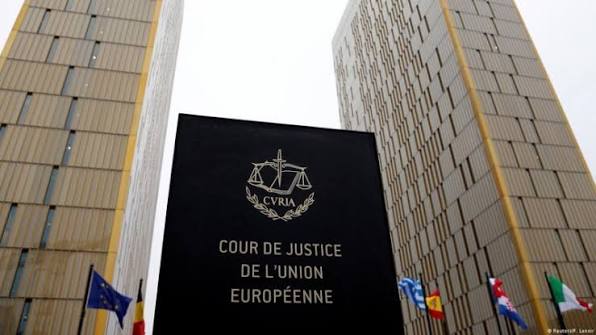
One of the cases that demands attention in the face of the implementation of European Union sanctions against Iranians is the case of “Kadi v Council of the European Union”. The case of this Saudi citizen, who has been placed in the sanctions list of the European Union, was finally reviewed in the European Court of Justice, and regardless of what happened in the court and during this case, this decision is one of the examples that could improve the relationship between the European Union and the Security Council of the United Nations. The value of this ruling is that by raising human rights issues, including the observance of fundamental human rights, for the first time it was able to prevent the implementation of Security Council resolutions with a legal argument.
However, it must be said that the road ahead for Iran to get its rights is difficult, because the current legal procedure in the European Union is defined against Iran. For example, in 2018, the Bank Melli Iran sued Deutsche Telecom based on the European Union laws after cutting off all the communication lines of its branch in Hamburg. Finally, the process of hearing and issuing an advisory decision for this case was entrusted to the Court of Justice of the European Union as the highest judicial authority of the EU. In the end, this European court, by playing with words, using ambiguous terms and misinterpreting the law, opened a new legal path to officially circumvent the blocking laws of the European Union, which has practically given a judicial and legal excuse to European companies to cut ties with Iran.





0 Comments