جدیدترین مطالب

Iran’s Potential Levers of Power

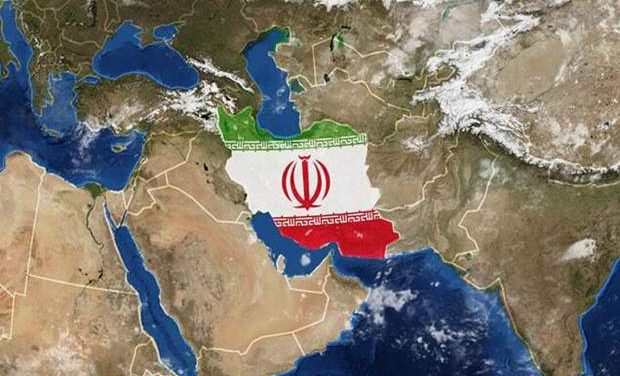
SCFRonline– Opinion: Iran’s geopolitical power is not limited solely to oil and the Strait of Hormuz; the unintended emergence of disruptions in the future global food and energy security chains can also demonstrate Iran’s strategic importance.

The Inseparability of the Lebanese Front from the Axis of Resistance

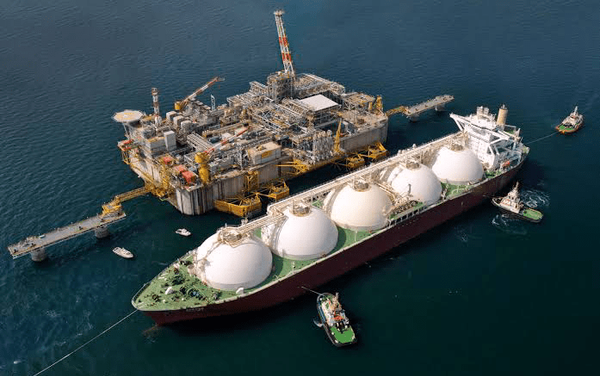
SCFR Online–Opinion: By providing an extensive network of social, healthcare, educational, and post-war reconstruction services, Hezbollah has established a strong social base for itself among Lebanon’s Shiites and Sunnis, and even beyond that, among other segments of Lebanese society, including Christians. Hezbollah has never been an external actor imposed upon Lebanon; rather, it is a phenomenon fundamentally born out of the occupation and crimes of the Zionist regime and itself influenced by popular resistance.

The Increasing Efforts of the Zionist Regime to Redefine Borders and the Regional Order and Its Consequences

SCFR Online– Opinion: Security and military developments in the region over recent months indicate that the ongoing crises and wars in Gaza, southern Lebanon, and parts of Syrian territory encompass broader dimensions of geopolitical and geostrategic transformations. In this context, the increased military presence and control of the Zionist regime over parts of the territories of these areas, along with proposals regarding the creation of buffer zones or even the expansion of security borders, have raised serious questions about the future of the regional order and its consequences for the countries of West Asia.

The Components of Iran’s Deterrence Power

SCFR Online – Opinion: At a time when regional security equations have reached a sensitive stage under the influence of Iran’s strategic confrontation with the United States and the Zionist regime, the question of the nature of Tehran’s defensive power has gained greater significance than ever before. While Washington and Tel Aviv rely on their technological superiority, the Islamic Republic of Iran has presented a model of deterrence that extends beyond the material calculations of the world’s classical militaries. This power, rooted in the connection between “the field” and “the people,” has not only altered the balance of power in recent conflicts but has also disrupted adversaries’ calculations when confronting Iran’s strategic depth.

Loading

Dr. Mohammad Mehdi Mazaheri

New Arabia: the need to develop a suitable strategy

New Arabia: the need to develop a suitable strategy

Strategic Council Online—Opinion: At the end of August this year, Saudi Arabia announced that it had appointed its first ambassador to the Palestinian Authority. Based on this decision, Nayef bin Bandar al-Sudairi, as the extraordinary, plenipotentiary and non-resident ambassador (accredited) of Saudi Arabia in Ramallah and the Saudi consul general in occupied Quds, handed over his credentials to Majdi Al-Khalidi, the diplomatic advisor of Mahmoud Abbas, the head of the Palestinian Authority. Now, less than two months have passed since these decisions and actions, the Saudi government has announced that an official delegation from this country, headed by Nayef Bin Bandar Al-Sudairi, will travel to Ramallah to celebrate the birthday of the Prophet of Islam (PBUH) and to offer prayers in Al-Aqsa Mosque; An unprecedented action since the occupation of Quds in 1967, which will open a new chapter in Saudi Arabia’s diplomatic and role-playing activities in the West Asian region.

Mohammad Mehdi Mazaheri – University professor

New East-West Corridor; First Operational Sign of Failed Abraham Accords

New East-West Corridor; First Operational Sign of Failed Abraham Accords

Strategic Council Online – Opinion: The idea of developing transportation routes to boost trade in the Persian Gulf and eliminate the need for the strategic Strait of Hormuz was formed among the Persian Gulf Cooperation Council member states some years ago. To realize the idea, the rail transport corridor along the Persian Gulf was started in 2016 by launching the Persian Gulf Cooperation Council rail network. According to the agreement signed among the member states of the Council, each of the countries was expected to build and complete their rail network independently. Finally, after completing all national lines, the Persian Gulf Cooperation Council network would be launched by connecting the national rail networks of those countries. In this way, an Arab railway network would be formed, connecting all six Persian Gulf Cooperation Council member countries through a railway line of 2177 kilometers.
Dr. Mohammad Mehdi Mazaheri – University professor

Environment; A New Era of Concern in Different Dimensions

Environment; A New Era of Concern in Different Dimensions

Strategic Council Online – Guest Opinion: In the past weeks, along with political issues that have been the hot topic of news circles, the intensity of the heat has also become the subject of analysis by many media and news agencies, an issue that not only has not an internal aspect but is apparently a problem that all parts of the world, from North America to Western Europe and of course East and West Asia, are struggling with.
Dr. Mohammad Mehdi Mazaheri – University professor

Requirements for Iran’s Positioning in New World Order

Requirements for Iran’s Positioning in New World Order

Requirements for Iran’s Positioning in New World Order
Strategic Council Online – Guest opinion: In recent years, the discussion of changes in the world order, the conditions and reasons for this, and its requirements for different countries has become one of the serious topics in the field of foreign policy studies and international relations. Such changes include political, economic, and cultural areas at the global level, which cause changes in the way countries interact with each other, as well as changes in the way international conflicts are resolved. But what are the signs of this change in the international political order? And how can one successfully get the right place in this new order?
Dr. Mohammad Mehdi Mazaheri – University professor

Strategic Importance of Strengthening Iran-Turkey Relations

Strategic Importance of Strengthening Iran-Turkey Relations

Strategic Council Online – Guest opinion: In the West Asian region, the number of countries that have democratic systems and real and free elections may not even reach the number of the fingers of one hand, and when those elections are related to an active and proactive country in the region, such as Turkey, its importance and analytical value multiplies.
Dr. Mohammad Mehdi Mazaheri – University professor

The strategic importance of resuming relations between Iran and Egypt

The strategic importance of resuming relations between Iran and Egypt

Strategic Council Online-Opinion: After the resumption of diplomatic relations between Iran and Saudi Arabia created a wave of positive developments in the region and encouraged other Persian Gulf countries to resume or strengthen ties with the Islamic Republic of Iran, now the news indicates that Iran and Egypt with the mediation of Iraq are trying to resume diplomatic relations.
Mohammad Mehdi Mazaheri—University scholar

Challenges, Key Priorities of Iran’s Foreign Policy in 2023-2024

Challenges, Key Priorities of Iran’s Foreign Policy in 2023-2024

Strategic Council Online – Guest opinion: Amidst talks about Iran’s essential issues and challenges in the current calendar year, what quickly comes into one’s mind is the debate on economic disturbances and people’s livelihood problems. This is even though, in today’s interconnected world, we can safely say that the root of many domestic financial problems lies in foreign policy and international relations of the country; however, this does not mean minimizing the importance of managerial inefficiencies and the weakness and inadequacy of some internal executive and supervisory institutions.
Dr. Mohammad Mehdi Mazaheri – University professor

Ukraine War; Approach of World Powers, Iran’s Policy

Ukraine War; Approach of World Powers, Iran’s Policy

Strategic Council Online – Guest opinion: Russia’s attack on Ukraine, which was initially thought to be a lightning attack with quick and tangible results, has lasted a year; meantime with the recent stances taken by certain European countries at the Munich Security Conference to the effect that they have prepared for a long-term war, no definite end can be expected for the conflict.
Dr. Mohammad Mahdi Mazaheri – University professor

Analysis of Ukraine War in Terms of Geopolitical Components

Analysis of Ukraine War in Terms of Geopolitical Components

Strategic Council Online – Opinion: In recent months, Russia’s invasion of Ukraine and its various consequences in regional and international arenas has become the main subject of analysts of politics and international relations. A war that has affected the security and stability of Eurasia, the order of international relations, food security, energy security and the like in various dimensions, and since the passage of more than three months from its beginning, there is still no clear end in sight.
Dr. Mohammad Mehdi Mazaheri – University professor

أحدث الوظائف

Iran’s Potential Levers of Power

SCFRonline– Opinion: Iran’s geopolitical power is not limited solely to oil and the Strait of Hormuz; the unintended emergence of disruptions in the future global food and energy security chains can also demonstrate Iran’s strategic importance.
The Inseparability of the Lebanese Front from the Axis of Resistance

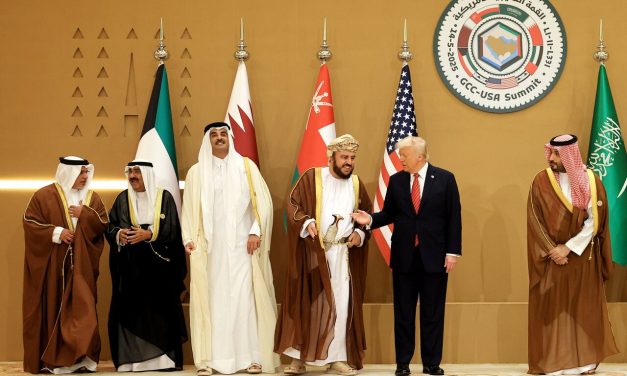
SCFR Online–Opinion: By providing an extensive network of social, healthcare, educational, and post-war reconstruction services, Hezbollah has established a strong social base for itself among Lebanon’s Shiites and Sunnis, and even beyond that, among other segments of Lebanese society, including Christians. Hezbollah has never been an external actor imposed upon Lebanon; rather, it is a phenomenon fundamentally born out of the occupation and crimes of the Zionist regime and itself influenced by popular resistance.

The Increasing Efforts of the Zionist Regime to Redefine Borders and the Regional Order and Its Consequences

SCFR Online– Opinion: Security and military developments in the region over recent months indicate that the ongoing crises and wars in Gaza, southern Lebanon, and parts of Syrian territory encompass broader dimensions of geopolitical and geostrategic transformations. In this context, the increased military presence and control of the Zionist regime over parts of the territories of these areas, along with proposals regarding the creation of buffer zones or even the expansion of security borders, have raised serious questions about the future of the regional order and its consequences for the countries of West Asia.

The Components of Iran’s Deterrence Power

SCFR Online – Opinion: At a time when regional security equations have reached a sensitive stage under the influence of Iran’s strategic confrontation with the United States and the Zionist regime, the question of the nature of Tehran’s defensive power has gained greater significance than ever before. While Washington and Tel Aviv rely on their technological superiority, the Islamic Republic of Iran has presented a model of deterrence that extends beyond the material calculations of the world’s classical militaries. This power, rooted in the connection between “the field” and “the people,” has not only altered the balance of power in recent conflicts but has also disrupted adversaries’ calculations when confronting Iran’s strategic depth.

Loading

Dr. Mohammad Mehdi Mazaheri

New Arabia: the need to develop a suitable strategy

New Arabia: the need to develop a suitable strategy

Strategic Council Online—Opinion: At the end of August this year, Saudi Arabia announced that it had appointed its first ambassador to the Palestinian Authority. Based on this decision, Nayef bin Bandar al-Sudairi, as the extraordinary, plenipotentiary and non-resident ambassador (accredited) of Saudi Arabia in Ramallah and the Saudi consul general in occupied Quds, handed over his credentials to Majdi Al-Khalidi, the diplomatic advisor of Mahmoud Abbas, the head of the Palestinian Authority. Now, less than two months have passed since these decisions and actions, the Saudi government has announced that an official delegation from this country, headed by Nayef Bin Bandar Al-Sudairi, will travel to Ramallah to celebrate the birthday of the Prophet of Islam (PBUH) and to offer prayers in Al-Aqsa Mosque; An unprecedented action since the occupation of Quds in 1967, which will open a new chapter in Saudi Arabia’s diplomatic and role-playing activities in the West Asian region.

Mohammad Mehdi Mazaheri – University professor

New East-West Corridor; First Operational Sign of Failed Abraham Accords

New East-West Corridor; First Operational Sign of Failed Abraham Accords

Strategic Council Online – Opinion: The idea of developing transportation routes to boost trade in the Persian Gulf and eliminate the need for the strategic Strait of Hormuz was formed among the Persian Gulf Cooperation Council member states some years ago. To realize the idea, the rail transport corridor along the Persian Gulf was started in 2016 by launching the Persian Gulf Cooperation Council rail network. According to the agreement signed among the member states of the Council, each of the countries was expected to build and complete their rail network independently. Finally, after completing all national lines, the Persian Gulf Cooperation Council network would be launched by connecting the national rail networks of those countries. In this way, an Arab railway network would be formed, connecting all six Persian Gulf Cooperation Council member countries through a railway line of 2177 kilometers.
Dr. Mohammad Mehdi Mazaheri – University professor

Environment; A New Era of Concern in Different Dimensions

Environment; A New Era of Concern in Different Dimensions

Strategic Council Online – Guest Opinion: In the past weeks, along with political issues that have been the hot topic of news circles, the intensity of the heat has also become the subject of analysis by many media and news agencies, an issue that not only has not an internal aspect but is apparently a problem that all parts of the world, from North America to Western Europe and of course East and West Asia, are struggling with.
Dr. Mohammad Mehdi Mazaheri – University professor

Requirements for Iran’s Positioning in New World Order

Requirements for Iran’s Positioning in New World Order

Requirements for Iran’s Positioning in New World Order
Strategic Council Online – Guest opinion: In recent years, the discussion of changes in the world order, the conditions and reasons for this, and its requirements for different countries has become one of the serious topics in the field of foreign policy studies and international relations. Such changes include political, economic, and cultural areas at the global level, which cause changes in the way countries interact with each other, as well as changes in the way international conflicts are resolved. But what are the signs of this change in the international political order? And how can one successfully get the right place in this new order?
Dr. Mohammad Mehdi Mazaheri – University professor

Strategic Importance of Strengthening Iran-Turkey Relations

Strategic Importance of Strengthening Iran-Turkey Relations

Strategic Council Online – Guest opinion: In the West Asian region, the number of countries that have democratic systems and real and free elections may not even reach the number of the fingers of one hand, and when those elections are related to an active and proactive country in the region, such as Turkey, its importance and analytical value multiplies.
Dr. Mohammad Mehdi Mazaheri – University professor

The strategic importance of resuming relations between Iran and Egypt

The strategic importance of resuming relations between Iran and Egypt

Strategic Council Online-Opinion: After the resumption of diplomatic relations between Iran and Saudi Arabia created a wave of positive developments in the region and encouraged other Persian Gulf countries to resume or strengthen ties with the Islamic Republic of Iran, now the news indicates that Iran and Egypt with the mediation of Iraq are trying to resume diplomatic relations.
Mohammad Mehdi Mazaheri—University scholar

Challenges, Key Priorities of Iran’s Foreign Policy in 2023-2024

Challenges, Key Priorities of Iran’s Foreign Policy in 2023-2024

Strategic Council Online – Guest opinion: Amidst talks about Iran’s essential issues and challenges in the current calendar year, what quickly comes into one’s mind is the debate on economic disturbances and people’s livelihood problems. This is even though, in today’s interconnected world, we can safely say that the root of many domestic financial problems lies in foreign policy and international relations of the country; however, this does not mean minimizing the importance of managerial inefficiencies and the weakness and inadequacy of some internal executive and supervisory institutions.
Dr. Mohammad Mehdi Mazaheri – University professor

Ukraine War; Approach of World Powers, Iran’s Policy

Ukraine War; Approach of World Powers, Iran’s Policy

Strategic Council Online – Guest opinion: Russia’s attack on Ukraine, which was initially thought to be a lightning attack with quick and tangible results, has lasted a year; meantime with the recent stances taken by certain European countries at the Munich Security Conference to the effect that they have prepared for a long-term war, no definite end can be expected for the conflict.
Dr. Mohammad Mahdi Mazaheri – University professor

Analysis of Ukraine War in Terms of Geopolitical Components

Analysis of Ukraine War in Terms of Geopolitical Components

Strategic Council Online – Opinion: In recent months, Russia’s invasion of Ukraine and its various consequences in regional and international arenas has become the main subject of analysts of politics and international relations. A war that has affected the security and stability of Eurasia, the order of international relations, food security, energy security and the like in various dimensions, and since the passage of more than three months from its beginning, there is still no clear end in sight.
Dr. Mohammad Mehdi Mazaheri – University professor

Dr. Mohammad Mehdi Mazaheri

New Arabia: the need to develop a suitable strategy

New Arabia: the need to develop a suitable strategy

Strategic Council Online—Opinion: At the end of August this year, Saudi Arabia announced that it had appointed its first ambassador to the Palestinian Authority. Based on this decision, Nayef bin Bandar al-Sudairi, as the extraordinary, plenipotentiary and non-resident ambassador (accredited) of Saudi Arabia in Ramallah and the Saudi consul general in occupied Quds, handed over his credentials to Majdi Al-Khalidi, the diplomatic advisor of Mahmoud Abbas, the head of the Palestinian Authority. Now, less than two months have passed since these decisions and actions, the Saudi government has announced that an official delegation from this country, headed by Nayef Bin Bandar Al-Sudairi, will travel to Ramallah to celebrate the birthday of the Prophet of Islam (PBUH) and to offer prayers in Al-Aqsa Mosque; An unprecedented action since the occupation of Quds in 1967, which will open a new chapter in Saudi Arabia’s diplomatic and role-playing activities in the West Asian region.

Mohammad Mehdi Mazaheri – University professor

New East-West Corridor; First Operational Sign of Failed Abraham Accords

New East-West Corridor; First Operational Sign of Failed Abraham Accords

Strategic Council Online – Opinion: The idea of developing transportation routes to boost trade in the Persian Gulf and eliminate the need for the strategic Strait of Hormuz was formed among the Persian Gulf Cooperation Council member states some years ago. To realize the idea, the rail transport corridor along the Persian Gulf was started in 2016 by launching the Persian Gulf Cooperation Council rail network. According to the agreement signed among the member states of the Council, each of the countries was expected to build and complete their rail network independently. Finally, after completing all national lines, the Persian Gulf Cooperation Council network would be launched by connecting the national rail networks of those countries. In this way, an Arab railway network would be formed, connecting all six Persian Gulf Cooperation Council member countries through a railway line of 2177 kilometers.
Dr. Mohammad Mehdi Mazaheri – University professor

Environment; A New Era of Concern in Different Dimensions

Environment; A New Era of Concern in Different Dimensions

Strategic Council Online – Guest Opinion: In the past weeks, along with political issues that have been the hot topic of news circles, the intensity of the heat has also become the subject of analysis by many media and news agencies, an issue that not only has not an internal aspect but is apparently a problem that all parts of the world, from North America to Western Europe and of course East and West Asia, are struggling with.
Dr. Mohammad Mehdi Mazaheri – University professor

Requirements for Iran’s Positioning in New World Order

Requirements for Iran’s Positioning in New World Order

Requirements for Iran’s Positioning in New World Order
Strategic Council Online – Guest opinion: In recent years, the discussion of changes in the world order, the conditions and reasons for this, and its requirements for different countries has become one of the serious topics in the field of foreign policy studies and international relations. Such changes include political, economic, and cultural areas at the global level, which cause changes in the way countries interact with each other, as well as changes in the way international conflicts are resolved. But what are the signs of this change in the international political order? And how can one successfully get the right place in this new order?
Dr. Mohammad Mehdi Mazaheri – University professor

Strategic Importance of Strengthening Iran-Turkey Relations

Strategic Importance of Strengthening Iran-Turkey Relations

Strategic Council Online – Guest opinion: In the West Asian region, the number of countries that have democratic systems and real and free elections may not even reach the number of the fingers of one hand, and when those elections are related to an active and proactive country in the region, such as Turkey, its importance and analytical value multiplies.
Dr. Mohammad Mehdi Mazaheri – University professor

The strategic importance of resuming relations between Iran and Egypt

The strategic importance of resuming relations between Iran and Egypt

Strategic Council Online-Opinion: After the resumption of diplomatic relations between Iran and Saudi Arabia created a wave of positive developments in the region and encouraged other Persian Gulf countries to resume or strengthen ties with the Islamic Republic of Iran, now the news indicates that Iran and Egypt with the mediation of Iraq are trying to resume diplomatic relations.
Mohammad Mehdi Mazaheri—University scholar

Challenges, Key Priorities of Iran’s Foreign Policy in 2023-2024

Challenges, Key Priorities of Iran’s Foreign Policy in 2023-2024

Strategic Council Online – Guest opinion: Amidst talks about Iran’s essential issues and challenges in the current calendar year, what quickly comes into one’s mind is the debate on economic disturbances and people’s livelihood problems. This is even though, in today’s interconnected world, we can safely say that the root of many domestic financial problems lies in foreign policy and international relations of the country; however, this does not mean minimizing the importance of managerial inefficiencies and the weakness and inadequacy of some internal executive and supervisory institutions.
Dr. Mohammad Mehdi Mazaheri – University professor

Ukraine War; Approach of World Powers, Iran’s Policy

Ukraine War; Approach of World Powers, Iran’s Policy

Strategic Council Online – Guest opinion: Russia’s attack on Ukraine, which was initially thought to be a lightning attack with quick and tangible results, has lasted a year; meantime with the recent stances taken by certain European countries at the Munich Security Conference to the effect that they have prepared for a long-term war, no definite end can be expected for the conflict.
Dr. Mohammad Mahdi Mazaheri – University professor

Analysis of Ukraine War in Terms of Geopolitical Components

Analysis of Ukraine War in Terms of Geopolitical Components

Strategic Council Online – Opinion: In recent months, Russia’s invasion of Ukraine and its various consequences in regional and international arenas has become the main subject of analysts of politics and international relations. A war that has affected the security and stability of Eurasia, the order of international relations, food security, energy security and the like in various dimensions, and since the passage of more than three months from its beginning, there is still no clear end in sight.
Dr. Mohammad Mehdi Mazaheri – University professor

LATEST CONTENT

Iran’s Potential Levers of Power

SCFRonline– Opinion: Iran’s geopolitical power is not limited solely to oil and the Strait of Hormuz; the unintended emergence of disruptions in the future global food and energy security chains can also demonstrate Iran’s strategic importance.
The Inseparability of the Lebanese Front from the Axis of Resistance

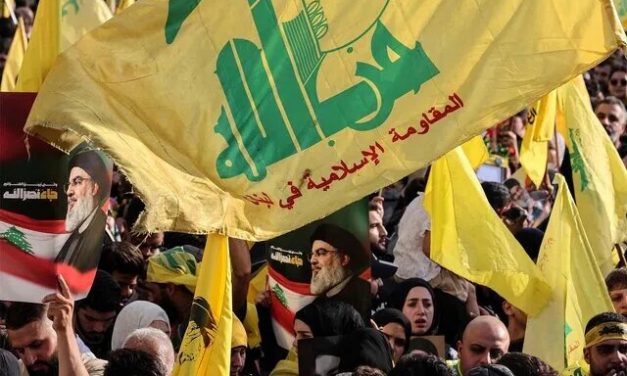
SCFR Online–Opinion: By providing an extensive network of social, healthcare, educational, and post-war reconstruction services, Hezbollah has established a strong social base for itself among Lebanon’s Shiites and Sunnis, and even beyond that, among other segments of Lebanese society, including Christians. Hezbollah has never been an external actor imposed upon Lebanon; rather, it is a phenomenon fundamentally born out of the occupation and crimes of the Zionist regime and itself influenced by popular resistance.

The Increasing Efforts of the Zionist Regime to Redefine Borders and the Regional Order and Its Consequences

SCFR Online– Opinion: Security and military developments in the region over recent months indicate that the ongoing crises and wars in Gaza, southern Lebanon, and parts of Syrian territory encompass broader dimensions of geopolitical and geostrategic transformations. In this context, the increased military presence and control of the Zionist regime over parts of the territories of these areas, along with proposals regarding the creation of buffer zones or even the expansion of security borders, have raised serious questions about the future of the regional order and its consequences for the countries of West Asia.

The Components of Iran’s Deterrence Power

SCFR Online – Opinion: At a time when regional security equations have reached a sensitive stage under the influence of Iran’s strategic confrontation with the United States and the Zionist regime, the question of the nature of Tehran’s defensive power has gained greater significance than ever before. While Washington and Tel Aviv rely on their technological superiority, the Islamic Republic of Iran has presented a model of deterrence that extends beyond the material calculations of the world’s classical militaries. This power, rooted in the connection between “the field” and “the people,” has not only altered the balance of power in recent conflicts but has also disrupted adversaries’ calculations when confronting Iran’s strategic depth.

Loading

Dr. Mohammad Mehdi Mazaheri

New Arabia: the need to develop a suitable strategy

New Arabia: the need to develop a suitable strategy

Strategic Council Online—Opinion: At the end of August this year, Saudi Arabia announced that it had appointed its first ambassador to the Palestinian Authority. Based on this decision, Nayef bin Bandar al-Sudairi, as the extraordinary, plenipotentiary and non-resident ambassador (accredited) of Saudi Arabia in Ramallah and the Saudi consul general in occupied Quds, handed over his credentials to Majdi Al-Khalidi, the diplomatic advisor of Mahmoud Abbas, the head of the Palestinian Authority. Now, less than two months have passed since these decisions and actions, the Saudi government has announced that an official delegation from this country, headed by Nayef Bin Bandar Al-Sudairi, will travel to Ramallah to celebrate the birthday of the Prophet of Islam (PBUH) and to offer prayers in Al-Aqsa Mosque; An unprecedented action since the occupation of Quds in 1967, which will open a new chapter in Saudi Arabia’s diplomatic and role-playing activities in the West Asian region.

Mohammad Mehdi Mazaheri – University professor

New East-West Corridor; First Operational Sign of Failed Abraham Accords

New East-West Corridor; First Operational Sign of Failed Abraham Accords

Strategic Council Online – Opinion: The idea of developing transportation routes to boost trade in the Persian Gulf and eliminate the need for the strategic Strait of Hormuz was formed among the Persian Gulf Cooperation Council member states some years ago. To realize the idea, the rail transport corridor along the Persian Gulf was started in 2016 by launching the Persian Gulf Cooperation Council rail network. According to the agreement signed among the member states of the Council, each of the countries was expected to build and complete their rail network independently. Finally, after completing all national lines, the Persian Gulf Cooperation Council network would be launched by connecting the national rail networks of those countries. In this way, an Arab railway network would be formed, connecting all six Persian Gulf Cooperation Council member countries through a railway line of 2177 kilometers.
Dr. Mohammad Mehdi Mazaheri – University professor

Environment; A New Era of Concern in Different Dimensions

Environment; A New Era of Concern in Different Dimensions

Strategic Council Online – Guest Opinion: In the past weeks, along with political issues that have been the hot topic of news circles, the intensity of the heat has also become the subject of analysis by many media and news agencies, an issue that not only has not an internal aspect but is apparently a problem that all parts of the world, from North America to Western Europe and of course East and West Asia, are struggling with.
Dr. Mohammad Mehdi Mazaheri – University professor

Requirements for Iran’s Positioning in New World Order

Requirements for Iran’s Positioning in New World Order

Requirements for Iran’s Positioning in New World Order
Strategic Council Online – Guest opinion: In recent years, the discussion of changes in the world order, the conditions and reasons for this, and its requirements for different countries has become one of the serious topics in the field of foreign policy studies and international relations. Such changes include political, economic, and cultural areas at the global level, which cause changes in the way countries interact with each other, as well as changes in the way international conflicts are resolved. But what are the signs of this change in the international political order? And how can one successfully get the right place in this new order?
Dr. Mohammad Mehdi Mazaheri – University professor

Strategic Importance of Strengthening Iran-Turkey Relations

Strategic Importance of Strengthening Iran-Turkey Relations

Strategic Council Online – Guest opinion: In the West Asian region, the number of countries that have democratic systems and real and free elections may not even reach the number of the fingers of one hand, and when those elections are related to an active and proactive country in the region, such as Turkey, its importance and analytical value multiplies.
Dr. Mohammad Mehdi Mazaheri – University professor

The strategic importance of resuming relations between Iran and Egypt

The strategic importance of resuming relations between Iran and Egypt

Strategic Council Online-Opinion: After the resumption of diplomatic relations between Iran and Saudi Arabia created a wave of positive developments in the region and encouraged other Persian Gulf countries to resume or strengthen ties with the Islamic Republic of Iran, now the news indicates that Iran and Egypt with the mediation of Iraq are trying to resume diplomatic relations.
Mohammad Mehdi Mazaheri—University scholar

Challenges, Key Priorities of Iran’s Foreign Policy in 2023-2024

Challenges, Key Priorities of Iran’s Foreign Policy in 2023-2024

Strategic Council Online – Guest opinion: Amidst talks about Iran’s essential issues and challenges in the current calendar year, what quickly comes into one’s mind is the debate on economic disturbances and people’s livelihood problems. This is even though, in today’s interconnected world, we can safely say that the root of many domestic financial problems lies in foreign policy and international relations of the country; however, this does not mean minimizing the importance of managerial inefficiencies and the weakness and inadequacy of some internal executive and supervisory institutions.
Dr. Mohammad Mehdi Mazaheri – University professor

Ukraine War; Approach of World Powers, Iran’s Policy

Ukraine War; Approach of World Powers, Iran’s Policy

Strategic Council Online – Guest opinion: Russia’s attack on Ukraine, which was initially thought to be a lightning attack with quick and tangible results, has lasted a year; meantime with the recent stances taken by certain European countries at the Munich Security Conference to the effect that they have prepared for a long-term war, no definite end can be expected for the conflict.
Dr. Mohammad Mahdi Mazaheri – University professor

Analysis of Ukraine War in Terms of Geopolitical Components

Analysis of Ukraine War in Terms of Geopolitical Components

Strategic Council Online – Opinion: In recent months, Russia’s invasion of Ukraine and its various consequences in regional and international arenas has become the main subject of analysts of politics and international relations. A war that has affected the security and stability of Eurasia, the order of international relations, food security, energy security and the like in various dimensions, and since the passage of more than three months from its beginning, there is still no clear end in sight.
Dr. Mohammad Mehdi Mazaheri – University professor

ÚLTIMAS PUBLICACIONES

Iran’s Potential Levers of Power

SCFRonline– Opinion: Iran’s geopolitical power is not limited solely to oil and the Strait of Hormuz; the unintended emergence of disruptions in the future global food and energy security chains can also demonstrate Iran’s strategic importance.
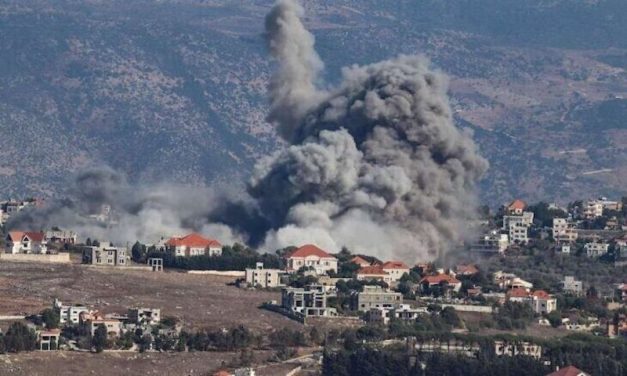
The Inseparability of the Lebanese Front from the Axis of Resistance

SCFR Online–Opinion: By providing an extensive network of social, healthcare, educational, and post-war reconstruction services, Hezbollah has established a strong social base for itself among Lebanon’s Shiites and Sunnis, and even beyond that, among other segments of Lebanese society, including Christians. Hezbollah has never been an external actor imposed upon Lebanon; rather, it is a phenomenon fundamentally born out of the occupation and crimes of the Zionist regime and itself influenced by popular resistance.

The Increasing Efforts of the Zionist Regime to Redefine Borders and the Regional Order and Its Consequences

SCFR Online– Opinion: Security and military developments in the region over recent months indicate that the ongoing crises and wars in Gaza, southern Lebanon, and parts of Syrian territory encompass broader dimensions of geopolitical and geostrategic transformations. In this context, the increased military presence and control of the Zionist regime over parts of the territories of these areas, along with proposals regarding the creation of buffer zones or even the expansion of security borders, have raised serious questions about the future of the regional order and its consequences for the countries of West Asia.

The Components of Iran’s Deterrence Power

SCFR Online – Opinion: At a time when regional security equations have reached a sensitive stage under the influence of Iran’s strategic confrontation with the United States and the Zionist regime, the question of the nature of Tehran’s defensive power has gained greater significance than ever before. While Washington and Tel Aviv rely on their technological superiority, the Islamic Republic of Iran has presented a model of deterrence that extends beyond the material calculations of the world’s classical militaries. This power, rooted in the connection between “the field” and “the people,” has not only altered the balance of power in recent conflicts but has also disrupted adversaries’ calculations when confronting Iran’s strategic depth.

Loading

Dr. Mohammad Mehdi Mazaheri

New Arabia: the need to develop a suitable strategy

New Arabia: the need to develop a suitable strategy

Strategic Council Online—Opinion: At the end of August this year, Saudi Arabia announced that it had appointed its first ambassador to the Palestinian Authority. Based on this decision, Nayef bin Bandar al-Sudairi, as the extraordinary, plenipotentiary and non-resident ambassador (accredited) of Saudi Arabia in Ramallah and the Saudi consul general in occupied Quds, handed over his credentials to Majdi Al-Khalidi, the diplomatic advisor of Mahmoud Abbas, the head of the Palestinian Authority. Now, less than two months have passed since these decisions and actions, the Saudi government has announced that an official delegation from this country, headed by Nayef Bin Bandar Al-Sudairi, will travel to Ramallah to celebrate the birthday of the Prophet of Islam (PBUH) and to offer prayers in Al-Aqsa Mosque; An unprecedented action since the occupation of Quds in 1967, which will open a new chapter in Saudi Arabia’s diplomatic and role-playing activities in the West Asian region.

Mohammad Mehdi Mazaheri – University professor

New East-West Corridor; First Operational Sign of Failed Abraham Accords

New East-West Corridor; First Operational Sign of Failed Abraham Accords

Strategic Council Online – Opinion: The idea of developing transportation routes to boost trade in the Persian Gulf and eliminate the need for the strategic Strait of Hormuz was formed among the Persian Gulf Cooperation Council member states some years ago. To realize the idea, the rail transport corridor along the Persian Gulf was started in 2016 by launching the Persian Gulf Cooperation Council rail network. According to the agreement signed among the member states of the Council, each of the countries was expected to build and complete their rail network independently. Finally, after completing all national lines, the Persian Gulf Cooperation Council network would be launched by connecting the national rail networks of those countries. In this way, an Arab railway network would be formed, connecting all six Persian Gulf Cooperation Council member countries through a railway line of 2177 kilometers.
Dr. Mohammad Mehdi Mazaheri – University professor

Environment; A New Era of Concern in Different Dimensions

Environment; A New Era of Concern in Different Dimensions

Strategic Council Online – Guest Opinion: In the past weeks, along with political issues that have been the hot topic of news circles, the intensity of the heat has also become the subject of analysis by many media and news agencies, an issue that not only has not an internal aspect but is apparently a problem that all parts of the world, from North America to Western Europe and of course East and West Asia, are struggling with.
Dr. Mohammad Mehdi Mazaheri – University professor

Requirements for Iran’s Positioning in New World Order

Requirements for Iran’s Positioning in New World Order

Requirements for Iran’s Positioning in New World Order
Strategic Council Online – Guest opinion: In recent years, the discussion of changes in the world order, the conditions and reasons for this, and its requirements for different countries has become one of the serious topics in the field of foreign policy studies and international relations. Such changes include political, economic, and cultural areas at the global level, which cause changes in the way countries interact with each other, as well as changes in the way international conflicts are resolved. But what are the signs of this change in the international political order? And how can one successfully get the right place in this new order?
Dr. Mohammad Mehdi Mazaheri – University professor

Strategic Importance of Strengthening Iran-Turkey Relations

Strategic Importance of Strengthening Iran-Turkey Relations

Strategic Council Online – Guest opinion: In the West Asian region, the number of countries that have democratic systems and real and free elections may not even reach the number of the fingers of one hand, and when those elections are related to an active and proactive country in the region, such as Turkey, its importance and analytical value multiplies.
Dr. Mohammad Mehdi Mazaheri – University professor

The strategic importance of resuming relations between Iran and Egypt

The strategic importance of resuming relations between Iran and Egypt

Strategic Council Online-Opinion: After the resumption of diplomatic relations between Iran and Saudi Arabia created a wave of positive developments in the region and encouraged other Persian Gulf countries to resume or strengthen ties with the Islamic Republic of Iran, now the news indicates that Iran and Egypt with the mediation of Iraq are trying to resume diplomatic relations.
Mohammad Mehdi Mazaheri—University scholar

Challenges, Key Priorities of Iran’s Foreign Policy in 2023-2024

Challenges, Key Priorities of Iran’s Foreign Policy in 2023-2024

Strategic Council Online – Guest opinion: Amidst talks about Iran’s essential issues and challenges in the current calendar year, what quickly comes into one’s mind is the debate on economic disturbances and people’s livelihood problems. This is even though, in today’s interconnected world, we can safely say that the root of many domestic financial problems lies in foreign policy and international relations of the country; however, this does not mean minimizing the importance of managerial inefficiencies and the weakness and inadequacy of some internal executive and supervisory institutions.
Dr. Mohammad Mehdi Mazaheri – University professor

Ukraine War; Approach of World Powers, Iran’s Policy

Ukraine War; Approach of World Powers, Iran’s Policy

Strategic Council Online – Guest opinion: Russia’s attack on Ukraine, which was initially thought to be a lightning attack with quick and tangible results, has lasted a year; meantime with the recent stances taken by certain European countries at the Munich Security Conference to the effect that they have prepared for a long-term war, no definite end can be expected for the conflict.
Dr. Mohammad Mahdi Mazaheri – University professor

Analysis of Ukraine War in Terms of Geopolitical Components

Analysis of Ukraine War in Terms of Geopolitical Components

Strategic Council Online – Opinion: In recent months, Russia’s invasion of Ukraine and its various consequences in regional and international arenas has become the main subject of analysts of politics and international relations. A war that has affected the security and stability of Eurasia, the order of international relations, food security, energy security and the like in various dimensions, and since the passage of more than three months from its beginning, there is still no clear end in sight.
Dr. Mohammad Mehdi Mazaheri – University professor

ÚLTIMAS PUBLICACIONES

Iran’s Potential Levers of Power

SCFRonline– Opinion: Iran’s geopolitical power is not limited solely to oil and the Strait of Hormuz; the unintended emergence of disruptions in the future global food and energy security chains can also demonstrate Iran’s strategic importance.
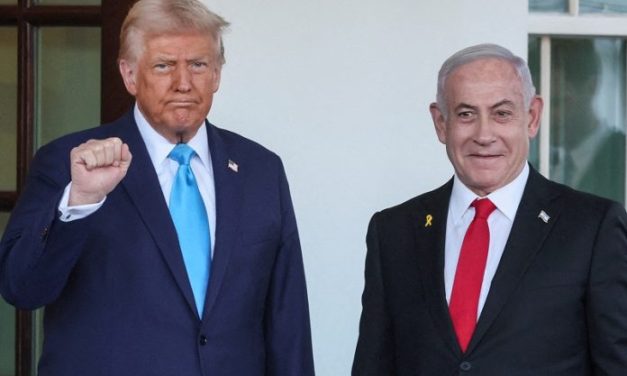
The Inseparability of the Lebanese Front from the Axis of Resistance

SCFR Online–Opinion: By providing an extensive network of social, healthcare, educational, and post-war reconstruction services, Hezbollah has established a strong social base for itself among Lebanon’s Shiites and Sunnis, and even beyond that, among other segments of Lebanese society, including Christians. Hezbollah has never been an external actor imposed upon Lebanon; rather, it is a phenomenon fundamentally born out of the occupation and crimes of the Zionist regime and itself influenced by popular resistance.

The Increasing Efforts of the Zionist Regime to Redefine Borders and the Regional Order and Its Consequences

SCFR Online– Opinion: Security and military developments in the region over recent months indicate that the ongoing crises and wars in Gaza, southern Lebanon, and parts of Syrian territory encompass broader dimensions of geopolitical and geostrategic transformations. In this context, the increased military presence and control of the Zionist regime over parts of the territories of these areas, along with proposals regarding the creation of buffer zones or even the expansion of security borders, have raised serious questions about the future of the regional order and its consequences for the countries of West Asia.

The Components of Iran’s Deterrence Power

SCFR Online – Opinion: At a time when regional security equations have reached a sensitive stage under the influence of Iran’s strategic confrontation with the United States and the Zionist regime, the question of the nature of Tehran’s defensive power has gained greater significance than ever before. While Washington and Tel Aviv rely on their technological superiority, the Islamic Republic of Iran has presented a model of deterrence that extends beyond the material calculations of the world’s classical militaries. This power, rooted in the connection between “the field” and “the people,” has not only altered the balance of power in recent conflicts but has also disrupted adversaries’ calculations when confronting Iran’s strategic depth.

Loading

Dr. Mohammad Mehdi Mazaheri

New Arabia: the need to develop a suitable strategy

New Arabia: the need to develop a suitable strategy

Strategic Council Online—Opinion: At the end of August this year, Saudi Arabia announced that it had appointed its first ambassador to the Palestinian Authority. Based on this decision, Nayef bin Bandar al-Sudairi, as the extraordinary, plenipotentiary and non-resident ambassador (accredited) of Saudi Arabia in Ramallah and the Saudi consul general in occupied Quds, handed over his credentials to Majdi Al-Khalidi, the diplomatic advisor of Mahmoud Abbas, the head of the Palestinian Authority. Now, less than two months have passed since these decisions and actions, the Saudi government has announced that an official delegation from this country, headed by Nayef Bin Bandar Al-Sudairi, will travel to Ramallah to celebrate the birthday of the Prophet of Islam (PBUH) and to offer prayers in Al-Aqsa Mosque; An unprecedented action since the occupation of Quds in 1967, which will open a new chapter in Saudi Arabia’s diplomatic and role-playing activities in the West Asian region.

Mohammad Mehdi Mazaheri – University professor

New East-West Corridor; First Operational Sign of Failed Abraham Accords

New East-West Corridor; First Operational Sign of Failed Abraham Accords

Strategic Council Online – Opinion: The idea of developing transportation routes to boost trade in the Persian Gulf and eliminate the need for the strategic Strait of Hormuz was formed among the Persian Gulf Cooperation Council member states some years ago. To realize the idea, the rail transport corridor along the Persian Gulf was started in 2016 by launching the Persian Gulf Cooperation Council rail network. According to the agreement signed among the member states of the Council, each of the countries was expected to build and complete their rail network independently. Finally, after completing all national lines, the Persian Gulf Cooperation Council network would be launched by connecting the national rail networks of those countries. In this way, an Arab railway network would be formed, connecting all six Persian Gulf Cooperation Council member countries through a railway line of 2177 kilometers.
Dr. Mohammad Mehdi Mazaheri – University professor

Environment; A New Era of Concern in Different Dimensions

Environment; A New Era of Concern in Different Dimensions

Strategic Council Online – Guest Opinion: In the past weeks, along with political issues that have been the hot topic of news circles, the intensity of the heat has also become the subject of analysis by many media and news agencies, an issue that not only has not an internal aspect but is apparently a problem that all parts of the world, from North America to Western Europe and of course East and West Asia, are struggling with.
Dr. Mohammad Mehdi Mazaheri – University professor

Requirements for Iran’s Positioning in New World Order

Requirements for Iran’s Positioning in New World Order

Requirements for Iran’s Positioning in New World Order
Strategic Council Online – Guest opinion: In recent years, the discussion of changes in the world order, the conditions and reasons for this, and its requirements for different countries has become one of the serious topics in the field of foreign policy studies and international relations. Such changes include political, economic, and cultural areas at the global level, which cause changes in the way countries interact with each other, as well as changes in the way international conflicts are resolved. But what are the signs of this change in the international political order? And how can one successfully get the right place in this new order?
Dr. Mohammad Mehdi Mazaheri – University professor

Strategic Importance of Strengthening Iran-Turkey Relations

Strategic Importance of Strengthening Iran-Turkey Relations

Strategic Council Online – Guest opinion: In the West Asian region, the number of countries that have democratic systems and real and free elections may not even reach the number of the fingers of one hand, and when those elections are related to an active and proactive country in the region, such as Turkey, its importance and analytical value multiplies.
Dr. Mohammad Mehdi Mazaheri – University professor

The strategic importance of resuming relations between Iran and Egypt

The strategic importance of resuming relations between Iran and Egypt

Strategic Council Online-Opinion: After the resumption of diplomatic relations between Iran and Saudi Arabia created a wave of positive developments in the region and encouraged other Persian Gulf countries to resume or strengthen ties with the Islamic Republic of Iran, now the news indicates that Iran and Egypt with the mediation of Iraq are trying to resume diplomatic relations.
Mohammad Mehdi Mazaheri—University scholar

Challenges, Key Priorities of Iran’s Foreign Policy in 2023-2024

Challenges, Key Priorities of Iran’s Foreign Policy in 2023-2024

Strategic Council Online – Guest opinion: Amidst talks about Iran’s essential issues and challenges in the current calendar year, what quickly comes into one’s mind is the debate on economic disturbances and people’s livelihood problems. This is even though, in today’s interconnected world, we can safely say that the root of many domestic financial problems lies in foreign policy and international relations of the country; however, this does not mean minimizing the importance of managerial inefficiencies and the weakness and inadequacy of some internal executive and supervisory institutions.
Dr. Mohammad Mehdi Mazaheri – University professor

Ukraine War; Approach of World Powers, Iran’s Policy

Ukraine War; Approach of World Powers, Iran’s Policy

Strategic Council Online – Guest opinion: Russia’s attack on Ukraine, which was initially thought to be a lightning attack with quick and tangible results, has lasted a year; meantime with the recent stances taken by certain European countries at the Munich Security Conference to the effect that they have prepared for a long-term war, no definite end can be expected for the conflict.
Dr. Mohammad Mahdi Mazaheri – University professor

Analysis of Ukraine War in Terms of Geopolitical Components

Analysis of Ukraine War in Terms of Geopolitical Components

Strategic Council Online – Opinion: In recent months, Russia’s invasion of Ukraine and its various consequences in regional and international arenas has become the main subject of analysts of politics and international relations. A war that has affected the security and stability of Eurasia, the order of international relations, food security, energy security and the like in various dimensions, and since the passage of more than three months from its beginning, there is still no clear end in sight.
Dr. Mohammad Mehdi Mazaheri – University professor

ÚLTIMAS PUBLICACIONES

Iran’s Potential Levers of Power

SCFRonline– Opinion: Iran’s geopolitical power is not limited solely to oil and the Strait of Hormuz; the unintended emergence of disruptions in the future global food and energy security chains can also demonstrate Iran’s strategic importance.

The Inseparability of the Lebanese Front from the Axis of Resistance

SCFR Online–Opinion: By providing an extensive network of social, healthcare, educational, and post-war reconstruction services, Hezbollah has established a strong social base for itself among Lebanon’s Shiites and Sunnis, and even beyond that, among other segments of Lebanese society, including Christians. Hezbollah has never been an external actor imposed upon Lebanon; rather, it is a phenomenon fundamentally born out of the occupation and crimes of the Zionist regime and itself influenced by popular resistance.

The Increasing Efforts of the Zionist Regime to Redefine Borders and the Regional Order and Its Consequences

SCFR Online– Opinion: Security and military developments in the region over recent months indicate that the ongoing crises and wars in Gaza, southern Lebanon, and parts of Syrian territory encompass broader dimensions of geopolitical and geostrategic transformations. In this context, the increased military presence and control of the Zionist regime over parts of the territories of these areas, along with proposals regarding the creation of buffer zones or even the expansion of security borders, have raised serious questions about the future of the regional order and its consequences for the countries of West Asia.

The Components of Iran’s Deterrence Power

SCFR Online – Opinion: At a time when regional security equations have reached a sensitive stage under the influence of Iran’s strategic confrontation with the United States and the Zionist regime, the question of the nature of Tehran’s defensive power has gained greater significance than ever before. While Washington and Tel Aviv rely on their technological superiority, the Islamic Republic of Iran has presented a model of deterrence that extends beyond the material calculations of the world’s classical militaries. This power, rooted in the connection between “the field” and “the people,” has not only altered the balance of power in recent conflicts but has also disrupted adversaries’ calculations when confronting Iran’s strategic depth.

Loading

Dr. Mohammad Mehdi Mazaheri

New Arabia: the need to develop a suitable strategy

New Arabia: the need to develop a suitable strategy

Strategic Council Online—Opinion: At the end of August this year, Saudi Arabia announced that it had appointed its first ambassador to the Palestinian Authority. Based on this decision, Nayef bin Bandar al-Sudairi, as the extraordinary, plenipotentiary and non-resident ambassador (accredited) of Saudi Arabia in Ramallah and the Saudi consul general in occupied Quds, handed over his credentials to Majdi Al-Khalidi, the diplomatic advisor of Mahmoud Abbas, the head of the Palestinian Authority. Now, less than two months have passed since these decisions and actions, the Saudi government has announced that an official delegation from this country, headed by Nayef Bin Bandar Al-Sudairi, will travel to Ramallah to celebrate the birthday of the Prophet of Islam (PBUH) and to offer prayers in Al-Aqsa Mosque; An unprecedented action since the occupation of Quds in 1967, which will open a new chapter in Saudi Arabia’s diplomatic and role-playing activities in the West Asian region.

Mohammad Mehdi Mazaheri – University professor

New East-West Corridor; First Operational Sign of Failed Abraham Accords

New East-West Corridor; First Operational Sign of Failed Abraham Accords

Strategic Council Online – Opinion: The idea of developing transportation routes to boost trade in the Persian Gulf and eliminate the need for the strategic Strait of Hormuz was formed among the Persian Gulf Cooperation Council member states some years ago. To realize the idea, the rail transport corridor along the Persian Gulf was started in 2016 by launching the Persian Gulf Cooperation Council rail network. According to the agreement signed among the member states of the Council, each of the countries was expected to build and complete their rail network independently. Finally, after completing all national lines, the Persian Gulf Cooperation Council network would be launched by connecting the national rail networks of those countries. In this way, an Arab railway network would be formed, connecting all six Persian Gulf Cooperation Council member countries through a railway line of 2177 kilometers.
Dr. Mohammad Mehdi Mazaheri – University professor

Environment; A New Era of Concern in Different Dimensions

Environment; A New Era of Concern in Different Dimensions

Strategic Council Online – Guest Opinion: In the past weeks, along with political issues that have been the hot topic of news circles, the intensity of the heat has also become the subject of analysis by many media and news agencies, an issue that not only has not an internal aspect but is apparently a problem that all parts of the world, from North America to Western Europe and of course East and West Asia, are struggling with.
Dr. Mohammad Mehdi Mazaheri – University professor

Requirements for Iran’s Positioning in New World Order

Requirements for Iran’s Positioning in New World Order

Requirements for Iran’s Positioning in New World Order
Strategic Council Online – Guest opinion: In recent years, the discussion of changes in the world order, the conditions and reasons for this, and its requirements for different countries has become one of the serious topics in the field of foreign policy studies and international relations. Such changes include political, economic, and cultural areas at the global level, which cause changes in the way countries interact with each other, as well as changes in the way international conflicts are resolved. But what are the signs of this change in the international political order? And how can one successfully get the right place in this new order?
Dr. Mohammad Mehdi Mazaheri – University professor

Strategic Importance of Strengthening Iran-Turkey Relations

Strategic Importance of Strengthening Iran-Turkey Relations

Strategic Council Online – Guest opinion: In the West Asian region, the number of countries that have democratic systems and real and free elections may not even reach the number of the fingers of one hand, and when those elections are related to an active and proactive country in the region, such as Turkey, its importance and analytical value multiplies.
Dr. Mohammad Mehdi Mazaheri – University professor

The strategic importance of resuming relations between Iran and Egypt

The strategic importance of resuming relations between Iran and Egypt

Strategic Council Online-Opinion: After the resumption of diplomatic relations between Iran and Saudi Arabia created a wave of positive developments in the region and encouraged other Persian Gulf countries to resume or strengthen ties with the Islamic Republic of Iran, now the news indicates that Iran and Egypt with the mediation of Iraq are trying to resume diplomatic relations.
Mohammad Mehdi Mazaheri—University scholar

Challenges, Key Priorities of Iran’s Foreign Policy in 2023-2024

Challenges, Key Priorities of Iran’s Foreign Policy in 2023-2024

Strategic Council Online – Guest opinion: Amidst talks about Iran’s essential issues and challenges in the current calendar year, what quickly comes into one’s mind is the debate on economic disturbances and people’s livelihood problems. This is even though, in today’s interconnected world, we can safely say that the root of many domestic financial problems lies in foreign policy and international relations of the country; however, this does not mean minimizing the importance of managerial inefficiencies and the weakness and inadequacy of some internal executive and supervisory institutions.
Dr. Mohammad Mehdi Mazaheri – University professor

Ukraine War; Approach of World Powers, Iran’s Policy

Ukraine War; Approach of World Powers, Iran’s Policy

Strategic Council Online – Guest opinion: Russia’s attack on Ukraine, which was initially thought to be a lightning attack with quick and tangible results, has lasted a year; meantime with the recent stances taken by certain European countries at the Munich Security Conference to the effect that they have prepared for a long-term war, no definite end can be expected for the conflict.
Dr. Mohammad Mahdi Mazaheri – University professor

Analysis of Ukraine War in Terms of Geopolitical Components

Analysis of Ukraine War in Terms of Geopolitical Components

Strategic Council Online – Opinion: In recent months, Russia’s invasion of Ukraine and its various consequences in regional and international arenas has become the main subject of analysts of politics and international relations. A war that has affected the security and stability of Eurasia, the order of international relations, food security, energy security and the like in various dimensions, and since the passage of more than three months from its beginning, there is still no clear end in sight.
Dr. Mohammad Mehdi Mazaheri – University professor

ÚLTIMAS PUBLICACIONES

Iran’s Potential Levers of Power

SCFRonline– Opinion: Iran’s geopolitical power is not limited solely to oil and the Strait of Hormuz; the unintended emergence of disruptions in the future global food and energy security chains can also demonstrate Iran’s strategic importance.

The Inseparability of the Lebanese Front from the Axis of Resistance

SCFR Online–Opinion: By providing an extensive network of social, healthcare, educational, and post-war reconstruction services, Hezbollah has established a strong social base for itself among Lebanon’s Shiites and Sunnis, and even beyond that, among other segments of Lebanese society, including Christians. Hezbollah has never been an external actor imposed upon Lebanon; rather, it is a phenomenon fundamentally born out of the occupation and crimes of the Zionist regime and itself influenced by popular resistance.

The Increasing Efforts of the Zionist Regime to Redefine Borders and the Regional Order and Its Consequences

SCFR Online– Opinion: Security and military developments in the region over recent months indicate that the ongoing crises and wars in Gaza, southern Lebanon, and parts of Syrian territory encompass broader dimensions of geopolitical and geostrategic transformations. In this context, the increased military presence and control of the Zionist regime over parts of the territories of these areas, along with proposals regarding the creation of buffer zones or even the expansion of security borders, have raised serious questions about the future of the regional order and its consequences for the countries of West Asia.

The Components of Iran’s Deterrence Power

SCFR Online – Opinion: At a time when regional security equations have reached a sensitive stage under the influence of Iran’s strategic confrontation with the United States and the Zionist regime, the question of the nature of Tehran’s defensive power has gained greater significance than ever before. While Washington and Tel Aviv rely on their technological superiority, the Islamic Republic of Iran has presented a model of deterrence that extends beyond the material calculations of the world’s classical militaries. This power, rooted in the connection between “the field” and “the people,” has not only altered the balance of power in recent conflicts but has also disrupted adversaries’ calculations when confronting Iran’s strategic depth.

Loading