جدیدترین مطالب

Iran’s Success in the Narrative Battle in Cyberspace

SCFR Online – Opinion: In the war between Iran and the United States, the main battlefield was not defined solely in the military domain; rather, the battle of narratives in cyberspace—particularly through memes—reached a decisive level.

The Global Energy Shock Situation and Future Scenarios

SCFR Online – Opinion: Only one month after the beginning of the Ramadan War, maritime traffic in the Strait of Hormuz decreased dramatically, with Bloomberg announcing a reduction of 103 vessels; Brent oil prices rose by more than 50 percent, and gasoline prices in the United States increased by 31.4 percent. Additionally, benchmark gas prices in Europe showed a 73.4 percent increase.

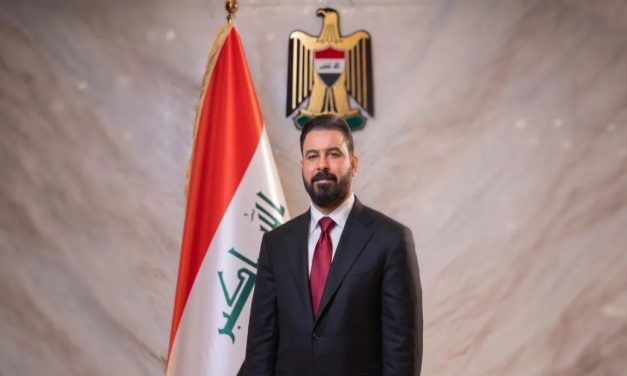
Al-Zaydi’s Selection as Prime Minister, The Beginning of a New Chapter in Iraq

SCFR Online – Note: After approximately five months of political deadlock and institutional confusion, Ali al-Zaydi has finally been selected as Iraq’s Prime Minister. Al-Zaydi’s selection as Prime Minister represents a positive sign of the completion of the government formation process and the beginning of a new phase in Iraqi politics and governance. The emergence of a young, technocratic figure from the third generation of politicians—in a context where the country has been administered by traditional figures for decades—revives hope that Iraq may perhaps distance itself from the repetitive cycle of crises and experience a new path of stability, efficiency, and regional convergence.

Intensifying Intra-Party Divisions in the United States Regarding the Zionist Regime

SCFR Online – Note: Over recent decades, support for the Zionist regime has been one of the few issues commanding bipartisan consensus in US foreign policy. Since the Cold War era, Republicans and Democrats have generally agreed on the necessity of preserving the security and survival of the Zionist regime as Washington’s most strategic ally in West Asia—and indeed, globally. However, developments in recent years—particularly the Gaza war, escalating regional conflicts, the expansion of tensions into Lebanon, and this regime’s recent warmongering against Iran—have caused this traditional consensus, especially within the Democratic Party, to face significant fractures.

Public Opinion Disappointment of the Zionist Regime Regarding Success in War with Iran

SCFR Online – Opinion: The internal situation of the Israeli regime during the 40-day war can be analyzed from several perspectives. The popularity levels of Benjamin Netanyahu, the Likud Party, and the ruling coalition led by Netanyahu until February 28, 2026, remained approximately the same as during the preceding year. The most recent factor that had somewhat increased Netanyahu’s popularity was the advancement of the 2024 war with Hezbollah Lebanon. Subsequently, his popularity temporarily increased during the 12-day war with Iran, but after the war, it returned to its previous state.

Loading

Saudi Arabia

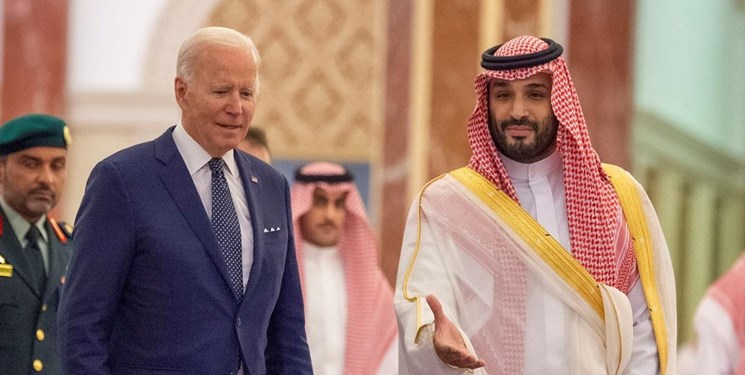
Biden’s Gamble to Revive Process of Normalizing Relations between Saudi Arabia and Zionist regime

Biden’s Gamble to Revive Process of Normalizing Relations between Saudi Arabia and Zionist regime

Strategic Council Online – Note: Since the beginning of the Gaza war, the US Secretary of State has visited Saudi Arabia twice and met and conferred with the kingdom officials. Tel Aviv Riyadh’s “reconciliation process” and the establishment of diplomatic relations were the most important agenda of the US secretary of state in his recent meeting with Saudi authorities (January 6, 2024).
Hamid Khoshayand – expert on regional issues

Reasons for Ineffectiveness of Riyadh Summit Concerning Expectations of Gazans

Reasons for Ineffectiveness of Riyadh Summit Concerning Expectations of Gazans

Strategic Council Online – Opinion: Recently, we witnessed an extraordinary summit of Islamic countries in Riyadh. The Palestinians, especially the people of Gaza, had built hope on the meeting, and it was expected that at the end of it, we would see a collective, serious, and deterrent decision by the Islamic countries. But, unfortunately, such expectations were not met.
Dr. Mohammad Mehdi Mazaheri – University professor

Al-Aqsa Storm, Defeat of Misconceptions of Arab States about Normalization

Al-Aqsa Storm, Defeat of Misconceptions of Arab States about Normalization

Strategic Council Online – Interview: An expert on Israeli affairs, saying that the blow the Zionist regime has received from the “Al-Aqsa Storm” operation severely shattered the notion that the regime is an immutable reality that must be dealt with in the region noted: The crimes committed by the Zionist regime in Gaza will remain in the minds of the people of Islamic countries for a long time and will be a serious challenge for normalization.

Al-Aqsa Storm, Vanishing of Normalization of Relations with Zionist Regime

Al-Aqsa Storm, Vanishing of Normalization of Relations with Zionist Regime

Strategic Council Online – Interview: An expert on international affairs stated that due to the ongoing conflict between Hamas and Palestine, the normalization of relations with the Zionist regime will be suspended and seriously challenged, adding: In this situation, with an increase of conflicts and human casualties, considering the sensitivity of public opinion, in the short term, less governments in the region will dare to raise the issue of normalization.

An analysis of the positive process of negotiations between Ansarullah and Riyadh and the perspective of stability in Yemen

An analysis of the positive process of negotiations between Ansarullah and Riyadh and the perspective of stability in Yemen

Strategic Council Online—Interview: An expert on Yemen issues said that conducting negotiations between Yemeni political groups will be a big part of Ansarollah’s problems and Yemen’s problems. Despite the influence of regional and international powers, these negotiations seem to be unsuccessful because they are trying to institutionalize the internal crisis in Yemen.

New Arabia: the need to develop a suitable strategy

New Arabia: the need to develop a suitable strategy

Strategic Council Online—Opinion: At the end of August this year, Saudi Arabia announced that it had appointed its first ambassador to the Palestinian Authority. Based on this decision, Nayef bin Bandar al-Sudairi, as the extraordinary, plenipotentiary and non-resident ambassador (accredited) of Saudi Arabia in Ramallah and the Saudi consul general in occupied Quds, handed over his credentials to Majdi Al-Khalidi, the diplomatic advisor of Mahmoud Abbas, the head of the Palestinian Authority. Now, less than two months have passed since these decisions and actions, the Saudi government has announced that an official delegation from this country, headed by Nayef Bin Bandar Al-Sudairi, will travel to Ramallah to celebrate the birthday of the Prophet of Islam (PBUH) and to offer prayers in Al-Aqsa Mosque; An unprecedented action since the occupation of Quds in 1967, which will open a new chapter in Saudi Arabia’s diplomatic and role-playing activities in the West Asian region.

Mohammad Mehdi Mazaheri – University professor

Significance of Formation of “Dialogue and Cooperation Assembly” among Persian Gulf States

Significance of Formation of “Dialogue and Cooperation Assembly” among Persian Gulf States

Strategic Council Online – Opinion: One of the most important issues raised during Amir Abdollahian’s trip to the coastal states of the Persian Gulf a few months ago was the formation of a joint mechanism called “Dialogue and Cooperation Assembly” for negotiation and cooperation with the presence of all countries in the Persian Gulf region.
Barsam Mohammadi – Expert on regional affairs

Lebanon’s Presidential Election, France’s Declining Role

Lebanon’s Presidential Election, France’s Declining Role

Strategic Council Online – Interview: An expert on West Asia affairs said that the meeting of the five-party committee in New York has failed. The failure that French President Macron experienced after the events related to the Beirut port explosion showed that France trying to play a role in Lebanon, as in the past, does not have the necessary place in the public opinion of that country for the settlement of disputes.

Obstacles, Prospect of Normalization of Riyadh-Tel Aviv Relations

Obstacles, Prospect of Normalization of Riyadh-Tel Aviv Relations

Strategic Council Online – Opinion: Normalization and recognition of relations between the Zionist regime and Saudi Arabia is still at the focal point of the political circles of the Zionist regime. Israel and, recently, the United States administration have focused on this issue and are discussing the imminent compromise between Tel Aviv and Riyadh, which is unrealistic.
Hamid Khoshayand – Expert on regional affairs

New East-West Corridor; First Operational Sign of Failed Abraham Accords

New East-West Corridor; First Operational Sign of Failed Abraham Accords

Strategic Council Online – Opinion: The idea of developing transportation routes to boost trade in the Persian Gulf and eliminate the need for the strategic Strait of Hormuz was formed among the Persian Gulf Cooperation Council member states some years ago. To realize the idea, the rail transport corridor along the Persian Gulf was started in 2016 by launching the Persian Gulf Cooperation Council rail network. According to the agreement signed among the member states of the Council, each of the countries was expected to build and complete their rail network independently. Finally, after completing all national lines, the Persian Gulf Cooperation Council network would be launched by connecting the national rail networks of those countries. In this way, an Arab railway network would be formed, connecting all six Persian Gulf Cooperation Council member countries through a railway line of 2177 kilometers.
Dr. Mohammad Mehdi Mazaheri – University professor

أحدث الوظائف

Iran’s Success in the Narrative Battle in Cyberspace

SCFR Online – Opinion: In the war between Iran and the United States, the main battlefield was not defined solely in the military domain; rather, the battle of narratives in cyberspace—particularly through memes—reached a decisive level.
The Global Energy Shock Situation and Future Scenarios

SCFR Online – Opinion: Only one month after the beginning of the Ramadan War, maritime traffic in the Strait of Hormuz decreased dramatically, with Bloomberg announcing a reduction of 103 vessels; Brent oil prices rose by more than 50 percent, and gasoline prices in the United States increased by 31.4 percent. Additionally, benchmark gas prices in Europe showed a 73.4 percent increase.

Al-Zaydi’s Selection as Prime Minister, The Beginning of a New Chapter in Iraq

SCFR Online – Note: After approximately five months of political deadlock and institutional confusion, Ali al-Zaydi has finally been selected as Iraq’s Prime Minister. Al-Zaydi’s selection as Prime Minister represents a positive sign of the completion of the government formation process and the beginning of a new phase in Iraqi politics and governance. The emergence of a young, technocratic figure from the third generation of politicians—in a context where the country has been administered by traditional figures for decades—revives hope that Iraq may perhaps distance itself from the repetitive cycle of crises and experience a new path of stability, efficiency, and regional convergence.

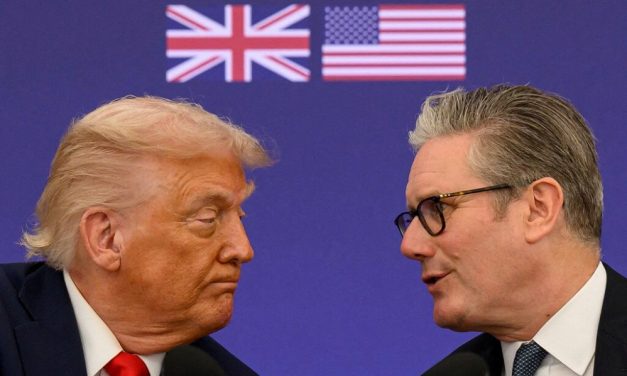
Intensifying Intra-Party Divisions in the United States Regarding the Zionist Regime

SCFR Online – Note: Over recent decades, support for the Zionist regime has been one of the few issues commanding bipartisan consensus in US foreign policy. Since the Cold War era, Republicans and Democrats have generally agreed on the necessity of preserving the security and survival of the Zionist regime as Washington’s most strategic ally in West Asia—and indeed, globally. However, developments in recent years—particularly the Gaza war, escalating regional conflicts, the expansion of tensions into Lebanon, and this regime’s recent warmongering against Iran—have caused this traditional consensus, especially within the Democratic Party, to face significant fractures.

Public Opinion Disappointment of the Zionist Regime Regarding Success in War with Iran

SCFR Online – Opinion: The internal situation of the Israeli regime during the 40-day war can be analyzed from several perspectives. The popularity levels of Benjamin Netanyahu, the Likud Party, and the ruling coalition led by Netanyahu until February 28, 2026, remained approximately the same as during the preceding year. The most recent factor that had somewhat increased Netanyahu’s popularity was the advancement of the 2024 war with Hezbollah Lebanon. Subsequently, his popularity temporarily increased during the 12-day war with Iran, but after the war, it returned to its previous state.

Loading

Saudi Arabia

Biden’s Gamble to Revive Process of Normalizing Relations between Saudi Arabia and Zionist regime

Biden’s Gamble to Revive Process of Normalizing Relations between Saudi Arabia and Zionist regime

Strategic Council Online – Note: Since the beginning of the Gaza war, the US Secretary of State has visited Saudi Arabia twice and met and conferred with the kingdom officials. Tel Aviv Riyadh’s “reconciliation process” and the establishment of diplomatic relations were the most important agenda of the US secretary of state in his recent meeting with Saudi authorities (January 6, 2024).
Hamid Khoshayand – expert on regional issues

Reasons for Ineffectiveness of Riyadh Summit Concerning Expectations of Gazans

Reasons for Ineffectiveness of Riyadh Summit Concerning Expectations of Gazans

Strategic Council Online – Opinion: Recently, we witnessed an extraordinary summit of Islamic countries in Riyadh. The Palestinians, especially the people of Gaza, had built hope on the meeting, and it was expected that at the end of it, we would see a collective, serious, and deterrent decision by the Islamic countries. But, unfortunately, such expectations were not met.
Dr. Mohammad Mehdi Mazaheri – University professor

Al-Aqsa Storm, Defeat of Misconceptions of Arab States about Normalization

Al-Aqsa Storm, Defeat of Misconceptions of Arab States about Normalization

Strategic Council Online – Interview: An expert on Israeli affairs, saying that the blow the Zionist regime has received from the “Al-Aqsa Storm” operation severely shattered the notion that the regime is an immutable reality that must be dealt with in the region noted: The crimes committed by the Zionist regime in Gaza will remain in the minds of the people of Islamic countries for a long time and will be a serious challenge for normalization.

Al-Aqsa Storm, Vanishing of Normalization of Relations with Zionist Regime

Al-Aqsa Storm, Vanishing of Normalization of Relations with Zionist Regime

Strategic Council Online – Interview: An expert on international affairs stated that due to the ongoing conflict between Hamas and Palestine, the normalization of relations with the Zionist regime will be suspended and seriously challenged, adding: In this situation, with an increase of conflicts and human casualties, considering the sensitivity of public opinion, in the short term, less governments in the region will dare to raise the issue of normalization.

An analysis of the positive process of negotiations between Ansarullah and Riyadh and the perspective of stability in Yemen

An analysis of the positive process of negotiations between Ansarullah and Riyadh and the perspective of stability in Yemen

Strategic Council Online—Interview: An expert on Yemen issues said that conducting negotiations between Yemeni political groups will be a big part of Ansarollah’s problems and Yemen’s problems. Despite the influence of regional and international powers, these negotiations seem to be unsuccessful because they are trying to institutionalize the internal crisis in Yemen.

New Arabia: the need to develop a suitable strategy

New Arabia: the need to develop a suitable strategy

Strategic Council Online—Opinion: At the end of August this year, Saudi Arabia announced that it had appointed its first ambassador to the Palestinian Authority. Based on this decision, Nayef bin Bandar al-Sudairi, as the extraordinary, plenipotentiary and non-resident ambassador (accredited) of Saudi Arabia in Ramallah and the Saudi consul general in occupied Quds, handed over his credentials to Majdi Al-Khalidi, the diplomatic advisor of Mahmoud Abbas, the head of the Palestinian Authority. Now, less than two months have passed since these decisions and actions, the Saudi government has announced that an official delegation from this country, headed by Nayef Bin Bandar Al-Sudairi, will travel to Ramallah to celebrate the birthday of the Prophet of Islam (PBUH) and to offer prayers in Al-Aqsa Mosque; An unprecedented action since the occupation of Quds in 1967, which will open a new chapter in Saudi Arabia’s diplomatic and role-playing activities in the West Asian region.

Mohammad Mehdi Mazaheri – University professor

Significance of Formation of “Dialogue and Cooperation Assembly” among Persian Gulf States

Significance of Formation of “Dialogue and Cooperation Assembly” among Persian Gulf States

Strategic Council Online – Opinion: One of the most important issues raised during Amir Abdollahian’s trip to the coastal states of the Persian Gulf a few months ago was the formation of a joint mechanism called “Dialogue and Cooperation Assembly” for negotiation and cooperation with the presence of all countries in the Persian Gulf region.
Barsam Mohammadi – Expert on regional affairs

Lebanon’s Presidential Election, France’s Declining Role

Lebanon’s Presidential Election, France’s Declining Role

Strategic Council Online – Interview: An expert on West Asia affairs said that the meeting of the five-party committee in New York has failed. The failure that French President Macron experienced after the events related to the Beirut port explosion showed that France trying to play a role in Lebanon, as in the past, does not have the necessary place in the public opinion of that country for the settlement of disputes.

Obstacles, Prospect of Normalization of Riyadh-Tel Aviv Relations

Obstacles, Prospect of Normalization of Riyadh-Tel Aviv Relations

Strategic Council Online – Opinion: Normalization and recognition of relations between the Zionist regime and Saudi Arabia is still at the focal point of the political circles of the Zionist regime. Israel and, recently, the United States administration have focused on this issue and are discussing the imminent compromise between Tel Aviv and Riyadh, which is unrealistic.
Hamid Khoshayand – Expert on regional affairs

New East-West Corridor; First Operational Sign of Failed Abraham Accords

New East-West Corridor; First Operational Sign of Failed Abraham Accords

Strategic Council Online – Opinion: The idea of developing transportation routes to boost trade in the Persian Gulf and eliminate the need for the strategic Strait of Hormuz was formed among the Persian Gulf Cooperation Council member states some years ago. To realize the idea, the rail transport corridor along the Persian Gulf was started in 2016 by launching the Persian Gulf Cooperation Council rail network. According to the agreement signed among the member states of the Council, each of the countries was expected to build and complete their rail network independently. Finally, after completing all national lines, the Persian Gulf Cooperation Council network would be launched by connecting the national rail networks of those countries. In this way, an Arab railway network would be formed, connecting all six Persian Gulf Cooperation Council member countries through a railway line of 2177 kilometers.
Dr. Mohammad Mehdi Mazaheri – University professor

Saudi Arabia

Biden’s Gamble to Revive Process of Normalizing Relations between Saudi Arabia and Zionist regime

Biden’s Gamble to Revive Process of Normalizing Relations between Saudi Arabia and Zionist regime

Strategic Council Online – Note: Since the beginning of the Gaza war, the US Secretary of State has visited Saudi Arabia twice and met and conferred with the kingdom officials. Tel Aviv Riyadh’s “reconciliation process” and the establishment of diplomatic relations were the most important agenda of the US secretary of state in his recent meeting with Saudi authorities (January 6, 2024).
Hamid Khoshayand – expert on regional issues

Reasons for Ineffectiveness of Riyadh Summit Concerning Expectations of Gazans

Reasons for Ineffectiveness of Riyadh Summit Concerning Expectations of Gazans

Strategic Council Online – Opinion: Recently, we witnessed an extraordinary summit of Islamic countries in Riyadh. The Palestinians, especially the people of Gaza, had built hope on the meeting, and it was expected that at the end of it, we would see a collective, serious, and deterrent decision by the Islamic countries. But, unfortunately, such expectations were not met.
Dr. Mohammad Mehdi Mazaheri – University professor

Al-Aqsa Storm, Defeat of Misconceptions of Arab States about Normalization

Al-Aqsa Storm, Defeat of Misconceptions of Arab States about Normalization

Strategic Council Online – Interview: An expert on Israeli affairs, saying that the blow the Zionist regime has received from the “Al-Aqsa Storm” operation severely shattered the notion that the regime is an immutable reality that must be dealt with in the region noted: The crimes committed by the Zionist regime in Gaza will remain in the minds of the people of Islamic countries for a long time and will be a serious challenge for normalization.

Al-Aqsa Storm, Vanishing of Normalization of Relations with Zionist Regime

Al-Aqsa Storm, Vanishing of Normalization of Relations with Zionist Regime

Strategic Council Online – Interview: An expert on international affairs stated that due to the ongoing conflict between Hamas and Palestine, the normalization of relations with the Zionist regime will be suspended and seriously challenged, adding: In this situation, with an increase of conflicts and human casualties, considering the sensitivity of public opinion, in the short term, less governments in the region will dare to raise the issue of normalization.

An analysis of the positive process of negotiations between Ansarullah and Riyadh and the perspective of stability in Yemen

An analysis of the positive process of negotiations between Ansarullah and Riyadh and the perspective of stability in Yemen

Strategic Council Online—Interview: An expert on Yemen issues said that conducting negotiations between Yemeni political groups will be a big part of Ansarollah’s problems and Yemen’s problems. Despite the influence of regional and international powers, these negotiations seem to be unsuccessful because they are trying to institutionalize the internal crisis in Yemen.

New Arabia: the need to develop a suitable strategy

New Arabia: the need to develop a suitable strategy

Strategic Council Online—Opinion: At the end of August this year, Saudi Arabia announced that it had appointed its first ambassador to the Palestinian Authority. Based on this decision, Nayef bin Bandar al-Sudairi, as the extraordinary, plenipotentiary and non-resident ambassador (accredited) of Saudi Arabia in Ramallah and the Saudi consul general in occupied Quds, handed over his credentials to Majdi Al-Khalidi, the diplomatic advisor of Mahmoud Abbas, the head of the Palestinian Authority. Now, less than two months have passed since these decisions and actions, the Saudi government has announced that an official delegation from this country, headed by Nayef Bin Bandar Al-Sudairi, will travel to Ramallah to celebrate the birthday of the Prophet of Islam (PBUH) and to offer prayers in Al-Aqsa Mosque; An unprecedented action since the occupation of Quds in 1967, which will open a new chapter in Saudi Arabia’s diplomatic and role-playing activities in the West Asian region.

Mohammad Mehdi Mazaheri – University professor

Significance of Formation of “Dialogue and Cooperation Assembly” among Persian Gulf States

Significance of Formation of “Dialogue and Cooperation Assembly” among Persian Gulf States

Strategic Council Online – Opinion: One of the most important issues raised during Amir Abdollahian’s trip to the coastal states of the Persian Gulf a few months ago was the formation of a joint mechanism called “Dialogue and Cooperation Assembly” for negotiation and cooperation with the presence of all countries in the Persian Gulf region.
Barsam Mohammadi – Expert on regional affairs

Lebanon’s Presidential Election, France’s Declining Role

Lebanon’s Presidential Election, France’s Declining Role

Strategic Council Online – Interview: An expert on West Asia affairs said that the meeting of the five-party committee in New York has failed. The failure that French President Macron experienced after the events related to the Beirut port explosion showed that France trying to play a role in Lebanon, as in the past, does not have the necessary place in the public opinion of that country for the settlement of disputes.

Obstacles, Prospect of Normalization of Riyadh-Tel Aviv Relations

Obstacles, Prospect of Normalization of Riyadh-Tel Aviv Relations

Strategic Council Online – Opinion: Normalization and recognition of relations between the Zionist regime and Saudi Arabia is still at the focal point of the political circles of the Zionist regime. Israel and, recently, the United States administration have focused on this issue and are discussing the imminent compromise between Tel Aviv and Riyadh, which is unrealistic.
Hamid Khoshayand – Expert on regional affairs

New East-West Corridor; First Operational Sign of Failed Abraham Accords

New East-West Corridor; First Operational Sign of Failed Abraham Accords

Strategic Council Online – Opinion: The idea of developing transportation routes to boost trade in the Persian Gulf and eliminate the need for the strategic Strait of Hormuz was formed among the Persian Gulf Cooperation Council member states some years ago. To realize the idea, the rail transport corridor along the Persian Gulf was started in 2016 by launching the Persian Gulf Cooperation Council rail network. According to the agreement signed among the member states of the Council, each of the countries was expected to build and complete their rail network independently. Finally, after completing all national lines, the Persian Gulf Cooperation Council network would be launched by connecting the national rail networks of those countries. In this way, an Arab railway network would be formed, connecting all six Persian Gulf Cooperation Council member countries through a railway line of 2177 kilometers.
Dr. Mohammad Mehdi Mazaheri – University professor

LATEST CONTENT

Iran’s Success in the Narrative Battle in Cyberspace

SCFR Online – Opinion: In the war between Iran and the United States, the main battlefield was not defined solely in the military domain; rather, the battle of narratives in cyberspace—particularly through memes—reached a decisive level.

The Global Energy Shock Situation and Future Scenarios

SCFR Online – Opinion: Only one month after the beginning of the Ramadan War, maritime traffic in the Strait of Hormuz decreased dramatically, with Bloomberg announcing a reduction of 103 vessels; Brent oil prices rose by more than 50 percent, and gasoline prices in the United States increased by 31.4 percent. Additionally, benchmark gas prices in Europe showed a 73.4 percent increase.

Al-Zaydi’s Selection as Prime Minister, The Beginning of a New Chapter in Iraq

SCFR Online – Note: After approximately five months of political deadlock and institutional confusion, Ali al-Zaydi has finally been selected as Iraq’s Prime Minister. Al-Zaydi’s selection as Prime Minister represents a positive sign of the completion of the government formation process and the beginning of a new phase in Iraqi politics and governance. The emergence of a young, technocratic figure from the third generation of politicians—in a context where the country has been administered by traditional figures for decades—revives hope that Iraq may perhaps distance itself from the repetitive cycle of crises and experience a new path of stability, efficiency, and regional convergence.

Intensifying Intra-Party Divisions in the United States Regarding the Zionist Regime

SCFR Online – Note: Over recent decades, support for the Zionist regime has been one of the few issues commanding bipartisan consensus in US foreign policy. Since the Cold War era, Republicans and Democrats have generally agreed on the necessity of preserving the security and survival of the Zionist regime as Washington’s most strategic ally in West Asia—and indeed, globally. However, developments in recent years—particularly the Gaza war, escalating regional conflicts, the expansion of tensions into Lebanon, and this regime’s recent warmongering against Iran—have caused this traditional consensus, especially within the Democratic Party, to face significant fractures.

Public Opinion Disappointment of the Zionist Regime Regarding Success in War with Iran

SCFR Online – Opinion: The internal situation of the Israeli regime during the 40-day war can be analyzed from several perspectives. The popularity levels of Benjamin Netanyahu, the Likud Party, and the ruling coalition led by Netanyahu until February 28, 2026, remained approximately the same as during the preceding year. The most recent factor that had somewhat increased Netanyahu’s popularity was the advancement of the 2024 war with Hezbollah Lebanon. Subsequently, his popularity temporarily increased during the 12-day war with Iran, but after the war, it returned to its previous state.

Loading

Saudi Arabia

Biden’s Gamble to Revive Process of Normalizing Relations between Saudi Arabia and Zionist regime

Biden’s Gamble to Revive Process of Normalizing Relations between Saudi Arabia and Zionist regime

Strategic Council Online – Note: Since the beginning of the Gaza war, the US Secretary of State has visited Saudi Arabia twice and met and conferred with the kingdom officials. Tel Aviv Riyadh’s “reconciliation process” and the establishment of diplomatic relations were the most important agenda of the US secretary of state in his recent meeting with Saudi authorities (January 6, 2024).
Hamid Khoshayand – expert on regional issues

Reasons for Ineffectiveness of Riyadh Summit Concerning Expectations of Gazans

Reasons for Ineffectiveness of Riyadh Summit Concerning Expectations of Gazans

Strategic Council Online – Opinion: Recently, we witnessed an extraordinary summit of Islamic countries in Riyadh. The Palestinians, especially the people of Gaza, had built hope on the meeting, and it was expected that at the end of it, we would see a collective, serious, and deterrent decision by the Islamic countries. But, unfortunately, such expectations were not met.
Dr. Mohammad Mehdi Mazaheri – University professor

Al-Aqsa Storm, Defeat of Misconceptions of Arab States about Normalization

Al-Aqsa Storm, Defeat of Misconceptions of Arab States about Normalization

Strategic Council Online – Interview: An expert on Israeli affairs, saying that the blow the Zionist regime has received from the “Al-Aqsa Storm” operation severely shattered the notion that the regime is an immutable reality that must be dealt with in the region noted: The crimes committed by the Zionist regime in Gaza will remain in the minds of the people of Islamic countries for a long time and will be a serious challenge for normalization.

Al-Aqsa Storm, Vanishing of Normalization of Relations with Zionist Regime

Al-Aqsa Storm, Vanishing of Normalization of Relations with Zionist Regime

Strategic Council Online – Interview: An expert on international affairs stated that due to the ongoing conflict between Hamas and Palestine, the normalization of relations with the Zionist regime will be suspended and seriously challenged, adding: In this situation, with an increase of conflicts and human casualties, considering the sensitivity of public opinion, in the short term, less governments in the region will dare to raise the issue of normalization.

An analysis of the positive process of negotiations between Ansarullah and Riyadh and the perspective of stability in Yemen

An analysis of the positive process of negotiations between Ansarullah and Riyadh and the perspective of stability in Yemen

Strategic Council Online—Interview: An expert on Yemen issues said that conducting negotiations between Yemeni political groups will be a big part of Ansarollah’s problems and Yemen’s problems. Despite the influence of regional and international powers, these negotiations seem to be unsuccessful because they are trying to institutionalize the internal crisis in Yemen.

New Arabia: the need to develop a suitable strategy

New Arabia: the need to develop a suitable strategy

Strategic Council Online—Opinion: At the end of August this year, Saudi Arabia announced that it had appointed its first ambassador to the Palestinian Authority. Based on this decision, Nayef bin Bandar al-Sudairi, as the extraordinary, plenipotentiary and non-resident ambassador (accredited) of Saudi Arabia in Ramallah and the Saudi consul general in occupied Quds, handed over his credentials to Majdi Al-Khalidi, the diplomatic advisor of Mahmoud Abbas, the head of the Palestinian Authority. Now, less than two months have passed since these decisions and actions, the Saudi government has announced that an official delegation from this country, headed by Nayef Bin Bandar Al-Sudairi, will travel to Ramallah to celebrate the birthday of the Prophet of Islam (PBUH) and to offer prayers in Al-Aqsa Mosque; An unprecedented action since the occupation of Quds in 1967, which will open a new chapter in Saudi Arabia’s diplomatic and role-playing activities in the West Asian region.

Mohammad Mehdi Mazaheri – University professor

Significance of Formation of “Dialogue and Cooperation Assembly” among Persian Gulf States

Significance of Formation of “Dialogue and Cooperation Assembly” among Persian Gulf States

Strategic Council Online – Opinion: One of the most important issues raised during Amir Abdollahian’s trip to the coastal states of the Persian Gulf a few months ago was the formation of a joint mechanism called “Dialogue and Cooperation Assembly” for negotiation and cooperation with the presence of all countries in the Persian Gulf region.
Barsam Mohammadi – Expert on regional affairs

Lebanon’s Presidential Election, France’s Declining Role

Lebanon’s Presidential Election, France’s Declining Role

Strategic Council Online – Interview: An expert on West Asia affairs said that the meeting of the five-party committee in New York has failed. The failure that French President Macron experienced after the events related to the Beirut port explosion showed that France trying to play a role in Lebanon, as in the past, does not have the necessary place in the public opinion of that country for the settlement of disputes.

Obstacles, Prospect of Normalization of Riyadh-Tel Aviv Relations

Obstacles, Prospect of Normalization of Riyadh-Tel Aviv Relations

Strategic Council Online – Opinion: Normalization and recognition of relations between the Zionist regime and Saudi Arabia is still at the focal point of the political circles of the Zionist regime. Israel and, recently, the United States administration have focused on this issue and are discussing the imminent compromise between Tel Aviv and Riyadh, which is unrealistic.
Hamid Khoshayand – Expert on regional affairs

New East-West Corridor; First Operational Sign of Failed Abraham Accords

New East-West Corridor; First Operational Sign of Failed Abraham Accords

Strategic Council Online – Opinion: The idea of developing transportation routes to boost trade in the Persian Gulf and eliminate the need for the strategic Strait of Hormuz was formed among the Persian Gulf Cooperation Council member states some years ago. To realize the idea, the rail transport corridor along the Persian Gulf was started in 2016 by launching the Persian Gulf Cooperation Council rail network. According to the agreement signed among the member states of the Council, each of the countries was expected to build and complete their rail network independently. Finally, after completing all national lines, the Persian Gulf Cooperation Council network would be launched by connecting the national rail networks of those countries. In this way, an Arab railway network would be formed, connecting all six Persian Gulf Cooperation Council member countries through a railway line of 2177 kilometers.
Dr. Mohammad Mehdi Mazaheri – University professor

ÚLTIMAS PUBLICACIONES

Iran’s Success in the Narrative Battle in Cyberspace

SCFR Online – Opinion: In the war between Iran and the United States, the main battlefield was not defined solely in the military domain; rather, the battle of narratives in cyberspace—particularly through memes—reached a decisive level.

The Global Energy Shock Situation and Future Scenarios

SCFR Online – Opinion: Only one month after the beginning of the Ramadan War, maritime traffic in the Strait of Hormuz decreased dramatically, with Bloomberg announcing a reduction of 103 vessels; Brent oil prices rose by more than 50 percent, and gasoline prices in the United States increased by 31.4 percent. Additionally, benchmark gas prices in Europe showed a 73.4 percent increase.

Al-Zaydi’s Selection as Prime Minister, The Beginning of a New Chapter in Iraq

SCFR Online – Note: After approximately five months of political deadlock and institutional confusion, Ali al-Zaydi has finally been selected as Iraq’s Prime Minister. Al-Zaydi’s selection as Prime Minister represents a positive sign of the completion of the government formation process and the beginning of a new phase in Iraqi politics and governance. The emergence of a young, technocratic figure from the third generation of politicians—in a context where the country has been administered by traditional figures for decades—revives hope that Iraq may perhaps distance itself from the repetitive cycle of crises and experience a new path of stability, efficiency, and regional convergence.

Intensifying Intra-Party Divisions in the United States Regarding the Zionist Regime

SCFR Online – Note: Over recent decades, support for the Zionist regime has been one of the few issues commanding bipartisan consensus in US foreign policy. Since the Cold War era, Republicans and Democrats have generally agreed on the necessity of preserving the security and survival of the Zionist regime as Washington’s most strategic ally in West Asia—and indeed, globally. However, developments in recent years—particularly the Gaza war, escalating regional conflicts, the expansion of tensions into Lebanon, and this regime’s recent warmongering against Iran—have caused this traditional consensus, especially within the Democratic Party, to face significant fractures.

Public Opinion Disappointment of the Zionist Regime Regarding Success in War with Iran

SCFR Online – Opinion: The internal situation of the Israeli regime during the 40-day war can be analyzed from several perspectives. The popularity levels of Benjamin Netanyahu, the Likud Party, and the ruling coalition led by Netanyahu until February 28, 2026, remained approximately the same as during the preceding year. The most recent factor that had somewhat increased Netanyahu’s popularity was the advancement of the 2024 war with Hezbollah Lebanon. Subsequently, his popularity temporarily increased during the 12-day war with Iran, but after the war, it returned to its previous state.

Loading

Saudi Arabia

Biden’s Gamble to Revive Process of Normalizing Relations between Saudi Arabia and Zionist regime

Biden’s Gamble to Revive Process of Normalizing Relations between Saudi Arabia and Zionist regime

Strategic Council Online – Note: Since the beginning of the Gaza war, the US Secretary of State has visited Saudi Arabia twice and met and conferred with the kingdom officials. Tel Aviv Riyadh’s “reconciliation process” and the establishment of diplomatic relations were the most important agenda of the US secretary of state in his recent meeting with Saudi authorities (January 6, 2024).
Hamid Khoshayand – expert on regional issues

Reasons for Ineffectiveness of Riyadh Summit Concerning Expectations of Gazans

Reasons for Ineffectiveness of Riyadh Summit Concerning Expectations of Gazans

Strategic Council Online – Opinion: Recently, we witnessed an extraordinary summit of Islamic countries in Riyadh. The Palestinians, especially the people of Gaza, had built hope on the meeting, and it was expected that at the end of it, we would see a collective, serious, and deterrent decision by the Islamic countries. But, unfortunately, such expectations were not met.
Dr. Mohammad Mehdi Mazaheri – University professor

Al-Aqsa Storm, Defeat of Misconceptions of Arab States about Normalization

Al-Aqsa Storm, Defeat of Misconceptions of Arab States about Normalization

Strategic Council Online – Interview: An expert on Israeli affairs, saying that the blow the Zionist regime has received from the “Al-Aqsa Storm” operation severely shattered the notion that the regime is an immutable reality that must be dealt with in the region noted: The crimes committed by the Zionist regime in Gaza will remain in the minds of the people of Islamic countries for a long time and will be a serious challenge for normalization.

Al-Aqsa Storm, Vanishing of Normalization of Relations with Zionist Regime

Al-Aqsa Storm, Vanishing of Normalization of Relations with Zionist Regime

Strategic Council Online – Interview: An expert on international affairs stated that due to the ongoing conflict between Hamas and Palestine, the normalization of relations with the Zionist regime will be suspended and seriously challenged, adding: In this situation, with an increase of conflicts and human casualties, considering the sensitivity of public opinion, in the short term, less governments in the region will dare to raise the issue of normalization.

An analysis of the positive process of negotiations between Ansarullah and Riyadh and the perspective of stability in Yemen

An analysis of the positive process of negotiations between Ansarullah and Riyadh and the perspective of stability in Yemen

Strategic Council Online—Interview: An expert on Yemen issues said that conducting negotiations between Yemeni political groups will be a big part of Ansarollah’s problems and Yemen’s problems. Despite the influence of regional and international powers, these negotiations seem to be unsuccessful because they are trying to institutionalize the internal crisis in Yemen.

New Arabia: the need to develop a suitable strategy

New Arabia: the need to develop a suitable strategy

Strategic Council Online—Opinion: At the end of August this year, Saudi Arabia announced that it had appointed its first ambassador to the Palestinian Authority. Based on this decision, Nayef bin Bandar al-Sudairi, as the extraordinary, plenipotentiary and non-resident ambassador (accredited) of Saudi Arabia in Ramallah and the Saudi consul general in occupied Quds, handed over his credentials to Majdi Al-Khalidi, the diplomatic advisor of Mahmoud Abbas, the head of the Palestinian Authority. Now, less than two months have passed since these decisions and actions, the Saudi government has announced that an official delegation from this country, headed by Nayef Bin Bandar Al-Sudairi, will travel to Ramallah to celebrate the birthday of the Prophet of Islam (PBUH) and to offer prayers in Al-Aqsa Mosque; An unprecedented action since the occupation of Quds in 1967, which will open a new chapter in Saudi Arabia’s diplomatic and role-playing activities in the West Asian region.

Mohammad Mehdi Mazaheri – University professor

Significance of Formation of “Dialogue and Cooperation Assembly” among Persian Gulf States

Significance of Formation of “Dialogue and Cooperation Assembly” among Persian Gulf States

Strategic Council Online – Opinion: One of the most important issues raised during Amir Abdollahian’s trip to the coastal states of the Persian Gulf a few months ago was the formation of a joint mechanism called “Dialogue and Cooperation Assembly” for negotiation and cooperation with the presence of all countries in the Persian Gulf region.
Barsam Mohammadi – Expert on regional affairs

Lebanon’s Presidential Election, France’s Declining Role

Lebanon’s Presidential Election, France’s Declining Role

Strategic Council Online – Interview: An expert on West Asia affairs said that the meeting of the five-party committee in New York has failed. The failure that French President Macron experienced after the events related to the Beirut port explosion showed that France trying to play a role in Lebanon, as in the past, does not have the necessary place in the public opinion of that country for the settlement of disputes.

Obstacles, Prospect of Normalization of Riyadh-Tel Aviv Relations

Obstacles, Prospect of Normalization of Riyadh-Tel Aviv Relations

Strategic Council Online – Opinion: Normalization and recognition of relations between the Zionist regime and Saudi Arabia is still at the focal point of the political circles of the Zionist regime. Israel and, recently, the United States administration have focused on this issue and are discussing the imminent compromise between Tel Aviv and Riyadh, which is unrealistic.
Hamid Khoshayand – Expert on regional affairs

New East-West Corridor; First Operational Sign of Failed Abraham Accords

New East-West Corridor; First Operational Sign of Failed Abraham Accords

Strategic Council Online – Opinion: The idea of developing transportation routes to boost trade in the Persian Gulf and eliminate the need for the strategic Strait of Hormuz was formed among the Persian Gulf Cooperation Council member states some years ago. To realize the idea, the rail transport corridor along the Persian Gulf was started in 2016 by launching the Persian Gulf Cooperation Council rail network. According to the agreement signed among the member states of the Council, each of the countries was expected to build and complete their rail network independently. Finally, after completing all national lines, the Persian Gulf Cooperation Council network would be launched by connecting the national rail networks of those countries. In this way, an Arab railway network would be formed, connecting all six Persian Gulf Cooperation Council member countries through a railway line of 2177 kilometers.
Dr. Mohammad Mehdi Mazaheri – University professor

ÚLTIMAS PUBLICACIONES

Iran’s Success in the Narrative Battle in Cyberspace

SCFR Online – Opinion: In the war between Iran and the United States, the main battlefield was not defined solely in the military domain; rather, the battle of narratives in cyberspace—particularly through memes—reached a decisive level.
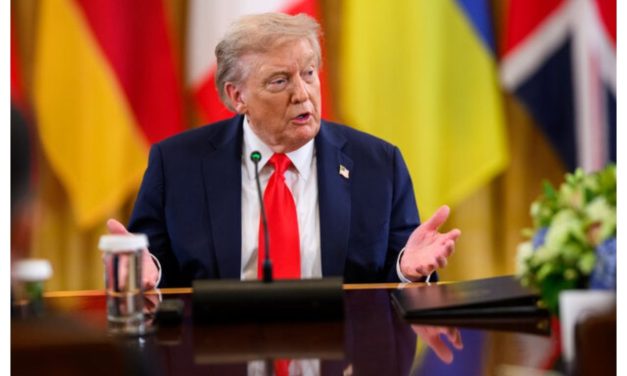
The Global Energy Shock Situation and Future Scenarios

SCFR Online – Opinion: Only one month after the beginning of the Ramadan War, maritime traffic in the Strait of Hormuz decreased dramatically, with Bloomberg announcing a reduction of 103 vessels; Brent oil prices rose by more than 50 percent, and gasoline prices in the United States increased by 31.4 percent. Additionally, benchmark gas prices in Europe showed a 73.4 percent increase.

Al-Zaydi’s Selection as Prime Minister, The Beginning of a New Chapter in Iraq

SCFR Online – Note: After approximately five months of political deadlock and institutional confusion, Ali al-Zaydi has finally been selected as Iraq’s Prime Minister. Al-Zaydi’s selection as Prime Minister represents a positive sign of the completion of the government formation process and the beginning of a new phase in Iraqi politics and governance. The emergence of a young, technocratic figure from the third generation of politicians—in a context where the country has been administered by traditional figures for decades—revives hope that Iraq may perhaps distance itself from the repetitive cycle of crises and experience a new path of stability, efficiency, and regional convergence.

Intensifying Intra-Party Divisions in the United States Regarding the Zionist Regime

SCFR Online – Note: Over recent decades, support for the Zionist regime has been one of the few issues commanding bipartisan consensus in US foreign policy. Since the Cold War era, Republicans and Democrats have generally agreed on the necessity of preserving the security and survival of the Zionist regime as Washington’s most strategic ally in West Asia—and indeed, globally. However, developments in recent years—particularly the Gaza war, escalating regional conflicts, the expansion of tensions into Lebanon, and this regime’s recent warmongering against Iran—have caused this traditional consensus, especially within the Democratic Party, to face significant fractures.

Public Opinion Disappointment of the Zionist Regime Regarding Success in War with Iran

SCFR Online – Opinion: The internal situation of the Israeli regime during the 40-day war can be analyzed from several perspectives. The popularity levels of Benjamin Netanyahu, the Likud Party, and the ruling coalition led by Netanyahu until February 28, 2026, remained approximately the same as during the preceding year. The most recent factor that had somewhat increased Netanyahu’s popularity was the advancement of the 2024 war with Hezbollah Lebanon. Subsequently, his popularity temporarily increased during the 12-day war with Iran, but after the war, it returned to its previous state.

Loading

Saudi Arabia

Biden’s Gamble to Revive Process of Normalizing Relations between Saudi Arabia and Zionist regime

Biden’s Gamble to Revive Process of Normalizing Relations between Saudi Arabia and Zionist regime

Strategic Council Online – Note: Since the beginning of the Gaza war, the US Secretary of State has visited Saudi Arabia twice and met and conferred with the kingdom officials. Tel Aviv Riyadh’s “reconciliation process” and the establishment of diplomatic relations were the most important agenda of the US secretary of state in his recent meeting with Saudi authorities (January 6, 2024).
Hamid Khoshayand – expert on regional issues

Reasons for Ineffectiveness of Riyadh Summit Concerning Expectations of Gazans

Reasons for Ineffectiveness of Riyadh Summit Concerning Expectations of Gazans

Strategic Council Online – Opinion: Recently, we witnessed an extraordinary summit of Islamic countries in Riyadh. The Palestinians, especially the people of Gaza, had built hope on the meeting, and it was expected that at the end of it, we would see a collective, serious, and deterrent decision by the Islamic countries. But, unfortunately, such expectations were not met.
Dr. Mohammad Mehdi Mazaheri – University professor

Al-Aqsa Storm, Defeat of Misconceptions of Arab States about Normalization

Al-Aqsa Storm, Defeat of Misconceptions of Arab States about Normalization

Strategic Council Online – Interview: An expert on Israeli affairs, saying that the blow the Zionist regime has received from the “Al-Aqsa Storm” operation severely shattered the notion that the regime is an immutable reality that must be dealt with in the region noted: The crimes committed by the Zionist regime in Gaza will remain in the minds of the people of Islamic countries for a long time and will be a serious challenge for normalization.

Al-Aqsa Storm, Vanishing of Normalization of Relations with Zionist Regime

Al-Aqsa Storm, Vanishing of Normalization of Relations with Zionist Regime

Strategic Council Online – Interview: An expert on international affairs stated that due to the ongoing conflict between Hamas and Palestine, the normalization of relations with the Zionist regime will be suspended and seriously challenged, adding: In this situation, with an increase of conflicts and human casualties, considering the sensitivity of public opinion, in the short term, less governments in the region will dare to raise the issue of normalization.

An analysis of the positive process of negotiations between Ansarullah and Riyadh and the perspective of stability in Yemen

An analysis of the positive process of negotiations between Ansarullah and Riyadh and the perspective of stability in Yemen

Strategic Council Online—Interview: An expert on Yemen issues said that conducting negotiations between Yemeni political groups will be a big part of Ansarollah’s problems and Yemen’s problems. Despite the influence of regional and international powers, these negotiations seem to be unsuccessful because they are trying to institutionalize the internal crisis in Yemen.

New Arabia: the need to develop a suitable strategy

New Arabia: the need to develop a suitable strategy

Strategic Council Online—Opinion: At the end of August this year, Saudi Arabia announced that it had appointed its first ambassador to the Palestinian Authority. Based on this decision, Nayef bin Bandar al-Sudairi, as the extraordinary, plenipotentiary and non-resident ambassador (accredited) of Saudi Arabia in Ramallah and the Saudi consul general in occupied Quds, handed over his credentials to Majdi Al-Khalidi, the diplomatic advisor of Mahmoud Abbas, the head of the Palestinian Authority. Now, less than two months have passed since these decisions and actions, the Saudi government has announced that an official delegation from this country, headed by Nayef Bin Bandar Al-Sudairi, will travel to Ramallah to celebrate the birthday of the Prophet of Islam (PBUH) and to offer prayers in Al-Aqsa Mosque; An unprecedented action since the occupation of Quds in 1967, which will open a new chapter in Saudi Arabia’s diplomatic and role-playing activities in the West Asian region.

Mohammad Mehdi Mazaheri – University professor

Significance of Formation of “Dialogue and Cooperation Assembly” among Persian Gulf States

Significance of Formation of “Dialogue and Cooperation Assembly” among Persian Gulf States

Strategic Council Online – Opinion: One of the most important issues raised during Amir Abdollahian’s trip to the coastal states of the Persian Gulf a few months ago was the formation of a joint mechanism called “Dialogue and Cooperation Assembly” for negotiation and cooperation with the presence of all countries in the Persian Gulf region.
Barsam Mohammadi – Expert on regional affairs

Lebanon’s Presidential Election, France’s Declining Role

Lebanon’s Presidential Election, France’s Declining Role

Strategic Council Online – Interview: An expert on West Asia affairs said that the meeting of the five-party committee in New York has failed. The failure that French President Macron experienced after the events related to the Beirut port explosion showed that France trying to play a role in Lebanon, as in the past, does not have the necessary place in the public opinion of that country for the settlement of disputes.

Obstacles, Prospect of Normalization of Riyadh-Tel Aviv Relations

Obstacles, Prospect of Normalization of Riyadh-Tel Aviv Relations

Strategic Council Online – Opinion: Normalization and recognition of relations between the Zionist regime and Saudi Arabia is still at the focal point of the political circles of the Zionist regime. Israel and, recently, the United States administration have focused on this issue and are discussing the imminent compromise between Tel Aviv and Riyadh, which is unrealistic.
Hamid Khoshayand – Expert on regional affairs

New East-West Corridor; First Operational Sign of Failed Abraham Accords

New East-West Corridor; First Operational Sign of Failed Abraham Accords

Strategic Council Online – Opinion: The idea of developing transportation routes to boost trade in the Persian Gulf and eliminate the need for the strategic Strait of Hormuz was formed among the Persian Gulf Cooperation Council member states some years ago. To realize the idea, the rail transport corridor along the Persian Gulf was started in 2016 by launching the Persian Gulf Cooperation Council rail network. According to the agreement signed among the member states of the Council, each of the countries was expected to build and complete their rail network independently. Finally, after completing all national lines, the Persian Gulf Cooperation Council network would be launched by connecting the national rail networks of those countries. In this way, an Arab railway network would be formed, connecting all six Persian Gulf Cooperation Council member countries through a railway line of 2177 kilometers.
Dr. Mohammad Mehdi Mazaheri – University professor

ÚLTIMAS PUBLICACIONES

Iran’s Success in the Narrative Battle in Cyberspace

SCFR Online – Opinion: In the war between Iran and the United States, the main battlefield was not defined solely in the military domain; rather, the battle of narratives in cyberspace—particularly through memes—reached a decisive level.
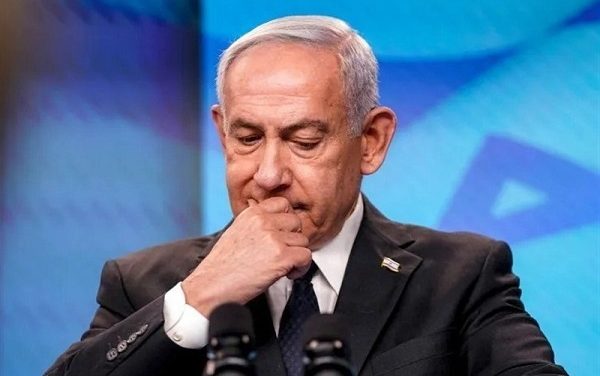
The Global Energy Shock Situation and Future Scenarios

SCFR Online – Opinion: Only one month after the beginning of the Ramadan War, maritime traffic in the Strait of Hormuz decreased dramatically, with Bloomberg announcing a reduction of 103 vessels; Brent oil prices rose by more than 50 percent, and gasoline prices in the United States increased by 31.4 percent. Additionally, benchmark gas prices in Europe showed a 73.4 percent increase.

Al-Zaydi’s Selection as Prime Minister, The Beginning of a New Chapter in Iraq

SCFR Online – Note: After approximately five months of political deadlock and institutional confusion, Ali al-Zaydi has finally been selected as Iraq’s Prime Minister. Al-Zaydi’s selection as Prime Minister represents a positive sign of the completion of the government formation process and the beginning of a new phase in Iraqi politics and governance. The emergence of a young, technocratic figure from the third generation of politicians—in a context where the country has been administered by traditional figures for decades—revives hope that Iraq may perhaps distance itself from the repetitive cycle of crises and experience a new path of stability, efficiency, and regional convergence.

Intensifying Intra-Party Divisions in the United States Regarding the Zionist Regime

SCFR Online – Note: Over recent decades, support for the Zionist regime has been one of the few issues commanding bipartisan consensus in US foreign policy. Since the Cold War era, Republicans and Democrats have generally agreed on the necessity of preserving the security and survival of the Zionist regime as Washington’s most strategic ally in West Asia—and indeed, globally. However, developments in recent years—particularly the Gaza war, escalating regional conflicts, the expansion of tensions into Lebanon, and this regime’s recent warmongering against Iran—have caused this traditional consensus, especially within the Democratic Party, to face significant fractures.

Public Opinion Disappointment of the Zionist Regime Regarding Success in War with Iran

SCFR Online – Opinion: The internal situation of the Israeli regime during the 40-day war can be analyzed from several perspectives. The popularity levels of Benjamin Netanyahu, the Likud Party, and the ruling coalition led by Netanyahu until February 28, 2026, remained approximately the same as during the preceding year. The most recent factor that had somewhat increased Netanyahu’s popularity was the advancement of the 2024 war with Hezbollah Lebanon. Subsequently, his popularity temporarily increased during the 12-day war with Iran, but after the war, it returned to its previous state.

Loading

Saudi Arabia

Biden’s Gamble to Revive Process of Normalizing Relations between Saudi Arabia and Zionist regime

Biden’s Gamble to Revive Process of Normalizing Relations between Saudi Arabia and Zionist regime

Strategic Council Online – Note: Since the beginning of the Gaza war, the US Secretary of State has visited Saudi Arabia twice and met and conferred with the kingdom officials. Tel Aviv Riyadh’s “reconciliation process” and the establishment of diplomatic relations were the most important agenda of the US secretary of state in his recent meeting with Saudi authorities (January 6, 2024).
Hamid Khoshayand – expert on regional issues

Reasons for Ineffectiveness of Riyadh Summit Concerning Expectations of Gazans

Reasons for Ineffectiveness of Riyadh Summit Concerning Expectations of Gazans

Strategic Council Online – Opinion: Recently, we witnessed an extraordinary summit of Islamic countries in Riyadh. The Palestinians, especially the people of Gaza, had built hope on the meeting, and it was expected that at the end of it, we would see a collective, serious, and deterrent decision by the Islamic countries. But, unfortunately, such expectations were not met.
Dr. Mohammad Mehdi Mazaheri – University professor

Al-Aqsa Storm, Defeat of Misconceptions of Arab States about Normalization

Al-Aqsa Storm, Defeat of Misconceptions of Arab States about Normalization

Strategic Council Online – Interview: An expert on Israeli affairs, saying that the blow the Zionist regime has received from the “Al-Aqsa Storm” operation severely shattered the notion that the regime is an immutable reality that must be dealt with in the region noted: The crimes committed by the Zionist regime in Gaza will remain in the minds of the people of Islamic countries for a long time and will be a serious challenge for normalization.

Al-Aqsa Storm, Vanishing of Normalization of Relations with Zionist Regime

Al-Aqsa Storm, Vanishing of Normalization of Relations with Zionist Regime

Strategic Council Online – Interview: An expert on international affairs stated that due to the ongoing conflict between Hamas and Palestine, the normalization of relations with the Zionist regime will be suspended and seriously challenged, adding: In this situation, with an increase of conflicts and human casualties, considering the sensitivity of public opinion, in the short term, less governments in the region will dare to raise the issue of normalization.

An analysis of the positive process of negotiations between Ansarullah and Riyadh and the perspective of stability in Yemen

An analysis of the positive process of negotiations between Ansarullah and Riyadh and the perspective of stability in Yemen

Strategic Council Online—Interview: An expert on Yemen issues said that conducting negotiations between Yemeni political groups will be a big part of Ansarollah’s problems and Yemen’s problems. Despite the influence of regional and international powers, these negotiations seem to be unsuccessful because they are trying to institutionalize the internal crisis in Yemen.

New Arabia: the need to develop a suitable strategy

New Arabia: the need to develop a suitable strategy

Strategic Council Online—Opinion: At the end of August this year, Saudi Arabia announced that it had appointed its first ambassador to the Palestinian Authority. Based on this decision, Nayef bin Bandar al-Sudairi, as the extraordinary, plenipotentiary and non-resident ambassador (accredited) of Saudi Arabia in Ramallah and the Saudi consul general in occupied Quds, handed over his credentials to Majdi Al-Khalidi, the diplomatic advisor of Mahmoud Abbas, the head of the Palestinian Authority. Now, less than two months have passed since these decisions and actions, the Saudi government has announced that an official delegation from this country, headed by Nayef Bin Bandar Al-Sudairi, will travel to Ramallah to celebrate the birthday of the Prophet of Islam (PBUH) and to offer prayers in Al-Aqsa Mosque; An unprecedented action since the occupation of Quds in 1967, which will open a new chapter in Saudi Arabia’s diplomatic and role-playing activities in the West Asian region.

Mohammad Mehdi Mazaheri – University professor

Significance of Formation of “Dialogue and Cooperation Assembly” among Persian Gulf States

Significance of Formation of “Dialogue and Cooperation Assembly” among Persian Gulf States

Strategic Council Online – Opinion: One of the most important issues raised during Amir Abdollahian’s trip to the coastal states of the Persian Gulf a few months ago was the formation of a joint mechanism called “Dialogue and Cooperation Assembly” for negotiation and cooperation with the presence of all countries in the Persian Gulf region.
Barsam Mohammadi – Expert on regional affairs

Lebanon’s Presidential Election, France’s Declining Role

Lebanon’s Presidential Election, France’s Declining Role

Strategic Council Online – Interview: An expert on West Asia affairs said that the meeting of the five-party committee in New York has failed. The failure that French President Macron experienced after the events related to the Beirut port explosion showed that France trying to play a role in Lebanon, as in the past, does not have the necessary place in the public opinion of that country for the settlement of disputes.

Obstacles, Prospect of Normalization of Riyadh-Tel Aviv Relations

Obstacles, Prospect of Normalization of Riyadh-Tel Aviv Relations

Strategic Council Online – Opinion: Normalization and recognition of relations between the Zionist regime and Saudi Arabia is still at the focal point of the political circles of the Zionist regime. Israel and, recently, the United States administration have focused on this issue and are discussing the imminent compromise between Tel Aviv and Riyadh, which is unrealistic.
Hamid Khoshayand – Expert on regional affairs

New East-West Corridor; First Operational Sign of Failed Abraham Accords

New East-West Corridor; First Operational Sign of Failed Abraham Accords

Strategic Council Online – Opinion: The idea of developing transportation routes to boost trade in the Persian Gulf and eliminate the need for the strategic Strait of Hormuz was formed among the Persian Gulf Cooperation Council member states some years ago. To realize the idea, the rail transport corridor along the Persian Gulf was started in 2016 by launching the Persian Gulf Cooperation Council rail network. According to the agreement signed among the member states of the Council, each of the countries was expected to build and complete their rail network independently. Finally, after completing all national lines, the Persian Gulf Cooperation Council network would be launched by connecting the national rail networks of those countries. In this way, an Arab railway network would be formed, connecting all six Persian Gulf Cooperation Council member countries through a railway line of 2177 kilometers.
Dr. Mohammad Mehdi Mazaheri – University professor

ÚLTIMAS PUBLICACIONES

Iran’s Success in the Narrative Battle in Cyberspace

SCFR Online – Opinion: In the war between Iran and the United States, the main battlefield was not defined solely in the military domain; rather, the battle of narratives in cyberspace—particularly through memes—reached a decisive level.

The Global Energy Shock Situation and Future Scenarios

SCFR Online – Opinion: Only one month after the beginning of the Ramadan War, maritime traffic in the Strait of Hormuz decreased dramatically, with Bloomberg announcing a reduction of 103 vessels; Brent oil prices rose by more than 50 percent, and gasoline prices in the United States increased by 31.4 percent. Additionally, benchmark gas prices in Europe showed a 73.4 percent increase.

Al-Zaydi’s Selection as Prime Minister, The Beginning of a New Chapter in Iraq

SCFR Online – Note: After approximately five months of political deadlock and institutional confusion, Ali al-Zaydi has finally been selected as Iraq’s Prime Minister. Al-Zaydi’s selection as Prime Minister represents a positive sign of the completion of the government formation process and the beginning of a new phase in Iraqi politics and governance. The emergence of a young, technocratic figure from the third generation of politicians—in a context where the country has been administered by traditional figures for decades—revives hope that Iraq may perhaps distance itself from the repetitive cycle of crises and experience a new path of stability, efficiency, and regional convergence.

Intensifying Intra-Party Divisions in the United States Regarding the Zionist Regime

SCFR Online – Note: Over recent decades, support for the Zionist regime has been one of the few issues commanding bipartisan consensus in US foreign policy. Since the Cold War era, Republicans and Democrats have generally agreed on the necessity of preserving the security and survival of the Zionist regime as Washington’s most strategic ally in West Asia—and indeed, globally. However, developments in recent years—particularly the Gaza war, escalating regional conflicts, the expansion of tensions into Lebanon, and this regime’s recent warmongering against Iran—have caused this traditional consensus, especially within the Democratic Party, to face significant fractures.

Public Opinion Disappointment of the Zionist Regime Regarding Success in War with Iran

SCFR Online – Opinion: The internal situation of the Israeli regime during the 40-day war can be analyzed from several perspectives. The popularity levels of Benjamin Netanyahu, the Likud Party, and the ruling coalition led by Netanyahu until February 28, 2026, remained approximately the same as during the preceding year. The most recent factor that had somewhat increased Netanyahu’s popularity was the advancement of the 2024 war with Hezbollah Lebanon. Subsequently, his popularity temporarily increased during the 12-day war with Iran, but after the war, it returned to its previous state.

Loading