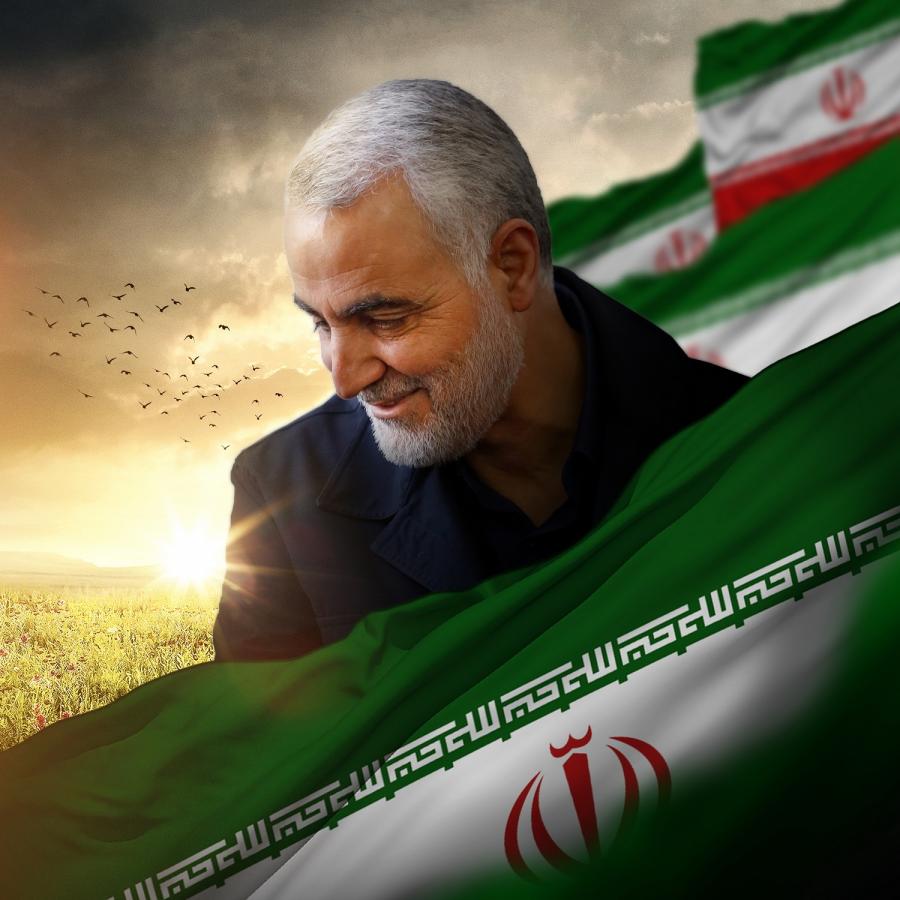
Legacy of Martyr Soleimani: defeat of terrorism and establishment of security and stability in the region

2021/01/01 | interview, Politics, top news

Strategic Council Online—Interview: An expert of West Asia affairs says efforts and measures taken by General Soleimani would be recorded in history as an utter fiasco for the United States as he played a significant role in establishing security and stability in the region.

Sadollah Zarei told the Strategic Council on Foreign Relations that General Soleimani legacy was to prove that humans enjoy a great capacity to mark outstanding achievements, adding that he defeated a big number of forces from the United States, Europe, Saudi Arabia, the United Arab Emirates and religious extremist and terrorists groups such as Daesh all acting against Iran.

He said forces acting against Iran have access to countless money and budgets, adding that the US Army spends 800 billion dollars per year in addition to the budgets spent in this region by NATO, Turkey, Saudi Arabia and other groups.

“Also, we should consider such big amount of advanced military equipment, Tornado, B-52 and F-35 fighter jets that are related to large organizations such as the Security Council of the United Nations which also support them legally.”

Zarei said that under such circumstances, a person as General Qassem Soleimani disrupted all conspiracies in a large geography.

“Indeed, regardless of the fruitfulness or ineffectiveness of such goals, General Soleimani assumed the heavy responsibility of defeating terrorism in a big field with a big mind and big spirit. He shouldered this burden during 2000 and 2001 when the US Army was active near our borders.”

He said that the US Army was stationed near the eastern and western borders of Iran in Afghanistan and Iraq while 70 US battleships were in the Persian Gulf and 35 US military bases erected near the Iranian borders.

Zarei said under such circumstances, General Qassem Soleimani was mandated to disrupt such plans against the Iranian interests in the region.

“Assuming such a grave responsibility requires great courage and bravery. He managed to fulfill his mandate and created conditions that Americans can no longer stay in Iraq,” he said, adding that Americans had to commit in an agreement to withdraw US troops from Iraq by the end of 2011.

He said that Americans had not signed such a deal any time in history to withdraw their military forces from another country, adding that American forces are still stationed in Germany and Japan and have not pulled out even though the war has finished.

Referring to the crimes committed by Americans in Afghanistan, he said Americans accepted to reduce their forces there and make peace with those whom they had invaded in the first place.

“That was a big incident. These will be recorded in history as an utter fiasco for the United States. The negotiation table between the US and the Taliban in Doha was in fact a hill of disgrace and scandal for the United States.”

General Soleimani, the leader of American defeat in the region

The expert of West Asia affairs said General Soleimani was the great leader of American defeat in the region, adding that Soleimani’s courage and success occurred while Iran was under tough sanctions and its military spending and equipment was by no means comparable with the US Army and other interventionists in the region.

However, General Soleimani was able to mark very important plans in line with providing regional security and bringing a big defeat to the US regime.

Zarei said this was a big lesson for us that humans enjoy large capacities especially when they are faithful and pious with foresight and prudence so that they can change the world with so many capacities and can stand against and become victorious over a mass of forces and military, financial and legal capabilities and facilities. This was the first lesson General Soleimani gave us.

The stabilizing role of General Soleimani in the region

Hailing the stabilizing role of General Soleimani, Zaeri rejected claims that Iran and General Soleimani have made the region insecure and caused a crisis.

“The fact of the matter is that General Soleimani fought with American and non-American occupiers and interventionists as well as Takfiri terrorists such as Daesh and al-Nusrah. Combating such terrorists is the most distinguished issue in General Soleimani’s record.”

Emphasizing that occupying measures of the United States is a clear example of destabilization in the region, he said General Soleimani tried in practice to evict American occupiers as elements of instability in the region as occupiers cannot ridiculously claim they are creating stability.

Zarei added that General Soleimani recovered stability in the region by eliminating the threat of Daesh.

“Daesh was fabricated to overthrow governments in Syria, Iraq, Lebanon and other countries. In fact, General Soleimani founded measures to make them failed in realizing their objective and prevented the disintegration of these countries and their governments.”

0 Comments

Submit a Comment

Your email address will not be published. Required fields are marked *

LATEST CONTENT

An Analysis of Iran’s Missile Capability

Strategic Council Online – Interview: A strategic affairs analyst said: Iran’s missile doctrine is not only part of its deterrent capability but also part of the security identity of the Islamic Republic of Iran and should not be weakened.

Japan-China Tensions Over Taiwan

Strategic Council Online – Interview: An international affairs expert said that U.S. President Donald Trump, in a phone call this week with Sanae Takaichi, asked her not to further escalate disputes with China. Earlier this month, Takaichi created a rare tension with Beijing by stating that “a potential Chinese attack on Taiwan could lead to military action by Japan,” remarks that drew a sharp reaction from China. Beijing demanded that she retract these statements, but the Japanese Prime Minister has not done so thus far, and Tokyo has only emphasized that its policy regarding Taiwan has not changed.

A Look at bin Salman’s Recent Trip to America

Strategic Council Online – Opinion: The recent trip of the Saudi Crown Prince to America was a targeted effort to solidify the strategic partnership with Washington, reduce political uncertainties, and strengthen Riyadh’s political role-playing.

Creating the Right Narrative: A Principled Strategy for Countering the Enemy’s Soft War

Strategic Council Online – Interview: A media expert stated: Given the intensification of the West’s soft war and psychological operations against Iran, our country’s primary strategy must be based on public education, strengthening national cohesion, developing international media, and countering the distortion of history through creating the right narrative.

F-35 Sale to Saudi Arabia: From Promise to Reality

Strategic Council Online – Interview: An international affairs analyst said: The issue of selling the F-35 to Saudi Arabia is not merely a military case, but rather part of a regional engineering that Washington is trying to advance.

Caspian Sea Water Level Drop; A Geopolitical Harm for Coastal Countries

Strategic Council Online – Interview: An expert in geopolitics stated, “The unprecedented drop in the Caspian Sea water level is not only an environmental threat but also a geopolitical alarm bell for Iran and the coastal countries, requiring urgent multilateral cooperation.”

Loading

Últimas publicaciones

An Analysis of Iran’s Missile Capability

Strategic Council Online – Interview: A strategic affairs analyst said: Iran’s missile doctrine is not only part of its deterrent capability but also part of the security identity of the Islamic Republic of Iran and should not be weakened.

Japan-China Tensions Over Taiwan

Strategic Council Online – Interview: An international affairs expert said that U.S. President Donald Trump, in a phone call this week with Sanae Takaichi, asked her not to further escalate disputes with China. Earlier this month, Takaichi created a rare tension with Beijing by stating that “a potential Chinese attack on Taiwan could lead to military action by Japan,” remarks that drew a sharp reaction from China. Beijing demanded that she retract these statements, but the Japanese Prime Minister has not done so thus far, and Tokyo has only emphasized that its policy regarding Taiwan has not changed.

A Look at bin Salman’s Recent Trip to America

Strategic Council Online – Opinion: The recent trip of the Saudi Crown Prince to America was a targeted effort to solidify the strategic partnership with Washington, reduce political uncertainties, and strengthen Riyadh’s political role-playing.

Creating the Right Narrative: A Principled Strategy for Countering the Enemy’s Soft War

Strategic Council Online – Interview: A media expert stated: Given the intensification of the West’s soft war and psychological operations against Iran, our country’s primary strategy must be based on public education, strengthening national cohesion, developing international media, and countering the distortion of history through creating the right narrative.

F-35 Sale to Saudi Arabia: From Promise to Reality

Strategic Council Online – Interview: An international affairs analyst said: The issue of selling the F-35 to Saudi Arabia is not merely a military case, but rather part of a regional engineering that Washington is trying to advance.

Caspian Sea Water Level Drop; A Geopolitical Harm for Coastal Countries

Strategic Council Online – Interview: An expert in geopolitics stated, “The unprecedented drop in the Caspian Sea water level is not only an environmental threat but also a geopolitical alarm bell for Iran and the coastal countries, requiring urgent multilateral cooperation.”

Loading

DERNIER CONTENU

An Analysis of Iran’s Missile Capability

Strategic Council Online – Interview: A strategic affairs analyst said: Iran’s missile doctrine is not only part of its deterrent capability but also part of the security identity of the Islamic Republic of Iran and should not be weakened.

Japan-China Tensions Over Taiwan

Strategic Council Online – Interview: An international affairs expert said that U.S. President Donald Trump, in a phone call this week with Sanae Takaichi, asked her not to further escalate disputes with China. Earlier this month, Takaichi created a rare tension with Beijing by stating that “a potential Chinese attack on Taiwan could lead to military action by Japan,” remarks that drew a sharp reaction from China. Beijing demanded that she retract these statements, but the Japanese Prime Minister has not done so thus far, and Tokyo has only emphasized that its policy regarding Taiwan has not changed.

A Look at bin Salman’s Recent Trip to America

Strategic Council Online – Opinion: The recent trip of the Saudi Crown Prince to America was a targeted effort to solidify the strategic partnership with Washington, reduce political uncertainties, and strengthen Riyadh’s political role-playing.

Creating the Right Narrative: A Principled Strategy for Countering the Enemy’s Soft War

Strategic Council Online – Interview: A media expert stated: Given the intensification of the West’s soft war and psychological operations against Iran, our country’s primary strategy must be based on public education, strengthening national cohesion, developing international media, and countering the distortion of history through creating the right narrative.

F-35 Sale to Saudi Arabia: From Promise to Reality

Strategic Council Online – Interview: An international affairs analyst said: The issue of selling the F-35 to Saudi Arabia is not merely a military case, but rather part of a regional engineering that Washington is trying to advance.

Caspian Sea Water Level Drop; A Geopolitical Harm for Coastal Countries

Strategic Council Online – Interview: An expert in geopolitics stated, “The unprecedented drop in the Caspian Sea water level is not only an environmental threat but also a geopolitical alarm bell for Iran and the coastal countries, requiring urgent multilateral cooperation.”

Loading